
Audio capture in weddings is the process of recording all spoken and ambient sounds at a ceremony and reception, including vows, speeches, laughter, and applause, to preserve the emotional core of a wedding film. Without it, even the most beautiful footage becomes a silent slideshow. The industry term for this practice is location sound recording, and it covers everything from lavalier microphones clipped to the groom's lapel to a direct feed pulled from the DJ's mixer. Understanding what is audio capture in weddings, and how it works, is one of the most overlooked decisions couples and videographers make during the planning process.
What is audio capture in weddings and why does it matter?
Audio is the narrative soul of a wedding film. Visuals set the scene, but the sound of a voice breaking during vows, a father laughing through tears, or a best man landing a joke is what makes a film feel real. Those sounds cannot be recreated in post-production.
Wedding audio recording covers three distinct layers. The first is dialogue: vows, ring exchanges, and toasts. The second is ambient sound: the crowd, the music, the room itself. The third is the technical feed: a clean signal pulled directly from the venue's sound system. Together, these layers create an immersive experience that no single microphone can achieve alone.
Couples who skip dedicated audio planning often receive films where vows are muffled, speeches are buried under DJ bass, or key moments are simply inaudible. That is not a visual problem. It is an audio problem, and it is entirely preventable.
What equipment do videographers use for wedding audio?
The best audio equipment for weddings combines multiple sources to create redundancy. If one source fails, two others are still recording. Three distinct audio sources is the current industry standard for professional wedding films.
The core setup includes:
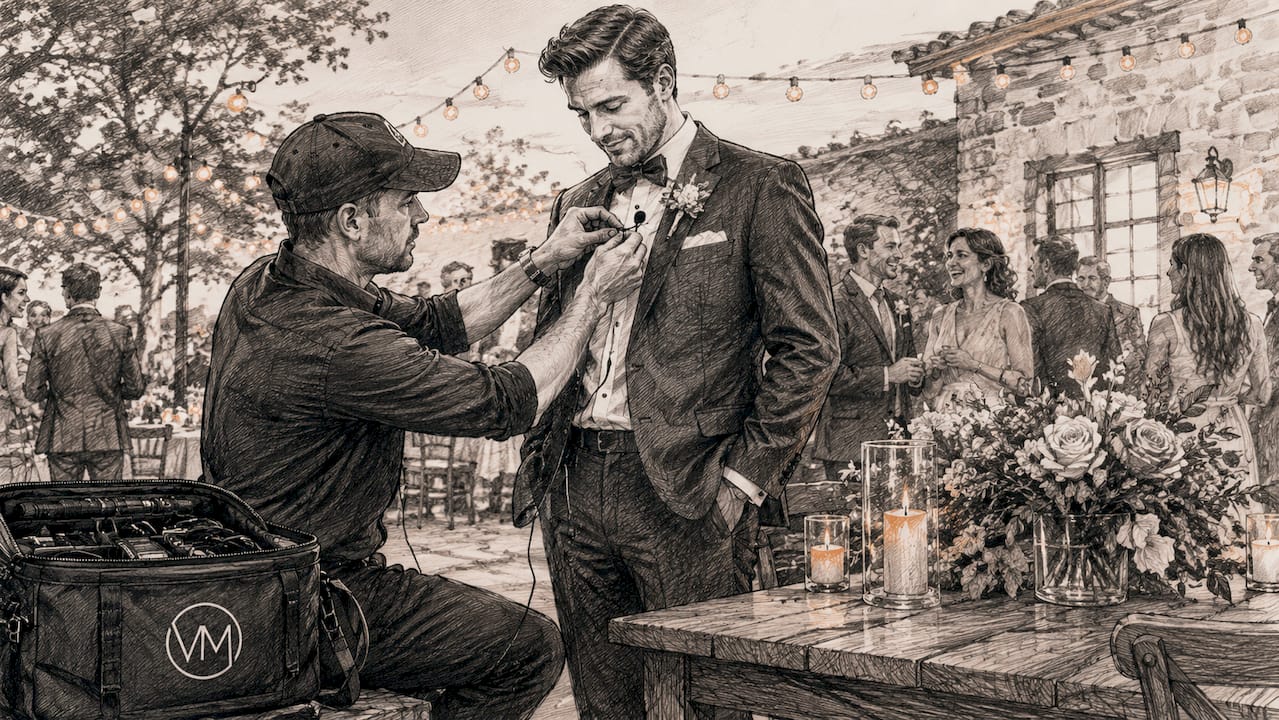
- Lavalier (lapel) microphones clipped to the groom and officiant. Placing lavs on both captures the exchange of vows without visible cables running across the aisle.
- Portable digital audio recorders like the Zoom H5 or Tascam DR-10L. These cost around $100 each, a significant cost advantage over wireless systems that exceed $400.
- Direct soundboard feed from the DJ or venue mixer. This delivers clean, studio-quality audio for reception toasts and speeches.
- Shotgun microphones mounted on cameras as ambient and backup sources. They capture room tone, applause, and crowd energy.
| Source | Best Use | Limitation |
|---|---|---|
| Lavalier mic | Vows, officiant words | Visible cable risk, fabric noise |
| Portable recorder | Ceremony dialogue | Requires close placement |
| Soundboard feed | Toasts, speeches | Needs DJ coordination |
| Shotgun mic | Ambient, crowd | Picks up background noise |
Pro Tip: The Rode Wireless Pro uses 32-bit float recording technology, which eliminates manual gain adjustments and prevents clipping when a crowd unexpectedly erupts during a toast.
How do videographers coordinate with djs and venues?
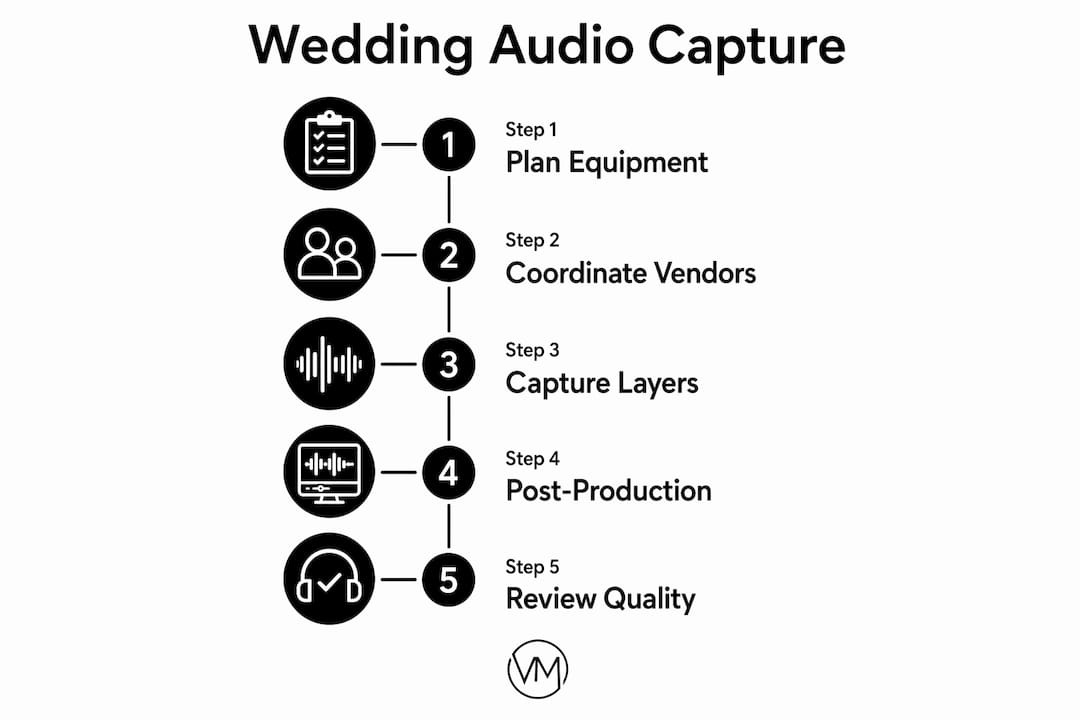
Securing a direct board feed from the DJ is the single most effective step for capturing clean reception audio. Coordination with the DJ should happen before the wedding day, not during setup. A five-minute call with the sound provider can prevent hours of unusable audio.
Key coordination steps include:
- Contacting the DJ or venue sound team at least two weeks before the event
- Confirming whether a direct XLR or 3.5mm output is available from the mixer
- Scheduling toasts during a quiet window, away from peak music volume
- Testing all wireless frequencies on-site to avoid signal interference from other vendors
- Confirming that PA system rentals are included in the venue package or budgeted separately, as professional systems typically cost around $169 per day
Pro Tip: Ask your videographer to arrive 30 minutes before the ceremony to run a full sound level test with all mics active. Problems found at 3:30 PM are fixable. Problems found at 4:01 PM are not.
What are the most common wedding audio challenges?
Live sound capture at weddings is unpredictable. Background noise, signal dropouts, and distortion are the three problems that destroy otherwise perfect footage.
Background noise is the most persistent issue. Outdoor ceremonies face wind, traffic, and birds. Indoor receptions battle DJ bass, clinking glasses, and crowd chatter. Wireless lav mics alone often fail in reception environments because the bass from speaker stacks overwhelms the mic signal. The fix is combining the lav with a direct board feed, not replacing one with the other.
Signal dropouts happen when wireless transmitters travel too far from their receivers or encounter interference from other wireless systems at the venue. Keeping transmitters within 50 feet of receivers and scanning for clear frequencies before the event eliminates most of this risk.
Clipping and distortion occur when audio levels spike beyond what the recorder can handle. A best man who shouts into a microphone during a toast can destroy the recording in seconds. Attenuators and 32-bit float technology solve this by giving the recorder headroom to handle unexpected volume spikes without distorting.
Pro Tip: Place lavalier mics under a shirt layer rather than on the outside of a jacket. This reduces fabric rustle and hides the mic from camera view without sacrificing audio quality.
Why does audio quality define the wedding film experience?
A wedding film without clear audio is a collection of images. A wedding film with clear audio is a story. The difference is not subtle.
"Audio conveys emotional cues that visuals simply cannot replicate. A voice breaking mid-vow, a whispered 'I love you,' or a room erupting in laughter are the moments couples replay for decades." — The Role of Audio in Wedding Videography
Ambient audio from on-camera microphones adds texture that makes a film feel lived-in. Applause, the rustle of a dress, a child giggling in the third row: these sounds place the viewer inside the room. They are the difference between watching a wedding and feeling one.
Wedding sound design in post-production layers these sources together. The lav mic carries the dialogue. The board feed anchors the speeches. The ambient mic fills the space. When mixed correctly, the result is a film that sounds as good as it looks. For couples who want to understand audio's full role in storytelling, the emotional payoff of proper planning is significant.
Key takeaways
Excellent wedding audio capture requires three simultaneous recording sources, intentional vendor coordination, and the right equipment placed strategically before the ceremony begins.
| Point | Details |
|---|---|
| Use three audio sources | Combine lav mics, a soundboard feed, and ambient camera audio for full redundancy. |
| Coordinate with the DJ early | Confirm a direct board feed at least two weeks before the wedding day. |
| Choose recorders wisely | Portable recorders like the Zoom H5 or Tascam DR-10L cost around $100 and outperform single wireless systems. |
| Test before the ceremony | Run a full sound check 30 minutes before the event to catch and fix problems in advance. |
| Prioritize audio in your vendor search | Ask videographers specifically how they handle audio capture, not just camera specs. |
The moment i realized audio was the whole film
I have filmed weddings where the visuals were stunning and the couple cried watching the edit. I have also delivered films where the footage was technically perfect but the vows were barely audible. The couple smiled politely. They did not cry. That difference lives entirely in the audio.
The mistake I see most often is treating audio as an afterthought. Couples spend months choosing flowers and almost no time asking their videographer how they plan to record the ceremony. Videographers sometimes show up without confirming a board feed with the DJ, then spend the reception hoping a lav mic will cut through the bass. It rarely does.
My honest recommendation: when you interview videographers, ask them to walk you through their audio setup. If they cannot name at least two recording sources and explain how they coordinate with the DJ, keep looking. The audio tips that separate good films from great ones are not secrets. They are just discipline and preparation.
Audio is not the technical part of a wedding film. Audio is the film. Everything else is illustration.
— Anthony
How Visualizemedia captures every word of your wedding day
Visualizemedia specializes in cinematic wedding films across New York and New Jersey, with a production approach built around location sound recording from the first moment of the ceremony to the final toast. Every package includes multi-source audio capture, direct coordination with your DJ or venue sound team, and a final mix that makes your vows and speeches as clear as the day you spoke them. If you want a film that sounds as good as it looks, explore Visualizemedia's wedding cinematography packages and see how professional audio planning transforms the final film. Follow the work on Instagram for real examples from real weddings.
FAQ
What is audio capture in weddings?
Audio capture in weddings is the recording of all spoken and ambient sounds at a ceremony and reception, including vows, speeches, and crowd reactions, using microphones, portable recorders, and soundboard feeds to preserve the emotional content of a wedding film.
What microphones are best for recording wedding vows?
Lavalier microphones placed on the groom and officiant are the most effective option for capturing vows clearly, as they stay close to the speaker and minimize background noise during the ceremony.
Do i need to tell my DJ that my videographer needs an audio feed?
Yes. Confirming a direct board feed with your DJ before the wedding day is one of the most important audio planning steps. This single connection delivers clean, studio-quality audio for all reception speeches and toasts.
What is 32-bit float recording and why does it matter at weddings?
32-bit float recording automatically adjusts for sudden volume spikes, preventing distortion when a crowd cheers or a speaker shouts. It removes the need for manual gain settings during unpredictable live events.
How many audio sources should a wedding videographer use?
The industry standard is three simultaneous sources: a lavalier mic on the groom or officiant, a direct soundboard feed from the DJ, and an ambient shotgun mic on the camera. This redundancy strategy protects against any single source failing during a critical moment.