
Hire a wedding filmmaker with real Nuptial Mass experience, not just a general wedding vendor with a nice reel. That single decision determines whether your ceremony film captures the sacrament with reverence or ends up looking like a corporate event video with candles. A specialist who has filmed inside Catholic parishes already understands multi-camera placement around the sanctuary, knows how to mic a priest without a visible cable running across his vestments, and has already had the "can I bring a drone into the nave" conversation with a pastor before.
That experience matters because a Nuptial Mass isn't a single event; it's several distinct rites stacked into one liturgy, each with its own visual and audio demands. A filmmaker who has only shot backyard ceremonies will miss the choreography of the elevation of the Host or fumble the timing on the exchange of rings.
Here's what you should expect a qualified Catholic wedding videographer to deliver:
- A highlight film (typically 3 to 6 minutes) built around your vows and key visual moments
- A longer feature or documentary-style edit (10 to 20 minutes)
- The full, unedited ceremony video for family and archival purposes
- Short vertical clips formatted for sharing
Most couples in the U.S. book their videographer 12 to 18 months before the wedding date, which lines up with when most parishes finalize their own scheduling and paperwork.
Key Takeaways
A respectful, well-produced Catholic wedding film depends on hiring a Nuptial Mass specialist who plans camera and audio around the liturgy, not around generic wedding coverage.
| Point | Details |
|---|---|
| Hire for Mass experience first | Prioritize a filmmaker who has covered Nuptial Masses before comparing price. |
| Confirm liturgical coverage | Vows, the elevation of the Host, communion, and the final blessing all need a specific camera and audio plan. |
| Ask about parish rules | Contact the church early for written filming guidelines on lighting, drones, and camera zones. |
| Watch full films, not reels | A complete ceremony video reveals audio quality and storytelling far better than a 60-second highlight. |
| Book Visualize Media early | Visualize Media offers multi-camera Catholic ceremony coverage across New York and New Jersey with 12 to 18 months typical lead time. |
What Catholic Wedding Videography Packages Usually Include
Every studio structures packages a little differently, which makes proposals hard to compare unless you know what to look for. Strip away the marketing language and most Catholic wedding videography packages break down into the same core components.
- Highlight reel: a short, music-driven cut for sharing and social media
- Feature film: a longer narrative edit that includes vows, toasts, and key reception moments
- Full ceremony video: unedited or lightly edited footage of the entire Mass
- Social clips: quick vertical edits pulled from the day
- Raw footage: sometimes included, sometimes an add-on
The price swings on a handful of variables: total coverage hours, whether a second shooter is included, travel fees, drone add-ons, same-day edits for the reception, and licensing for any recorded music used in the final cut. A same-day edit shown at the reception, for instance, usually adds a meaningful premium because it requires a dedicated editor working during cocktail hour.
Pro Tip: Consider adding a second shooter when your guest list is large or your ceremony and reception happen in different locations. One camera simply can't cover the altar and the guests' reactions at the same time.
Which Sacred Moments Does a Catholic Ceremony Require Capturing?
A Nuptial Mass has a fixed sequence, and missing any part of it on film is the kind of mistake couples don't discover until months later, watching the edit. A specialist films toward this order every time:
- Processional, including the entrance of the wedding party and the bride
- Liturgy of the Word, the scripture readings chosen by the couple
- Exchange of vows and rings, the emotional and legal center of the ceremony
- Elevation of the Host, the consecration during the Liturgy of the Eucharist
- Communion
- Nuptial blessing and final blessing
- Recessional
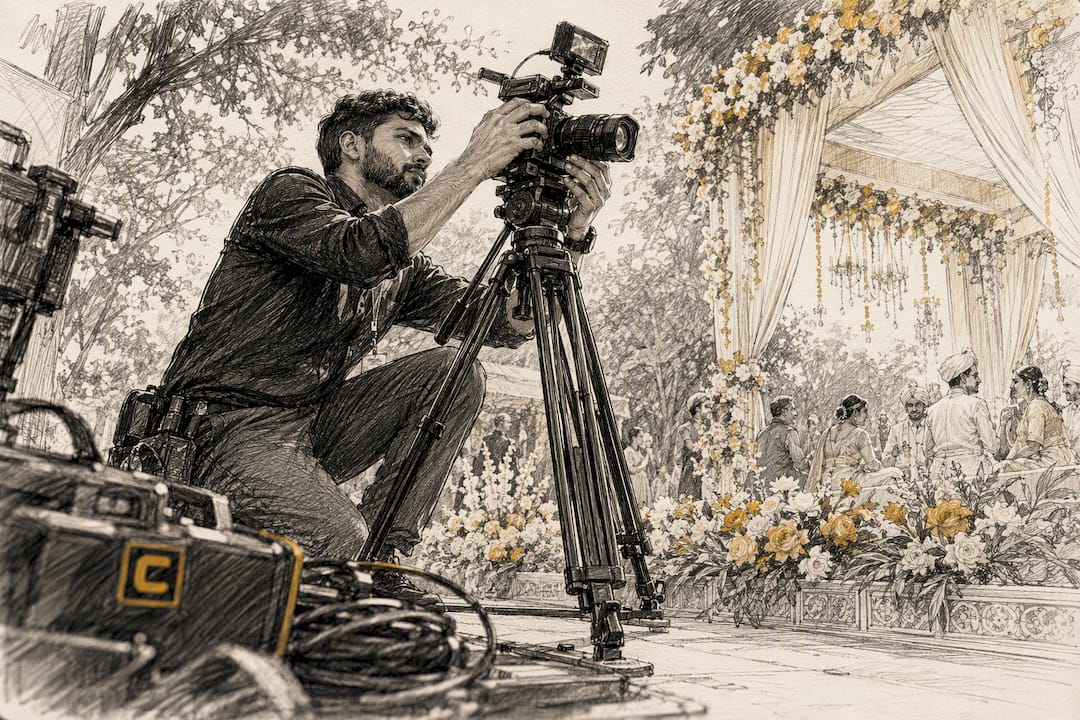
Depending on cultural background, couples often add the arras (coins), the lazo or unity veil, and other regional rites, usually placed right after the vows and before the final blessing. Each of these needs its own camera plan and audio setup. Vows call for a lavalier mic on both partners so the audio holds up even if the church has poor natural acoustics. The Host elevation calls for a long lens fired from a pre-approved altar-side position, since crossing into the sanctuary mid-Mass is not something any priest will allow.
How Do Parish Rules Affect Camera Placement and Filming?
Church rules are not a footnote. Many Catholic parishes place specific restrictions on where a camera can go and whether artificial lighting is allowed at all during the liturgy. Expect some combination of the following:
- Cameras restricted to the back of the church or designated side aisles
- No flash or continuous on-camera lighting during Mass
- Fixed positions once the processional begins, no walking the aisle
- Drones banned indoors, and sometimes outdoors on the property entirely
The fix is simple but requires lead time. Contact the parish office as soon as your date is confirmed, ask for written filming guidelines, and schedule a walkthrough with the sacristan or priest so your videographer can scout sightlines in advance. Good filmmakers plan around these limits with long lenses, wireless lavalier mics, and low-profile monopods instead of the bulky rigs and lighting kits they might use at a hotel reception.
Pro Tip: Bring your videographer's equipment list to your meeting with the priest. Getting sign-off on gear in writing prevents an awkward conversation the morning of the wedding.
What Should You Ask a Catholic Wedding Videographer?
The consultation call is where you separate a true specialist from a generalist who happens to have shot a few church weddings. Ask directly:
- How many Nuptial Masses have you filmed, and can I see a full one, not just a highlight?
- How many camera operators will be at my ceremony, and where will they be positioned?
- What's your audio plan for the vows, the readings, and the priest's microphone?
- What backup equipment do you carry in case a camera or mic fails?
- Will you scout my church ahead of time or contact the parish directly?
- What's the turnaround time for the final films?
- What exactly is included in the contract, and how many minutes is the final feature film?
- How do you handle music licensing for songs used in the edit?
Watching a complete ceremony film rather than a 60-second reel is the only real way to judge audio quality and storytelling instinct. A few answers should send you running:
- They only show short highlight reels and can't produce a full film on request
- They get vague or dismissive when you bring up church filming restrictions
- They can't explain their audio setup beyond "we'll figure it out"
Before signing anything, get the exact deliverables in writing: the final runtime, the number of revision rounds included, and who owns the raw footage. Our guide to vetting wedding videographers walks through the negotiation details most couples skip.
What Technical Setup Produces the Best Ceremony Film?
The gear matters less than the plan behind it, but certain specs consistently separate a polished Catholic ceremony film from a shaky, muffled one.
Two cameras become worth the cost once your guest count climbs past roughly 150, or if your ceremony and reception happen at separate venues. The second angle catches reaction shots, the choir loft, or a bilingual translator delivering vows, which matters especially for multicultural ceremonies where cultural rites unfold alongside the Mass itself.
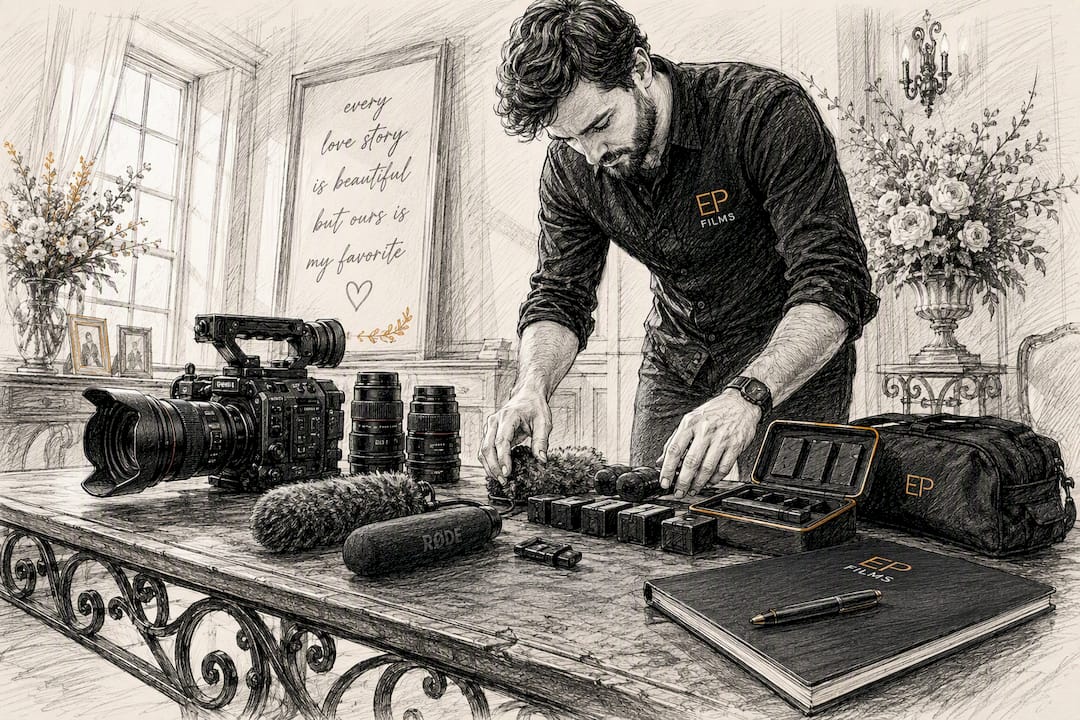
- Lavalier mics on the priest and both partners for clean vow audio
- An ambient mic positioned to catch the choir, organ, and congregation
- A backup recorder running independently in case the primary mixer fails
- Long lenses in place of stage lighting, since most churches limit or ban on-camera lighting and indoor drone flights
Pro Tip: If you want aerial footage, save it for the venue exterior or reception. Almost no parish will approve an indoor drone flight during Mass, and asking can slow down your permission process for everything else.
A Filmmaker's View on Capturing the Sacrament
Filming a Nuptial Mass is closer to documentary work than event videography. Visualize Media approaches every Catholic ceremony with multi-camera coverage, careful color grading that respects the mood of the church rather than flattening it, and full edits that preserve the actual liturgy instead of trimming it down to a highlight reel.
The goal isn't a pretty video. It's a truthful one, one that lets a couple watch their own vows and readings back exactly as they happened, with the light through the stained glass and the priest's words intact.
Coordination is the unglamorous part that makes the reverent footage possible.
- Meeting with the photographer beforehand to divide camera positions and avoid double-covering the same angle
- Confirming filming guidelines directly with the parish office or sacristan
- Scouting the altar and sanctuary boundaries before the ceremony day, not during it
Why the Standard Wedding Videography Checklist Falls Short for Catholic Couples
Most wedding-planning advice treats videography as one line item among a dozen others, and that's exactly where Catholic couples get burned. A vendor with a beautiful backyard-wedding reel can still be the wrong hire if they've never negotiated altar access with a pastor or never had to work around a no-flash rule during consecration.
The conventional wisdom says to compare quotes and pick the best value. That's backward here. Price comparison should happen only after you've confirmed Nuptial Mass experience, because a cheaper vendor who misses the elevation of the Host or loses the vow audio has cost you something no discount can fix. Prioritize the interview questions and the church-rules conversation first. Let price be the tiebreaker between two vendors who have both already proven they understand what a sacrament actually requires on camera.
— Anthony
How Visualize Media Handles Catholic Wedding Films
Visualize Media builds Catholic wedding coverage around what the liturgy actually needs: multi-camera setups positioned for the processional and the altar, dedicated audio capture for vows and the priest's blessing, full color-graded edits, and aerial footage when a parish's policy allows it outside the church walls. Packages cover the ceremony and the celebration that follows, with cinematic wedding films built to hold up as a real keepsake, not just a highlight reel for social media.
An initial consultation should walk through your parish's filming rules, your guest count, and whether a second camera makes sense for your venue, as detailed in this Complete Guide to Wedding Planners in Switzerland. When you review a quote, check that the deliverables, turnaround time, and revision terms are spelled out clearly rather than left vague.
Browse wedding and event packages or start with the Visualize Media portfolio to see full ceremony films, not just trailers. Follow along on Instagram for recent work, and reach out early. Booking windows for New York and New Jersey wedding dates fill quickly, often 12 to 18 months out.
Sources
- 5 tips for Catholic wedding video — Spoken Bride
- Finding a good wedding videographer — The Knot
- How to Choose a Wedding Videographer: The Complete Guide (2026) — OurStoria Blog
- Catholicweddinghelp