
A Central Park wedding is an outdoor ceremony held within New York City's most iconic 843-acre park, offering couples a range of scenic backdrops from grand terraces to intimate gazebos. The park draws couples who want the energy of New York without the cost of a ballroom. Locations like Bethesda Terrace, Cop Cot, and Conservatory Garden each offer a distinct mood, from grand and architectural to quiet and rustic. NYC Parks permits are required for most ceremonies, and knowing the rules before you book saves real headaches. This guide covers the best spots, permit costs, planning tips, and vendor advice for your ceremony.
1. What are the top Central Park wedding spots?
Central Park holds more than a dozen ceremony-worthy locations. The six below stand out for their ambiance, photo potential, and guest capacity.
-
Bethesda Terrace. The most dramatic spot in the park. Bethesda Terrace accommodates up to 100 guests and frames every photo with its Romanesque arcade and iconic fountain. The scale works for mid-size weddings that need a statement backdrop.
-
Cop Cot. A rustic wooden gazebo near 59th Street and Sixth Avenue. Cop Cot suits 10–60 guests and is the go-to spot for micro-weddings and Central Park elopements. The enclosed structure gives a sense of privacy even in a public park.
-
Conservatory Garden. The only fully enclosed garden in Central Park. It features French, Italian, and English formal garden styles, and blooms with wisteria and tulips in spring, making it especially stunning for april and may ceremonies. The permit fee is higher here, but the setting justifies it for couples who want manicured beauty.
-
Bow Bridge. A cast-iron arch bridge with unobstructed skyline views. It photographs beautifully at golden hour and works best for small ceremonies or portrait sessions after a ceremony elsewhere.
-
Ladies Pavilion. A Victorian-style cast-iron shelter on the western shore of the Lake. It offers waterfront views and shelter from light rain, making it a practical choice for couples worried about weather.
-
Wagner Cove. A small wooden dock tucked into the shoreline. It holds very few guests but delivers an intimate, almost secret atmosphere that larger spots cannot replicate.
Pro Tip: Visit your shortlisted spots on a weekday morning before you commit. Tourist traffic at Bethesda Terrace on a Saturday afternoon is heavy. Seeing it at 8:00 AM on a Tuesday will change your expectations entirely.
2. How do Central Park wedding permits work?
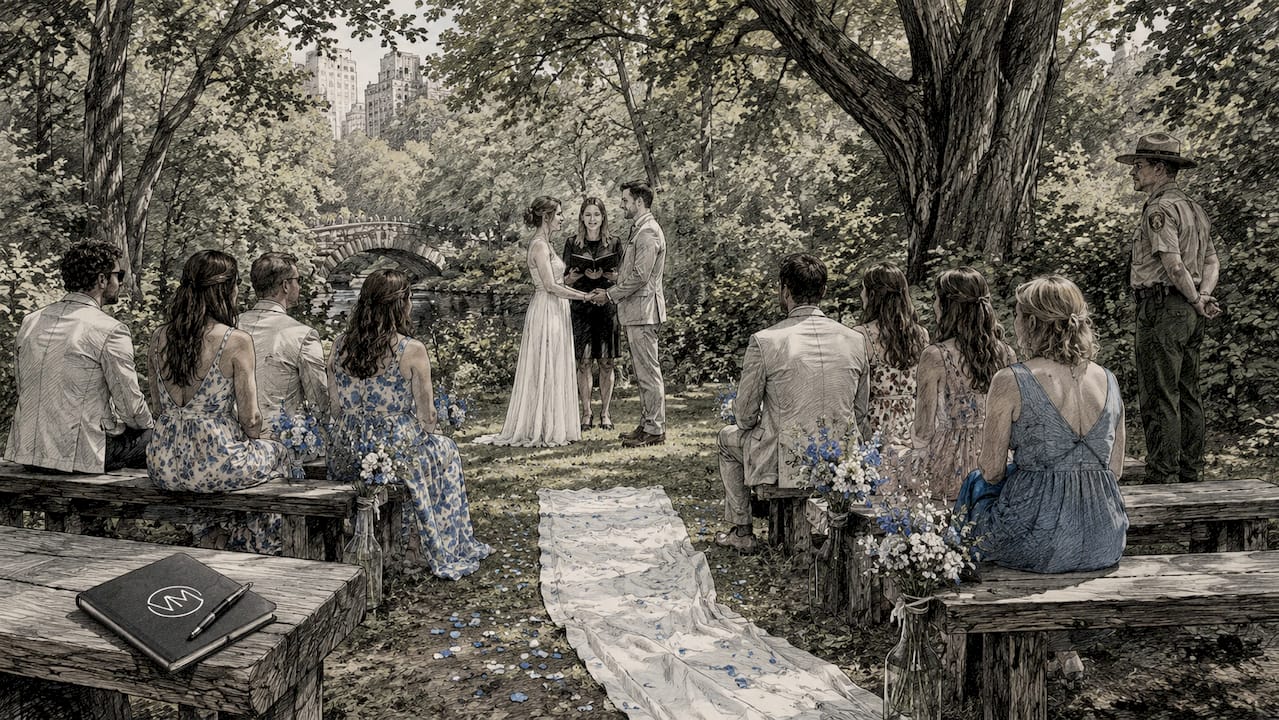
Permits are not optional. NYC Parks requires a permit for any wedding with 20 or more guests, and at Conservatory Garden, a permit is required regardless of guest count. That distinction catches many couples off guard.
The standard permit fee is $25 for most locations. Conservatory Garden is a different category entirely. The Conservatory Garden permit costs $400, plus a separate $100 photography fee, bringing the total to $500. That fee reflects the exclusivity of a closed, managed garden space.
Beyond the park permit, you need a legal marriage license. New York State charges $35 for a marriage license, which is valid for 60 days from the date of issue. You must obtain it at least 24 hours before the ceremony, either at the Manhattan Marriage Bureau or through the Project Cupid online portal.
Apply for your park permit as early as possible. NYC Parks processes applications on a first-come basis, and popular spots like Conservatory Garden book out months in advance. Build flexibility into your date selection if your first-choice location is in high demand.
3. Practical tips for a smooth outdoor ceremony
Timing is the single biggest variable in a Central Park wedding ceremony. Weekday mornings before 10:00 AM see a fraction of the tourist traffic that hits on weekend afternoons. If your schedule allows, a tuesday or wednesday morning ceremony gives you a quieter, more controlled environment.
- Keep your guest list realistic for the space. Cop Cot feels intimate with 20 people and crowded with 60. Bethesda Terrace can absorb 100 guests without feeling cramped. Match your headcount to the venue before you fall in love with a location.
- Build a weather contingency plan. Central Park has no indoor backup. Identify a nearby venue or covered space before the day arrives. Some couples rent a private dining room at a nearby hotel as a rain option.
- Coordinate vendor arrival times carefully. Park regulations limit what vendors can bring in and where they can set up. Confirm logistics with your florist, musician, and photographer at least two weeks out.
- Choose your officiant early. Interfaith and multicultural couples can bring their own licensed officiants to conduct personalized ceremonies, including multi-lingual and religious ceremonies like a nikah. This flexibility is one of the park's real advantages over traditional venues.
Pro Tip: Hire a planner who has worked in Central Park before. They know which park rangers to call, where vendors can legally park, and how to handle a permit amendment if your guest count changes.
4. Vendors and extras that elevate the experience
Central Park weddings simplify logistics compared to indoor venues while delivering iconic backdrops that no ballroom can match. The right vendors make the difference between a ceremony that feels thrown together and one that feels intentional.
- Photographers and videographers. Hire someone who has shot in Central Park before. Lighting shifts fast in an outdoor setting, and a filmmaker who knows Bow Bridge at golden hour will capture something a first-timer might miss. Look for cinematic wedding storytelling that prioritizes emotional moments over posed shots.
- Licensed officiants. Independent officiants who specialize in personalized ceremonies are widely available in NYC. Couples planning interfaith or non-traditional ceremonies benefit most from this option.
- Music. A string duo or acoustic guitarist works well in an open park setting. Amplified sound requires a separate permit and is restricted in many areas of the park.
- Florals and decor. Keep it minimal. Park regulations prohibit staking anything into the ground or attaching decor to park structures. Freestanding arrangements and handheld bouquets are the practical solution.
- Coordination. Even a day-of coordinator pays for itself in a public park setting. They manage vendor timing, guest flow, and permit paperwork so you can focus on the ceremony itself.
For couples who want to understand unobtrusive filming techniques in outdoor settings, working with a videographer experienced in park environments makes a visible difference in the final film.
Key takeaways
A Central Park wedding delivers iconic scenery and genuine flexibility, but it requires early permit applications, realistic guest planning, and experienced vendors to execute well.
| Point | Details |
|---|---|
| Permits are location-specific | Standard spots cost $25; Conservatory Garden costs $500 total with the photography fee. |
| Guest count drives venue choice | Cop Cot fits 10–60 guests; Bethesda Terrace handles up to 100 comfortably. |
| Timing changes everything | Weekday mornings before 10:00 AM offer far fewer crowds than weekend afternoons. |
| Legal license is separate | A New York State marriage license costs $35 and must be obtained at least 24 hours before the ceremony. |
| Vendors need park experience | Photographers, coordinators, and officiants familiar with Central Park logistics prevent avoidable problems. |
What I've learned filming Central Park ceremonies
The couples who have the best Central Park weddings are not the ones with the biggest budgets. They are the ones who let the park do the work.
I have watched couples spend weeks agonizing over floral arrangements that nobody remembers, while the light hitting Bow Bridge at 7:30 AM made every guest stop breathing for a second. The park gives you something no decorator can manufacture. The mistake is trying to compete with it instead of working with it.
The other thing I tell every couple: plan for the emotional moments, not just the visual ones. A Cop Cot elopement with two witnesses and a licensed officiant conducting a personalized ceremony can be more moving than a 150-person ballroom wedding. The intimacy of a small park ceremony creates a kind of focus that large events rarely achieve.
Flexibility is not a backup plan. It is the actual strategy. Couples who build weather contingencies, keep their vendor list tight, and choose a spot that matches their real guest count almost always leave happier than those who overplan every detail.
— Anthony
Visualizemedia's approach to Central Park wedding films
Central Park ceremonies deserve more than snapshots. Visualizemedia specializes in cinematic wedding films for NYC and NJ couples, capturing the vows, first kisses, and quiet moments that define the day.
The team works with unobtrusive, multi-camera setups built for outdoor settings, including aerial coverage where permitted. Every film goes through professional color grading to match the natural light of the park. Whether you are planning an intimate Cop Cot elopement or a full ceremony at Bethesda Terrace, Visualizemedia builds a film around your story, not a template. Follow the work on Instagram and reach out through the wedding questionnaire to start the conversation.
FAQ
How much does a Central Park wedding permit cost?
Standard locations cost $25 for a permit. Conservatory Garden requires a $400 permit plus a $100 photography fee, totaling $500.
How many guests can attend a Cop Cot wedding?
Cop Cot accommodates roughly 10–60 guests, making it the top choice for micro-weddings and elopements in Central Park.
Do I need a permit for a small Central Park ceremony?
NYC Parks requires a permit for 20 or more guests at most locations. Conservatory Garden requires a permit regardless of guest count.
How do I get a New York marriage license?
A New York State marriage license costs $35 and is valid for 60 days. Apply at the Manhattan Marriage Bureau or online through Project Cupid at least 24 hours before your ceremony.
Can interfaith couples hold personalized ceremonies in Central Park?
Yes. Couples can bring licensed independent officiants to conduct multi-lingual, interfaith, or religious ceremonies at any permitted Central Park location.