
Color grading in wedding videos is the artistic and technical practice of manipulating color, contrast, and saturation to define mood, visual consistency, and emotional impact across every scene. It goes far beyond fixing a white balance issue. The role of color grading in wedding videos is to transform technically sound footage into a cinematic story that feels as emotionally charged as the day itself. Understanding this process separates videographers who deliver beautiful footage from those who deliver films couples watch over and over again.
How color grading shapes emotional responses in wedding films
Color grading directly impacts emotional engagement before viewers even process the narrative. That means the feeling a couple gets in the first five seconds of their film is driven almost entirely by color, not by the edit or the music.
The data on this is hard to ignore. Warm grades score 34% higher on romance and emotional intensity compared to high-contrast grades, and are rewatched 63% more often over a year. That rewatchability number matters because a wedding film is not a one-time watch. It is something couples return to on anniversaries, share with family, and revisit for decades.
Color choices also support specific narrative moments within the film. A soft, golden palette during the ceremony reinforces tenderness and intimacy. A slightly cooler, more saturated grade during the reception can amplify energy and celebration. Matching the color palette to the emotional arc of the story is what separates a color grade from a color filter.
- Warm tones (oranges, soft yellows) signal romance and nostalgia
- Cool tones (blues, teals) suggest calm, elegance, or drama
- High contrast grades create cinematic tension and visual boldness
- Soft, desaturated looks evoke timelessness and editorial style
Pro Tip: Before you grade a single clip, ask the couple to describe how they want to feel when they watch their film. "Warm and dreamy" and "clean and modern" are two completely different grade directions, and getting that answer upfront saves hours of revision.
What is color grading vs. color correction in the wedding video editing process?
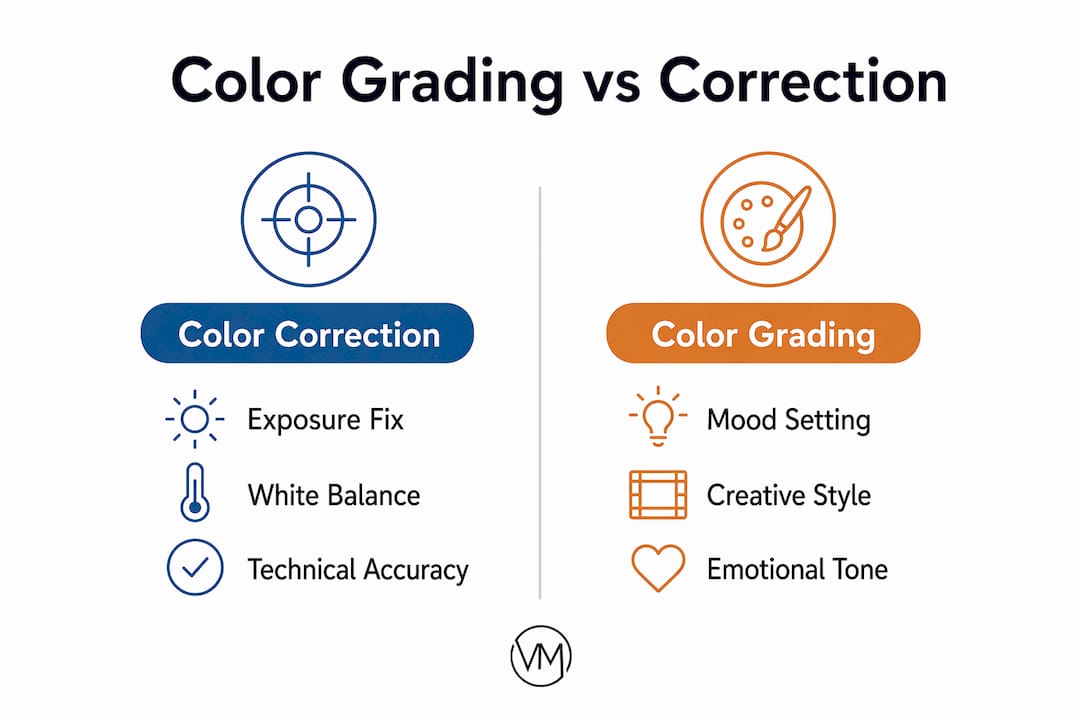
Color correction is the technical foundation and color grading is the creative layer built on top of it. You cannot skip correction and jump straight to grading. If your exposure is off or your white balance is inconsistent, no creative grade will save the footage.
The typical post-production workflow for wedding films follows this order:
- Ingest and organize footage by scene and camera source
- Apply color correction to fix exposure, white balance, and contrast across all clips
- Match shots from multiple cameras so they look like they came from the same source
- Apply the creative color grade to set mood, tone, and visual style
- Check output encoding to confirm the grade holds across delivery formats (web, 4K, mobile)
Shooting in Log format is non-negotiable for this workflow. Log footage preserves maximum highlight and shadow detail, giving you the flexibility to push the grade without introducing noise or clipping. Grading flat, over-exposed JPEG-style footage is like trying to sculpt with dry clay.
Proper color space management during grading is what keeps your creative intent intact across different devices. A grade that looks stunning on your calibrated monitor can look washed out or oversaturated on a client's phone if you ignore output encoding.
Pro Tip: Share specific LUTs or .look files with your editor along with timestamp references from sample footage. Vague briefs like "warm with crushed shadows" produce inconsistent results. A reference file removes all ambiguity.
Popular color grading styles: which one fits each wedding?
The warm cinematic grade dominates the wedding film market for a reason. It shifts shadows and highlights toward oranges, yellows, and soft reds with a controlled saturation boost, and it preserves natural skin tones using a +800–1500K color temperature shift and a 10–20% saturation increase. Skin tones are the first thing a client notices when something looks wrong, so protecting them is always the priority.
That said, the warm cinematic look is not right for every wedding. A modern, minimalist ceremony in a white gallery space might call for a clean, neutral grade. A dramatic black-tie event might suit a high-contrast, desaturated look. Matching the grade to the wedding's personality is part of the craft. You can explore how current grading trends are shaping client expectations across different wedding styles.
| Style | Emotional Effect | Best Use Case |
|---|---|---|
| Warm cinematic | Romance, nostalgia, intimacy | Outdoor, garden, rustic, or traditional weddings |
| High contrast | Drama, boldness, cinematic tension | Black-tie, editorial, or fashion-forward weddings |
| Soft natural | Timeless, clean, editorial | Minimalist, modern, or destination weddings |
| Moody desaturated | Elegance, depth, sophistication | Dark venues, candlelit receptions, luxury events |
One practical rule: always align your video grade with the photographer's editing style. Harmonizing video grading with photography presets produces cohesive wedding media and reduces the jarring disconnect couples notice when their photos look warm and golden but their video looks cold and flat. Ask the photographer for their preset reference or a sample gallery before you finalize your grade.
Common challenges in color grading wedding videos
The biggest technical pitfall in wedding grading is over-grading. Extreme grading in high-contrast or dark scenes produces muddy, blocky images on consumer devices. What looks rich and cinematic on a graded monitor can look broken on a 65-inch TV in a client's living room. The best grading practice always balances artistic intent with output device limitations.
Managing footage from multiple camera sources is another real challenge. A Sony A7S III and a Canon R5 do not produce the same color science, and if you are cutting between them without matching first, the inconsistency will be obvious. Correction before grading solves this, but it takes time and attention.
- Match all camera sources before applying any creative grade
- Grade for your delivery format, not just your editing monitor
- Avoid crushing blacks in scenes with dark skin tones
- Check your grade on at least two different screens before delivery
- Coordinate with the photographer to align color direction early
Client communication is also part of the workflow. Showing a couple a reference grade at the approval stage, before the full edit is complete, prevents expensive revisions. Think of it as a color proof, similar to what print designers send before a final press run.
Pro Tip: Build scene-specific grades within one wedding film. The ceremony, cocktail hour, and reception all have different lighting and emotional energy. A single grade applied across all three will always look slightly wrong in at least one of them. Use the storytelling structure of the film to guide where the grade shifts.
Key takeaways
Color grading is the single most powerful post-production tool for controlling how a wedding film feels, not just how it looks.
| Point | Details |
|---|---|
| Correction before grading | Fix exposure and white balance first; creative grading built on bad correction always fails. |
| Shoot in Log | Log footage preserves highlight and shadow data needed for flexible, high-quality grades. |
| Warm grades drive rewatchability | Warm tones score 34% higher on emotional intensity and are rewatched 63% more often. |
| Match the photographer's style | Aligning video and photo color creates cohesive wedding media and a better client experience. |
| Avoid over-grading | Extreme grades break on consumer devices; always check delivery on multiple screens. |
Why i think most videographers underestimate color grading
After years of working on cinematic wedding films, the pattern I keep seeing is this: videographers invest heavily in cameras and lenses, then rush the grade. They treat it as the last checkbox in the editing process rather than the creative decision that defines the entire film.
The couples who cry watching their film back are not reacting to the camera model or the lens choice. They are reacting to the feeling the color creates before their brain even registers what they are seeing. That is the science, and it is also just the truth of the experience.
What I have learned about client preferences is that most couples cannot articulate what they want in technical terms. They show you a mood board or a film they love. Your job is to decode that visual language into a grade. The videographers who get this right are the ones who ask better questions upfront and build a reference library of grades they can point to during the consultation.
The future of wedding color grading is moving toward more personalized, story-driven palettes and away from one-size-fits-all LUT packs. The craft is getting more sophisticated, and clients are getting better at noticing the difference. That is a good thing. It rewards the videographers who treat grading as art, not an afterthought.
— Anthony
See how Visualizemedia brings color grading to life
At Visualizemedia, color grading is built into every film we create, not offered as an add-on. Every wedding film we produce starts with Log footage, moves through a full correction and grading workflow, and is finished with a color palette matched to the couple's style and the photographer's visual direction.
If you want to see what intentional, story-driven color grading looks like in practice, explore our wedding cinematography portfolio and watch how color shapes the emotional experience of each film. Ready to talk about your wedding? Start with our questionnaire and tell us the story you want to tell. Follow our work on Instagram for behind-the-scenes looks at how we approach color and craft on every project.
FAQ
What is color grading in wedding videos?
Color grading is the creative post-production process of adjusting color, contrast, and saturation to set the mood and visual style of a wedding film. It follows color correction and transforms technically sound footage into a cinematic, emotionally resonant story.
How does color grading differ from color correction?
Color correction fixes technical issues like exposure and white balance. Color grading is the artistic step that follows, shaping the emotional tone and visual identity of the film.
Why do warm color grades work so well for wedding films?
Warm grades score 34% higher on romance and emotional intensity and are rewatched 63% more often than high-contrast grades, making them the most effective style for emotionally engaging wedding films.
Should wedding video grading match the photography style?
Yes. Aligning your video grade with the photographer's presets creates visual harmony across all wedding media and prevents the jarring disconnect couples notice when photos and video look like they came from different worlds.
What footage format is best for color grading wedding videos?
Shooting in Log format is the professional standard. Log preserves maximum highlight and shadow detail, giving you the flexibility to apply a polished grade without introducing noise or clipping.