
Elopement videography is the art of capturing an intimate wedding day through cinematic storytelling, preserving emotional moments that photos alone cannot hold. Unlike traditional wedding coverage, this specialized form of filmmaking focuses on mood, authentic reactions, and the ambient sounds of your day, from whispered vows to wind through the trees. The best elopement films use techniques like shallow depth of field, color grading, and music-driven editing to turn a few hours into a film you will watch for decades. Some filmmakers, including those at Visualizemedia, also incorporate Super 8 film alongside digital video to add a warm, textured quality that feels timeless. This guide covers everything you need to know before booking.
What is elopement videography and why does it matter?
Elopement videography is defined as cinematic film coverage of an intimate wedding, typically involving two people, an officiant, and a small number of guests or none at all. The format strips away the production scale of a traditional wedding and replaces it with focused, emotional filmmaking. Cinematic storytelling prioritizes how moments feel over strict chronological order, which means your film has a narrative arc rather than a simple event log.
Photos freeze a single frame. Video captures the tremor in a voice, the laugh that breaks through tears, and the silence before a first kiss. These are the details couples report missing most when they only have still images. A well-crafted elopement film becomes a living memory rather than a document, and that distinction is what makes videography worth serious consideration for any couple planning an intimate ceremony.
How much does elopement videography cost?
Elopement video packages are about 50% more cost-effective than traditional full wedding coverage, with North American pricing starting around $1,500. That cost advantage exists because elopements require fewer hours of coverage, less crew, and simpler logistics than a 200-person reception. Pricing rises based on location, travel fees, and creative add-ons like Super 8 film rolls.
Here is what typically affects your final price:
- Location and travel. Remote destinations like national parks or international venues add travel fees on top of base rates.
- Package length. Most elopement packages cover 2 to 6 hours. Longer coverage costs more.
- Super 8 film add-ons. Film stock, processing, and scanning add cost but deliver a distinct visual texture.
- Deliverables. A highlight reel (3 to 5 minutes), a full ceremony edit, and a short teaser clip are the most common outputs.
- Editing complexity. Color grading, sound design, and custom music licensing all influence the final price.
Final film delivery commonly takes between 4 and 12 weeks, with peak seasons pushing timelines longer due to editing backlog. That window exists because quality color grading and sound design cannot be rushed. Plan your expectations around a 6 to 8 week average for a polished result.
What video styles and formats work best for elopements?
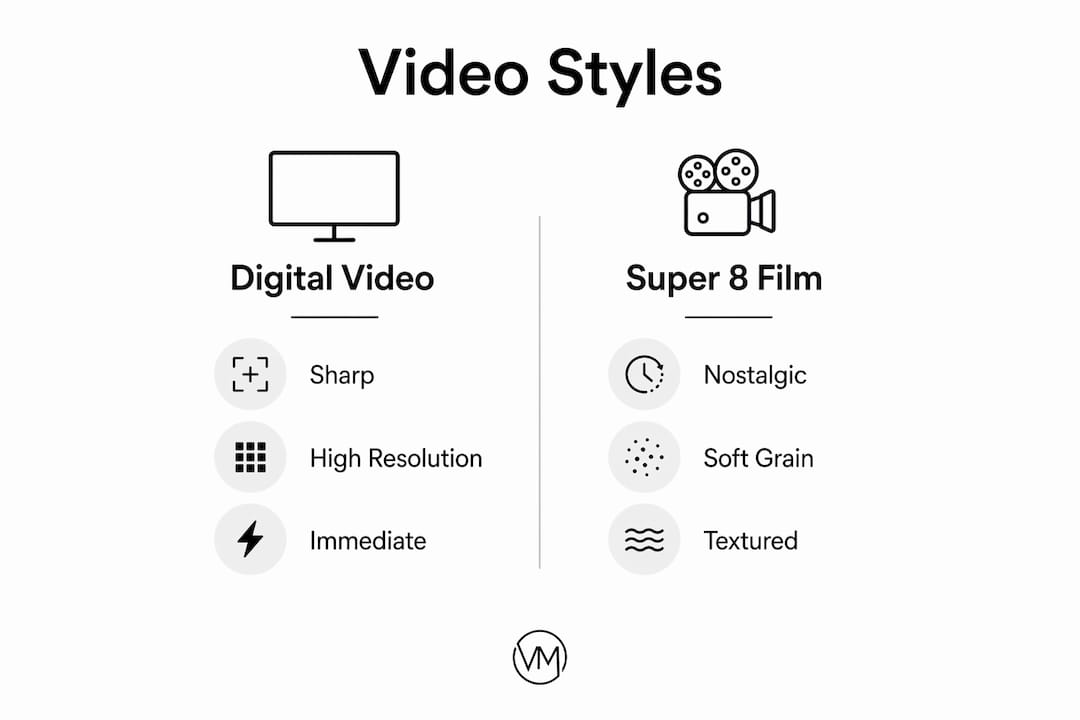
The two primary formats couples choose between are digital video and Super 8 film. Each produces a fundamentally different emotional experience, and understanding the difference helps you pick a style that matches your vision.
| Format | Look and feel | Best for |
|---|---|---|
| Digital video | Sharp, high-resolution, immediate | Couples who want clarity and real-time immersion |
| Super 8 film | Warm grain, soft edges, nostalgic texture | Couples who want a vintage, emotional, timeless feel |
| Blended digital + Super 8 | Layered storytelling, contrast of eras | Couples who want depth and creative complexity |
Digital video provides high clarity and real-time immersion, while Super 8 film offers nostalgic grain and softness. Blending both creates layered emotional storytelling, though most couples choose one format to ground the video's overall tone. Mixing formats works best when the filmmaker has experience cutting between them, since the color and texture differences require deliberate editing to feel cohesive rather than inconsistent.
Audio is as important as the visual format. Lavalier microphones capturing vows clearly predict long-term client satisfaction more than any visual upgrade. The moment you hear your own voice saying "I do" in perfect audio quality, years after the day, is when the value of good sound design becomes undeniable. Ask any videographer you consider how they handle audio capture before you discuss camera gear.
Pro Tip: When reviewing film vs. digital options, ask your videographer to show you a full-length film shot in each format, not just a highlight reel. Trailers are edited to impress. Full films reveal how a filmmaker handles quiet moments and transitions.
How to prepare for your elopement videography shoot
Preparation is the single biggest variable couples control. A well-planned shoot produces organic, emotionally rich footage. A rushed one produces technically acceptable footage that feels flat.
Follow this sequence to prepare effectively:
- Book your videographer 2 to 3 months out. Planning that far ahead gives you time to align on style, location, and logistics without pressure.
- Submit your final timeline 2 weeks before the shoot. Your videographer needs this to plan camera positions, lighting setups, and travel between locations.
- Build in buffer time. Buffer zones of 20 to 30 minutes between events allow your filmmaker to capture unscripted moments and adapt to changing light. Couples who skip buffers consistently report that their films feel rushed.
- Schedule around golden hour. Shooting during golden hour dramatically improves color grading results and gives your film a natural cinematic quality that artificial lighting cannot replicate.
- Prepare a weather contingency plan. Discuss backup locations or timing shifts with your videographer before the day. Reactive decisions under pressure produce worse results than proactive ones.
- Coordinate on attire and location permits. Some national parks and state lands require filming permits. Confirm this with your videographer at least 4 weeks out to avoid surprises.
Pro Tip: Read this guide on filming for cinematic results before your first call with a videographer. It gives you the vocabulary to communicate your vision clearly, which directly improves what ends up on screen.
Common questions couples have about elopement filming
Do you actually need a videographer for an elopement? You do not need one, but couples who skip video consistently report regretting it within a year. Photos preserve the look of a moment. Video preserves how it felt.
How many hours of coverage is standard? Most elopement packages cover 2 to 6 hours. That typically includes getting ready, the ceremony, and a short portrait session. Some couples add a "day after" shoot for additional footage in a different location or light.
How do you choose the right videographer? Watch at least three full-length wedding films from any videographer you consider, not just highlight reels. Portfolio style match is the strongest predictor of satisfaction, stronger than price or online reviews. Pay attention to how they handle audio and low-light conditions.
What deliverables should you expect? Standard packages include a highlight film (3 to 5 minutes), a full ceremony edit, and sometimes a short teaser clip delivered within days of the shoot. Confirm deliverables in writing before signing any contract.
Tips to get the most from your elopement video
Getting a great elopement film is a collaboration, not a transaction. Here is how to show up as a good creative partner:
- Share your emotional priorities openly. Tell your filmmaker which moments matter most, whether that is the vow exchange, a private letter reading, or a specific location at a specific time of day.
- Leave room for unscripted moments. The footage couples treasure most is almost never the posed shot. It is the laugh between takes, the quiet look before the ceremony starts, the hand squeeze nobody planned.
- Consider a "day after" shoot. If your budget allows, a second session the following morning gives your filmmaker fresh light and a relaxed couple, which often produces the most cinematic footage of the entire project.
- Choose locations with strong natural light. Open meadows, clifftops, and forest clearings at golden hour give your videographer the raw material to create something genuinely beautiful.
- Store your final film in multiple places. Download the delivered file and back it up to a cloud service and an external drive. Streaming links expire. Your film should not.
Pro Tip: Follow Visualizemedia on Instagram to see real elopement and wedding films in action. Watching finished work is the fastest way to identify the visual style that resonates with you before you start reaching out to filmmakers.
Key takeaways
Elopement videography works because cinematic storytelling, quality audio, and deliberate preparation combine to produce a film that outlasts any photo album.
| Point | Details |
|---|---|
| Cost starts around $1,500 | Elopement packages cost roughly 50% less than full wedding coverage, with pricing driven by location and add-ons. |
| Audio quality is the top priority | Lavalier microphones capturing clear vows predict long-term satisfaction more than any camera upgrade. |
| Super 8 adds emotional texture | Film grain and warmth give elopement videos a nostalgic quality that digital video alone cannot replicate. |
| Buffer time protects your film | Build 20 to 30 minute gaps between events so your filmmaker can capture organic, unscripted moments. |
| Watch full films before booking | Highlight reels impress. Full-length films reveal how a videographer handles audio, pacing, and difficult light. |
Why elopement films are worth more than couples expect
I have watched couples receive their elopement films and go completely silent. Not because the footage is technically impressive, though it often is. Because they are hearing their own voices say words they barely remember saying, in a place that mattered more than anywhere else on earth.
The couples who get the most from their elopement film are the ones who treated the videographer as a creative collaborator, not a vendor. They shared what the day meant to them. They built in time for the quiet moments. They chose a style, whether digital or Super 8, that matched the emotional tone they wanted to carry forward.
What I have seen consistently is that the couples who prioritize authenticity over perfection end up with the most powerful films. A slightly imperfect vow delivered with genuine emotion will move you to tears at year ten. A perfectly staged shot will feel hollow by year two. The cinematic storytelling approach that the best filmmakers use is built around that truth. Emotion first. Everything else follows.
— Anthony
See what Visualizemedia can do for your elopement
Visualizemedia specializes in luxury wedding cinematography across New York and New Jersey, with packages designed specifically for intimate ceremonies and elopements. Every film includes professional color grading, multi-camera coverage, and dedicated audio capture to preserve the moments that matter most.
If you are planning an elopement and want a film that genuinely captures how the day felt, explore Visualizemedia's wedding and elopement packages to find the right fit. The team builds each project around your vision, your location, and the story only you two can tell. You can also browse finished work and get a feel for the filmmaking style on Instagram before reaching out.
FAQ
What is elopement videography?
Elopement videography is cinematic film coverage of an intimate wedding, focused on authentic emotion, ambient sound, and narrative storytelling rather than traditional event documentation.
How much does an elopement video cost?
North American elopement video packages start around $1,500, roughly 50% less than full wedding coverage, with pricing rising based on location, coverage hours, and add-ons like Super 8 film.
How long does it take to receive the final film?
Final delivery typically takes 4 to 12 weeks, depending on editing complexity and the videographer's peak-season workload.
Is Super 8 film worth adding to an elopement video?
Super 8 adds warm grain and nostalgic texture that digital video cannot replicate. It works best when the filmmaker has experience blending both formats into a cohesive edit.
How do I choose the right elopement videographer?
Watch at least three full-length wedding films from any candidate, paying close attention to audio quality and how they handle low-light or challenging conditions. Style match matters more than price.