
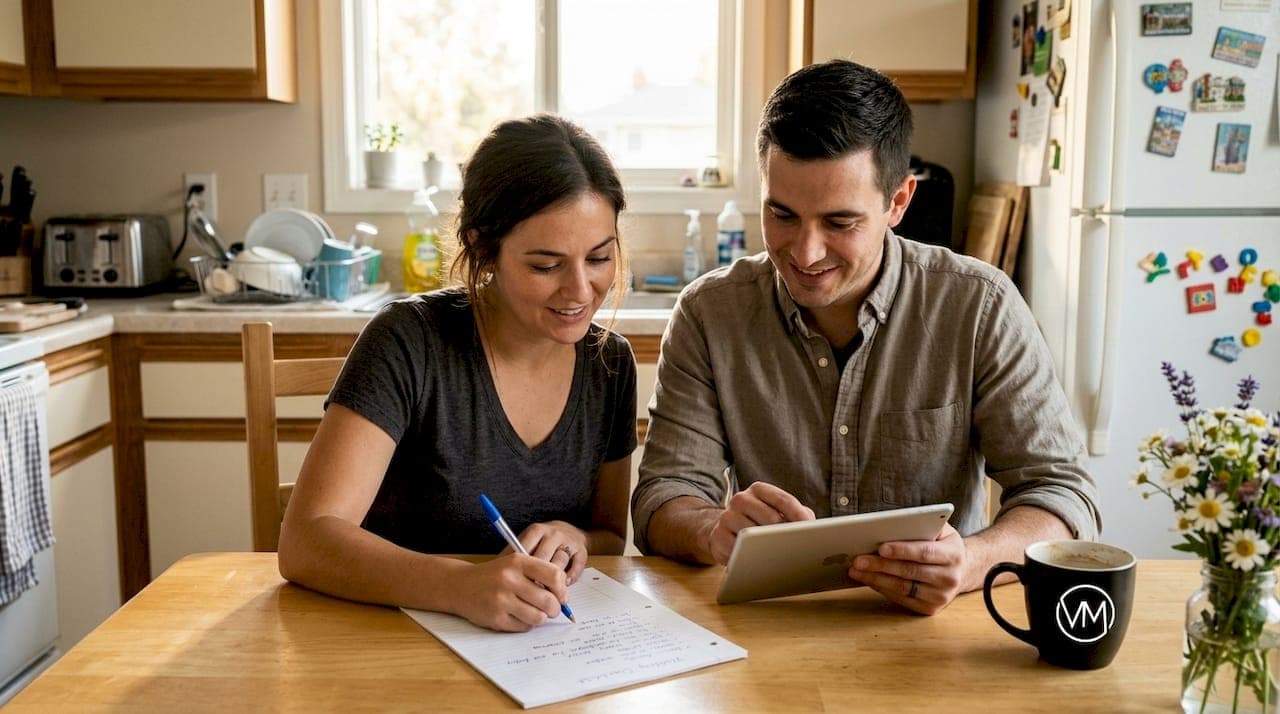
Wedding planning sits at the intersection of joy and chaos. You're juggling venue deposits, family opinions, vendor contracts, and a guest list that seems to grow on its own. Most couples feel overwhelmed within the first few weeks, not because they're doing something wrong, but because nobody hands you a clear roadmap. This article gives you exactly that: practical, research-backed tips to help you plan with confidence, avoid common pitfalls, and actually enjoy the process from engagement to ceremony.
Table of Contents
- Define your vision and priorities
- Master your budget and guest list
- Streamline scheduling and communication
- Elevate the guest experience
- Stay flexible and stress-free on your day
- Our perspective: Focus on what matters most for your unique day
- Bring your vision to life with expert support
- Frequently asked questions
Key Takeaways
| Point | Details |
|---|---|
| Set clear priorities | Decide together what matters most and focus your efforts on creating those standout moments. |
| Control your guest count | Each guest adds significant cost, so finalizing your list early keeps your budget realistic. |
| Be flexible and communicate | Adapt your timeline, communicate early, and expect some changes for a stress-free day. |
| Enhance the guest experience | Thoughtful touches for comfort, fun, and entertainment make your celebration unforgettable. |
| Seek expert support | Don’t hesitate to delegate or enlist pros for smoother planning and beautiful results. |
Define your vision and priorities
Before you book a single vendor or visit one venue, sit down with your partner and get brutally honest about what matters most to you both. Do you care more about incredible food, a stunning location, or a packed dance floor? Knowing your top three priorities changes every decision that follows.
Here's a truth most planning guides won't tell you: trying to perfect every single detail will exhaust you and your budget. As GQ's wedding etiquette rules put it, do few things exceptionally well rather than spreading your energy thin. Pick your two or three non-negotiables and invest there. Let everything else be good enough.
Equal partnership matters here too. Both of you should have a real voice in the process. Once you've agreed on priorities, divide responsibilities based on who cares most about each area. Delegate tasks to family members or a planner early. Burnout is real, and it sneaks up fast when one person is carrying the entire load.
- Identify your top three must-haves together
- Assign clear ownership of each planning category
- Use a wedding vision questionnaire to organize your ideas
- Set boundaries early on outside input (yes, that includes well-meaning family)
Pro Tip: Write your priorities down and keep them somewhere visible. When a vendor pitches something tempting that's outside your plan, those priorities become your filter.
Master your budget and guest list
With your priorities clear, it's time to establish the two most important parameters: your budget and your guest list. These two factors shape literally every other decision you'll make.
Here's the number that should guide your early planning: the average cost per guest is approximately $292, and guest count drives around 80% of total wedding costs. That means adding ten people to your list could add nearly $3,000 to your bill without changing a single decoration.
| Guest count | Estimated total cost |
|---|---|
| 50 guests | ~$14,600 |
| 100 guests | ~$29,200 |
| 150 guests | ~$43,800 |
| 200 guests | ~$58,400 |
Those numbers are a starting point, not a ceiling. Your location, style, and vendor choices all shift the final figure. But the table above shows why your guest list is the most powerful budget lever you have.
- Start with a dream list, then cut ruthlessly by asking: "Would we have dinner with this person outside the wedding?"
- Set a firm cap before sharing it with family
- Factor in per-person costs for catering, seating, favors, and invitations
- Track RSVPs early to avoid last-minute headcount chaos
Key takeaway: Trimming your guest list is the single fastest way to free up budget for the things you actually care about.
Streamline scheduling and communication
Now that budget and guest list are set, staying organized with scheduling and communication is your next challenge. Poor timing and unclear communication are responsible for more wedding-day stress than almost anything else.
Start with a planning calendar that works backward from your wedding date. Build in buffer time at every stage. As detailed planning checklists show, off-peak dates and weekdays can save couples between 20 and 50% on venue and vendor costs, so flexibility in your scheduling pays real dividends.
For invitations, the timing is more specific than most people realize. Send save-the-dates 6 to 12 months before your wedding and formal invitations 6 to 8 weeks before the date. Miss that window and you risk lower attendance and last-minute confusion.
- Set your wedding date and immediately book your venue and photographer
- Send save-the-dates within one week of booking
- Build a shared planning calendar with your partner
- Create a vendor contact list with names, numbers, and deadlines
- Send formal invitations 6 to 8 weeks out with a clear RSVP deadline
Pro Tip: Use a free project management app like Trello or Notion to track every task, deadline, and vendor conversation in one place. Shared access means both partners always know the current status.
"Flexibility is a superpower in wedding planning. Couples who build buffer time into their schedules and stay open to shifting details consistently report less stress and smoother days." — Precious Pics Pro Wedding Planning Checklist
Elevate the guest experience
Communication can help logistics run smoothly, but thoughtful guest experience transforms your celebration from ordinary to unforgettable. Your guests will forget the centerpieces within a week. They will remember how they felt the entire night.

Prioritizing comfort and flow, including smart seating, well-timed food service, reliable transportation, and genuine hospitality, creates the foundation for a joyful event. Everything else builds on top of that.
| Experience upgrade | Impact | Estimated cost range |
|---|---|---|
| Photo booth | High engagement, fun keepsakes | $500 to $1,200 |
| Lounge seating area | Comfort, mingling | $300 to $800 |
| Live music or band | Memorable atmosphere | $1,500 to $5,000 |
| Interactive lawn games | Casual fun, ice-breaker | $100 to $400 |
| Custom cocktail hour | Personalized, impressive | $200 to $600 |
Lighting and sound are often underestimated. A great sound system and warm lighting do more for atmosphere than almost any decoration. Explore wedding entertainment ideas that fit your style and budget, or think about creative guest engagement moments that reflect your personalities.
- Assign a team member to manage guest flow and answer questions
- Create a clear timeline so guests always know what's coming next
- Offer a quiet space for guests who need a break from the crowd
- Personalize one or two moments, such as a custom cocktail or a handwritten table note
Stay flexible and stress-free on your day
Finally, the secret to a meaningful celebration is not sweating the small stuff. Things will go slightly off-script. A vendor will run late. The flowers won't look exactly like the Pinterest photo. And none of that will matter as much as you think it will.
Building buffer time into your day-of timeline is the most practical thing you can do. Schedule transitions longer than you think you need. If cocktail hour is supposed to last 45 minutes, plan for 60.
- Assign one trusted person as your day-of point of contact for vendor questions
- Create a printed backup timeline for your wedding party and key family members
- Have a weather backup plan even if the forecast looks perfect
- Give yourself permission to let small problems go unseen
- Stay off your phone during the ceremony and reception
Pro Tip: Brief your maid of honor or best man on the full timeline and give them authority to handle small hiccups without involving you. You shouldn't be problem-solving on your wedding day.
Remember, the goal is joy, not perfection. Presence is the best gift you can give yourself and each other.
Our perspective: Focus on what matters most for your unique day
After filming weddings across the country and around the world, I've watched couples spend enormous energy on details their guests never noticed, and miss the moments that made their day genuinely theirs. The couples whose videos move people to tears aren't the ones with the most elaborate setups. They're the ones who were truly present.
Weddings aren't a checklist of trends. They're a reflection of a relationship. Letting go of the pressure to match what you've seen on social media, and instead leaning into what's real and meaningful to you both, is what creates unique wedding moments worth preserving. Trust your instincts. Plan well, then let go.
Bring your vision to life with expert support
You've done the research, set your priorities, and built a plan. Now it's time to surround yourself with people who can bring it all to life beautifully.
At Visualize Media, we specialize in capturing the real, unscripted moments that make your story uniquely yours. Whether you're looking for wedding cinematography and photography or simply want to explore what's possible, we'd love to connect. Browse our work, get inspired, and when you're ready, reach out through our contact wedding experts page. Discover the full range of Visualize Media wedding services and take the next step toward a wedding film you'll treasure for life.
Frequently asked questions
What is the first step in wedding planning?
Start by defining your vision and priorities as a couple, then set a realistic budget. From there, build your guest list, since guest count drives roughly 80% of total costs and shapes every decision that follows.
How far in advance should we send invitations and save-the-dates?
Send save-the-dates 6 to 12 months before your wedding and formal invitations 6 to 8 weeks in advance. Sending invites early gives guests time to plan and reduces last-minute RSVP confusion.
What's the most effective way to reduce wedding costs?
Limit your guest count and stay flexible on your date. Choosing off-peak dates or weekdays can save between 20 and 50% on venue and vendor fees without sacrificing quality.
How can we involve both partners equally in planning?
Discuss priorities openly early on, then divide responsibilities based on each partner's strengths and interests. Delegating tasks and sharing the planning labor prevents burnout and keeps both people genuinely invested in the outcome.