
Choosing between film and digital wedding videography is one of those decisions that sounds simple until you actually sit down to make it. Couples in New York and New Jersey are often drawn to film's warm, nostalgic glow one moment, then pulled toward digital's sharp, vibrant clarity the next. Neither format is universally better. What matters is which one tells your story. This guide breaks down the real differences, the aesthetic qualities, the practical realities, and how to find the format that fits your wedding day perfectly.
Table of Contents
- Understanding film vs digital: What's the real difference?
- Aesthetic qualities: How do film and digital each capture wedding moments?
- Practical considerations: Budget, flexibility, and convenience
- Which is right for your wedding? Finding your perfect fit
- Our take: Why the best choice is the one that reflects you
- Ready for your dream wedding film?
- Frequently asked questions
Key Takeaways
| Point | Details |
|---|---|
| Film offers timeless artistry | Film brings a nostalgic, cinematic feel to wedding videos that’s hard to replicate. |
| Digital means flexibility and speed | Digital videography delivers crisp videos with easier editing and faster turnaround. |
| Budget and style shape the choice | Your priorities and wedding vision should guide whether film, digital, or a hybrid is best. |
| Ask about hybrid options | Combining film and digital gives you the best of both worlds for a custom look. |
Understanding film vs digital: What's the real difference?
At its core, the debate comes down to how light is captured and how footage is processed. Film wedding videography uses physical celluloid stock, typically Super 8 or 16mm, where light chemically reacts with the film to create an image. Digital wedding videography captures light electronically through a sensor, converting it into data that can be instantly reviewed and edited on a computer.
These aren't just technical distinctions. They shape everything from how your videographer moves on the wedding day to how the final film feels when you watch it years later. Understanding wedding cinematography techniques helps clarify why each format produces such a distinct emotional experience.
Here's a side-by-side breakdown of the key differences:
| Feature | Film | Digital |
|---|---|---|
| Image capture | Chemical reaction on celluloid | Electronic sensor data |
| Editing workflow | Lab processing required | Immediate post-production |
| Color rendering | Warm, organic tones | Precise, adjustable palette |
| Grain/texture | Natural film grain | Clean, sharp resolution |
| Shooting flexibility | Limited takes per roll | Virtually unlimited footage |
| Delivery timeline | Weeks to months | Days to weeks |
Beyond the technical side, the shooting process itself differs dramatically. With film, every frame costs money, so videographers must be intentional and selective. This actually creates a beautiful side effect: the footage captured tends to be purposeful and emotionally charged. With digital, videographers can shoot continuously, capturing spontaneous moments without hesitation.
Key creative differences worth knowing:
- Film requires precise exposure settings because there's no instant playback to check
- Digital allows real-time monitoring through an external screen
- Film grain adds texture that many couples find deeply romantic
- Digital footage can be color graded extensively in post-production to mimic almost any look
Both formats demand skill. The difference is in where that skill is applied.
Aesthetic qualities: How do film and digital each capture wedding moments?
With an understanding of the basics, let's bring these differences to life through aesthetics.
Film has a quality that's genuinely difficult to replicate digitally. The colors tend to be softer and warmer, with natural contrast that feels less manufactured. Highlights don't blow out harshly. Shadows retain depth. The grain gives footage a tactile, almost touchable quality that many couples describe as feeling "real" in a way that digital sometimes doesn't.
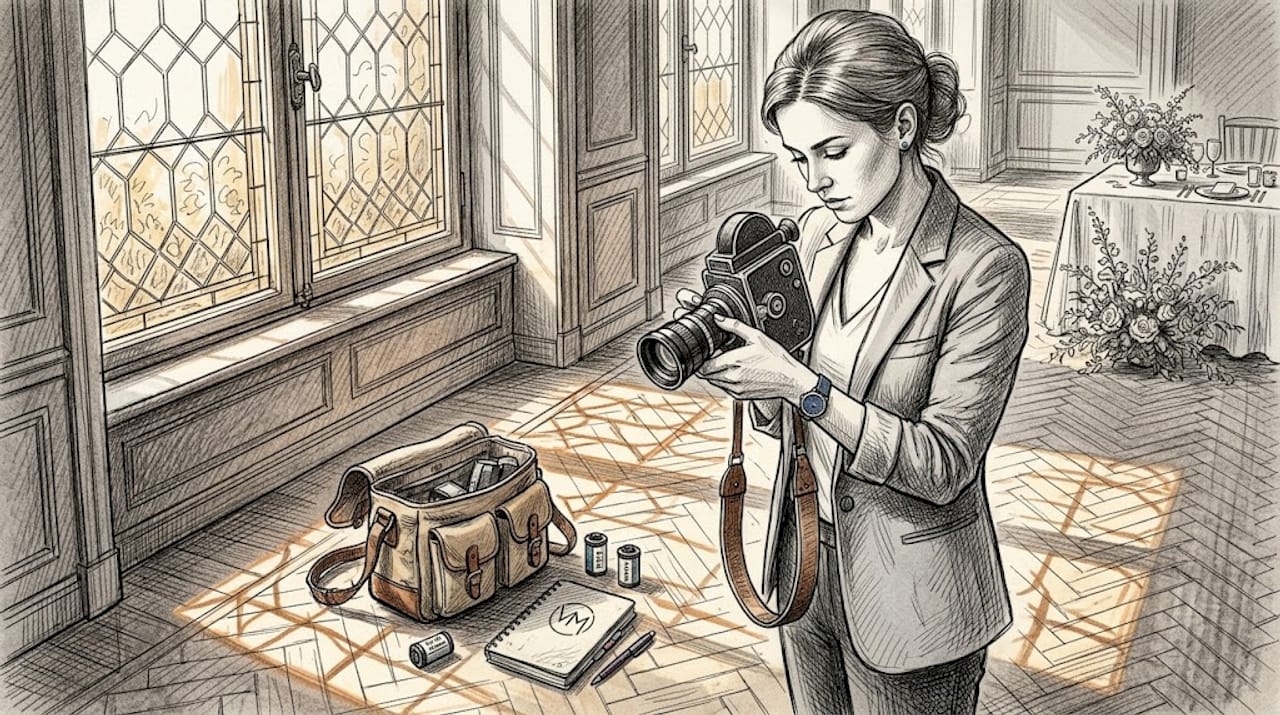
Digital, on the other hand, delivers stunning clarity and precision. Modern cinema cameras used by luxury videographers capture extraordinary detail, from the lace pattern on a dress to the tears on a father's cheek during the first dance. The color range is wide, and skilled colorists can push digital footage into virtually any aesthetic territory, including a film-inspired look.
| Aesthetic quality | Film | Digital |
|---|---|---|
| Skin tones | Warm, flattering | Accurate, adjustable |
| Motion rendering | Slight blur, cinematic | Sharp, crisp |
| Low-light performance | Challenging | Excellent |
| Emotional "feel" | Nostalgic, intimate | Vivid, immersive |
"Film forces you to slow down and be present. Every shot is a commitment. That intentionality translates directly onto the screen and into the emotions the viewer feels." This is something experienced wedding cinematographers often reflect on when describing why film still holds a special place in storytelling.
Exploring cinematic wedding examples reveals how dramatically these aesthetic choices influence the final film's emotional impact. A film-shot ceremony feels like a memory. A digitally shot ceremony feels like you're standing right there.
A common misconception is that digital looks "cheap" or "like a home video." That's simply not true when a skilled cinematographer is behind the lens with professional-grade equipment. Equally, some couples assume film is always superior for luxury weddings. It isn't automatically. The format serves the vision, not the other way around.
Pro Tip: Ask your videographer to show you sample footage from both formats shot in similar lighting conditions to your venue. This is the fastest way to understand which aesthetic genuinely moves you.
Practical considerations: Budget, flexibility, and convenience
Beyond aesthetics, practical questions often shape the final choice for couples.
Film is a premium experience in every sense, including cost. Film stock itself is expensive, and each roll provides only a limited amount of shooting time. Add lab processing fees, scanning costs, and the specialized post-production workflow, and film wedding videography can run significantly higher than comparable digital packages. Digital, by contrast, has a lower operational cost per hour of footage, which often allows videographers to offer more shooting time and coverage within a given budget.
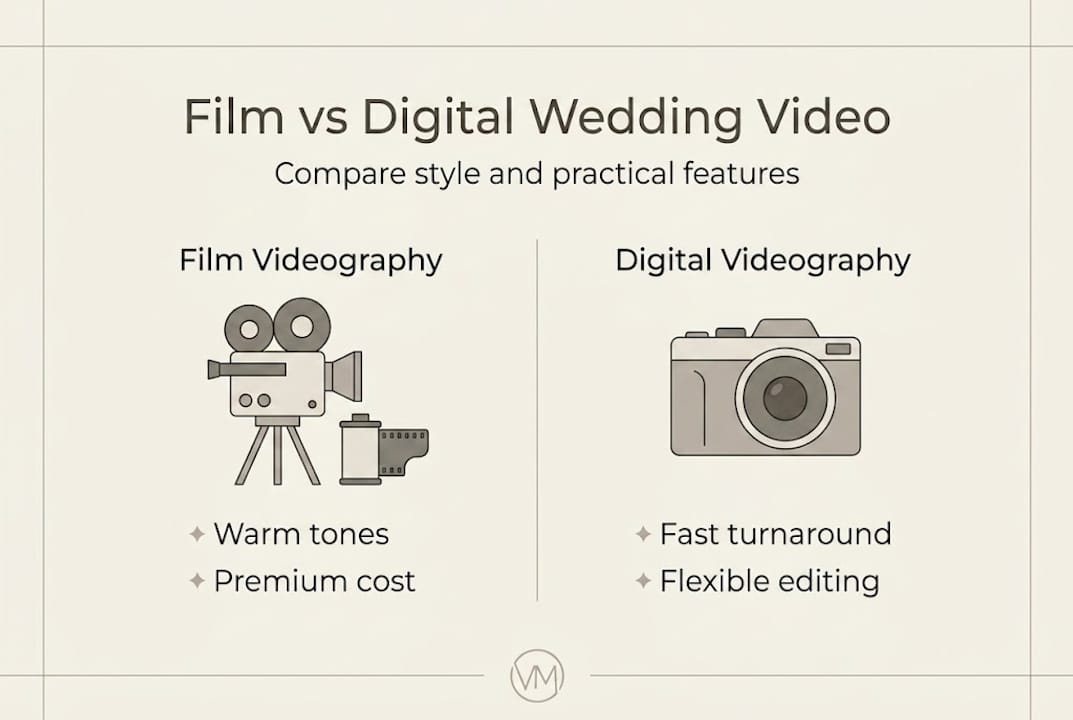
Flexibility is another major factor. Digital videographers can shoot in near-darkness with minimal noise, making them ideal for candlelit receptions, dimly lit ballrooms, or late-evening celebrations common at New York and New Jersey venues. Film requires more light to perform well, and while experienced cinematographers can work around this creatively, it does add a layer of planning.
Key practical differences to consider:
- Film rolls typically provide 3 to 4 minutes of footage each, requiring careful planning
- Digital cameras can record for hours without interruption
- Film footage cannot be reviewed on-site, meaning mistakes aren't caught until processing
- Digital footage can be backed up immediately to multiple drives, reducing risk
Reviewing real wedding film logistics shows how these practical factors play out on actual wedding days. Spontaneous moments, like a surprise toast or an unexpected first look, are much easier to capture with digital because there's no concern about running out of film at a critical moment.
According to industry data, digital video delivery timelines average 6 to 12 weeks, while film-based projects often extend to 16 weeks or longer due to lab processing.
Pro Tip: If your wedding includes a lot of unscripted moments or a venue with challenging lighting, discuss this openly with your videographer before committing to film. Transparency here prevents disappointment later.
Which is right for your wedding? Finding your perfect fit
Once you know the practical factors, here's how to figure out which style aligns with your dreams and needs.
- Define your visual priority. Do you want footage that looks like a vivid, high-resolution memory, or something that feels warm, textured, and nostalgic? Pull reference images and films that move you emotionally.
- Assess your venue and timeline. Outdoor daytime weddings in natural light are ideal for film. Evening receptions in dimly lit venues tend to favor digital.
- Set a realistic budget. Film adds cost at every stage. Be honest about what you can allocate, and ask your videographer what each format includes within your budget.
- Consider a hybrid approach. Many luxury videographers now offer mixed-format films that use film for ceremony highlights and digital for the reception. This gives you the best of both worlds.
- Talk to your videographer like a creative partner. Share your mood boards, your venue details, and what you want to feel when you watch your wedding film in ten years.
Browsing wedding videography style inspiration is a great way to see how different format choices translate into finished films. One couple might fall in love with the grainy, sun-drenched look of a film-shot outdoor ceremony. Another might be moved by the razor-sharp clarity of a digital film that captures every whispered word during vows.
Hybrid films are increasingly popular in the New York and New Jersey market because they allow couples to prioritize the emotional core of the day in film while ensuring comprehensive coverage digitally. It's not a compromise. It's a creative strategy.
Pro Tip: Ask to see a full wedding film, not just a highlight reel, in whichever format you're considering. A highlight reel is designed to impress. A full film shows you how the format holds up across an entire day.
Our take: Why the best choice is the one that reflects you
After filming weddings across New York and New Jersey in both formats, we've learned one thing clearly: the format is a tool, not the goal. Couples sometimes arrive convinced that film is the only "artistic" choice, or that digital is the only "practical" one. Both assumptions miss the point.
What makes a personalized wedding film extraordinary isn't the format. It's the intention behind every shot, the relationship between the couple and the filmmaker, and the willingness to let the story breathe. We've seen breathtaking digital films that feel more intimate than any film roll, and we've seen film footage that felt cold because the emotion wasn't there to begin with.
Talk to your videographer. Be honest about what moves you. The right format will follow naturally from that conversation.
Ready for your dream wedding film?
If this guide has helped clarify your thinking, the next step is a real conversation with a team that understands both formats deeply.
At Visualize Media, we specialize in wedding cinematography services that are built around your story, not a template. Whether you're drawn to the warmth of film, the precision of digital, or a hybrid of both, we'll help you find the approach that feels completely and authentically yours. Ready to start planning? Contact Visualize Media today and let's talk about bringing your wedding day to life.
Frequently asked questions
Is film or digital more expensive for wedding videography?
Film wedding videography is typically more expensive due to film stock costs, lab processing, and longer post-production workflows, while digital options generally offer more coverage for a comparable budget.
Can I combine film and digital styles in my wedding video?
Yes, many luxury videographers offer hybrid wedding films that blend both formats, often using film for ceremony highlights and digital for full-day coverage.
Does digital videography deliver faster turnaround than film?
Digital wedding videos are usually delivered faster since footage moves directly into editing, while film requires lab development and scanning before post-production can begin.
Which format works better in low light, film or digital?
Digital is significantly more flexible in low-light conditions, though skilled film videographers can compensate with careful lighting planning and creative exposure choices.