
Yes, you can get a full, unedited recording of your wedding ceremony, but it rarely happens by accident. You have to ask for it, name it in your contract, and confirm the technical setup that makes it possible: clear audio from at least two sources and one fixed camera running the whole time, ideally backed by a second shooter. Skip this step and you may end up paying extra later for raw files, or discover the studio never captured your vows at full length in the first place.
TL;DR:
- Providing a full, unedited ceremony recording requires specific contract language, guaranteed multiple camera angles, and redundant audio sources, usually with extra cost.
- Documenting complete vows and speeches in high-quality, full-length footage is best achieved through documentary or traditional styles, not cinematic edits.
- Employing at least three recording systems—a primary, fixed backup camera, and multi-source audio—is essential to prevent lost vows due to technical failures.
- Expect to pay around $3,000 to $5,000 for mid-range packages that include multiple shooters, full ceremony coverage, and raw footage options; prioritize coverage over added effects.
- Request full ceremony samples showcasing vows, speech audio, and dim-light footage to verify the studio’s ability to reliably deliver comprehensive, high-quality recordings.
How to Request a Full Ceremony Video From Your Videographer
Most disputes about missing footage trace back to a vague conversation months before the wedding. The fix is a specific line in writing, not a verbal assurance.
Put this sentence directly into your contract or booking email: "We require an edited full ceremony file and copies of raw camera audio files." That single phrase forces the studio to confirm both the deliverable and the backup material before you sign anything.
From there, get specific about equipment and delivery:
- Audio: request a lavalier mic on the officiant and, where possible, on each partner, plus a separate recording pulled from the venue's house sound system.
- Cameras: ask for a primary camera positioned on the aisle for close coverage, one fixed wide camera at the back of the room running continuously, and a second shooter if your budget allows it.
- File formats: MP4 for easy playback on phones and laptops, ProRes if you want an archival master file.
- Delivery method: cloud download link plus a physical backup drive, with a stated turnaround window in writing.
- Fallback plans: ask what happens if a camera fails mid-ceremony, and whether equipment insurance is in place.
Confirm whether raw footage delivery comes with an extra fee. Many studios charge for it separately, and that number should show up in your contract, not as a surprise invoice after the wedding.
Pro Tip: Email your request instead of just discussing it on a call. A written record of "full ceremony file plus raw audio" protects you if there's ever a disagreement about what was promised.
Cinematic, Documentary, or Traditional: Which Style Actually Preserves the Ceremony?
The style your videographer shoots in determines how much of your actual ceremony survives editing.
Cinematic studios build short, heavily edited films with music, slow motion, and selective moments. Beautiful to watch, but a cinematic package does not automatically include your full vows at full length unless you ask.
Documentary or reportage style records events in chronological order and leans on complete, uncut audio rather than stylized cuts. This is generally the safest style for couples who want every spoken word preserved.
Traditional or event coverage is the most straightforward: a fixed record of what happened, minimal styling, closer to a recording than a film.
The fastest way to tell which one you're getting? Watch full films, not just highlight reels. A three-minute reel can't show you whether the microphone caught the vows or whether the room went dark and grainy the moment the sun went down.
- Ask for two or three complete ceremony films, start to finish.
- Listen specifically to the vows and speeches, not just the music-backed montage sections.
- Watch a segment shot in low light, since indoor ceremonies often run darker than reception footage.
Coverage Essentials: Cameras, Microphones, and Why One Operator Isn't Enough
A usable full ceremony recording needs three things working at once: a primary camera, a fixed backup camera, and a dedicated audio feed that doesn't depend on either camera's built in mic.
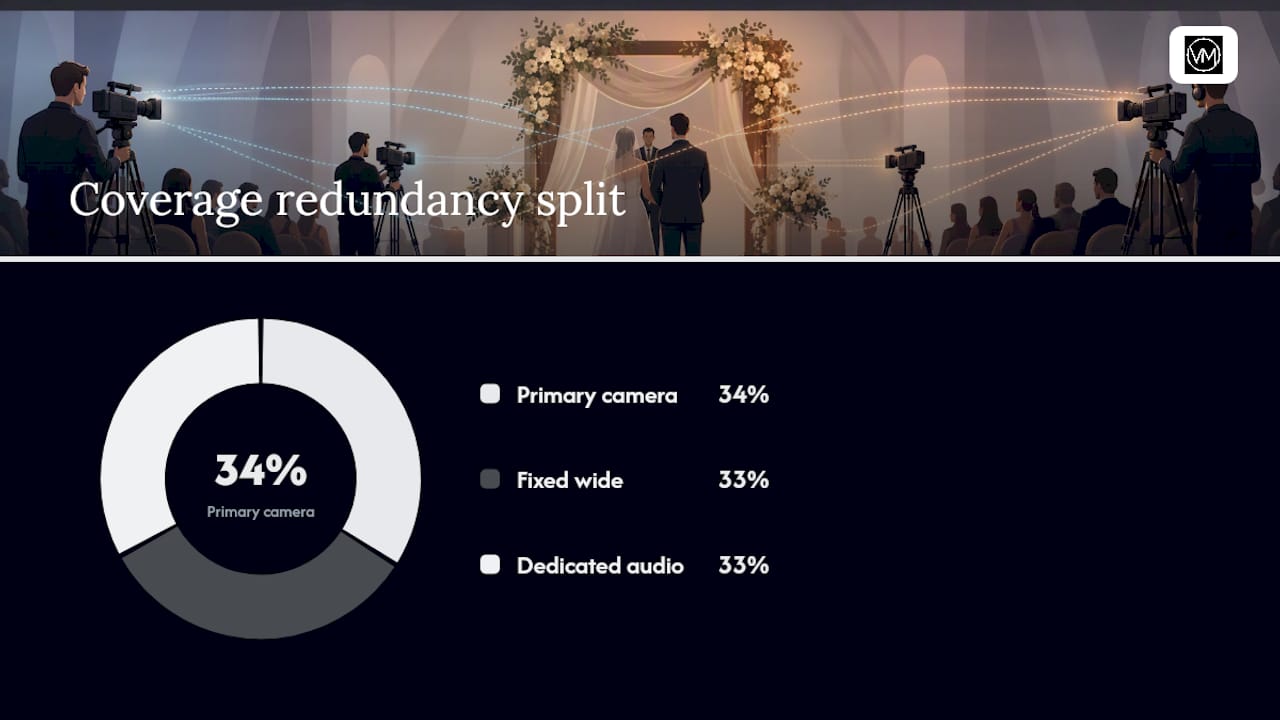
The primary camera handles close-ups and framing. The fixed wide camera, set up before guests arrive and left running, is your insurance policy. If the primary operator has to reposition during the vows, the wide shot keeps recording anyway.
A second shooter changes what's actually captured, not just how it looks. One person physically cannot frame the couple's faces and catch a parent's reaction at the same moment. A second shooter is widely considered the single most impactful upgrade a couple can make, and it usually adds somewhere between $500 and $1,000 to a package, a modest cost against what it protects.
Audio redundancy matters just as much as camera count. The strongest setups combine:
- Lavalier mics on the officiant and both partners
- The camera's built in audio as a backup track
- A direct feed pulled from the venue's PA or sound console
Three separate ways to capture the same fifteen minutes means one failed mic doesn't erase the vows.
What Happens Between Filming and Delivery
Three different products can come out of the same ceremony: raw camera files, an edited full ceremony video, and a highlight reel. Raw files are unedited camera footage, useful if you want full editorial control later. The edited full ceremony video is trimmed for dead air and synced audio but still runs the complete length. The highlight reel is a short, music-driven cut meant for sharing, not documentation.
Most couples want the edited full ceremony file for watching and the highlight reel for sharing, and that combination should be spelled out in your package rather than assumed.
On formats: ask for an MP4 for everyday playback and, if you care about long-term archiving, a ProRes master file as well. Delivery through a cloud link plus a physical backup drive covers both convenience and durability.
- Confirm in writing who owns the footage and whether you can freely share, print stills from, or re-edit it later.
- Ask whether raw footage delivery carries an additional fee, since many studios treat it as a separate line item.
- Get a stated turnaround window, not a vague "a few weeks."
What a Full Ceremony Video Actually Costs
Wedding videography pricing in the US generally falls into three bands. Entry-level packages, usually a solo shooter with a highlight reel, run $1,500 to $2,500. Mid-range packages with one or two shooters and a full ceremony edit land between $3,000 and $5,000. Premium or luxury packages with multiple shooters, drone footage, and archival deliverables start around $5,000 and can climb past $10,000.
If your budget is tight, prioritize the upgrades that directly affect ceremony capture over the ones that just make the final film prettier.
- A second shooter and dedicated audio feeds protect the actual recording.
- Extra editing hours or additional deliverable formats matter, but only after coverage is secured.
- Cutting a drone add-on or a same-day edit to fund a second shooter is usually the smarter trade, since reallocating budget toward coverage and audio yields more usable footage than spending the same money on a longer highlight cut.
Reviewing Sample Films: What to Watch For and Five Warning Signs
Before you book anyone, ask to watch two or three complete ceremony films from their portfolio, not just reels. Play close attention to the vows and speeches, check whether the footage cuts between angles smoothly, and watch a section shot in dim lighting to see how the camera handles it.
Five signs a studio may not reliably deliver a full ceremony:
- They only have highlight reels to show you, no full films.
- Their sample full films are missing vows or speeches entirely.
- The audio sounds muffled, distant, or inconsistent between cuts.
- Ceremony footage comes from a single angle with no backup camera visible.
- Contract language about raw footage or full-length delivery stays vague when you ask directly.
If you spot any of these, ask the studio point blank how they handle audio redundancy and camera backup, and get their answer in writing before signing anything.
Pro Tip: If a studio hesitates to send a full film and only offers reels, take that hesitation seriously. It usually means full length footage either doesn't exist or isn't something they're proud of.
Common Challenges in Recording a Full Ceremony and How Videographers Solve Them
Ceremonies are unpredictable in ways receptions aren't. The room goes quiet, lighting is often fixed and dim, and there's exactly one take.
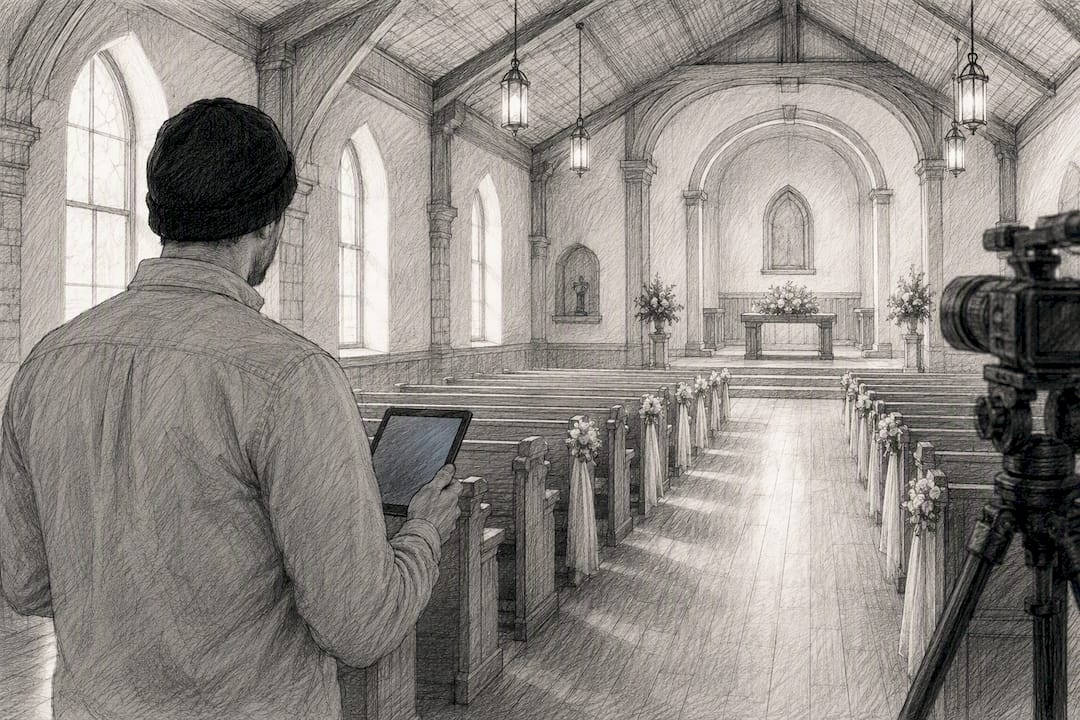
Low light is the most frequent problem, especially in older churches or evening outdoor ceremonies with no artificial lighting allowed. Experienced videographers plan for this by scouting the venue in advance and choosing camera bodies that handle low light well, rather than relying on adding light on the day, which many religious venues restrict anyway.
Audio interference is the second big challenge. HVAC hum, outdoor wind, or a distracted officiant who wanders from the microphone can all wreck a clean recording. Redundant audio sources, lavaliers plus a house feed plus camera mics, solve this by giving editors multiple tracks to pull from if one gets compromised.
Unpredictable timing causes problems too. A ceremony that's supposed to run twenty minutes can stretch to forty, and a camera with limited battery or card space can cut out at the worst moment. Videographers manage this with spare batteries staged nearby, high capacity cards, and a habit of starting the fixed wide camera well before the processional begins rather than cutting it close.
Officiants who move around unexpectedly, readers who speak too softly, or family members who block a sight line are all things a second shooter can compensate for in real time, repositioning while the primary camera stays locked on the couple.
Permissions, Privacy, and What to Clear Before You Film
Filming a wedding ceremony touches on privacy and permission questions that go beyond the couple's own contract. Many religious venues, churches, synagogues, and temples in particular, have their own written rules about camera placement, flash use, and where an operator can stand during the service. Confirm these rules with your officiant or venue coordinator well before the wedding, since some locations restrict videographers to a single fixed position at the back.
Guests appearing in ceremony footage generally have no separate consent requirement for a private event like a wedding, but if you plan to share the full film publicly, on social media or in a portfolio, it's worth asking your videographer how they handle guest likenesses in that footage. Some studios include a release clause in their own client contracts covering how footage may be reused for marketing.
If your ceremony includes readings, music, or religious text, ask whether any licensing applies, particularly if a copyrighted song is played live and captured in the recording. This mostly matters if you intend to distribute the film widely rather than keep it for personal use.
Finally, confirm who legally owns the final files. Some contracts grant the couple full ownership; others retain the studio's rights to the raw footage while granting the couple a license to the edited product. Get this distinction in writing before the wedding, not after.
What Professionals Do to Guarantee It Gets Captured
Getting a full ceremony on film reliably comes down to preparation most couples never see. A proper scout of the venue reveals where mic and line out connections actually are, not where you assume they'll be. Meeting the officiant ahead of time to confirm lavalier placement avoids a mic clipped in the wrong spot. A fixed backup camera should be running before a single guest sits down, and every media card gets labeled on the spot so nothing gets lost sorting through footage after the fact.
Deliverables and coordination should be settled well before the processional starts, not negotiated in the parking lot.
— Anthony
How Visualize Media Delivers a Full Ceremony You Can Actually Watch Back
If you've read this far, you already know the gap between a highlight reel and a real, full ceremony recording, and closing that gap is what premium wedding videography services aim for. Such packages often include multi-camera coverage, dedicated audio capture, full ceremony and speech edits, and professional color grading to deliver a complete, watchable record of your vows, not a trimmed-down version.
Booking starts with a consultation that addresses your ceremony's specific needs: venue lighting, officiant preferences, number of shooters the space can support, and the ideal audio setup. From there, you'll receive a clear plan for deliverables, formats, and turnaround, agreed on before your wedding day, not guessed at afterward.
If you're ready to talk through coverage for your own ceremony, visit our weddings and events page to see packages and start a conversation, and follow along on Instagram for real examples of full ceremony coverage from recent weddings.
Sources
For deeper guidance on audio setup, see our tips on capturing every moment and how to evaluate wedding video edits. For broader vendor hiring advice, see this videographer hiring checklist.
- How to Choose a Wedding Videographer: The Complete Guide (2026) — OurStoria Blog
- How to Choose a Wedding Videographer | Sortra