
Do three things before anything else: confirm the venue's filming restrictions, hand your filmmaker a floor plan, and lock call times with buffer built in. Get these done well in advance, because most indoor venues enforce limits on tripods and aisle movement, microphone placement, drone use, and access windows, and finding out about a restriction the week of your wedding is how couples lose coverage of moments they can never get back.
- Confirm venue-specific filming restrictions in writing
- Share a floor plan and lighting notes with your filmmaker
- Lock call times and setup windows for every location
Missing that one-month deadline is the single most common reason cinematic coverage falls apart indoors. A ceremony aisle that turns out to be off-limits to tripods, or a reception room with a hard 10 p.m. sound cutoff nobody flagged, forces last-minute improvisation that shows up in the final film.
Key Takeaways
Cinematic indoor wedding films depend on confirming venue restrictions a month out, documenting permissions in writing, and building lighting and audio plans around each room's specific conditions.
| Point | Details |
|---|---|
| Lock restrictions early | Confirm tripod, aisle, drone, and time-limit rules at least one month before the wedding. |
| Document everything in writing | Attach venue permissions and filming rules directly to your videography contract. |
| Build in buffer time | Add 10 to 20 minutes between locations for gear moves and elevator transitions. |
| Test audio and lighting on-site | Visit at the actual event hour to catch echo and color-temperature issues early. |
| Confirm backup procedures | Ask exactly how many footage copies exist before your filmmaker leaves the venue. |
| Choose a venue-experienced team | Visualizemedia builds pre-visits, lighting plans, and backup workflows into every indoor luxury package. |
Guide to Indoor Venue Videography Planning: The Pre-Visit Walkthrough
Before you schedule a walkthrough, request the venue's floor plan, lighting schedule, power panel locations, vendor load-in windows, and any documented access routes for the day of the event. Most coordinators have these on file. Getting them in advance means your filmmaker walks in already knowing what to look for instead of discovering surprises on the actual wedding day.
During the visit, log the following:
- Natural light conditions at the exact hour your ceremony or reception will happen
- Sightlines from guest seating to the altar, head table, and dance floor
- Working power outlets and their distance from key filming positions
- Service entrances, elevators, and staff-only zones that affect camera movement
- Any areas the venue marks as restricted for tripods, lighting stands, or drones
Experts recommend visiting at the same time of day as your actual event, since a 2 p.m. tour tells you nothing about how a ballroom looks under its evening lighting rig, and daytime acoustics rarely match a room full of 150 guests and a live band later that night, according to guidance on mastering difficult indoor lighting.
Pro Tip: Get any special filming rules documented in writing from the venue coordinator, and attach that document to your videography contract. Verbal permissions have a way of getting "forgotten" by a different staff member on the wedding day.
What Should Your Wedding-Day Videography Timeline Look Like?
Build your schedule around fixed, non-negotiable events first: ceremony start time, golden hour for portraits, and first dance. Everything else gets built backward or forward from those anchors, a structure that timeline specialists point to as the difference between a rushed shoot and a smooth, cinematic wedding day.
A sample indoor sketch might look like this:
- Filmmaker arrival and gear setup: 90 minutes before first look
- Getting-ready coverage: a substantial amount of time per location
- Ceremony setup and mic check: 30 minutes before guests are seated
- Ceremony: real-time coverage, no reset possible
- Cocktail hour: candid coverage plus reset time for reception cameras
- Reception entrances, toasts, first dance: fixed-position multi-camera coverage
Buffer time matters more indoors than outdoors, because:
- Moving gear between a ceremony room and a separate reception hall eats 15 to 20 minutes minimum
- Elevator access in multi-floor venues can double that transition time
- A 10 minute buffer before the ceremony absorbs a late officiant without cutting into vow coverage
How Do You Get Cinematic Lighting in a Dim Indoor Venue?
Four priorities produce cinematic indoor footage: preserve the room's ambient mood, add a controlled key light on the subjects, correct mixed color temperatures, and avoid competing with the DJ's light show. Get those four right and a dim ballroom looks intentional instead of murky.
Photography-derived techniques translate directly to video here. Pin-spot lighting isolates a couple during their first dance without flattening the room behind them. LED panels with soft diffusion give a filmmaker portable, adjustable key light that doesn't blow out a bride's dress. CTO and CTB gels balance the orange tungsten glow of chandeliers against the blue-white LED uplighting many venues install, a fix drawn from professional lighting techniques for wedding receptions.
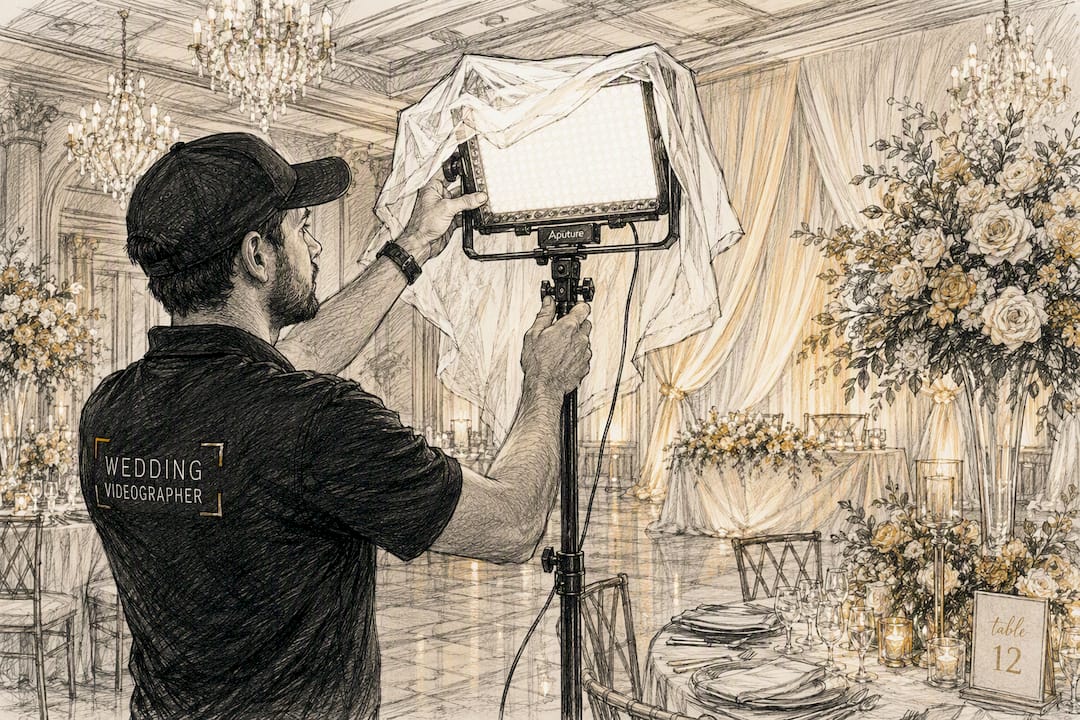
Pro Tip: Ask your filmmaker about their "drag the shutter" approach for reception dancing and confirm their color-gel workflow in the same conversation. Then loop in your photographer and DJ ahead of time. Nothing kills a cinematic frame faster than a strobe flash and a slow-shutter video pass fighting for the same three seconds.
Controlling color temperature with gels or LED presets while blending in ambient light is what separates a film that feels expensively lit from one that just looks dark, a balance confirmed by lighting professionals working the reception circuit.
Which Audio Setup Actually Protects Your Vows and Speeches?
Use lavalier microphones on the officiant and both partners, plus a secondary ambient recorder placed near the ceremony space. Feed a clean line from the house sound system whenever the venue has one, since PA audio almost always beats a shotgun mic across a room, especially with high ceilings that create echo.
Backups matter as much as the primary setup:
- Wired lavs as backup to wireless in case of interference
- A dedicated handheld mic for the reception toasts
- Dual, labeled recordings so editors can match tracks without guesswork later
Pro Tip: Have your filmmaker test any wireless microphone system on-site during the pre-visit, not on the wedding day. Old buildings with thick walls and older electrical wiring cause dropouts that only show up under real conditions, and you want to know where the house PA connection actually lives before guests arrive.
What Cinematic Shots Should an Indoor Wedding Film Prioritize?
Six to eight moments carry most of the emotional weight in a finished film: the couple's entrance, vows, the first kiss, reactions from parents and the wedding party, speeches, and the first dance. Everything else is coverage; these are the moments the edit gets built around.
- Vows, shot close on both partners' faces, not just the speaker
- First kiss, with a wide establishing frame to show the room's reaction
- Guest reactions during vows, particularly parents
- Entrance and grand introduction at the reception
- Speeches and toasts, framed to catch the room laughing or tearing up
- First dance, using a slow dolly or slider move rather than a static frame
Grouping the shot list by technical setup rather than story order saves real time on the day, since a videographer who plans "everything on the ceremony tripod" together and "everything on the reception slider" together avoids constant equipment reconfiguration, a method recommended in professional wedding videography planning.
Some couples are also asking their filmmakers about vintage aesthetic inserts, like Super 8 style footage, woven into highlight reels for texture and warmth. It's worth a direct conversation with your videographer about whether that treatment fits your overall vision before the wedding day, not after.
How Should Vendors Coordinate on the Wedding Day?
Appoint one point person, usually the planner or the videographer's lead, to run vendor coordination. Distribute a single-page run sheet showing camera positions, no-go zones, and the day's schedule so photographer, videographer, and venue staff aren't guessing at each other's plans mid-ceremony.
That one page should cover:
- Who moves reception props or centerpieces, and when
- Who controls uplighting and dance floor effects
- Who communicates schedule shifts in real time, and how
- Confirmed camera positions during vows so photographer and videographer don't block each other
Confirm vendor insurance certificates and the venue's policy contact during this same coordination pass. Most upscale venues require a certificate of insurance from every vendor on-site, and chasing that paperwork the morning of the wedding is a preventable headache. Details on structuring vendor conversations show up in guidance on how to photograph during videography setup.
What Backup Plans Prevent Lost Footage?
Redundant cameras, spare batteries, and duplicate audio recorders are non-negotiable, along with a field procedure to copy memory cards after every major event rather than waiting until the reception ends.
- Alternate camera position ready if aisles get blocked mid-ceremony
- Portable power or an extension plan if outlets run short
- Indoor backup location identified in case outdoor portraits get rained out
Pro Tip: Ask your filmmaker directly how many backup copies of your footage exist before they leave the venue, and where those copies live. "It's backed up" isn't an answer. "Two drives, copied after the ceremony and after speeches" is.
What Questions Should You Ask Before Booking a Videographer?
Start with experience at your exact venue, written permissions, and their backup procedure. Those three questions alone eliminate most bad fits fast.
A curated list worth working through:
- Have you filmed at this venue before, and do you know its restrictions?
- What's your microphone setup for vows and speeches?
- What are your power needs, and do you bring your own extension cords?
- Are you insured, and can you provide a certificate for the venue?
- Does the venue allow drone footage, and do you have the required permits?
- Are there additional fees for a second shooter, drone, or extra hours?
- What's your post-production timeline from wedding day to final delivery?
- What file formats and delivery methods do you use?
The Knot's videographer question checklist covers similar territory and is worth reviewing alongside your own list, particularly on drone use and data backup processes.
Red flags to watch for: vague answers about backup procedures, no written venue permissions on offer, or reluctance to coordinate directly with your photographer and planner.
How Do You Manage Echo and Acoustics in an Indoor Venue?
High ceilings, marble floors, and bare walls, the exact features that make a ballroom feel grand, are also what makes it echo badly on camera microphones. A room that sounds fine to the human ear during a quiet tour can produce audio that bounces and blurs once 150 guests, a live band, and a hard floor are all working against your recording.
The fix starts with the pre-visit. Have your filmmaker listen to the room, ideally with some ambient noise present, not just at silent midday quiet. Rooms with soft surfaces, carpet, drapes, upholstered chairs, absorb sound and produce cleaner audio than rooms full of hard, reflective surfaces.
Lapel microphones placed close to the speaker's mouth are far less affected by room echo than a shotgun mic across the room, because they capture direct sound before it has a chance to bounce. For speeches in an echo-prone hall, feeding directly from the venue's own PA system, when one exists, bypasses the room's acoustics almost entirely.
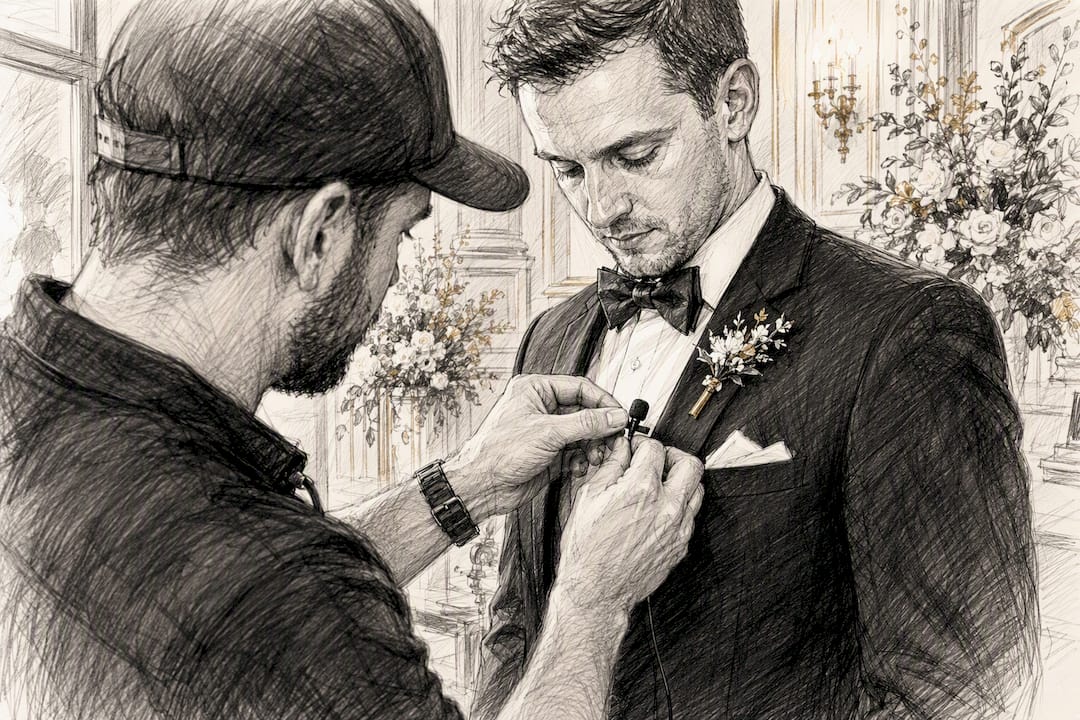
If the ceremony space has particularly aggressive echo, ask your officiant whether a sound check is possible before guests arrive. A five-minute test at actual speaking volume reveals problems no amount of visual inspection will catch, and gives your filmmaker time to reposition a recorder or add a secondary mic before it matters.
Does Your Videography Team Need an Electrical Load Assessment?
Yes, if you're running LED panels, monitors, chargers, and backup equipment across multiple rooms for eight or more hours. Older venues, particularly historic mansions, converted churches, and boutique event spaces, often run on electrical systems that were never designed for modern lighting rigs plus a DJ setup plus catering equipment on the same circuit.
Ask the venue directly how many amps are available at each outlet near your planned camera positions, and whether those circuits are shared with kitchen equipment or HVAC. A tripped breaker during the first dance is not a recoverable mistake.
Practical steps to take during the pre-visit:
- Identify which outlets are on dedicated circuits versus shared ones
- Confirm whether the venue allows portable generators or requires all power to run through house circuits
- Ask your filmmaker to bring their own heavy-duty extension cords and power strips rather than relying on whatever the venue has on hand
- Flag any known circuit issues to your DJ and lighting vendor, since everyone is likely drawing from the same limited supply
Venues with a documented history of power issues should get called out specifically in your vendor coordination sheet, so your videographer's lighting choices account for it rather than discovering a blown fuse mid-reception.
What Emergency Protocols Affect Wedding Videography?
Every indoor venue has fire codes, capacity limits, and emergency exit requirements that can directly affect where cameras and lighting stands are allowed to sit. Tripods and light stands blocking a marked exit path are a liability the venue will not tolerate, no matter how good the shot looks.
Ask the venue coordinator, during your pre-visit, for a copy of the emergency evacuation plan and confirm which zones are permanently off-limits to equipment, not just "avoid the middle of the room." Some venues also restrict fog machines, open flame effects, and certain lighting gels for fire-code reasons, all of which affect a filmmaker's toolkit.
Weather-related contingencies matter here too. If your ceremony has a rain backup plan that moves the event indoors last minute, your videographer needs advance notice of that alternate room's layout, not a five-minute scramble once guests are already seated. Building that alternate scenario into your pre-visit conversation, even if you never use it, means your team isn't improvising blind.
What Permissions and Insurance Do Indoor Venues Require?
Most upscale indoor venues require a certificate of insurance from every outside vendor, including videographers, naming the venue as an additional insured party for the date of the event. Confirm this requirement early, since obtaining a certificate can take your filmmaker's insurance provider several business days to process.
Filming permissions go beyond a general "yes, video is allowed." Many venues restrict tripod placement in aisles, prohibit drone use indoors entirely regardless of outdoor allowances, and cap the number of lighting stands permitted in a given room for fire-code reasons. Some historic or religious venues also require a separate written agreement specifically covering photography and video, distinct from your general venue contract.
Get every one of these permissions in writing and attach them to your videography contract before the wedding, not as a verbal understanding with whichever coordinator happens to answer the phone that week.
How Long Does Wedding Video Post-Production Take?
A typical post-production timeline runs on defined milestones rather than one single delivery date. Expect a highlight reel or teaser first, often within two to four weeks, followed by the full ceremony and speech edits, and finally the complete cinematic film.
A structured pre-production plan, including a clear creative brief and scheduled review rounds, is what keeps that timeline on track. Industry guidance points to building in two to three review rounds and starting the planning process months before the wedding date, a rhythm outlined in step-by-step wedding videography planning. Skipping review rounds to save time almost always backfires into longer revision cycles later.
Ask your videographer for specific delivery milestones in writing: draft highlight reel, first full edit for review, final delivery date, and how many rounds of revision are included before additional fees apply. A vague "a few months" answer is worth pressing on directly.
Why Venue-Specific Planning Determines Everything Else
The single biggest factor separating a cinematic indoor wedding film from a merely adequate one isn't the camera gear. It's how thoroughly the filmmaker understood the room before the ceremony started. A crew that's planned around your specific venue's light, acoustics, and constraints works with the space instead of fighting it all day.
Visualizemedia keeps a portfolio of films shot across a range of indoor New York and New Jersey venues, and couples planning a similar space are welcome to request comparable sample films before booking.
Ready to Plan Your Indoor Wedding Film?
Visualizemedia is the alternative to piecing your coverage together from a checklist and hoping your vendor executes it. Instead of handing a generic filmmaker your venue notes and crossing your fingers, you work with a team that already builds pre-visits, lighting plans, and backup workflows into every luxury cinematic package for New York and New Jersey weddings.
Every project includes multi-camera coverage, aerial footage where permitted, professional color grading, and full ceremony and speech edits, built around the exact venue-specific planning this guide walks through. If you want to see how that approach translates at a venue similar to yours, browse recent work on Instagram or explore wedding and event packages directly.
Start by requesting a consultation through Visualizemedia's main site and share your venue name up front. That single detail lets the team begin the pre-visit planning process before you've even finalized your date.
Sources
- Questions to ask your wedding videographer
- Step by step videography planning for your wedding
- Creative Lighting for Wedding Receptions: A Professional Photographer’s Guide for 2026
- How to Plan a Wedding Videography Timeline for a Smooth, Cinematic Wedding Day