
Plan for five things before you plan for anything else: a timeline built around your ballroom's actual load-in and lighting, confirmed power and AV access, enough shooters for your guest count, a lighting kit that survives a dim chandelier-lit room, and a locked shot list that protects your non-repeatable moments. Everything else in a guide to planning ballroom wedding coverage flows from these five decisions.
Here's the handout version you can screenshot right now:
- Timeline blocks with buffer built in, not squeezed out
- Power and AV confirmed with the venue, in writing, before the week of
- Second shooter or floater staffed once you pass roughly 120 guests
- LED lighting kit with a backup battery plan for low ceilings
- Shot priorities locked: room reveal, vows, first dance, speeches, dance floor
Ballrooms have their own physics. A hotel ballroom with a 14-foot ceiling and no windows behaves nothing like a barn or a garden tent, and most generic wedding checklists don't account for that. Industry timeline guidance from WeddingProsRated and venue cost patterns tracked by WeddingClever both point to the same conclusion: ballroom weddings need tighter technical planning than outdoor or barn venues, precisely because there's less room for lighting or acoustic improvisation once the day starts.
Key Takeaways
Ballroom wedding coverage succeeds when the timeline, power, staffing, and shot list are all built around the specific room, not a generic wedding-day template.
| Point | Details |
|---|---|
| Scout the room in person | Test lighting and power at the actual time of day your event happens, not during a generic tour. |
| Build buffer into every block | Add 15 minutes per two-hour block and a 30 to 45 minute cushion around hair and makeup. |
| Staff for your guest count | Move from a single shooter to two shooters plus a floater once you pass roughly 120 to 180 guests. |
| Protect non-repeatable moments | Lock vows, first dance, and toasts as top-priority shots before planning anything else. |
| Confirm legal and consent details early | Get written permission for lighting, drones, and guest filming before wedding week. |
| Work with a studio that walks the venue with you | Visualize Media builds vendor-ready timelines during the venue walkthrough and offers Super 8 cutaways and same-day teasers for ballroom weddings across NYC and NJ. |
Ballroom Venue Checklist That Affects Photography and Videography Coverage
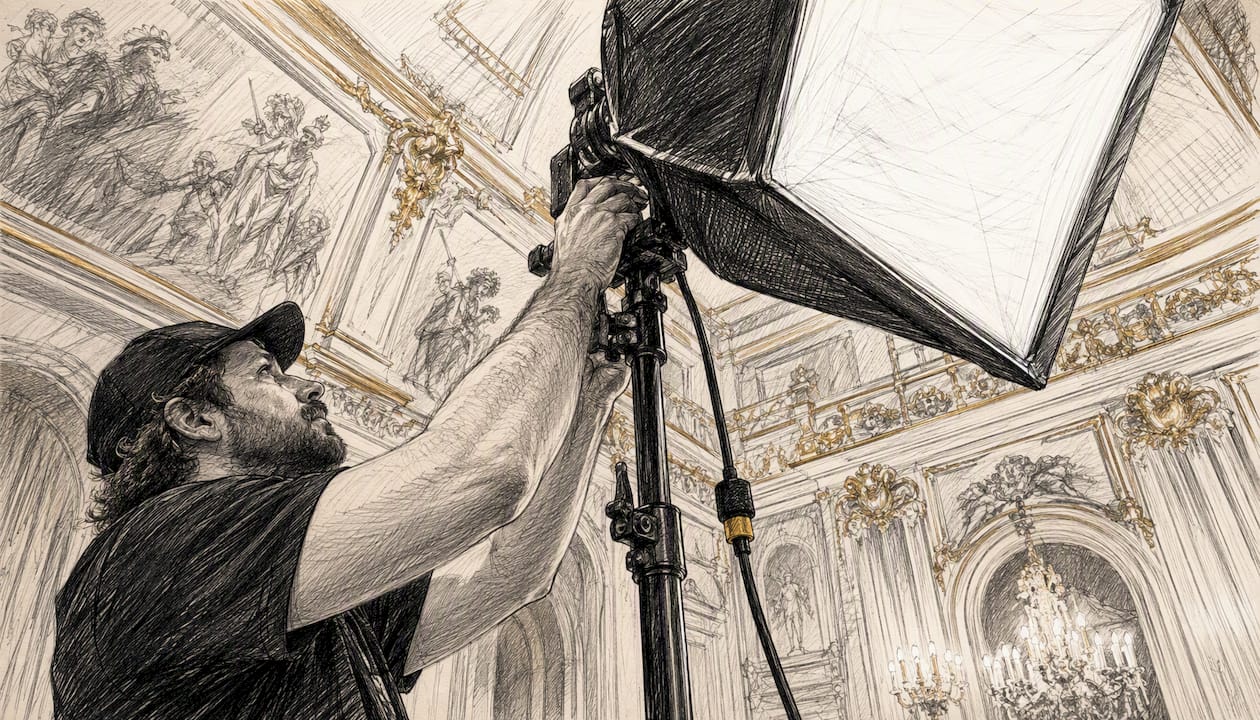
The room itself dictates half your coverage plan before a single camera turns on, making venue aesthetics a crucial factor in how you approach your plans. A ballroom with 10 foot ceilings and fluorescent house lighting requires a completely different kit than one with 20 foot ceilings, crystal chandeliers, and floor to ceiling windows on the west side.
Capacity numbers deserve a second look too. A venue's fire-code capacity and its comfortable seated capacity are rarely the same number, and the gap matters for photography because a room packed to its legal limit leaves no aisle width for a second shooter to move during the ceremony.
Here's what actually changes your coverage plan:
- Ceiling height and fixtures. Low ceilings with can lights create harsh downward shadows on faces; high ceilings with chandeliers give you beautiful ambient glow but often not enough lumens for handheld video without supplemental LEDs.
- Window placement. East-facing windows mean gorgeous morning light for getting-ready shots; west-facing windows mean a golden hour glow during a 6 p.m. reception, but also mean you'll fight glare during a 2 p.m. ceremony.
- House sound and AV. Ask whether the venue has a built-in PA, where the mixer lives, and whether your videographer can patch a line-out for clean audio during vows and toasts.
- Electrical access. Confirm dedicated circuits, floor box locations, and whether the venue has a no-extension-cord-across-the-floor policy (many hotel ballrooms do).
- Load-in logistics. Service elevator dimensions, loading dock hours, vendor parking, and whether there's a green room or storage closet for gear cases.
Many hotel ballrooms bundle in complimentary bridal suites, setup staff, and house linens, which can reduce your decor budget but sometimes comes with restrictions on outside vendors bringing in their own lighting rigs or extension cables. Ask about that trade-off directly during your tour.
Pro Tip: Walk the room at the same time of day your ceremony is scheduled, not whenever the tour happens to be booked. Ask the venue manager for a lighting grid or electrical schematic if one exists. Photographers can tell you in thirty seconds whether a room lights well; they can't tell you that from a daytime tour of an evening event.
Ballroom-Specific Timeline Templates You Can Edit
A ballroom timeline is not a garden wedding timeline with the location swapped out. Load-in windows are stricter, vendor meal timing is often dictated by the catering staff's own schedule, and F&B minimums can quietly determine how long you get the room. Here are three starting templates.
1. Short-coverage template (6 hours, ceremony plus reception highlights)
- 2:00 PM: Photographer/filmmaker arrival, room detail shots before guests arrive
- 3:00 PM: Ceremony begins
- 3:30 PM: Cocktail hour, family formals
- 4:30 PM: Reception entrance, first dance
- 5:15 PM: Toasts and dinner service begins
- 7:00 PM: Cake cutting, open dancing
- 8:00 PM: Coverage ends
2. Full-day template (9 hours, getting ready through send-off)
- 10:00 AM: Getting ready coverage begins (details, dress, hair/makeup finishing touches)
- 11:30 AM: First look (if planned) — budget 30 minutes before formal portraits start
- 12:00 PM: Wedding party and family formals
- 1:30 PM: Ceremony
- 2:15 PM: Cocktail hour, remaining formals
- 3:30 PM: Grand entrance, first dance, welcome toasts
- 4:15 PM: Dinner service, parent dances
- 5:30 PM: Cake cutting, open dancing, band/DJ set
- 7:00 PM: Coverage ends or grand exit
3. Evening-only template (4 hours, late ceremony and reception)
- 5:30 PM: Photographer/filmmaker arrival, ceremony room reveal
- 6:00 PM: Ceremony
- 6:30 PM: Cocktail hour, expedited formals
- 7:30 PM: Reception entrance, first dance, toasts stacked early
- 9:30 PM: Coverage ends
Editable notes worth marking on any of these: expand the getting-ready block by 30 minutes if there's a first look, expand family formals by 15 minutes per additional blended-family grouping, and add a 20-minute travel buffer if photos happen at a second location before returning to the ballroom.
The most useful rule to memorize is what photographers sometimes call the 30-5 rule for portraits: roughly 30 minutes for a couple's portrait session and 5 minutes per individual family formal grouping. Apply that math to your own guest list and you'll know instantly if your "20 minutes for family photos" block is realistic or wishful thinking.
A separate and equally important heuristic comes from wedding planning data: add 15 minutes of unscheduled buffer for every two-hour block, and build in a 30 to 45 minute cushion around hair and makeup specifically, since that's where nearly every wedding day timeline starts slipping. Finalize the full timeline three to four weeks out, not the week of, so vendors have time to flag conflicts.
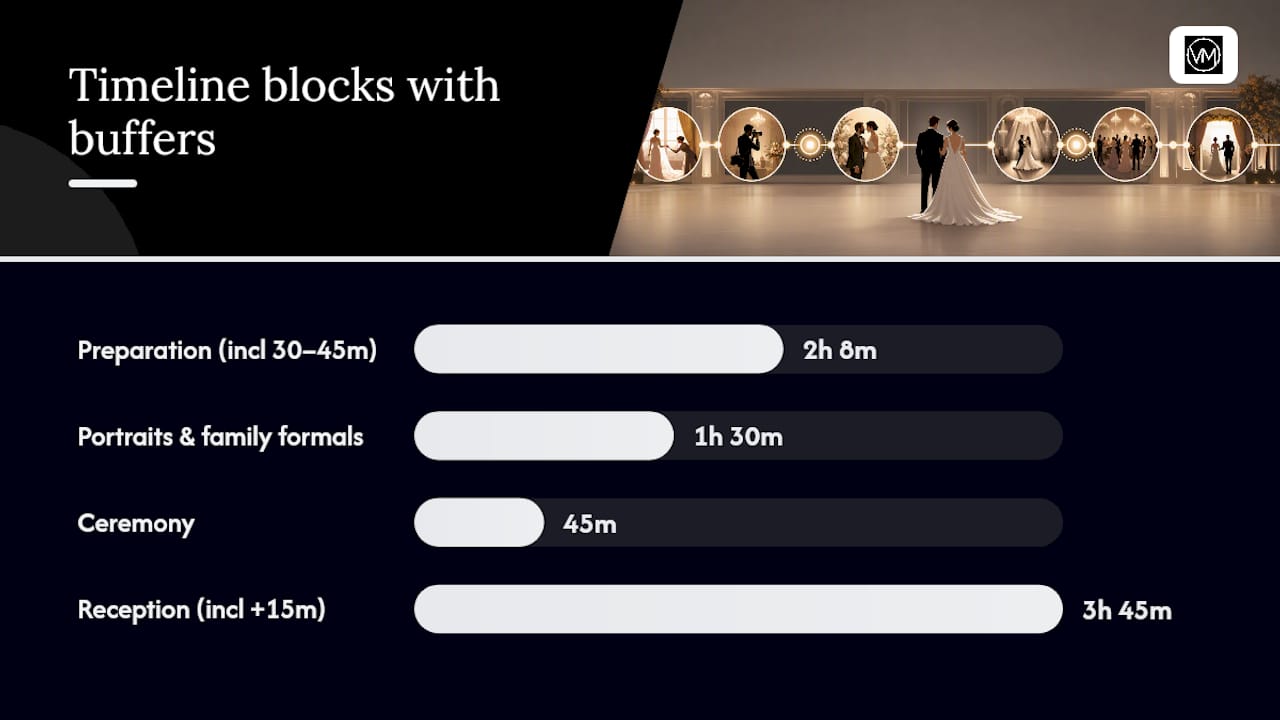
F&B minimums and venue curfews also shape these templates more than couples expect. If your ballroom requires dinner service to start by a fixed time to hit staffing labor windows, your cocktail hour length is not really your choice. Ask the catering manager for their standard service flow before you build your own timeline around it.
Staffing, Kit, and Technical Logistics for Ballroom Coverage
Guest count is the simplest predictor of how much coverage you need, but it's not the only one. A 90-guest ballroom wedding with a single ceremony room and reception in the same space needs less staffing than a 150-guest wedding split across a ceremony room, a separate cocktail lounge, and a ballroom reception.
As a general staffing guide: a single shooter can cover intimate weddings under roughly 80 guests reasonably well. Between 80 and 180 guests, plan for two shooters, one anchored on the couple and one floating for candids and room details. Above 180 guests, or for any wedding with multiple simultaneous events (a first look plus a separate family gathering, for instance), add a third camera or a dedicated videographer running a second angle during the ceremony.
Audio deserves its own line item, and it's the one couples underestimate most. Vows need a wired lavalier mic on the officiant or groom at minimum, with a shotgun mic as backup in case the lav fails or cuts out. For speeches, ask whether you can patch directly into the venue's house sound system rather than relying on a standalone recorder picking up room echo, which is a real problem in high-ceilinged ballrooms with hard flooring.
Lighting kit essentials for a typical ballroom:
- Two to three LED panels with diffusion, positioned to avoid flat, shadowless faces
- On-camera flash or video light for dance floor and reception movement
- Light stands rated for the room's floor type (carpet vs. hardwood changes your footing options)
- A compact, high-output LED bank as backup for rooms with dim ambient chandelier lighting
Equipment backup planning matters more in a ballroom than almost anywhere else, because there's often no natural light fallback if a light dies mid-reception. Bring spare camera bodies, at least double the batteries you think you'll need, and redundant memory cards so a single card failure never costs an irreplaceable moment.
Pro Tip: Ballroom ceilings routinely eat more light than couples expect, even in rooms that look bright to the naked eye. A small, high-output LED panel that fits in a jacket pocket has saved more first dances than any other single piece of gear.
Shot List and Cinematic Priorities Tailored to Ballrooms
Some moments happen exactly once. Everything else can be re-staged, reshot, or captured a second time if the light wasn't right. Your shot list needs to reflect that hierarchy explicitly, not leave it to instinct in the moment.
- Vows and first kiss (never repeatable)
- First dance and parent dances
- Toasts and speeches
- Grand entrance
- Cake cutting
- Bouquet/garter toss, if included
- Open dance floor coverage
Room reveal shots deserve deliberate planning, not a grab-shot on the way to something else. Capture the empty ballroom before guests enter, favoring angles that show off chandeliers, balconies, or a grand staircase if the venue has one. This is also your best chance to document table settings, place card details, and the band or DJ setup before anything gets touched.
For every key moment, use the three-shot sequence: a wide shot for context, a medium shot for the action itself, and a tight shot for emotion. This applies to the three-shot rule recommended for reception coverage broadly, and it works especially well for entrances and toasts in a ballroom, where the room's scale makes a wide establishing shot genuinely valuable. Reception coverage time should map to your priorities: a tight coverage plan runs 35 to 50 minutes of dedicated reception shooting, a standard plan runs 60 to 90 minutes, and an ideal plan runs 90 to 120 minutes.
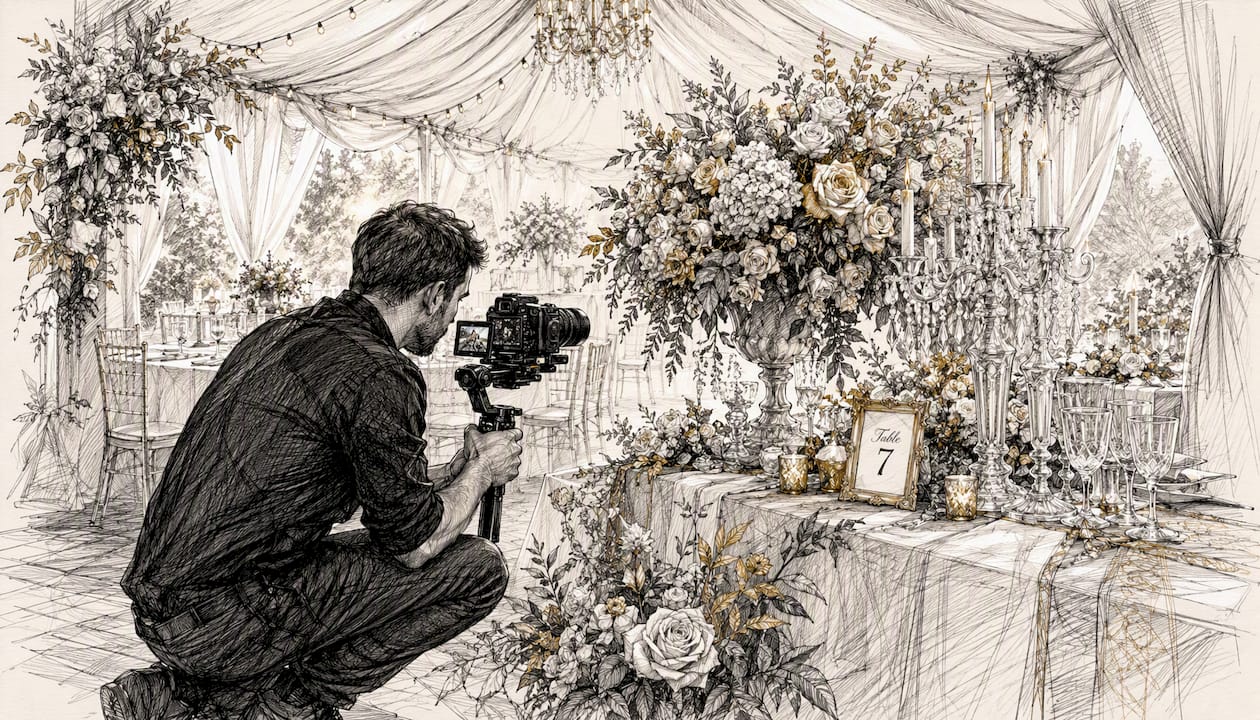
Detail shots that specifically signal a ballroom wedding include gold or crystal chandeliers, tablescapes against the room's architecture, and any dramatic staircase or entrance moment. Capture these during setup, before the room fills.
Pro Tip: Reserve two to three minutes during cocktail hour for a quick couple reset, ideally stepping just outside the ballroom for a burst of natural light if the venue has an accessible balcony, terrace, or lobby with windows. Fully indoor receptions lose this option, so scout an alternative during your walkthrough.
Vendor Walkthrough Checklist: Venue, Caterer, and Band Coordination
The pre-wedding walkthrough is where surprises get eliminated, not discovered. Bring your planner, your photographer or videographer, and ideally the venue's day-of coordinator to the same room at the same time.
Cover these points directly:
- Load-in schedule: who arrives when, where each vendor stages equipment, and confirmed elevator or loading dock access
- Soundcheck timing with the band or DJ, including any venue noise curfew
- Catering flow: when plated service starts and the exact cake-cutting window
- Vendor meal policy: when and where the photography and video team eats without missing coverage
Ask these questions before you leave:
- Where is usable power, and is there a no-cord-across-the-floor rule?
- Where does vendor equipment and trash go during the event?
- What's the emergency exit route if gear needs to move quickly?
- Who is the single day-of contact for the venue?
Booking these walkthroughs early matters. Popular ballrooms often require booking 12 to 18 months out for peak Saturdays between May and October, which means your scouting visit should happen well before the final timeline gets locked.
Contingency Plans and Timeline Buffers Every Ballroom Plan Needs
Something will run long. Plan for it instead of hoping around it.
- Add 15 minutes of buffer per two-hour timeline block, and 30 to 45 minutes specifically around hair and makeup
- Prenegotiate overtime rates with your photography, video, and venue teams before the wedding week
- Carry backup batteries, cards, and at minimum one spare camera body per shooter
- Have a fallback for AV or power failure: battery-powered lighting and ambient-only audio capture if house power drops
Pro Tip: Write a one-paragraph contingency plan directly into your vendor contracts specifying what happens if the ceremony runs over or the room loses power. Every vendor working from the same fallback plan prevents confusion in the moment.
A Printable One-Page Timeline You Can Hand to Vendors
Every vendor on-site should be working from the same single page. Build yours with these blocks:
- Vendor arrival and load-in times
- Getting ready coverage start
- Ceremony start and end
- Photo blocks (family formals, couple portraits)
- Reception markers (entrance, first dance, toasts, cake, open dancing)
- Coverage end or send-off time
Include a contact block with direct phone numbers for the venue manager, wedding planner, lead photographer, and lead videographer, so any vendor can reach a decision-maker in seconds rather than hunting through a group text.
- Tape a copy inside the bridal suite door
- Include a copy in every vendor's welcome packet
- Keep a laminated copy in the lead photographer's kit
Legal and Privacy Considerations for Filming in Ballrooms
Most hotel and event ballrooms require some form of written permission before a photography or video team brings in professional lighting, tripods, or drone equipment, separate from whatever agreement the couple signs. Confirm this during your venue tour, not the week of the wedding, since some venues restrict certain lighting rigs or require a certificate of insurance from outside vendors.
Guest consent is a separate and increasingly relevant issue. If your videographer plans to capture candid guest interviews, cocktail hour reactions, or any content intended for social media beyond the couple's own highlight reel, it's worth including a simple notice on the wedding website or a small sign near the entrance letting guests know filming is taking place. This is standard courtesy, not a formality to skip.
Drone or aerial footage adds another layer entirely. Indoor ballroom spaces generally prohibit drone use outright for safety reasons, and any exterior aerial footage of the venue grounds needs separate permission from property management, plus compliance with local airspace rules where applicable. Confirm aerial plans with the venue in writing well before the wedding, since this is one of the most commonly overlooked permission gaps in ballroom coverage planning.
Post-Production Expectations: Editing and Delivery Timelines
Coverage hours directly determine deliverable size, which is worth understanding before you finalize your package. A professional photography team typically delivers roughly 50 to 100 edited photos per hour of coverage, meaning an eight-hour wedding day generally yields 400 to 800 final images depending on style and shooting approach.
Video delivery timelines vary more by studio, but most cinematic wedding films take anywhere from 8 to 16 weeks for a full ceremony and speech edit, with shorter highlight reels often delivered faster. Ask your videographer directly what their turnaround time looks like for both a same-day teaser (if offered) and the full film, since ballroom weddings with heavy speech content or multiple language segments (common in South Asian and multicultural ceremonies) can add editing time.
Color grading is where a ballroom's often-challenging mixed lighting (warm tungsten chandeliers next to cooler LED uplighting) gets corrected in post, so ask to see a sample of how a studio has handled a similarly lit room before you book.
What a Cinematic Filmmaker Actually Tests on a Ballroom Walkthrough
. On one scouting visit, a chandelier positioned directly over the dance floor threw a hard shadow line straight across where the first dance would happen. Catching that during the walkthrough meant repositioning a single LED panel instead of fighting it during the actual reception.
Not every ballroom problem shows up on a floor plan.. See how these room-specific decisions play out on Visualize Media's Instagram, where ballroom weddings across New York and New Jersey show the lighting and framing choices this guide describes.
How Visualize Media Plans Ballroom Coverage, Start to Finish
Visualize Media builds ballroom coverage around the same walkthrough-first approach this guide describes: multi-camera ceremony coverage, documentary-style plus cinematic editing, aerial footage where the venue permits it, and optional Super 8 cutaways for couples who want a nostalgic, textured layer woven into their wedding highlight reel.
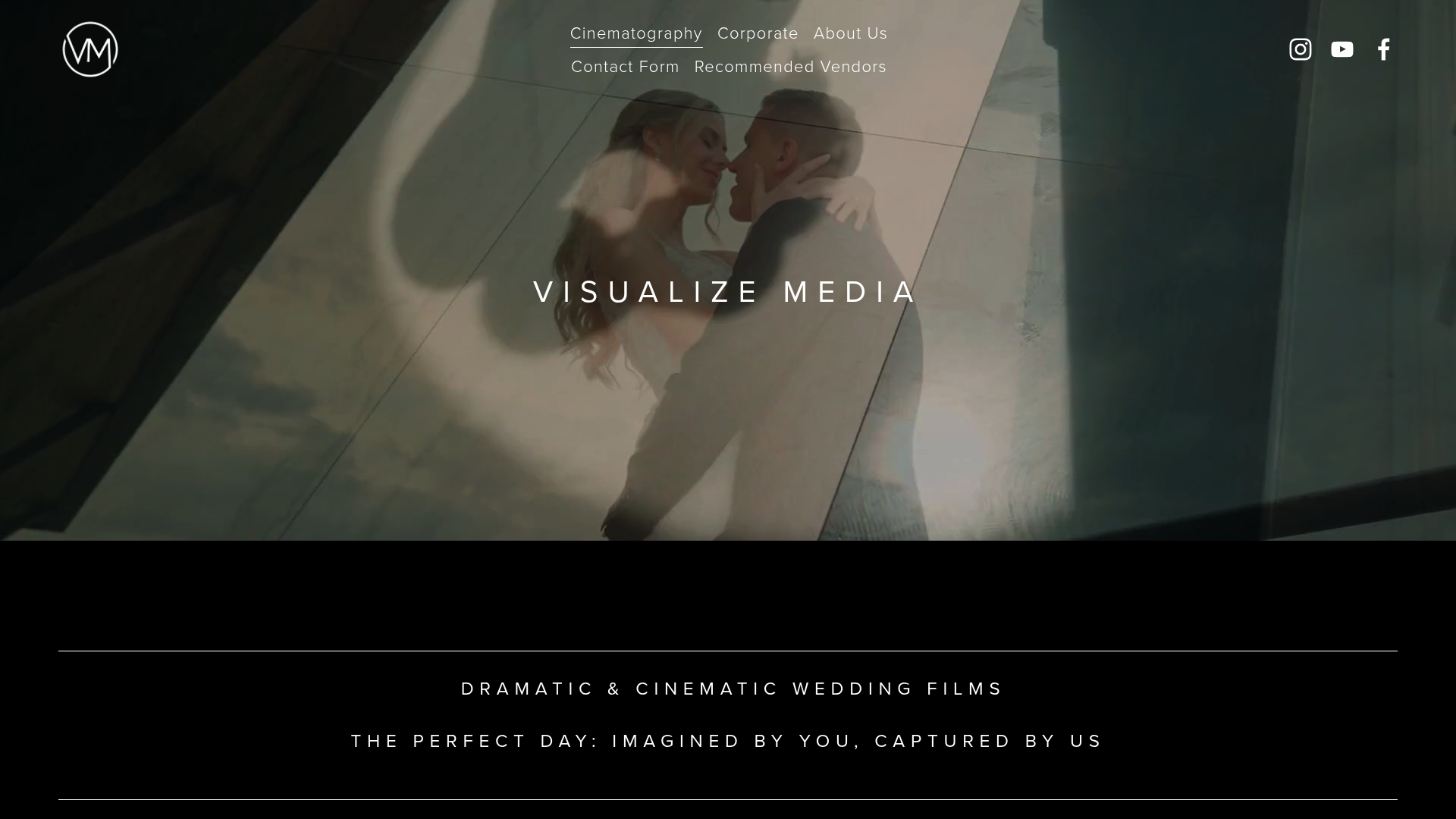
The difference from piecing together a plan on your own is simple: instead of guessing at power access, lighting gaps, and vendor timing, Visualize Media joins your venue walkthrough directly and hands you a vendor-ready timeline built around your specific ballroom, not a generic template. Same-day teaser edits and full highlight delivery options are both available depending on your package.
Visualize Media covers weddings across New York City and New Jersey. If you're planning a ballroom wedding in either market, reach out to schedule a scouting visit or request pricing, and browse recent ballroom films on Instagram for a sense of how these coverage decisions actually look on screen.
Sources
- The Ultimate Guide to Ballroom Wedding Venues | WeddingClever
- How to Build a Wedding Day Timeline (With Examples)
- Wedding Reception Photos: Shot List + Simple Coverage Plan | Photo-Logica