
Wear a navy or charcoal blazer over a light-blue or white shirt. That combination photographs well in almost any professional setting, tie optional depending on your industry. Fit matters more than the label on the jacket, and you should bring two to three outfit options to your session, including one formal look and one relaxed one.
TL;DR:
- Choose navy or charcoal blazers over light-blue or white shirts, and bring two to three outfits covering different formality levels to adapt during the shoot.
- Dress one step above your typical work attire, with suits for finance or law and blazers for consulting or tech, always layering options for flexibility.
- Prioritize fit over brand, ensuring shoulder seams sit correctly and collar fits snugly, with a tailored shirt and minor fixes like collar stays or safety pins.
- Opt for solid white or light blue shirts with broad collars and avoid tiny patterns or bright colors that can cause visual issues or distraction on camera.
- Match shoes and socks in dark, neutral tones and consider seasonal fabrics to stay comfortable while maintaining a professional appearance.
Bring‑These Outfit Combos for Headshot Outfits for Men
You do not need a closet full of suits to look sharp on camera. You need a small, deliberate rotation that covers the range of formality your photographer might ask for.
- Navy blazer, light-blue shirt, no tie. This is the safest starting point for almost any professional context, and it works whether you end up seated or standing.
- Charcoal or navy suit, white shirt, conservative tie. Reach for this in finance, law, or any setting where clients expect formality.
- Blazer over a fine-gauge crewneck or a fitted polo. This reads modern without looking sloppy, and it fits consulting, tech, or hybrid corporate roles well.
- A dark solid button-up on its own. Deep navy, forest, or burgundy gives you a distinct look when a jacket feels like overkill.
Layering with a jacket gives your photographer room to adjust formality mid-session, so bring one even if your plan is to shoot without it.
Suits, Blazers, or Casual: Matching Formality to Your Industry
The general rule photographers use is to dress one level above your normal workday. If you wear jeans daily, show up in a blazer. If you wear a blazer daily, bring a suit. That single-step-up logic solves most wardrobe questions before you even get to color or pattern.
- Suits fit finance, law, and senior executive roles where clients expect visible formality.
- Blazers fit consulting and corporate leadership, striking a balance between polish and approachability.
- Shirts without a jacket work well for tech and startup profiles, where a full suit can look stiff or out of step with company culture.
Bring layers regardless of which category you fall into. A blazer you can remove lets the photographer test two formality levels in one sitting, which saves time and gives you leverage to pick the stronger shot afterward.
Shirts and Ties That Actually Photograph Well
Collar choice matters more than most men expect. A spread or point collar sits cleanly under a jacket and holds its shape through a shoot; anything too small will gap on camera. Check the collar fit before you leave the house, not after the photographer points it out.
- Stick to white or light blue. Both are dependable, flattering shirt colors under studio and natural light alike.
- Skip bright white on its own. Without a darker jacket over it, bright white can wash out your face in strong light.
- Choose solid ties or broad patterns. Tiny repeating patterns, like thin stripes, can create moiré, a flickering distortion on digital sensors.
- Skip the tie when your industry doesn't expect one. Tech, startups, and creative fields usually read better open-collar; law, finance, and client-facing corporate roles usually expect one.
Colors and Patterns: What Reads Well on Camera
Navy and charcoal dominate professional headshots for a reason. Both colors photograph as trustworthy and hold up against nearly any background, studio gray, brick, or outdoor greenery. Light blue softens the look and reads as approachable without sacrificing polish.
Why blue works: Capturely's review of headshot styling notes that blue tones are perceived as more trustworthy in professional contexts by a roughly 3:1 margin in the settings they surveyed, which helps explain why navy shows up in so many corporate headshot libraries.
- Avoid neon or saturated colors. They pull focus from your face and tend to shift under different lighting setups.
- Avoid tiny stripes or pinstripes. They can moiré, as noted above, and read as visual noise in a tight crop.
- Keep bold accents, a tie or pocket square, to roughly 10 to 20 percent of the visible outfit. Beyond that, the accent starts competing with your face instead of framing it.
Fit and Tailoring: The Checklist That Matters More Than Brand
A headshot crops tight. That means a slightly long sleeve or a gapping collar shows up far more obviously than it would across a room, and no designer label fixes that in post-production.
- Shoulder seam. It should sit right at the edge of your shoulder, not draped past it or pulling inward.
- Sleeve length. Roughly a half-inch of shirt cuff should show past the jacket sleeve when your arm hangs naturally.
- Chest closure. Button your jacket and check for pulling across the chest or a gap at the button.
- Collar fit. No gapping at the neck when you look straight at the camera.
Fit is the single most visible wardrobe variable in a close crop, more visible than fabric quality or brand. A tailor can usually fix shoulder and sleeve issues for less than the cost of a new jacket.
Pro Tip: Bring safety pins or collar stays in your bag. A quick pin at the back of a loose collar or jacket vent is invisible on camera and takes ten seconds to fix on set.
Grooming, Facial Hair, and the Accessories That Won't Distract
Time your grooming so it looks like you, not like you just left the barber. Get a haircut seven to ten days before your session, and trim facial hair one to three days out so it settles naturally.
- Moisturize the night before and the morning of; dry skin catches harsh studio light.
- Keep blotting papers on hand to manage shine between shots.
- Skip heavy cologne. It has no bearing on the photo, but it can affect how relaxed you feel in a small studio.
- If you wear glasses, ask about anti-reflective lenses, or plan on removing them for at least one frame.
- Keep jewelry minimal. Anything jangly or reflective becomes a distraction the moment it catches light.
What Not to Wear for a Professional Headshot
A short list saves you from packing the wrong bag entirely.
- Neon colors, tiny stripes, or pinstripes
- Visible logos or brand text
- Shiny synthetic fabrics, which pick up glare under studio lights
- Clothing that closely matches your skin tone
- Wrinkled, ill-fitting, or overly trendy pieces that will date the photo in a year or two
What to Pack for Your Headshot Session
Pack light, but pack with intention. A stronger outfit rotation beats a bigger wardrobe bag.
- Two to three shirts: white, light blue, and one deeper tone
- One blazer or jacket, plus a suit if your industry calls for it
- A tie, pocket square, and a spare collar stay or two
- A lint roller and a small grooming kit with a mirror
If you can, bring a friend or stylist along. A second opinion between looks catches wrinkles, stray threads, and collar issues faster than checking your phone camera alone.
How Visualizemedia Styles Headshots on Set
We run a short style consult before every headshot session, testing jacket and shirt combinations on camera rather than guessing from a hanger. What looks sharp in a mirror does not always read the same way through a lens.
- We check collar fit, sleeve length, and collar stays before every set change.
- We keep a lint roller and a shine-control kit on hand between looks.
- We favor layered outfits because they give us room to shift formality without a full wardrobe change, and we choose background and lighting to complement the wardrobe rather than fight it.
You can see how this styling approach plays out in practice on our pre-session planning process.
Footwear for Full-Body Professional Headshots
Most headshots crop above the waist, but full-body portraits and branding sessions put shoes squarely in frame, and they get overlooked constantly. If your session includes any standing or walking shots, footwear needs the same attention as your jacket.
Stick with leather dress shoes in black or dark brown, and match the shade to your belt. Oxfords and derbies read as the most conservative choice, appropriate for finance, law, and formal corporate photos. A clean leather loafer works for business casual and creative industries where a full lace-up shoe would look overdressed.
Skip sneakers unless your brand identity is genuinely built around a casual, startup-forward image, and even then, choose a clean, minimal pair over anything with bold branding or bright colors. Scuffed leather is one of the most common full-body headshot mistakes: a quick polish the night before makes a visible difference, especially under studio lighting where scuffs and dull finishes show up more than they would in daylight.
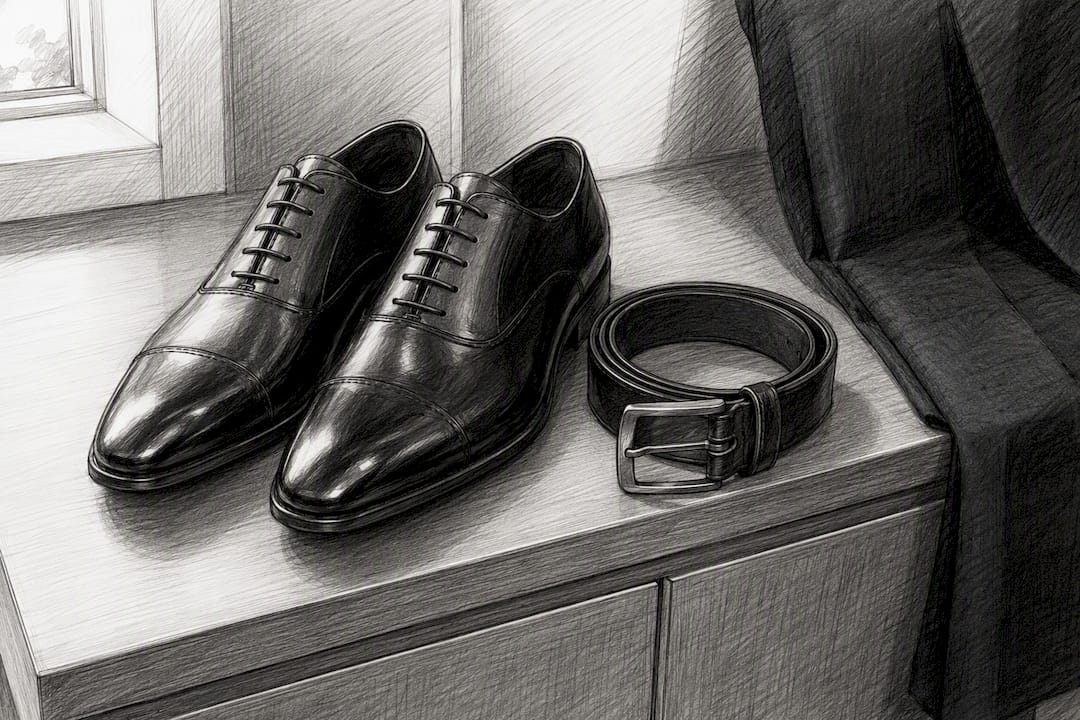
Socks matter more than people expect too. Match your sock color to your trousers, not your shoes, so a seated pose or a slight pant break doesn't expose a jarring color gap. Novelty socks might work in daily life, but they pull focus in a professional photo the same way a loud tie does.
Adjusting Your Headshot Wardrobe by Season
Weather shapes what you can wear comfortably, and comfort shows on your face whether you want it to or not. A stiff, sweaty pose reads as tense on camera, so plan your outfit around the season, not against it.
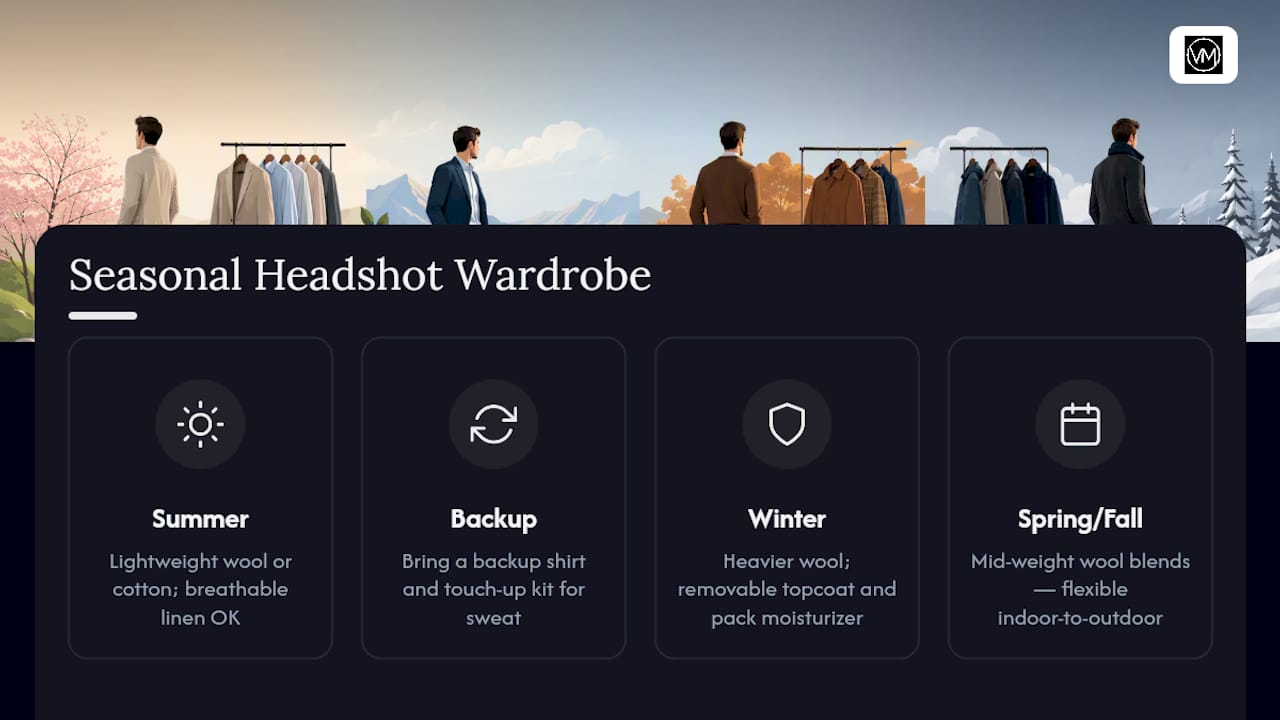
In summer, choose lightweight wool or cotton blazers over heavier flannel or tweed, and skip the undershirt if it adds bulk without adding warmth. Linen can work for outdoor sessions but wrinkles fast, so bring a backup shirt if you're shooting in humidity. Studios are usually climate-controlled, so overheating is less of an issue indoors, but outdoor headshots in July call for breathable fabric and a quick touch-up kit for sweat.
Winter sessions need the opposite approach. A heavier wool suit or blazer photographs fine and adds visible structure to your shoulders, which flatters most body types. If you're shooting outdoors in cold weather, bring a topcoat you can remove the moment you're in front of the camera, rather than trying to shoot in it. Cold weather also dries skin quickly, so pack moisturizer if your session falls in a low-humidity month.
Spring and fall give you the most flexibility. Mid-weight wool blends work in nearly any lighting condition, indoor or out, and they transition well between a strictly formal look and a business-casual one without needing a full wardrobe swap.
Layering Rules: Undershirts, Sweaters, and What Goes Underneath
Layering is not just a formality trick. It also solves practical problems that show up the moment the camera starts rolling.
An undershirt matters more than most men realize. A thin, close-fitted cotton undershirt keeps sweat from showing through a dress shirt under hot studio lights, and it prevents any see-through issues with lighter-colored fabrics. Skip ribbed tank-style undershirts. Their texture can show through a fitted shirt and create a visible line at the collar or sleeve.
A fine-gauge sweater under a blazer gives you a third formality option without packing a whole extra outfit. Crewnecks work better than V-necks for headshots, since a V-neck without a shirt underneath can look unfinished, while a crewneck layers cleanly over a collared shirt and peeks out at the neckline for texture. Keep the sweater solid and close-fitted. A bulky knit adds visible weight to your shoulders and can throw off the proportions a tailored blazer is designed to create.
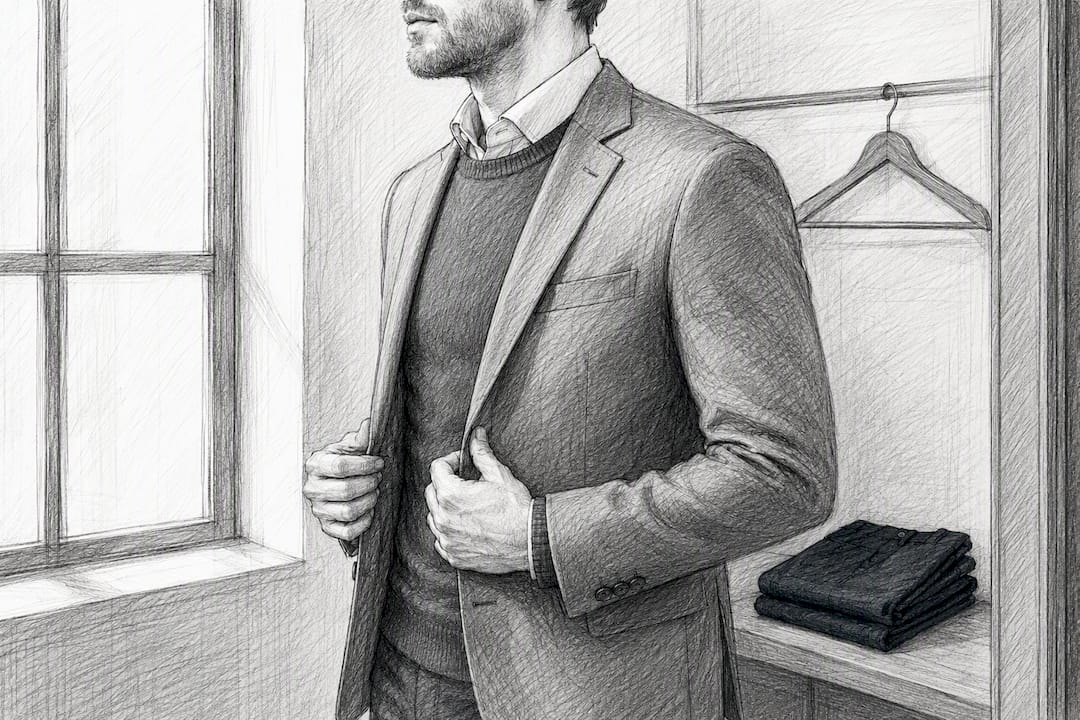
If you're wearing a jacket, button it before every shot unless you're specifically going for a relaxed, open look. An open jacket over an undershirt or sweater layer usually reads as unfinished rather than casual. And if you plan to remove a layer between shots, as suggested earlier when bringing multiple outfit options, do it fully between setups rather than mid-shoot. A half-removed layer rarely photographs as intentional.
A Photographer's Honest Take on Headshot Wardrobe
Most men overthink color and underthink fit. A $40 shirt tailored to actually fit your shoulders will outperform a $400 suit that gaps at the collar, every time, in every crop. Preparation beats confidence here: showing up with two or three tested combinations removes the guesswork that makes people tense up in front of a lens.
Trust the photographer's eye on set. They can see what the camera sees, which is not always what the mirror showed you that morning.
— Anthony
Book Your Headshot Session With Visualizemedia
Visualizemedia gives you the styling eye of a filmmaker, not just a photographer with a backdrop. Our headshot sessions include a pre-shoot style consult where we test your jacket, shirt, and color combinations on camera before we ever start shooting, so you walk in with a wardrobe plan instead of a guess.
Beyond headshots, we build full corporate video and branding packages around the same eye for detail we bring to luxury wedding films, multi-camera setups, color grading, and polished final edits. If you're weighing a DIY session against working with a stylist-minded team, book a consult through our headshot and style services to lock in a date and get outfit guidance before you ever step in front of the camera. Follow along on Instagram for behind-the-scenes looks at real sessions and styling picks in action.
Sources
- Professional Headshots for Men: Styles, Poses & More (2026)
- Headshot Wardrobe Guide for Men: What to Wear and What to Avoid | Photography Shark Studios
- What To Wear For Male Headshots: 9 Rules That Work
- Style combos & outfit ideas for men's headshot and branding sessions