
Your wedding film isn't a video recording of your day. It's a fully crafted, emotionally driven story built from dozens of invisible decisions made before a single frame is ever shot. Upscale couples in New York and New Jersey are increasingly choosing luxury videographers not just to document their weddings, but to transform those moments into something they'll still feel deeply twenty years from now. This guide pulls back the curtain on exactly how those films are made, what separates them from standard videography, and how you can actively shape the story they tell.
Table of Contents
- What makes a wedding film cinematic?
- Key techniques used behind the scenes
- Comparing luxury wedding films to industry standards
- How couples can shape their own behind-the-scenes story
- A filmmaker's take: Why behind-the-scenes matters more than most realize
- Discover luxury wedding cinematography in NJ & NYC
- Frequently asked questions
Key Takeaways
| Point | Details |
|---|---|
| Audio shapes emotion | Clear vows and emotional clarity are made possible by advanced audio capture. |
| Multi-camera coverage | At least two cameras are essential for cinematic angles and comprehensive storytelling. |
| Couple collaboration | Personal input from couples ensures their wedding film reflects their unique story. |
| Luxury vs. standard | Luxury films outperform standard videography by blending artistry and technical excellence. |
| Behind-the-scenes magic | Meticulous planning and creative expertise backstage are the real secret to unforgettable wedding films. |
What makes a wedding film cinematic?
The word "cinematic" gets used a lot, but it means something very specific in wedding filmmaking. A cinematic wedding film isn't just beautifully shot footage. It's a structured, emotionally intentional piece of work where every element, from the music to the color grading to the audio, is chosen to create a feeling rather than simply record an event.
The foundation of any great wedding film is emotional storytelling. Think about the difference between watching a home video of a wedding and watching a film that opens with a quiet close-up of a bride's hands shaking as she holds her bouquet. One is a record. The other pulls you in immediately and makes you feel something. That emotional pull is built through wedding cinematography decisions made at every stage of production.
Here's what separates cinematic work from standard coverage:
- Multi-camera setups capture the ceremony from multiple angles simultaneously, giving editors dynamic perspectives that make the film feel alive and unpredictable
- Intentional shot selection means every frame earns its place in the final cut, from a sweeping aerial view of the venue to a tight close-up of a parent's tear
- Deliberate editing rhythm builds tension, releases emotion, and keeps viewers completely absorbed
- Color grading gives the entire film a visual identity, whether that's warm golden tones or a cooler, more dramatic palette
Sound design is where most standard videographers fall short. Multi-camera ceremony coverage and strong ceremony audio are key differentiators in how wedding films are built. When you hear your partner's voice clearly as they say their vows, the emotional impact is immediate and lasting. Capturing that audio requires planning, equipment, and expertise that most budget videographers simply don't have.
"A cinematic wedding film isn't about the equipment. It's about the intent behind every single creative decision, from where to place a microphone to how long to hold a shot."
Key techniques used behind the scenes
Understanding what makes a film cinematic, here's how those moments are actually captured on the day.
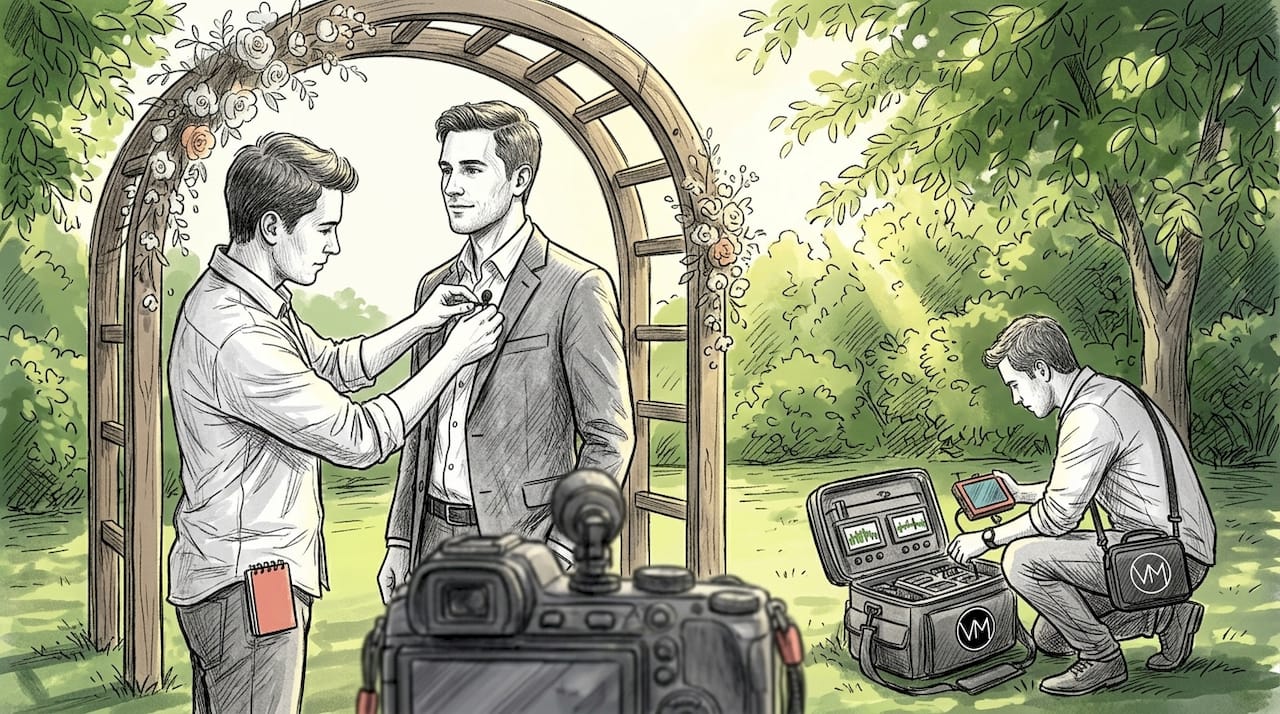
Microphone placement is the first conversation a luxury filmmaker should have with you. Outstanding audio separates excellent wedding films, and asking about microphone systems early is critical. The best setup typically captures audio from both the officiant and the groom, giving editors options in post-production and ensuring no pivotal word is lost.
Here's a breakdown of the key techniques used in luxury production:
| Technique | Purpose | Why it matters |
|---|---|---|
| Dual-microphone audio | Captures officiant and groom separately | Ensures clarity even in outdoor or noisy venues |
| Two-camera minimum | Covers ceremony from multiple angles | Provides dynamic editing choices |
| Drone footage | Captures aerial establishing shots | Adds scale and cinematic grandeur |
| Prime lens selection | Creates shallow depth of field | Gives footage a film-like, intentional look |
| Unobtrusive movement | Allows natural, candid moments | Preserves authentic emotion without staging |
A luxury filmmaker's approach follows a clear production logic:
- Pre-wedding walkthrough of the venue to identify lighting conditions and camera positions
- Audio equipment setup and testing at least one hour before the ceremony begins
- Drone flight planning coordinated with venue permissions and weather
- Multi-camera positioning agreed upon in advance with the ceremony coordinator
- Candid coverage strategy for cocktail hour and reception to capture natural interactions
Pro Tip: Ask your filmmaker to do a complete audio check before your guests arrive. Wireless microphone signals can be disrupted by interference, and catching that early is far better than discovering it in the edit.
You can see how these techniques play out in a recent wedding film that shows exactly how intentional camera work and clean audio combine to create something emotionally powerful. Before you even book, consider completing a wedding film questionnaire to start communicating your vision clearly.
Comparing luxury wedding films to industry standards
After exploring specific techniques, let's see how luxury approaches stack up against the wider industry.
The gap between standard wedding videography and luxury wedding filmmaking is significant, and it shows up in very concrete ways. Two cameras minimum for ceremony is standard for professional-grade coverage, yet many budget services send a single operator to cover an entire ceremony. When an unexpected moment happens on one side of the aisle while the single camera is pointed the other way, that moment is gone forever.
| Feature | Standard videography | Luxury wedding film |
|---|---|---|
| Camera operators | 1 | 2 to 4 |
| Audio setup | Camera-mounted mic | Wireless lav mics on officiant and groom |
| Drone footage | Rarely included | Standard in premium packages |
| Color grading | Basic or none | Full, stylized grade for visual identity |
| Editing depth | Chronological cut | Story-driven, emotionally sequenced edit |
| Delivery time | 4 to 6 weeks | 8 to 12 weeks for full cinematic treatment |
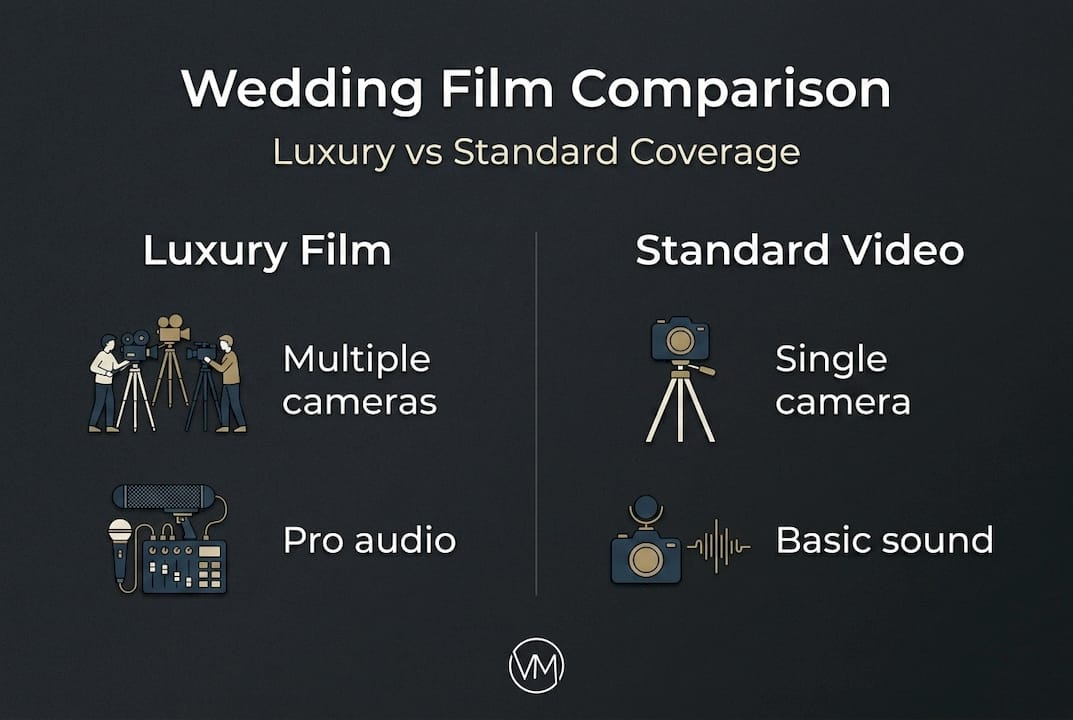
Standard coverage delivers footage. Luxury filmmaking delivers a film. That distinction matters because footage fades in memory, while a film holds emotional resonance for decades. You can see the difference immediately when watching a film production example compared to typical ceremony recordings.
What also sets luxury apart is real-time audio monitoring. A professional filmmaker or dedicated audio technician listens to microphone feeds live during the ceremony, adjusting levels and catching problems before they ruin a take that can never be repeated. Compare that to a single operator juggling camera movements and audio simultaneously, and the quality difference becomes obvious.
For a tangible sense of how these production values translate to an actual couple's story, watching another wedding film shows how multi-camera editing and intentional sound design work together seamlessly in a real New York/New Jersey wedding context.
- Luxury films prioritize the feeling of the day, not just the sequence of events
- Advanced color grading creates a visual consistency that makes every frame feel intentional
- Story structure in the edit means your film has a beginning, a middle, and an emotional peak
How couples can shape their own behind-the-scenes story
Now that you see what sets luxury films apart, here's how you can actively shape your own cinematic story.
The most beautiful wedding films happen when couples show up as creative collaborators, not passive subjects. Your filmmaker brings the technical skill. You bring the emotional blueprint. Together, those two things create something neither could produce alone.
Start with a pre-wedding meeting that goes beyond logistics. Ask about ceremony audio capture from the officiant and groom to ensure emotional clarity in your final film. But also talk about the stories you want told. Is your grandmother's presence particularly meaningful? Do you have a private joke that your guests will recognize? These personal details give a filmmaker the raw material for genuine storytelling.
Here's a practical sequence for collaborating with your filmmaker:
- Initial meeting: Share your personalities, your relationship story, and the emotional tone you want the film to carry
- Venue walkthrough: Walk through the ceremony and reception spaces with your filmmaker so they can identify creative opportunities
- Shot wishlist: Provide specific moments you want captured, such as a first look with a parent or a specific speech
- Music discussion: Talk about songs that mean something to you, since music shapes everything about the emotional experience of watching a film
- Review a sample: Watch a couple's wedding film together with your filmmaker and discuss what resonates and what doesn't
Pro Tip: Don't just tell your filmmaker what you want to see. Tell them how you want to feel when you watch your film five years from now. That emotional target is more useful than any shot list.
Key questions every couple should ask before signing:
- Where will microphones be placed during the ceremony?
- How many cameras will cover the ceremony and reception?
- What is your approach to capturing candid moments versus staged ones?
- Can I see a full-length film from a recent wedding, not just a highlight reel?
A filmmaker's take: Why behind-the-scenes matters more than most realize
Most couples judge a wedding filmmaker by their highlight reels. That's understandable, but it's a little like choosing a restaurant by its Instagram photos. The real quality lives in what you can't immediately see.
The invisible work, including venue scouting, audio system testing, pre-ceremony microphone checks, and shot planning, is what makes the visible work extraordinary. Every perfect moment you see in a finished film was preceded by meticulous preparation that happened hours or even days before. The team at Visualize Media believes strongly that the behind-the-scenes process is where the real filmmaking happens. Beautiful visuals come from beautiful preparation, not just beautiful equipment.
Discover luxury wedding cinematography in NJ & NYC
Inspired by the creative possibilities, discover how Visualize Media can help realize your cinematic wedding vision.
Visualize Media works with couples across New York and New Jersey who want more than documentation. They want a film that genuinely moves people. Explore the full portfolio and weddings and events showcase to find a style that resonates with your vision. Ready to take the next step? Reach out directly through the wedding vendor contact form, or start sharing your story today by completing the questionnaire. Your wedding film starts long before the cameras roll.
Frequently asked questions
Why is behind-the-scenes audio capture important for wedding films?
Professional-grade audio, especially from the officiant and groom, ensures vows and emotions are clear and impactful in the finished film. Outstanding audio separates excellent wedding films from forgettable ones.
How many cameras should cover a wedding ceremony?
Two cameras is the minimum standard for luxury and professional wedding films, allowing dynamic angles and complete coverage. Two cameras minimum ensures no unrepeatable moment is ever missed.
What can couples do to help their wedding film feel more personal and cinematic?
Couples should meet with their filmmaker, share their story, and discuss the emotional moments they most want highlighted. Asking early about ceremony audio capture from officiant and groom ensures those personal exchanges are preserved with full clarity.
What specific questions should couples ask their wedding videographer?
Ask about camera placement, audio setups, editing style, and whether they capture candid behind-the-scenes moments for a fuller, more personal story. Confirming that microphone systems cover both the officiant and groom gives you a reliable signal about a filmmaker's production standards.