
Lighting is rarely the first thing couples think about when planning their wedding film. Most assume it's a technical detail their videographer handles automatically, like adjusting a camera setting. But lighting is actually the single most powerful creative tool in cinematic wedding filmmaking. It shapes mood, directs emotion, and decides whether your finished film feels like a home video or a feature-length story worth watching for decades.
Table of Contents
- Why lighting matters in cinematic wedding films
- Navigating NY/NJ venue lighting: Real world examples
- Overcoming lighting challenges: Weather, receptions, and real-time adjustments
- Lighting gear and cinematic techniques for modern wedding films
- The truth most couples miss about wedding lighting
- Bring your cinematic wedding vision to life with expert lighting
- Frequently asked questions
Key Takeaways
| Point | Details |
|---|---|
| Invisible lighting magic | Skillfully planned lighting supports emotion and artistry without distracting from your story. |
| Venue-tailored strategies | Upscale NY/NJ weddings require unique lighting techniques suited to venue architecture and season. |
| Expert adaptation | Professional videographers are ready to handle unpredictable weather, fast-changing conditions, and tough receptions. |
| Cinematic gear matters | The right lighting equipment and techniques transform your film’s color accuracy and visual impact. |
Why lighting matters in cinematic wedding films
Most people think of lighting as something that simply makes footage bright enough to see. In reality, skilled videographers use lighting as a storytelling instrument. The way light falls across your face during vows, the warm glow behind you during your first dance, the dramatic rim of light framing your silhouette at sunset — none of that happens by accident.
The goal in cinematic wedding artistry is to make lighting feel invisible. Viewers should feel the emotion in a scene, not notice that a light panel is positioned just off-camera. When lighting draws attention to itself, it breaks the story. When it's done right, it simply makes the moment feel more real, more beautiful, and more powerful.
"Great wedding lighting doesn't announce itself. It just makes you feel something without knowing why."
Here are the core techniques that separate flat footage from cinematic storytelling:
- Embrace shadows. Even illumination flattens faces and removes visual depth. Shadows add dimension and drama.
- Color grade intentionally. Matching tones across different light sources in post-production creates a consistent emotional palette throughout the film.
- Use portable, non-disruptive gear. Nanlite LED panels allow professional lighting setups without interrupting your guests or your ceremony's natural atmosphere.
- Layer light sources. Combining ambient venue light with subtle fill lighting creates richness and warmth that single-source lighting simply cannot match.
The difference between a videographer who "handles lighting" and one who designs lighting for your film is significant. It's the difference between documentation and art.
Navigating NY/NJ venue lighting: Real world examples
Upscale venues across New York and New Jersey present a wide variety of lighting environments, and each one demands a custom strategy. There is no single approach that works everywhere.
Take a venue like the Park Loft in Manhattan, which bathes its space in soft, diffused natural light during afternoon ceremonies. That kind of ambient glow is ideal for delicate, intimate moments. Compare it to a Tribeca Rooftop shoot during golden hour, where the setting sun floods the frame with warm, cinematic tones that no artificial light can fully replicate. Knowing how to leverage that pre-wedding lighting impact during location scouting can make an enormous difference in the final film.
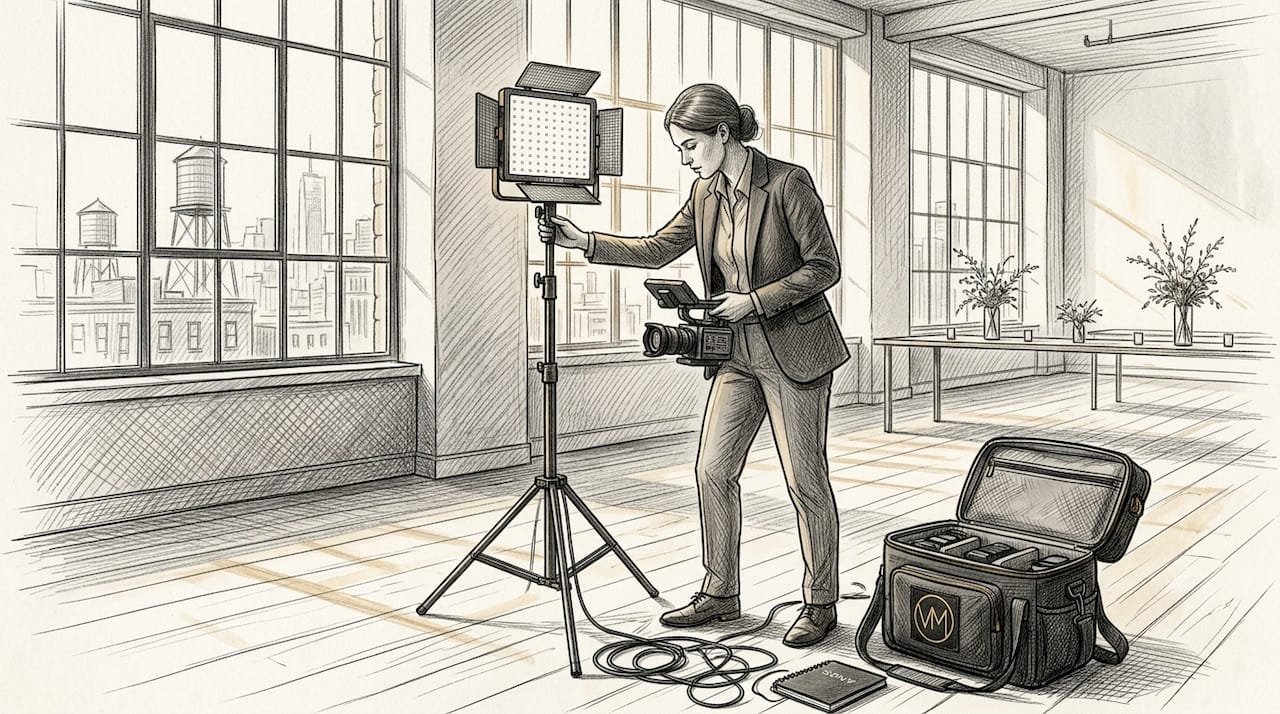
Winter ceremonies in the New York area introduce a different challenge entirely. Shorter days mean venue spotlight lighting becomes essential to prevent grainy, underexposed footage. Strategic use of spotlights, blended with portable lighting gear, keeps the visual quality consistently high regardless of the season.
| Venue type | Primary lighting challenge | Best approach |
|---|---|---|
| Indoor ballroom | Mixed artificial and ambient light | Portable fill lights, color grading |
| Rooftop garden | Fast-changing natural light | Real-time exposure adjustments |
| Historic mansion | Low ceilings and warm tungsten tones | Match portable lights to ambient color temperature |
| Modern loft | Harsh overhead lighting | Diffusion panels, shadow shaping |
| Waterfront venue | Glare and reflections | Polarized lens filters, angled fill lighting |
Key lighting priorities for NY/NJ luxury venues:
- Scout the ceremony space earlier in the day to understand where natural light peaks
- Identify ambient reception light sources and plan complementary portable gear accordingly
- Account for seasonal changes, especially for winter and late autumn events
- Coordinate with the venue's event team to understand any restrictions on lighting equipment
Pro Tip: Ask your videographer to visit your venue in person before the wedding day. Seeing the space during daylight and evening hours reveals lighting challenges that no photo or floor plan can fully capture. This kind of preparation feeds directly into lighting for emotional artistry.
Overcoming lighting challenges: Weather, receptions, and real-time adjustments
No wedding day follows a perfectly controlled script, and lighting conditions are often the most unpredictable variable of all. Experienced videographers treat adaptability as a core skill, not an afterthought.
Unpredictable weather is a consistent challenge for outdoor ceremonies in the New York metro area. A ceremony planned for warm afternoon sun can shift dramatically with cloud cover, changing the exposure requirements in minutes. The best videographers make rapid real-time adjustments by shifting camera settings, repositioning portable lights, or changing shooting locations to preserve the visual quality of the footage.
Here's a practical breakdown of how challenges are handled in the field:
- Overcast outdoor ceremonies. Use portable LED panels positioned at a 45-degree angle to simulate directional natural light and prevent flat, washed-out footage.
- Low-light reception halls. Increase LED panel brightness gradually to match the ambient atmosphere without making guests feel like they're under stage lighting.
- DJ strobe lights during receptions. Position lighting at angles that minimize deep shadows and avoid the strobe effect bleeding into key emotional moments like your first dance.
- Rapid twilight changes. Pre-set backup exposure profiles and have a second camera operator monitor conditions while the lead cinematographer focuses on the couple.
- Unexpected venue changes. Keep a portable lighting kit on hand that can be configured within minutes for any indoor or outdoor scenario.
| Challenge scenario | Risk to footage | Solution |
|---|---|---|
| Sudden cloud cover | Underexposed, dull footage | Portable fill lights, exposure shift |
| DJ strobe effects | Distracting light patterns | Angled lighting, faster shutter speed |
| Late sunset in winter | Near-dark ceremony footage | Portable LED, spotlight use |
| Harsh midday sun | Blown highlights, squinting | Shade positioning, ND filters |
For couples filming for emotional results, understanding these adjustments in advance helps set realistic expectations. The artistry doesn't stop when conditions change. It intensifies.
Pro Tip: Ask your videographer how they specifically handle low-light receptions and outdoor weather changes. A confident, detailed answer tells you they've navigated these exact scenarios before.
Lighting gear and cinematic techniques for modern wedding films
The equipment a videographer carries directly impacts the visual quality of your film. But gear alone doesn't create cinematic results. Technique and creative vision are what transform tools into art.
Modern wedding videography benefits from several categories of essential lighting equipment:
- High-quality LED panels. Portable, dimmable, and color-accurate, these are the foundation of professional on-site lighting. They reduce noise in low light and allow precise color temperature control to match venue ambiance.
- Drone-integrated golden hour sessions. Aerial footage captured during golden hour adds a sweeping, emotional scale to films that no ground-level shot can replicate.
- Bi-color LED wands. These slim, directional lights are ideal for tight spaces or for wrapping light around a subject during first-look moments.
- Diffusion panels and reflectors. Softening harsh light sources creates the kind of gentle, flattering illumination seen in videography style trends across luxury wedding films today.
- Wireless lighting triggers. Synchronizing multiple light sources without cables keeps the setup invisible and non-intrusive for guests.
The combination of precise gear and creative technique allows videographers to personalize your wedding film with a visual signature that reflects your venue, your story, and your aesthetic. A Brooklyn loft wedding film should feel distinctly different from a New Jersey estate ceremony film, and lighting is the primary tool that achieves that.
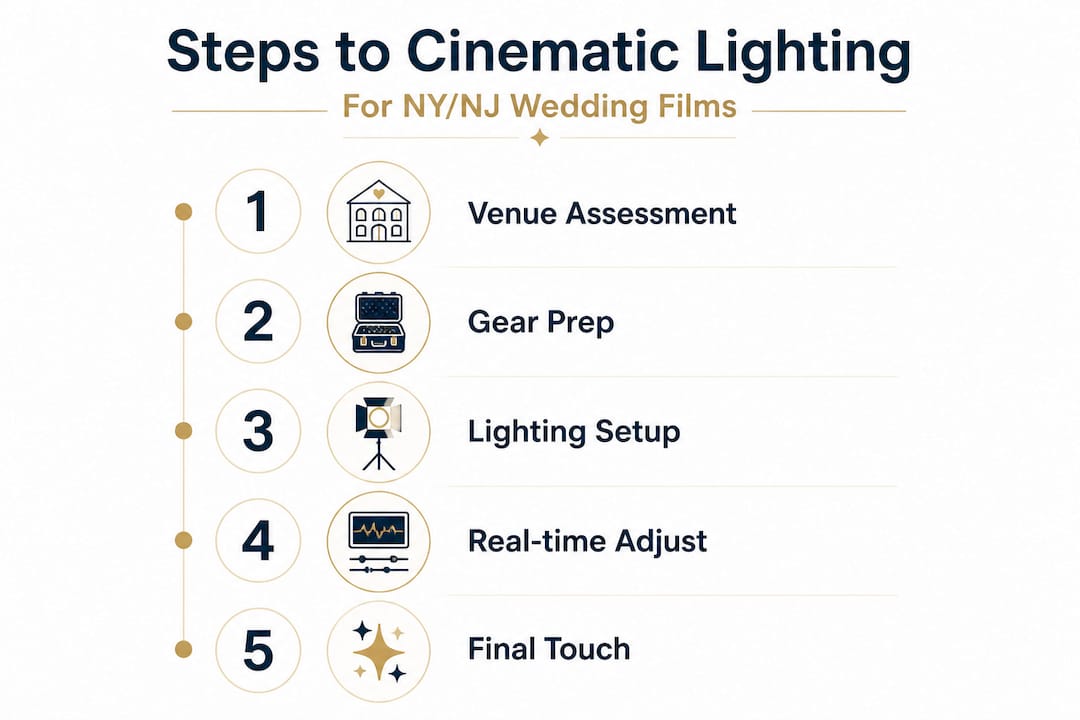
The truth most couples miss about wedding lighting
Here's an opinion that standard wedding planning guides rarely state plainly: most couples invest significant time choosing their venue, their flowers, and their dress, but almost none of them think strategically about their wedding film's lighting before the day arrives.
That gap is where cinematic artistry either happens or it doesn't. Lighting is not a passive response to the environment. It's a creative decision made in collaboration between you, your videographer, and sometimes your venue's event team. The couples whose films turn out extraordinarily well are usually the ones who had a real conversation with their cinematographer about the emotional tone they wanted to capture.
Think about the specific moments you imagine looking back on. Are they bright and airy, full of natural warmth? Or are they moody and intimate, with rich shadows and dramatic contrasts? Those are lighting decisions that can be intentionally built into your film's visual identity before the wedding day. Knowing how to choose a wedding videographer with this level of creative collaboration in mind is one of the most practical steps you can take.
Lighting is not just a technical layer. It's your story's visual language.
Bring your cinematic wedding vision to life with expert lighting
Understanding the artistry behind lighting is only the beginning. Putting it into practice for your specific venue, your season, and your story takes experience, the right gear, and a filmmaker who sees light as a storytelling partner.
At Visualize Media, our wedding cinematography experts bring professional lighting design to every luxury wedding we film across New York and New Jersey. We don't react to lighting conditions. We prepare for them, collaborate with you on your visual vision, and execute with intention. If you're ready to start planning a wedding film that reflects the depth and emotion of your day, our personalized wedding planning process helps us understand exactly what your story needs to look and feel its best.
Frequently asked questions
How does lighting affect the mood of a wedding film?
Lighting guides the film's emotional tone by shaping shadows, warmth, and visual depth. As lighting experts note, invisible lighting supports storytelling while color grading unifies the emotional palette throughout the film.
What lighting challenges are common in NY/NJ venues?
Upscale venues often feature dramatic shifts between natural light, low-light receptions, and DJ strobe effects. Real-world adjustments like angled fill lighting and real-time exposure shifts are essential for managing these conditions professionally.
What lighting equipment is best for cinematic results?
High-quality LED panels, bi-color wands, and drone filming during golden hour produce the most visually striking footage. Professional lights improve color accuracy and reduce noise in low-light reception environments.
How can couples ensure their videographer uses the best lighting?
Discuss lighting strategies, emotional tone, and specific venue conditions during your initial planning meetings. Choose a videographer with demonstrated experience handling the unique lighting environments found at luxury NY/NJ wedding venues.