
Most couples assume a wedding video means a camera operator following you around and capturing events in the order they happen. That assumption is costing them the most emotionally powerful film they could ever own. Storytelling wedding videography builds a coherent narrative from emotionally meaningful moments, rather than simply logging the day. This article breaks down exactly how that works, why it matters for upscale New York and New Jersey weddings, and how to make sure your film is a genuine heirloom rather than a polished event recap.
Table of Contents
- What is storytelling in wedding videos?
- Core mechanics: How experts shape an emotional narrative
- Music, audio, and the secrets of emotional resonance
- How to select a storytelling-focused wedding videographer
- Why story-driven wedding films are more than a trend: Our take
- Connect with storytelling-driven wedding cinematography
- Frequently asked questions
Key Takeaways
| Point | Details |
|---|---|
| Storytelling shapes emotion | True wedding storytelling videos use narrative structure and emotional beats, not just event documentation. |
| Audio makes the impact | High-fidelity sound and music blending are essential for capturing and reliving wedding emotions. |
| Workflow underpins artistry | Planning, unobtrusive filming, and intentional editing create films that feel both cinematic and personal. |
| Choose with full films | Viewing complete wedding films, not just highlight reels, is crucial to assessing a videographer’s storytelling skill. |
| Personal narrative matters most | The best films reflect your unique story, not a copy of someone else’s trendy or aspirational style. |
What is storytelling in wedding videos?
To understand why storytelling matters, let's define how it's different from what most couples expect.
At its core, storytelling in wedding videography means creating an intentional arc. Your personalities, your relationship history, the unscripted gasps and quiet glances, all of it gets shaped into a film that builds emotionally from the first frame to the last. This is fundamentally different from simply showing up and rolling cameras. Good wedding videography styles exist on a spectrum, but storytelling sits at the most intentional end of that spectrum.
Cinematic and storytelling approaches are often confused for each other, but they serve different masters. Cinematic is a visual and technical philosophy. Storytelling is a narrative philosophy. The best luxury films blend both. Here is how the three most common approaches actually compare:
| Approach | Focus | Structure | Emotional impact |
|---|---|---|---|
| Traditional coverage | Documenting events | Chronological | Informational |
| Cinematic | Visual beauty and color | Often event-driven | Aesthetic, evocative |
| Storytelling | Emotional arc and narrative | Non-linear, intentional | Deep, personal, memorable |
The difference becomes clearest when you watch a film ten years after your wedding. A coverage video shows what happened. A storytelling film makes you feel it again.
Key qualities that define storytelling in wedding films:
- Intentional pacing: Not every moment gets equal time. The most emotionally loaded beats get space to breathe.
- Non-linear editing: Your film might open with a quiet moment from the ceremony, then cut to morning preparations, building forward with purpose.
- Character-driven scenes: You and your partner are the protagonists. Every shot either develops your relationship or advances the emotional arc.
- Authentic audio as narrative glue: Whispered vows, nervous laughter, a parent's tearful toast. These sound elements carry the story forward.
Films that capture emotion and artistry go beyond the beautiful shot. They create a sequence of meaning.
Core mechanics: How experts shape an emotional narrative
Once we know what makes storytelling different, how do videographers actually achieve this narrative effect?
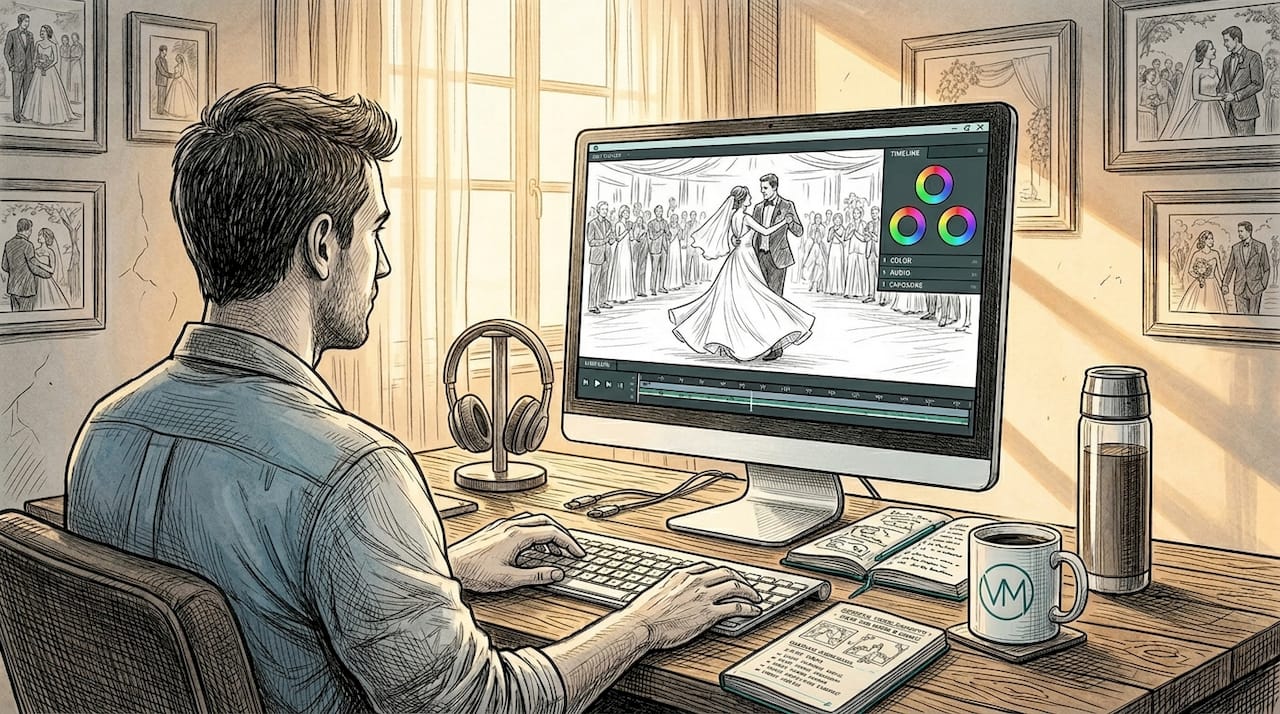
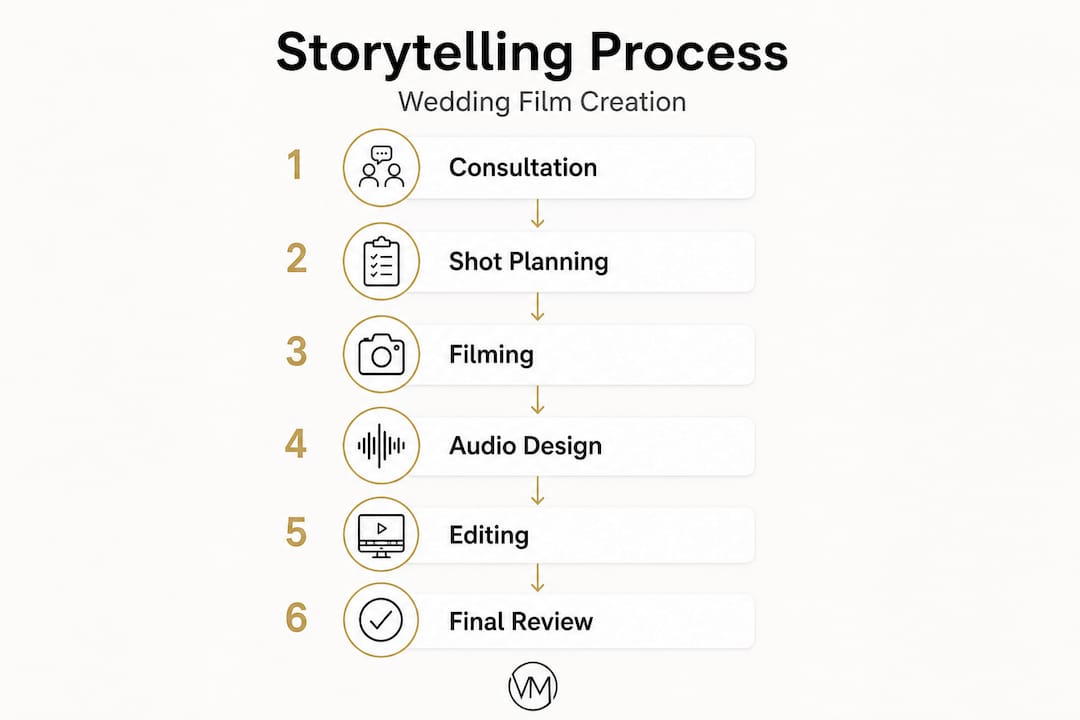
A practical storytelling workflow includes pre-planning, unobtrusive capture during the day, and intentional post-production decisions. Here is how a professional team typically breaks that down:
- Pre-production consultation. Before the wedding, experienced cinematographers interview the couple, ask about relationships, inside jokes, meaningful music, and the emotional moments they most want preserved. This shapes the entire creative strategy.
- Emotional arc planning. The team maps the natural emotional peaks of the day. Getting ready, the first look, vows, the first dance, the late-night party. Each has its own emotional register, and good storytellers plan transitions between them.
- Multi-camera and audio setup. Typical storytelling mechanics include multi-camera coverage, lavalier microphones on the officiant and often both partners, and a discreet presence that does not interrupt genuine moments.
- Unobtrusive day-of coverage. The best storytelling teams operate invisibly. Guests forget cameras are present. That is precisely when the most authentic moments surface.
- Post-production assembly. The editor reviews all footage, selects the strongest emotional audio first, then builds the visual story around those anchors.
- Color grading and sound design. Final color grading creates visual consistency and mood. Music is layered, adjusted, and balanced against spoken moments for maximum emotional clarity.
| Workflow stage | Who leads | Key decision |
|---|---|---|
| Pre-production | Lead cinematographer | Emotional priorities and style brief |
| Day-of audio capture | Audio lead | Mic placement and live monitoring |
| Footage selection | Editor | Which moments carry the story |
| Music and sound design | Editor | Tone, pacing, and pivot points |
| Final color grade | Colorist | Visual mood consistency |
Pro Tip: Audio clarity is the single most overlooked element of storytelling wedding films. If your videographer cannot clearly capture the words being spoken at your ceremony, the emotional backbone of your film is compromised before editing even begins. Always ask how they record audio, and whether they use backup systems.
Finding a team focused on artistic and emotional shots is a good starting point, but make sure their audio workflow matches their visual ambition.
Music, audio, and the secrets of emotional resonance
With a crafted vision and technical plan, the magic happens in the soundtrack. Here's why sound matters more than most couples realize.
Audio is the core mechanism for emotional storytelling in wedding films, requiring high-fidelity capture and deliberate blending with music. Your brain processes sound differently from visuals. A voice saying "I choose you" activates memory and emotion in ways that even the most stunning aerial shot cannot replicate.
Techniques that professional editors use to balance music and spoken moments:
- Ducking and swelling: Music volume drops when spoken words arrive, then swells again during transitional visuals.
- Music selection by emotional register: Soft acoustic pieces for quiet morning scenes, orchestral builds for ceremony moments, energetic tracks for receptions.
- Ambient sound layering: Crowd murmur, rain on windows, ocean waves. These textures ground the viewer emotionally and create a sense of "being there."
- Silence as a tool: Brief moments with no music, just raw audio, can be more powerful than any score.
Pro Tip: Personalizing your wedding film includes planning for tonal pivots. If your ceremony was intimate and emotional and your reception was energetic and joyful, those are two distinct tones. A planned tonal pivot with a deliberate music change ensures neither half of your story feels out of place. This is especially relevant for multi-venue New York and New Jersey weddings where the morning, ceremony, and reception can each feel like entirely different events.
"Music in a wedding film is not decoration. It is the emotional infrastructure. When it's chosen and placed correctly, it tells the viewer how to feel before the image even registers."
This is particularly true for NYC and New Jersey weddings that span a rooftop ceremony, a church, and a ballroom reception. Each venue carries its own sonic and visual identity, and the music strategy needs to honor all three.
How to select a storytelling-focused wedding videographer
Now that you're equipped to appreciate storytelling, here's how to make sure the right team brings it to life for you.
- Watch full-length films, not just reels. Evaluating full-length films for consistency in emotional pacing and audio quality reveals far more than a three-minute highlight reel. Ask for a complete ceremony edit and a full reception cut.
- Listen to audio quality throughout. Pay specific attention to how vows sound. Are words clear? Is there background noise? This tells you a great deal about their technical discipline.
- Assess pacing over the full film. Does it hold your attention? Does it feel rushed in some sections and slow in others? Consistent pacing signals a thoughtful editor.
- Ask direct questions during your consultation. See the checklist below.
Questions to ask during your videographer consultation:
- How do you approach the narrative structure of a wedding film?
- Can you share a full-length film from a venue similar to ours?
- How many cameras do you use during the ceremony?
- How do you handle audio backup if a primary mic fails?
- Who edits the final film, and how involved are you in that process?
Pro Tip: Communicating clearly about style and pacing before booking prevents significant disappointment after. Referencing films that are genuinely true to your taste matters far more than sharing a viral wedding video that's currently trending on social media. Aspirational reference films can cause real miscommunication if they do not reflect your actual aesthetic and emotional priorities.
Expert steps to choose your videographer also include evaluating wedding love story films to understand how a team handles your personal history within the larger film. Operational readiness and genuine respect for your venue's timeline are non-negotiable at luxury New York and New Jersey properties.
Why story-driven wedding films are more than a trend: Our take
As you weigh different styles, here's what matters most beyond what most lists or trend articles mention.
The couples who end up with the most emotionally powerful wedding films are not necessarily those who hired the biggest name or the most expensive team. They are the couples who showed up to their consultation prepared. They talked about their relationship in real terms. They shared music that actually moved them. They described the moments they feared most losing and the people they most wanted remembered. In other words, they did the emotional work before filming ever started.
Here's the uncomfortable reality: chasing a famous wedding film you found on Instagram often leads to a beautiful but generic result. Narrative structure, sound design, and editing decisions are what create genuine emotional resonance. When a couple says "make it look like that viral Amalfi Coast wedding film," what they often get is the aesthetic skin without any of the emotional bones. The result is visually impressive and emotionally hollow.
The current New York and New Jersey wedding video market is full of technically skilled teams. Cinematic storytelling workflow is increasingly common as a marketing phrase. What separates a genuinely story-driven film from a trend-chasing one is collaboration depth. The real heirloom films we've seen come from partnerships where the couple and the filmmaker built something specific together, not a template applied to a new wedding.
Your film should be unrecognizably yours. That only happens when storytelling starts in the consultation room, not in the editing suite.
Connect with storytelling-driven wedding cinematography
If you value this deeper storytelling approach, here's where to start your own cinematic journey.
At Visualize Media, we specialize in story-driven wedding cinematography for couples across New York and New Jersey who want more than beautiful footage. Every film we create begins with understanding your relationship and ends with a personal narrative you'll return to for decades.
Our luxury wedding video team brings a filmmaker's perspective to every detail, from multi-camera ceremony coverage to aerial sequences and meticulous sound design. If you're beginning your search, exploring our wedding video expo is a great way to see full films, meet our team in person, and ask the exact questions this article prepared you to ask.
Frequently asked questions
What makes storytelling wedding videos different from traditional coverage?
Storytelling videos use a narrative structure and authentic moments to create an emotional journey, rather than just documenting events in the order they happened.
How important is audio in storytelling wedding films?
High-quality audio capture is critical for capturing vows, speeches, and emotional moments, and must be deliberately blended with music for maximum storytelling impact.
Should we watch full films or just reels when choosing a videographer?
You should watch full-length films to assess emotional pacing, style consistency, and audio quality across the entire wedding day.
Is it possible to blend cinematic and storytelling styles?
Yes, luxury videographers often blend cinematic, documentary, and storytelling approaches, though one narrative thread typically anchors the final film for emotional cohesion.
How do professionals handle major tone shifts in the wedding day?
A planned tonal pivot with a deliberate music change ensures that both the intimate and celebratory parts of your wedding day are honored authentically in the final film.