
Your wedding day moves faster than you expect. Vows are spoken, tears fall, and your best friend pulls you into a hug before you've even processed what just happened. Knowing how to capture wedding moments, and doing it well, requires far more than pointing a camera at the right time. It demands deliberate planning, the right equipment, and a team that understands the difference between recording a day and telling a story. This guide walks you through every stage, from building your shot list to reviewing your final film.
Table of Contents
- How to plan your wedding moment shot list
- Essential equipment and venue preparation for upscale weddings
- Executing wedding day coverage: capturing cinematic and emotional moments
- Audio capture essentials for clear vows and speeches
- Verifying your wedding film and planned coverage
- Why upscale weddings in NY/NJ deserve cinematic storytelling
- Capture your upscale NY/NJ wedding with Visualize Media
- Frequently asked questions
Key Takeaways
| Point | Details |
|---|---|
| Prioritize key moments | Identify and categorize the most important wedding moments you want captured to guide your videographer effectively. |
| Prepare equipment and venue | Scout your venue and ensure your videographer has the right gear for lighting and audio challenges unique to your location. |
| Capture both audio and visuals | Use lav mics and direct audio feeds alongside multi-angle video to preserve clear, emotional storytelling. |
| Review cinematic storytelling | A great wedding film blends authentic moments with artistic direction to evoke lasting emotion. |
| Choose expert partners | Collaborate with premium videographers who specialize in upscale NY/NJ weddings for the best results. |
How to plan your wedding moment shot list
The best starting point is sorting your moments into three buckets: non-negotiable, important, and nice-to-have. Non-negotiables are universal: the first look, processional, ring exchange, vows, first kiss, and first dance. These belong in every cinematic wedding film, regardless of venue or style.
Shot lists for cinematic wedding videos prioritize 10-15 must-have moments, including multiple angles and b-roll per section. That last part matters more than most couples realize. B-roll, the supporting footage of hands, flowers, architecture, or guests watching, is what transforms a sequence of events into a film.
Here are the key categories to build into your shot list:
- Non-negotiable: First look, processional, vows, ring exchange, first kiss, first dance
- Important: Getting-ready details, family portraits, speeches, cake cutting, send-off
- Nice-to-have: Surprise performances, special guest moments, ambient venue shots
- Personalized: Cultural rituals, heirloom details, custom floral arrangements, live musicians
Once you have your categories, go one layer deeper. Identify who should be visible in each shot and at what point in the timeline. This is where personalizing your wedding film becomes the difference between a film that feels generic and one that feels unmistakably yours.
Pro Tip: Share your finalized shot list with both your videographer and wedding planner at least four weeks before the date. Conflicts between your timeline and shot requirements are far easier to resolve in advance than on the day itself.
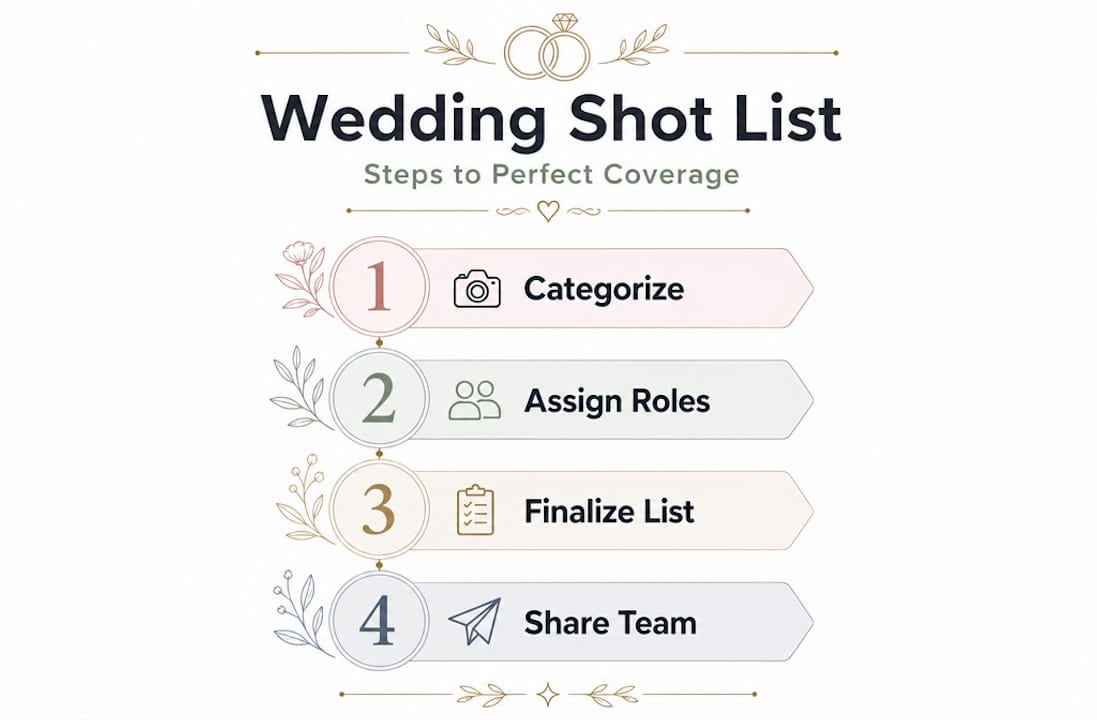
When approaching filming weddings for cinematic results, the shot list is your creative blueprint. Treat it like one.
Essential equipment and venue preparation for upscale weddings
Equipment decisions directly affect what your film looks and sounds like. This is not a category where good enough is acceptable for an upscale wedding.
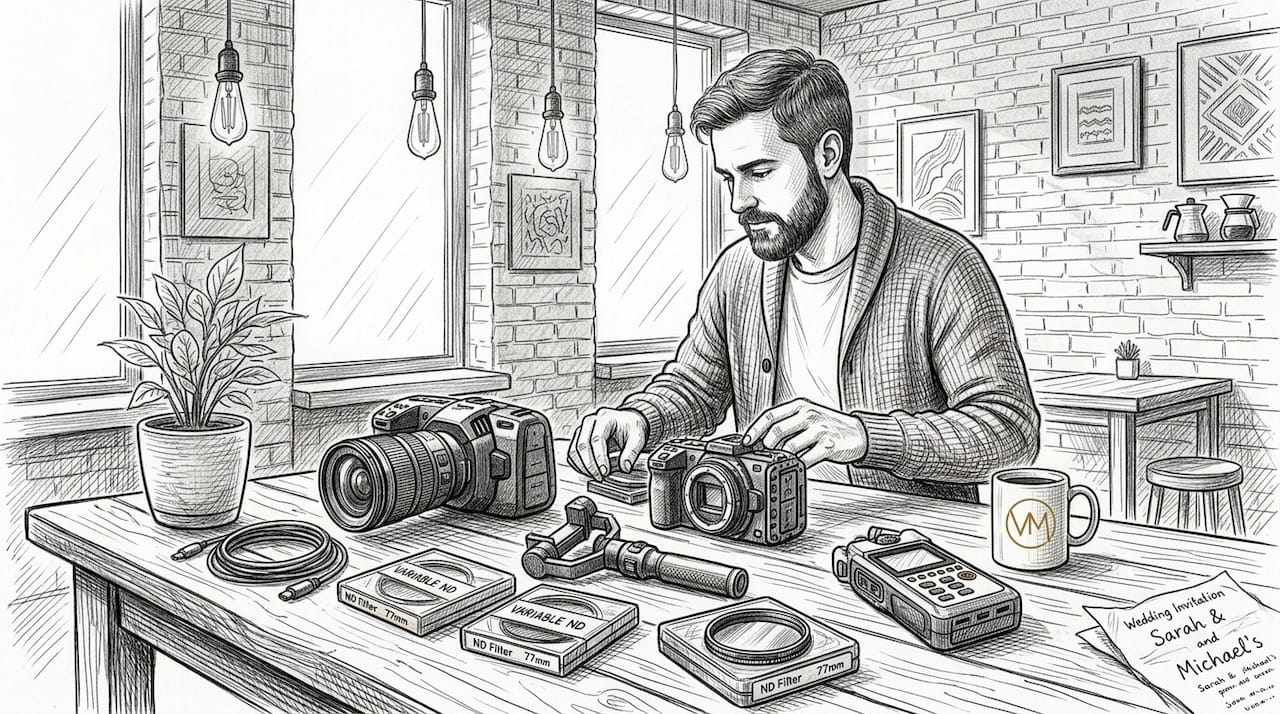
| Equipment | Purpose | Why it matters |
|---|---|---|
| ND filters | Controls light exposure outdoors | Prevents blown-out footage at bright outdoor venues |
| DJI RS3 gimbal | Smooth tracking shots | Enables fluid 20-30 second entrance sequences |
| Handheld camera | Candid, reactive shooting | Captures raw emotional reactions without mechanical stiffness |
| Lavalier microphones | Direct audio capture | Isolates speech from ambient crowd noise |
| Drone / aerial rig | Wide establishing shots | Contextualizes the venue and scale of the celebration |
Premium videographers use ND filters, gimbals for smooth tracking shots, and handheld for authentic reactions because each tool solves a specific visual problem. You would not use a gimbal to capture a candid tear rolling down a mother's cheek. You would not use handheld for a bride's entrance down a cathedral aisle.
Venue scouting is equally critical. Visiting 2-4 weeks prior helps identify golden hour light paths and quiet audio corners that are invisible on a walk-through the day before. At many New York rooftop venues or New Jersey estate properties, the acoustic environment shifts dramatically depending on where guests are gathered.
Pro Tip: Ask your videographer to bring a test audio rig during the venue scout. Recording a short speech in the actual ceremony space tells you immediately whether you need supplemental microphone placement, rather than discovering the problem mid-vow.
Your cinematic filming equipment choices should be discussed openly with your production team well before the wedding date.
Executing wedding day coverage: capturing cinematic and emotional moments
Coverage is most powerful when it follows a structured sequence. Here is the workflow that premium videographers use across upscale NY/NJ weddings:
- Getting ready (1-2 hours): Focus on candid emotional exchanges, detail shots of rings, shoes, invitations, and attire, and quiet in-between moments that reveal personality.
- Ceremony: Capture vows, ring exchange, and first kiss from multiple angles simultaneously. Reactions from parents and guests are as important as the couple.
- Portraits (20-30 minutes): Blend formal family frames with candid interactions. The laughter between shots is often more expressive than the posed image.
- Reception: Cover speeches in full, then shift to observational coverage of dancing, toasts, and spontaneous moments between guests.
Premium coverage typically spans 8-12 hours to include all key phases from preparation through reception. That timeline exists because the emotional arc of a wedding is continuous. Cutting a phase cuts the story.
Slow-motion footage deserves a specific mention. A wedding film is a cinematic memory requiring shots like slow-motion first looks to preserve emotions you will relive for decades. At 120 frames per second, a first look becomes three seconds of pure feeling rather than a blink-and-miss exchange.
Key candid moments to watch for throughout the day:
- A parent seeing their child before the processional
- Flower girls or ring bearers losing their composure (in the best way)
- Guests who did not know each other finding each other on the dance floor
- The couple stealing a private moment between events
Pro Tip: Build two 15-minute "buffer windows" into the reception timeline. These give your videographer space to capture ambient footage of the venue and guest interactions, the kind of b-roll that makes a film feel full and alive rather than rushed.
Explore wedding videography styles and trends to decide which visual language best suits your reception aesthetic before the wedding date.
Audio capture essentials for clear vows and speeches
Visual storytelling only works when the audio holds up. In a crowded ballroom or an open-air garden, that requires deliberate planning.
The foundation of any solid audio plan for how to capture wedding moments relies on redundancy:
- Place lavalier mics on the officiant, the groom, and the lectern for speeches
- Connect directly to the DJ mixer board to capture a clean feed, free of room reverb
- Run dual safety recording levels to prevent distortion if volume spikes during an emotional moment
- Use wind protection on all outdoor lavalier mics
- Record a backup track on a second device as insurance against primary failure
Using 2-3 lav mics plus a DJ board feed with backups for vows and speeches is standard practice among professional wedding film teams. It is also the most frequently skipped step by teams that underestimate how punishing real-world venue acoustics can be.
"Clear audio is the invisible backbone of every powerful wedding film. A stunning shot of a vow exchange means nothing if the words are buried under reverb and crowd noise."
Confirm with your DJ at least two weeks before the wedding that a board feed output is available and compatible with your videographer's recording equipment. When choosing your wedding videographer, audio experience is a non-negotiable qualification.
Verifying your wedding film and planned coverage
When you receive your film, watch it once purely as a viewer. Then watch it again with your shot list beside you.
A well-made cinematic wedding film delivers polished artistry and authentic raw moments together. If one is present without the other, the emotional resonance suffers. Here is what to check:
- Emotional arc: Does the film feel like it builds from anticipation to joy to celebration?
- Coverage completeness: Are all non-negotiable moments present, including getting-ready footage and the full ceremony?
- Audio quality: Are vows and speeches clean and audible throughout?
- Personalized shots: Are the cultural rituals, heirloom details, or special performances you requested visible?
- Pacing: Does the edit feel rhythmically intentional, not rushed or padded?
| Review category | What to look for | Green flag | Red flag |
|---|---|---|---|
| Storytelling | Emotional build from prep to reception | Natural narrative arc | Disjointed sequence of clips |
| Audio | Vows and speeches clarity | Clean, clear speech | Muffled or echo-heavy dialogue |
| Visual variety | Mix of wide, medium, and close-up shots | Dynamic composition | Single angle throughout |
| Personalization | Custom moments included | All priorities represented | Generic template feel |
If key moments are missing or the emotional tone does not match what you envisioned, request a revision. A high-quality cinematic wedding video guide will always include a revision process as part of the production commitment.
Why upscale weddings in NY/NJ deserve cinematic storytelling
Here is the truth most couples do not hear until after the fact: a standard wedding recording is almost always a disappointment. It captures what happened. It rarely captures how it felt.
This distinction matters most for upscale NY/NJ weddings, where the investment in venue, florals, catering, and experience is significant. The Vanderbilt estate in New Jersey, a rooftop ceremony above Manhattan, a black-tie reception in a Tribeca loft. These settings carry visual and emotional weight that a static camera at the back of a room simply cannot honor.
As Reid Johnson of Best Made Videos notes, "A wedding film is more than recording; it's a cinematic memory requiring must-haves like slow-motion first looks to preserve emotions you'll relive forever." That framing is exactly right. The technical decisions, multi-angle coverage, deliberate composition, color grading tuned to your venue's light, are all in service of one goal: putting you back in that moment every time you watch.
Slow-motion during a first look is not a stylistic flourish. It is the only way to make a three-second exchange last long enough for the emotion to register on screen. Multi-angle ceremony coverage is not excess. It is the only way to show simultaneously what the couple feels and what the crowd witnesses.
Upscale couples who understand how cinematic wedding films capture emotion consistently report that their film is the wedding investment they reach for most, years later. Not the centerpieces. Not the specialty cocktails. The film.
Capture your upscale NY/NJ wedding with Visualize Media
You have put months into planning every detail of your day. The film should reflect that same level of intention.
Visualize Media specializes in upscale wedding cinematography across New York and New Jersey, combining multi-camera coverage, aerial footage, and expert audio capture into films that feel like they belong at a festival screening. Our team scouts your venue in advance, collaborates with you on a personalized shot list, and builds your film around the emotional moments that matter most to you. Every production includes crystal-clear audio capture, color grading, and a full narrative edit from preparation through reception. Begin your planning by completing our wedding questionnaire and our team will reach out to start building your cinematic vision.
Frequently asked questions
How long should premium wedding videography coverage last?
Typically, premium coverage spans 8-12 hours to include getting ready, ceremony, portraits, and reception events for a film with a complete emotional arc.
What are the must-have shots to include in my wedding video?
Must-have shots include the first look, processional, ring exchange, vows, first kiss, speeches, first dance, and candid guest reactions. Shot lists prioritize 10-15 moments including multi-angle coverage and b-roll to give each scene cinematic depth.
How can I ensure clear audio during vows and speeches?
Use multiple lavalier microphones on the officiant, groom, and lectern, and connect to a direct DJ mixer feed. Lav mics with a board feed and backups eliminate the distortion and reverb that plague ambient recordings in large reception spaces.
What makes a wedding video cinematic rather than just a recording?
Cinematic videos use storytelling, composition, and emotional arcs built on film directing principles. The goal is to evoke the feeling of the day, not just document its sequence of events.