

Your wedding day will pass in a blur of emotion, laughter, and happy tears. When it's over, a great wedding video is often the only way to relive those raw, unscripted moments that no photograph can fully capture. Yet many couples look back with regret, wishing they had chosen a videographer whose style truly matched their vision. This guide walks you through every step, from defining your aesthetic to signing a contract, so you can make a confident decision and end up with a film you'll want to watch again and again for the rest of your lives.
Table of Contents
- Clarify your vision: Styles and what matters most
- Research and shortlist candidates
- Interviewing videographers: What to ask and watch for
- Reviewing contracts, logistics, and red flags
- The overlooked secret: It's about emotional storytelling, not just video quality
- Let Visualize Media help capture your story
- Frequently asked questions
Key Takeaways
| Point | Details |
|---|---|
| Match style with vision | Choosing a videographer whose style feels emotionally right is the key to lasting satisfaction. |
| Review full films | Always ask to see entire wedding videos, not just highlights, to assess real skill and consistency. |
| Ask targeted questions | Prepare insightful questions to uncover the videographer's storytelling approach and technical reliability. |
| Never skip the contract | Securing a clear contract protects your expectations and coverage for the big day. |
Clarify your vision: Styles and what matters most
Before you search a single website or ask a single friend for a recommendation, spend time getting clear on what you actually want your wedding film to feel like. This is the step most couples skip, and it's the reason so many end up with a video that looks beautiful on paper but feels completely wrong when they watch it on their anniversary.
Think about the emotional tone first. Do you want something cinematic and dramatic, with sweeping shots and a movie-like score? Or do you prefer a raw, fly-on-the-wall documentary style that captures real reactions as they happen? Maybe you love the warmth of a vintage-toned film, or you want a storytelling approach where your love story is woven through the footage like a short film. Common styles include cinematic, documentary, storytelling, traditional, and vintage, and each produces a completely different viewing experience.
Here's a quick breakdown of the most popular styles:
- Cinematic: Dramatic lighting, color grading, and a film-like quality. Feels polished and artistic.
- Documentary: Minimal direction, maximum authenticity. Captures events as they naturally unfold.
- Storytelling/Editorial: A narrative arc built around interviews, voiceovers, or vow readings.
- Traditional: Chronological coverage of the day with a focus on completeness over artistry.
- Vintage: Warm, faded tones and a nostalgic feel, often shot on specific lenses or edited to mimic older film.
Once you know your style, list your non-negotiable moments. Most couples prioritize the exchange of vows, candid family reactions, the first dance, and quiet in-between moments that often get missed. Writing these down before you start interviewing anyone gives you a clear filter for evaluating candidates.
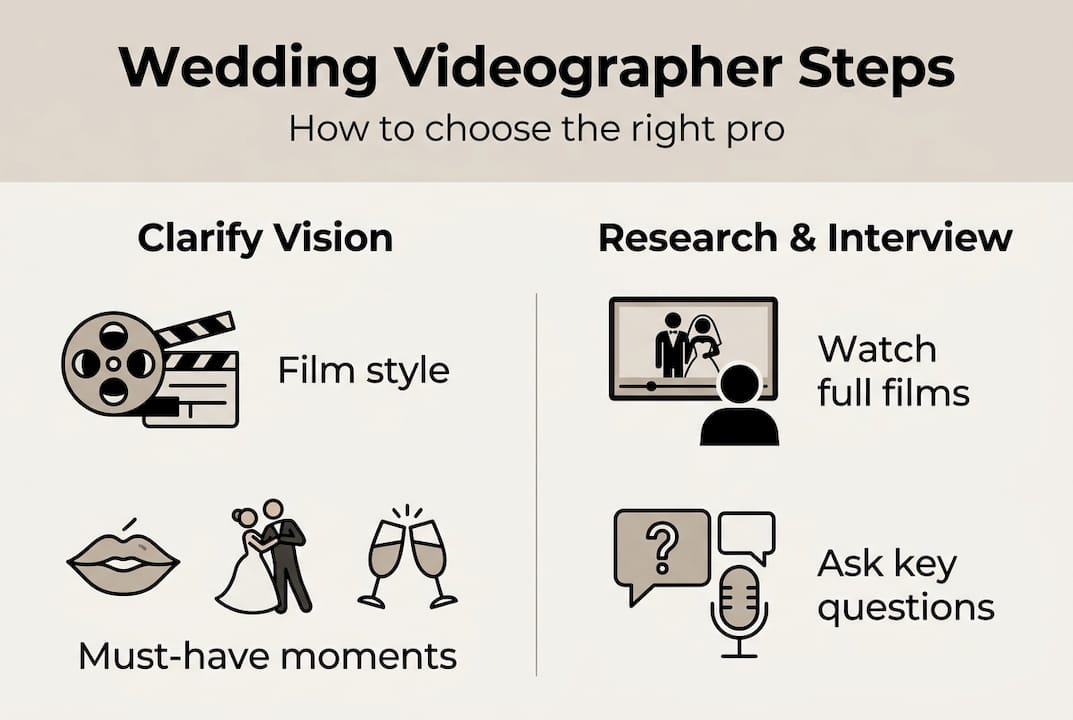
Pro Tip: Watch three to five wedding films in different styles and note which ones make you feel something. Your emotional reaction is data. Use it.
Exploring wedding cinematography options early in your planning process can also help you see the range of what's possible before you narrow your search.
| Priority moment | Why it matters |
|---|---|
| Vow exchange | Most personal and emotional moment of the day |
| First look/reaction | Raw, unscripted emotion that photos can't fully convey |
| Family candids | Generational moments you'll treasure for decades |
| Reception speeches | Humor, love, and stories told by the people who know you best |
| Quiet in-betweens | The small, real moments that define your relationship |
Research and shortlist candidates
With your priorities clearly defined, it's time to find the professionals who can actually deliver on them. Start with referrals from your photographer, wedding planner, or recently married friends. People in the industry work together often, and a trusted referral carries more weight than a cold search result.
Beyond referrals, use Instagram, Vimeo, and wedding directories like The Knot or Zola to discover videographers whose work catches your eye. When you find someone promising, follow this process to evaluate them properly:
- Watch a full-length wedding film, not just a highlight reel.
- Check if their editing style, pacing, and music choices feel consistent across multiple weddings.
- Look for how they handle different lighting conditions, from bright outdoor ceremonies to dim reception halls.
- Read reviews with a focus on communication, professionalism, and whether couples felt heard.
- Note whether their portfolio shows diversity in venues, cultures, and wedding sizes.
Review full-length films, not just highlights, to judge editing consistency, music selection, pacing, and quality across different lighting and venues. A highlight reel is a videographer's best work, carefully curated. A full film shows you how they handle the quiet moments and the messy, beautiful reality of a full wedding day.
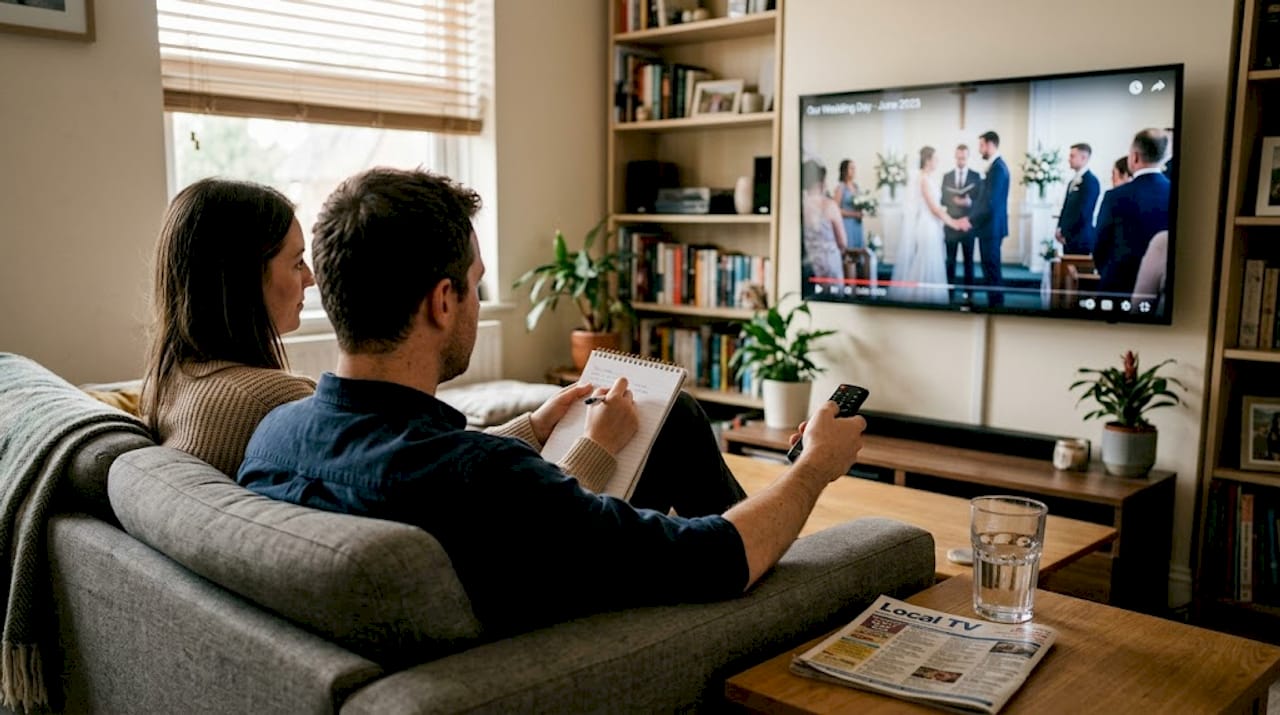
For example, watch the MICHELE & BRANDON wedding video to see how a full-length film captures the emotional arc of an entire day, not just the peak moments.
| Format | Pros | Cons |
|---|---|---|
| Highlight reel | Quick to watch, shows best work | Hides inconsistencies, curated only |
| Full-length film | Shows real pacing and editing depth | Takes more time to evaluate |
As you research, keep a simple spreadsheet with each videographer's name, website, price range, style notes, and your gut reaction. This makes comparison much easier when you're ready to reach out.
Interviewing videographers: What to ask and watch for
Once you've narrowed your list to two or four strong candidates, schedule video or in-person consultations. The interview is where you move beyond the portfolio and start evaluating the person behind the camera.
Come prepared with these essential questions:
- How many weddings have you filmed at venues similar to ours?
- What backup equipment do you bring in case of gear failure?
- Do you use wireless microphones for the vows and speeches?
- How do you handle low-light or challenging environments?
- What does your editing process look like, and how long does delivery take?
- Will you be the one filming our wedding, or will you send a second shooter?
- How do you incorporate our specific requests into your creative process?
Beyond the answers themselves, pay close attention to how the videographer listens. Do they ask questions back? Do they seem genuinely curious about your story? A videographer who asks about how you met, what moments matter most to you, and what you want to feel when you watch your film years from now is showing you exactly the kind of attention they'll bring on your wedding day.
"Trust your instincts if a videographer's style resonates emotionally. Misaligned style is the leading cause of regret after the wedding."
Pro Tip: Fill out a wedding vendor questionnaire before your consultations. Having your priorities written down helps you stay focused and makes it easier to compare candidates afterward.
Don't negotiate on style to save money. A cheaper videographer whose aesthetic doesn't match your vision will produce a film you don't connect with, no matter how technically competent they are. Personality fit also matters more than most couples expect. You'll spend a significant portion of your wedding day with this person nearby. Comfort and trust make a real difference in how natural you feel on camera.
Reviewing contracts, logistics, and red flags
Once you've found your match, don't let excitement rush you past the contract stage. A clear, detailed written agreement protects both of you and sets the foundation for a smooth experience.
Here's what every solid wedding videography contract should include:
- Deliverables: Exact list of what you'll receive (highlight film, full ceremony, reception footage, raw files if applicable)
- Delivery timeline: How many weeks or months after the wedding you'll receive your final films
- Backup provisions: What happens if the videographer has an emergency or equipment fails
- Payment schedule: Deposit amount, due dates, and refund policy
- Licensing and usage rights: Who owns the footage and how it can be shared
- Overtime policy: What happens if your timeline runs long
Beyond the contract itself, run through this final logistics checklist before your booking is confirmed:
- Have you shared your shot request list in writing?
- Does your venue have any filming restrictions or permit requirements?
- Is the videographer insured for liability?
- Have you confirmed vendor meal arrangements for the reception?
- Is there a clear point of contact on the wedding day?
Professionals mic couples for vows and carry backup equipment as standard practice. If a candidate can't clearly explain their backup plan, that's a serious concern.
Watch for these red flags: vague or verbal-only agreements, no backup gear policy, slow or evasive communication during the inquiry stage, and an inability to show you full-length films from past weddings. Any of these signals should give you pause. Use the vendor contact form to reach out to professionals who are transparent and responsive from the very first message.
The overlooked secret: It's about emotional storytelling, not just video quality
Here's something the typical wedding planning checklist won't tell you. Most of the advice couples receive focuses on technical specs, package sizes, and price comparisons. Those things matter, but they're not what separates a forgettable wedding video from one that makes you cry every time you watch it.
The real differentiator is emotional storytelling. A videographer can have the most expensive camera on the market and still produce a film that feels flat and disconnected. Meanwhile, a filmmaker who truly understands how to find the emotional truth in a moment, how to sequence footage so it builds feeling, and how to pair visuals with sound in a way that moves you, will create something that feels alive.
When you watch a sample video and feel something, that's not an accident. That's craft. That's a storytelling approach built on years of learning how people connect with moving images. If a film gives you goosebumps, your style and the videographer's sensibility are aligned. Don't talk yourself out of that reaction by overthinking the price or the package details.
Trust your gut. It's usually right.
Let Visualize Media help capture your story
Choosing the right wedding videographer is one of the most meaningful decisions you'll make in your planning process. The steps above give you a solid framework, but nothing replaces working with someone who genuinely cares about your story.
At Visualize Media, I've spent over a decade bringing a filmmaker's eye to weddings across the country and around the world. From intimate backyard ceremonies to grand ballroom celebrations, every couple I've worked with has brought something completely original to their day. I'd love to do the same for you. Explore wedding videography services to see full examples of my work, then take the next step and get in touch to start the conversation.
Frequently asked questions
How early should we book a wedding videographer?
Book your videographer at least 9 to 12 months in advance. Top professionals fill their calendars quickly, especially for peak wedding season dates.
Should we choose a videographer who offers both photography and video?
Convenience is appealing, but weigh whether their video style truly matches your vision. For couples who prioritize film quality, a dedicated specialist often delivers stronger results. Always define your preferred style before making this call.
What is the most important question to ask in a videographer interview?
Ask how they approach capturing and editing moments to match your emotional goals. Style resonating emotionally matters far more than what's included in a package.
Can we request specific moments to be captured?
Absolutely. Reputable videographers welcome personal shot requests and build them into their coverage plan from the start.