

South Asian weddings in New York and New Jersey are extraordinary. They span multiple days, layer in dozens of rituals, and involve hundreds of guests who travel from across the world to celebrate together. Capturing all of it on film is one of the most demanding assignments in wedding cinematography, and couples who treat it as an afterthought almost always regret it. This guide walks you through every step, from pre-wedding planning to final film delivery, so that your cinematic wedding story becomes something your family will watch and re-watch for generations.
Table of Contents
- Key elements required for a high-end South Asian wedding film
- Planning your South Asian wedding film: Step-by-step guide
- Common mistakes to avoid in South Asian wedding filming
- Choosing the right videography team for your South Asian wedding
- Our take: Why cinematic storytelling elevates South Asian wedding memories
- Ready to create your own unforgettable South Asian wedding film?
- Frequently asked questions
Key Takeaways
| Point | Details |
|---|---|
| Preparation is essential | Careful planning guarantees every cultural moment and detail is captured. |
| Choose experienced teams | Hire videographers who understand the nuances of South Asian weddings. |
| Avoid common mistakes | Overlooking events or poor communication can limit your wedding film’s impact. |
| Cinematic storytelling matters | Narrative-driven films provide richer, more meaningful memories. |
Key elements required for a high-end South Asian wedding film
Now that you understand the impact of a wedding film, let's look at the fundamental requirements for creating one that does your celebration justice.
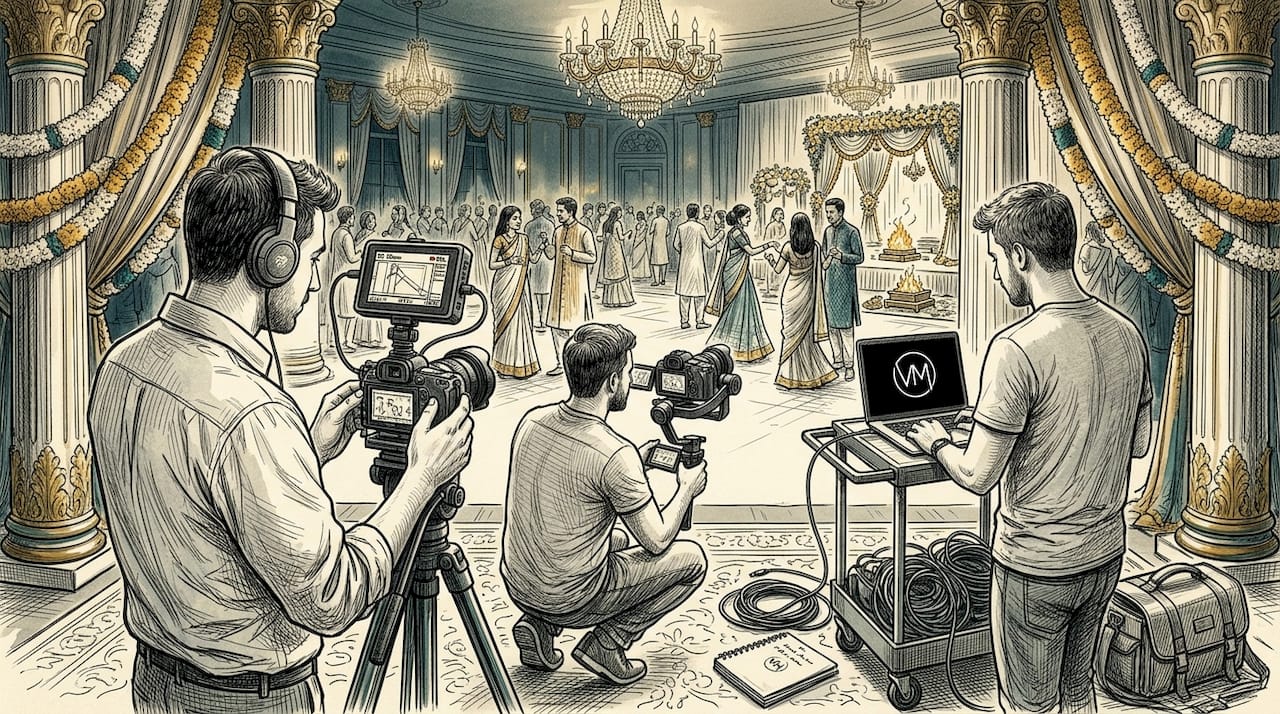
A South Asian wedding is not a single event. It is a series of ceremonies, each with its own mood, lighting condition, and emotional peak. A high-end film requires technical muscle and cultural fluency in equal measure.
Essential technical requirements:
- Multiple cinema-grade cameras (at least three) to cover simultaneous events like the Baraat and the family reception line at the same time
- Wireless lavalier microphones to capture vows and spoken blessings without ambient crowd noise drowning them out
- Drone or aerial footage to capture the scale of outdoor Baraats and grand venue arrivals
- Dedicated lighting rigs for dark banquet halls common in New Jersey and Manhattan venues
- A dedicated sound technician, separate from the camera operators
Cultural knowledge your team must bring:
- Understanding the sequence and significance of each ritual, from the Haldi to the Vidaai
- Knowing when to step back and when to move in close during sacred moments
- Recognizing key family members who must be featured, including grandparents and siblings who hold ceremonial roles
- Awareness of traditional dress, jewelry, and decor details that hold sentimental value
The difference between a basic vendor and a true luxury wedding cinematography team shows up precisely in this cultural awareness.
| Essential element | Optional upgrade |
|---|---|
| Three-camera setup | Fourth camera for wide establishing shots |
| Wireless audio capture | Live audio mixing during ceremony |
| Aerial drone footage | Cinematic slider and gimbal work |
| Natural and venue lighting | Custom lighting design consultation |
| Full ceremony edit | Extended feature-length director's cut |
| Color grading | Custom film grain and cinematic look |
Getting both the essentials and the right upgrades locked in before signing a contract protects your investment from the start.
Planning your South Asian wedding film: Step-by-step guide
With your requirements in place, it's time to dive into the planning phase that ensures your film captures exactly what you want and need.
Rushed planning is the single biggest cause of missed moments. Start early, communicate clearly, and use a structured process.
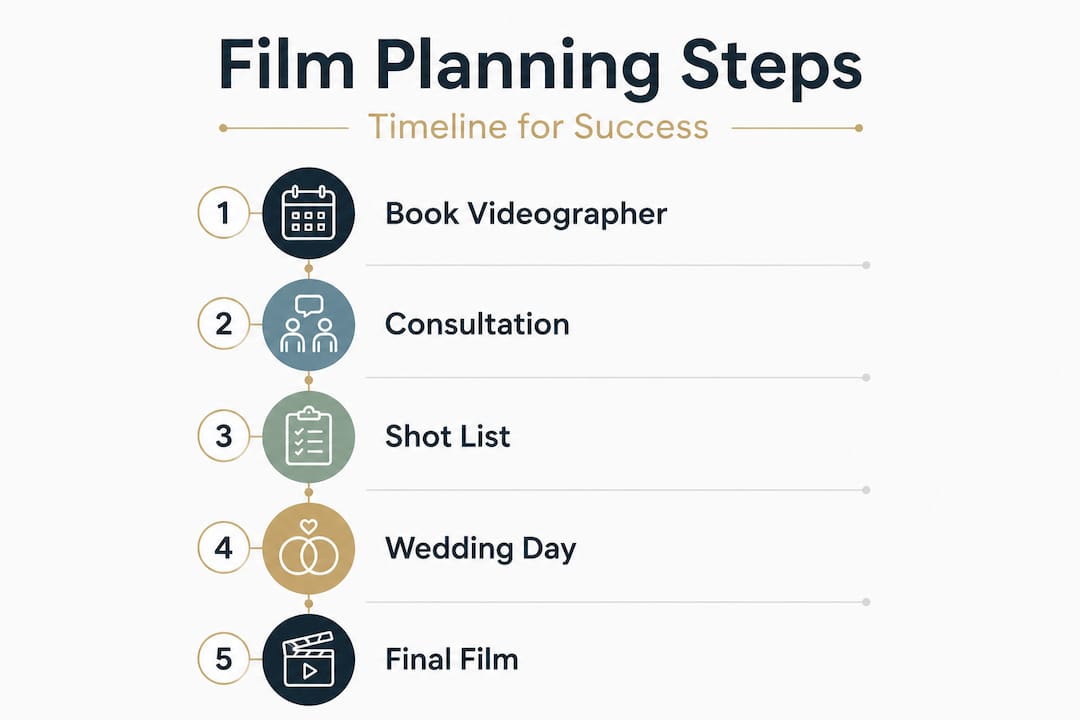
- Book your team 9 to 12 months in advance. Top-tier videographers in the NYC and NJ market fill their calendars fast, especially for peak South Asian wedding season between October and February.
- Schedule a detailed pre-wedding consultation. Share your vision, your family's cultural background, and any non-negotiable moments. This is where you build the creative brief together.
- Complete a thorough wedding questionnaire. A detailed wedding questionnaire helps your team understand your priorities without relying on day-of verbal reminders.
- Build a ceremony-by-ceremony shot list. This is not a general list of "nice to have" shots. It is a precise, event-specific breakdown: who needs to be on camera, when, and why.
- Confirm logistics with all vendors. Your videographer needs to coordinate with your photographer, DJ, event planner, and venue manager. Using strong vendor contact best practices prevents schedule collisions.
- Schedule a venue walk-through. Your team should visit the ceremony and reception spaces before the wedding day to identify lighting challenges and camera placement options.
- Send your final timeline at least two weeks out. Changes happen, but locking in a working timeline early prevents last-minute chaos.
| Planning milestone | Recommended timing |
|---|---|
| Videographer booked | 9 to 12 months before |
| Initial consultation | 8 to 10 months before |
| Questionnaire submitted | 4 to 6 months before |
| Shot list finalized | 2 to 3 months before |
| Vendor coordination call | 4 to 6 weeks before |
| Venue walk-through | 2 to 4 weeks before |
| Final timeline sent | 2 weeks before |
Pro Tip: Assign one family member as the dedicated point of contact for your video team on the wedding day itself. This person knows where key family members are at all times and can quietly alert the crew to unscripted moments before they pass.
Common mistakes to avoid in South Asian wedding filming
Even the best plans can stumble over unexpected pitfalls, so let's highlight common mistakes and how to sidestep them.
Many couples invest heavily in their wedding day experience but lose significant moments on film simply due to preventable errors. Knowing what goes wrong most often gives you a real advantage.
Top five mistakes and how to prevent them:
- Skipping audio planning for outdoor ceremonies. Wind, crowd noise, and live music at a Baraat can make ceremony audio unusable. Always confirm your team has directional microphones and backup wireless options specifically for outdoor moments.
- Failing to share the full guest list hierarchy. Your videographer does not automatically know that your maternal grandmother has not met your spouse's family yet. These once-in-a-lifetime reaction shots require context. Share a brief "VIP family list" before the event.
- Underestimating the length of events. South Asian weddings routinely run 45 minutes to an hour behind schedule. Build buffer time into your plan and communicate that buffer to your video team so they are not packing up during the Vidaai.
- Not confirming venue rules for drones and lighting equipment. Some venues in New York City explicitly prohibit drone use indoors or in their outdoor spaces. Discovering this on the wedding day is too late. Your video team should verify permits weeks in advance.
- Assuming the photographer and videographer will coordinate themselves. They will not unless you specifically ask them to. A brief joint call between your photo and video leads eliminates duplicate blocking, where both teams crowd the same angle and block each other.
Reviewing wedding film best practices from real South Asian celebrations gives you a practical picture of what seamless execution actually looks like on film.
Pro Tip: During your final vendor call, explicitly ask your videographer to identify three "high-risk" moments on your timeline where timing or logistics could create problems. Getting their honest assessment in advance is far more useful than a surprise on the day.
Choosing the right videography team for your South Asian wedding
Avoiding mistakes sets the stage for picking the right partners; here's how to find and select the best crew for your film.
Not every videographer who calls their work "cinematic" has the experience your wedding demands. South Asian celebrations are fast-moving, multi-day, and culturally layered. Your team needs to have been in the room before.
- Request portfolio samples from South Asian weddings specifically. Watching South Asian wedding film samples gives you immediate evidence of how a team handles the visual complexity of events like a Sangeet or a multi-faith ceremony.
- Ask for references from recent NYC and NJ clients. Local references understand venue-specific challenges and vendor ecosystems you will be working within.
- Review a wide range of their work. Exploring wedding film examples across different wedding styles shows you whether a team can adapt their storytelling or whether they produce the same look regardless of the couple.
- Ask pointed interview questions. Find out how many cameras they deploy, whether they have a dedicated sound team, what their delivery timeline is, and how they handle equipment failure.
- Confirm cultural familiarity directly. Ask specifically which South Asian ceremonies they have filmed and what they learned from doing so. Vague answers are a red flag.
- Review the contract carefully. Confirm what raw footage rights you hold, what revisions are included, and what happens if a team member is unavailable on your date.
Pro Tip: Ask your shortlisted videographers about a specific South Asian wedding they filmed in the NYC or NJ area within the last two years. Their answer, including the details they remember, tells you immediately how invested they were in the experience.
Our take: Why cinematic storytelling elevates South Asian wedding memories
After understanding the logistics, let's step back and reflect on why cinematic storytelling is truly transformative for South Asian weddings.
We have filmed hundreds of weddings, and the ones that move people to tears years later are never the ones with the longest uncut ceremony recordings. They are the ones where the film is built, not just recorded.
There is a real difference between documentation and storytelling. Documentation says: "Here is everything that happened." Storytelling says: "Here is what it felt like to be there." South Asian weddings are overflowing with material for the second kind of film. The quiet moment when a father adjusts his daughter's dupatta. The elderly grandmother who has traveled from another country seeing the Baraat arrive. The chaos and joy of the Sangeet turning into something genuinely beautiful when cut to music that actually matches the energy.
"A recorded event tells you what happened. A crafted memory makes you feel it again every time you watch."
When you watch cinematic storytelling in wedding films done with real craft, you realize that the goal was never to collect footage. The goal was to preserve feeling. That requires a team that thinks like filmmakers, not operators. It requires editing choices, color grading, and music selection that serve the emotion of the story, not just the chronology of the day. For South Asian couples in New York and New Jersey, where your celebration carries the weight of family history and cultural identity, that distinction matters enormously.
Ready to create your own unforgettable South Asian wedding film?
With inspiration and a step-by-step framework, take your vision further by connecting with seasoned teams to bring your wedding story to life.
Your wedding celebration deserves more than footage on a hard drive. It deserves a film that your children and grandchildren will watch and understand, one that makes them feel the love and culture it was built from. Explore our luxury wedding cinematography packages designed specifically for multi-day South Asian celebrations across New York and New Jersey. Every package includes multi-camera coverage, drone footage, color grading, and full ceremony edits crafted with a filmmaker's eye.
Ready to start the conversation? Reach out through our wedding film inquiry form and let's talk about your specific ceremonies, venues, and vision. Availability for 2026 is filling quickly, and the earlier you connect, the more time we have to do your story justice.
Frequently asked questions
What moments should never be missed in a South Asian wedding film?
Key rituals including the Mehendi, Sangeet, Baraat, and Vidaai, along with candid family portraits and spoken blessings, form the emotional backbone of any complete South Asian wedding film. Missing even one of these events creates a gap that no amount of editing can fill.
How early should couples book a videographer for a South Asian wedding?
Booking at least 9 to 12 months before your wedding date is strongly recommended, especially for peak season dates in the NYC and NJ market, where top teams are reserved well in advance.
What's the difference between traditional and cinematic wedding films?
Traditional wedding films record events sequentially from start to finish, while cinematic films use intentional storytelling, selective editing, color grading, and music to create an emotional narrative that feels more like watching a film than rewinding a recording.
How can couples communicate special requests to their videographer?
Submitting a detailed questionnaire and following up with a direct vendor coordination call ensures every personal request, from specific family members to particular ritual moments, is documented, confirmed, and built into the shot list before the wedding day.