
When wind hits an outdoor ceremony, audio breaks first and image stability second. Close-mic the officiant and couple with proper windscreens, run a redundant recorder, then lock down your camera setup and use whatever windbreaks the site offers. Do those three things in that order and a 15 mph gust becomes a non-event instead of a ruined vow track.
Run through this before anything else:
- Lavalier mics on both partners and the officiant, not just a single shotgun on the camera.
- A deadcat or blimp windscreen on any mic that sits outside clothing.
- A second recorder running independently, ideally hidden near the altar.
- Sandbags or tie-downs on tripods, speaker stands, and any unstable decor.
- A tripod or locked gimbal mode ready in case handheld gets too shaky.
Pro Tip: Record a 30-second ambient test the moment you arrive on-site. If wind rumble shows up on your meters before the ceremony even starts, you know to swap windscreens now, not after the vows are already lost.
Key Takeaways
Protecting audio with close-mic lavaliers, proper windscreens, and a redundant recorder matters more than any camera setting when wind threatens an outdoor ceremony.
| Point | Details |
|---|---|
| Audio comes first | Lavalier both partners and the officiant, then add a hidden backup recorder near the altar. |
| Match windscreen to wind | Use foam for light breeze, a deadcat for moderate wind, and a blimp for the highest protection. |
| Stabilize deliberately | Increase gimbal motor power, lower follow speed, or switch to a sandbagged tripod for static shots. |
| Scout wind, not just light | Check prevailing wind direction at ceremony time and position natural barriers upwind. |
| Hire for redundancy | Visualizemedia builds multi-camera coverage and audio redundancy into every outdoor ceremony plan. |
How to Film an Outdoor Ceremony in Wind: Audio Comes First
Wind ruins video by making it shaky. Wind ruins weddings by making the vows inaudible, and audio is the harder loss to fix in post. Every decision here should protect sound before it protects the shot.
Microphone choice. Lavaliers are the backbone of outdoor ceremony audio because they sit an inch from the mouth, which cuts down how much open air the wind has to travel across before hitting the capsule. Mic the officiant and both members of the couple separately rather than relying on one shotgun mounted to a camera fifteen feet away. A shotgun mic still earns its place as a secondary source, hidden in a bouquet or on a stand just out of frame, but it should never be your only channel.
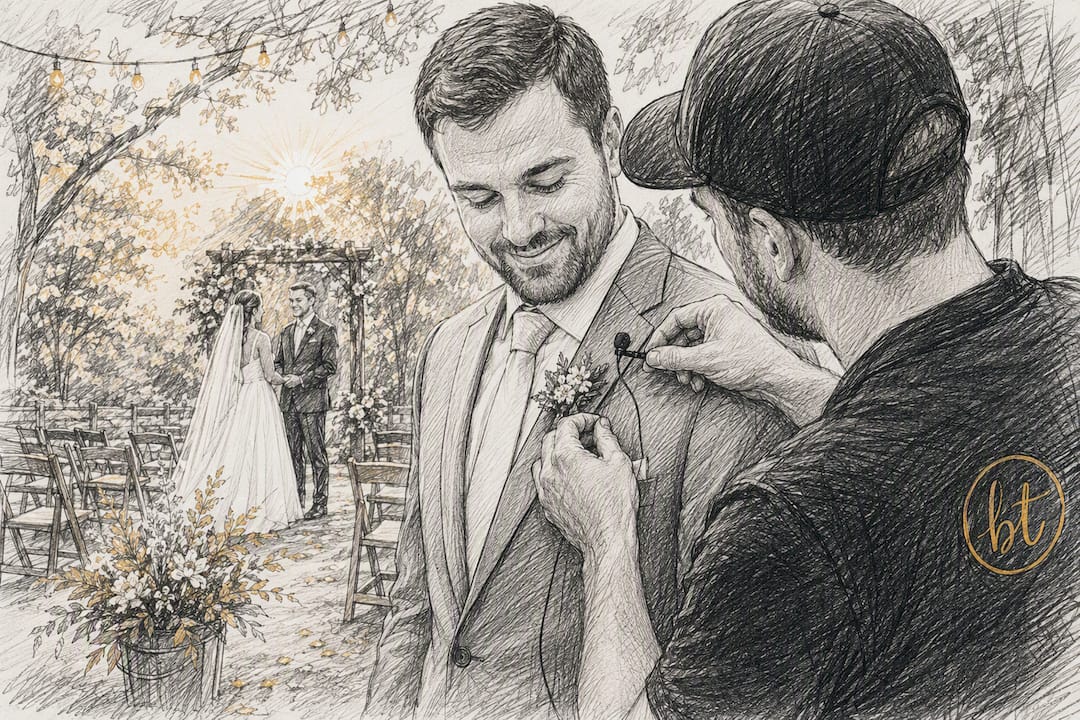
Wind protection hierarchy. Foam covers handle a light breeze and nothing more. Once wind picks up, switch to a deadcat, the furry windscreen that breaks up turbulent airflow before it reaches the capsule. For genuinely difficult conditions, a blimp or zeppelin system is the strongest option: it fully surrounds the microphone capsule and pairs a shock mount with a furry cover, which is why professionals reach for it on exposed coastal or open-field ceremonies. The tradeoff is size. A blimp is bulkier and more visible in wide shots, so weigh that against how much wind you're actually fighting.
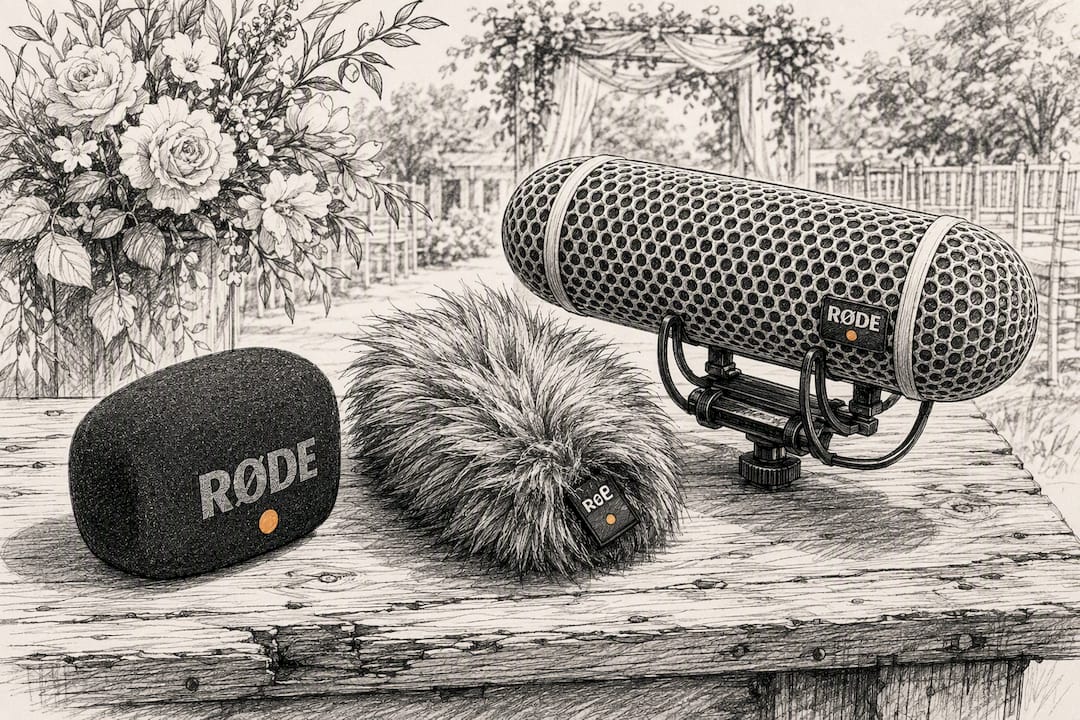
Placement details. Clip lavaliers at sternum height, angled slightly upward, and route the cable inside a jacket or dress seam so fabric rub doesn't register as noise. Check that clothing won't shift and cover the mic capsule once the couple starts moving through vows.
Backup workflow. Send audio to both the camera and a dedicated recorder, and keep a second independent recorder running as backup. Practitioners commonly hide a small recorder inside the officiant's book or a nearby floral arrangement, which costs almost nothing and saves the day if a transmitter drops out. Keep input gain conservative and use a limiter so a sudden gust or a raised voice doesn't clip the track. Check transmitter battery levels and confirm you have two full channels of storage before the processional starts.
Pro Tip: Test your lav placement again after the couple's final wardrobe adjustment, not before. A jacket buttoned five minutes before walking down the aisle can shift a mic just enough to rub against fabric for the entire ceremony.
Stabilizing Your Camera When Gusts Hit
A gimbal fights harder in wind than it does on a calm day. Strong gusts push against the payload and force the motors to overcorrect, which shows up as horizon drift and small, persistent jitters even when your hands are steady. Countermeasures are straightforward:
- Increase motor power and lower the follow speed so the gimbal resists gusts instead of chasing them.
- Lock the horizon setting rather than letting it float.
- Switch to a tripod with sandbagged legs for any static or locked-off shot, saving the gimbal for movement you actually need.
- Swap heavy telephoto glass for a compact prime lens when possible. Less sail area on the lens means less wind load on the stabilizer.
- Shoot from a slightly lower angle and keep the gimbal close to your body rather than extended, which reduces leverage the wind can act on.
Bring extra batteries specifically for the gimbal. The motors draw more power fighting wind than they do in still air, and a dead stabilizer mid ceremony forces you into handheld at the worst possible moment.
Pro Tip: Do a five-second horizon check through your monitor before the processional starts. If you see drift standing still, rebalance the gimbal now rather than trying to fix it in the edit.
Choosing a Ceremony Spot That Fights Wind for You
Scout the site at the actual ceremony time, not just whenever you happen to arrive. Wind patterns shift by the hour, and a spot that's calm at 10 a.m. can turn into a wind tunnel by a 4 p.m. ceremony. Check a local forecast for prevailing direction, and walk the site listening for repeat noise sources like nearby traffic, HVAC units, or a generator that might overlap with vows.
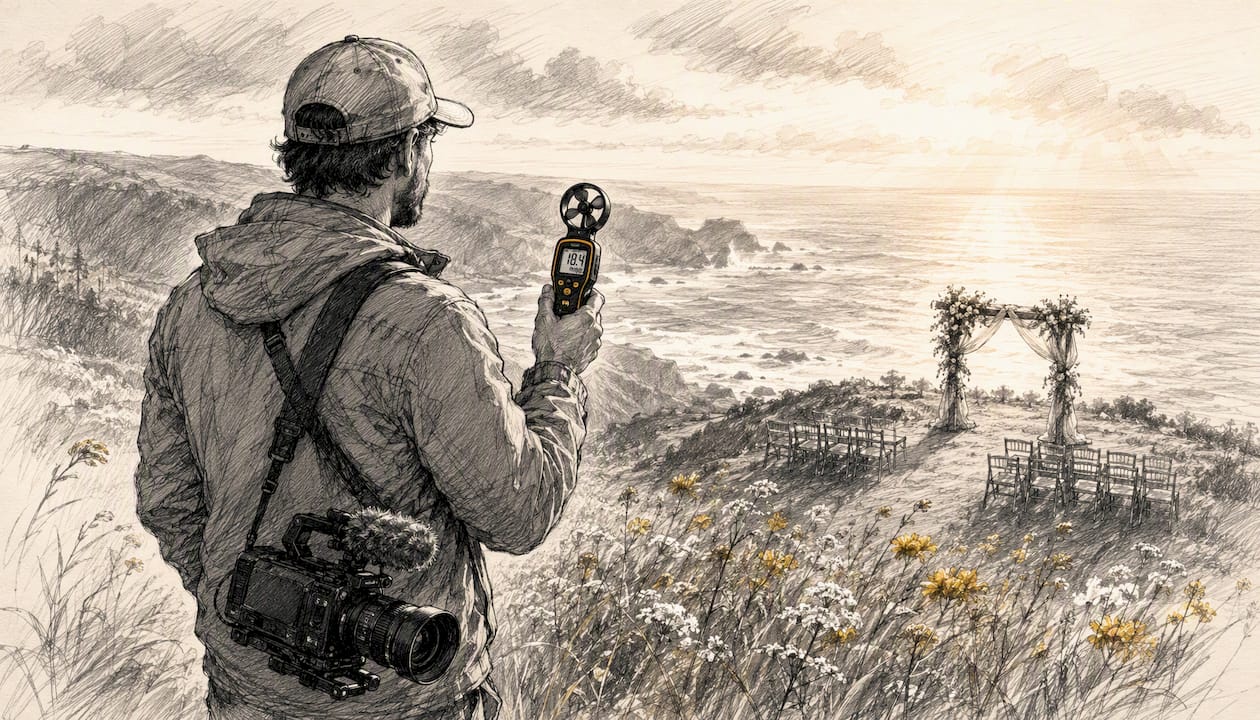
Trees, hedges, and building walls act as free windbreaks, so use natural barriers to your advantage when proposing where the arch or altar should sit. If the site has no natural cover, ask about a temporary shelter arch or decor screen positioned upwind of the ceremony area. Positioning the officiant and guests with their backs to the wind also cuts down on how much of it hits exposed microphones head-on.
Confirm these items with the planner or venue ahead of time by following expert advice on how to choose the right DJ for your wedding, ensuring all vendors including sound professionals coordinate effectively.
- Power access near the ceremony spot, so you're not running long extension cables through wind-prone areas.
- Permission to reposition chairs or add a small windbreak structure.
- Sandbags or ties for any floral installation that could tip in a gust.
- A backup indoor location, and at what wind speed the team agrees to use it.
Pro Tip: Ask the planner who's coordinating with the venue's outdoor wedding location about wind history at that specific spot. Repeat venues almost always have a known problem corner, and someone on staff has probably already learned it the hard way.
What to Pack Every Time You Shoot Outdoors
Build a kit that never leaves the van without these items: two to three lavaliers, a deadcat for each exposed mic, a blimp or furry-covered shotgun for high-wind days, two independent recorders, sandbags, a tripod and gimbal, spare batteries for every device, extra memory cards, and cable ties for securing loose cords.
Your redundancy workflow should be simple to explain to an assistant: primary lav feeds the camera and main recorder, a secondary lav or hidden recorder runs independently as backup, and both sync through timecode or a slate clap at the start. Before the ceremony begins, verify transmitter battery percentage, record a short ambient test, check input levels against your limiter, and confirm lav placement one last time after any final wardrobe change. This same pre-flight discipline is what a detailed audio checklist is built around, and it takes less than five minutes once it's a habit.
Handling Wind in Real Time During the Ceremony
Assign one crew member to watch audio meters throughout the ceremony, with headphones on at least one recorder so problems get caught by ear, not just by eye. Common faults to watch for: clipping on a raised voice, RF dropout on a wireless channel, or a rustling sound that signals a lav has shifted against fabric.
Quick fixes in the moment matter more than perfect planning. If a lav starts rustling, discreetly reposition it during a natural pause. If a wireless channel drops, switch to the backup recorder without breaking stride. A photographer standing slightly downwind of an exposed mic can physically block gusts for a few critical seconds, so agree on that positioning with your photo team before the ceremony starts.
If wind is sustained and strong enough to threaten either the ceremony or your gear, that's a signal worth escalating. A short delay or move to a covered location is a better outcome than unusable vow audio, and having that conversation ready with the planner beforehand makes it far less awkward in the moment.
Pro Tip: Agree on one hand signal with your photographer before the ceremony that means "gust incoming, hold position." It takes two seconds to teach and saves entire audio takes.
Why Windscreens Actually Work
Wind noise isn't random static. It's turbulent air hitting the microphone capsule directly, creating low-frequency rumble and broadband noise that sits right on top of the speech frequencies you're trying to capture. That's why foam alone stops working once wind picks up past a light breeze; it simply doesn't break up enough airflow.
A deadcat's long fibers disrupt turbulence before it reaches the capsule, handling moderate-to-high wind far better than foam. A blimp goes further, fully enclosing the mic and adding a mechanical shock mount, which is why it remains the top-tier choice for the windiest ceremony sites. The tradeoff is visibility and setup time, which is exactly why close-micing the couple in the first place reduces how much you need heavy wind protection to begin with; less distance between mic and mouth means less exposed air for wind to disturb.
- Foam: light breeze only, minimal bulk.
- Deadcat: moderate-to-high wind, visible but effective.
- Blimp: highest protection, best for consistently windy or coastal sites.
Pro Tip: Keep one deadcat and one compact blimp in your bag at all times. Deciding which to use takes ten seconds once you've felt the wind on-site; not having the option costs you the whole take.
A Cinematographer's Take on Filming Through Wind
One ceremony stands out: gusts strong enough to shake the arch, and the couple's lavs alone would have caught nothing but rumble. The hidden backup recorder tucked in the officiant's book carried the vows clean while we swapped to deadcats mid-setup. Redundancy isn't a nice extra; it's what saved that footage.
When to Bring in a Team Built for Windy Ceremonies
A single operator with a shotgun mic can handle a calm backyard ceremony. A large guest list, an exposed waterfront site, or vows you can't afford to lose calls for a crew that has already solved this problem dozens of times. Visualizemedia builds every outdoor shoot around the audio-first rule: lavaliers on the couple and officiant, a hidden backup recorder, multi-camera coverage with gimbal operators trained for wind, and a contingency plan already discussed with your planner before anyone walks down the aisle.

That contingency planning is the part most couples never see until they need it: knowing at what wind speed to suggest moving under cover, or how to keep a ceremony on schedule while an operator quietly swaps a windscreen. If you're planning a ceremony at an exposed outdoor venue and want a crew that treats wind as a solved problem rather than a surprise, get in touch through Visualizemedia's wedding services page. You can also browse recent work on Instagram to see how the team handles real outdoor conditions, or start with the wedding questionnaire to share your date and venue details.
Frequently Asked Questions
What's the single most important step when filming an outdoor ceremony in wind? Protect audio first. Close-mic the officiant and couple with lavaliers, add wind protection appropriate to conditions, and run a backup recorder independent of your main camera feed.
Can foam windscreens handle a windy wedding ceremony? Foam only works for a light breeze. Once wind becomes moderate or strong, switch to a deadcat or blimp for real protection against turbulent air noise.
How do you stabilize video outdoors when gimbals struggle in wind? Increase motor power, lower follow speed, lock the horizon, and switch to a sandbagged tripod for static or locked-off shots when gusts get strong.
Should the ceremony ever move indoors because of wind? Yes, if sustained wind threatens safety or makes audio unusable. Agree on a wind threshold with the planner beforehand so the decision doesn't have to happen on the spot.
What backup gear should every videographer bring for windy outdoor weddings? Two to three lavaliers, deadcat covers for exposed mics, a blimp for high wind, two independent recorders, sandbags, and spare batteries for every device on the shoot.
Sources
- Audio for film: 101 ways to reduce wind noise when recording outside — RØDE
- How to improve gimbal performance in windy conditions — CameraGuidePro
- How videographers capture crisp audio during outdoor ceremonies — LEVI Weddings