
The fastest way to review a videographer portfolio is to check four things in order: storytelling arc, technical quality (audio, lighting, color, framing), authenticity (full edits versus highlight reels), and deliverables with usage rights. Then take one immediate action: request a short reel plus two full edits and at least two references before you schedule any call.
- Storytelling: Does the edit have a beginning, middle, and emotional peak?
- Technical quality: Is audio intelligible? Is color consistent cut-to-cut?
- Authenticity: Are full ceremony or event edits available, not just a 90-second highlight?
- Deliverables and rights: Do you own the final files, and in what format?
Pro Tip: Watch the first 30 seconds of a reel on your phone with headphones, then replay the same clip on a Bluetooth speaker. Audio problems that hide in earbuds surface immediately on external playback.
Visualizemedia, a luxury wedding cinematography studio in New York and New Jersey, uses this exact sequence when vetting subcontractors. The sections below turn it into a repeatable workflow.
Key Takeaways
Reviewing a videographer portfolio comes down to one discipline: verify scope and authenticity before you compare price.
60-second portfolio scan: the fastest signals to keep or cut a vendor
Before you spend 20 minutes on a full edit, run this triage. It takes one minute and eliminates most weak candidates.
- Does the reel run under two minutes and stay focused on one event type?
- Are at least three full projects linked or available on request?
- Is dialogue (vows, speeches) audible without straining?
- Does color stay consistent across cuts, or does skin tone shift between scenes?
- Are projects labeled with context (venue, event type, your role)?
- Is the portfolio on a clean page or organized site, not a raw Google Drive dump? A disorganized Drive folder predicts a disorganized working relationship.
Red flags to disqualify immediately: no full projects at all, no client names or event context, reels under 60 seconds for vendors claiming full-day wedding coverage.
Pro Tip: On mobile, thumb through the reel first for visual rhythm. Then open one full project and skip to the 20-minute mark. That's where focus drift, mic battery drops, and lighting changes show up — not in the opening minutes.
How to review videographer portfolios with a 7-question framework
A repeatable vendor comparison comes down to asking the same seven questions to every shortlisted candidate, then lining up the answers side by side. You're comparing scope, not price.
- Comparable experience: "Can you share two full edits from events similar in scale and format to mine?"
- Crew and camera count: "How many operators and cameras will cover my event?"
- Audio approach: "How do you integrate with a venue PA system, and what backup mics do you carry?"
- Deliverables and turnaround: "What file formats do I receive, and what is your standard delivery window?"
- Post-production scope: "Does the package include color grading, a highlight reel, and a full ceremony edit?"
- Availability and lead time: "Is my date available, and what is your booking deposit and cancellation policy?"
- References and full edits: "May I contact two past clients and see an unedited multi-cam sample?"
Copy those questions into an email or RFP and send the same version to every vendor. When answers come back, build a simple grid: crew size, camera count, audio method, edit count, turnaround, and price. Vendors who ask clarifying questions about your venue's PA setup and technical layout before quoting are lower-risk hires than those who accept a vague brief without follow-up.
Pro Tip: When two quotes look similar in price but one includes PA integration and the other doesn't, that gap often represents a full day of additional audio work. Scope first, price second.
Technical signals that separate good work from great work
Evaluating videographer work on a technical level means checking six specific dimensions, not just whether the footage "looks nice."
- Audio intelligibility: Vows and speeches should be clear without boosting your device volume. The NCRA benchmark for intelligible recordings is roughly 20 dB above ambient noise; test on external speakers, not earbuds.
- Color consistency: Skin tones should hold across cuts. A bride's dress shifting from warm white to cool blue between angles is a grading failure.
- Sharp focus: Close-up detail shots (rings, tears, hands) should be crisp. Soft focus on a static subject means the operator missed the pull.
- Stable framing: Handheld work can have motion, but subjects should stay composed in frame. Jittery pans during vows are a distraction, not a style choice.
- Lighting for faces: Backlit subjects with blown-out windows and dark faces indicate the operator didn't expose for the subject.
- Pacing and cuts: Cuts should land on beats or emotional moments. Choppy edits with no rhythmic logic suggest the editor is covering gaps rather than crafting a story.
For platform-specific review: Instagram Reels and YouTube Shorts are compressed and short, so they hide audio problems. Always request a full-length ceremony edit before making a hiring decision. Spot-check long edits at the three-hour mark to catch focus drift or mic battery issues that never appear in highlights.
Does the videographer's style actually match your wedding?
Style fit is where technically competent vendors get eliminated. Ask yourself these yes/no questions while watching each reel.
- Does the mood match what you want your wedding film to feel like?
- Are emotional details (tears, laughter, quiet moments) given screen time, or is it all wide establishing shots?
- Is the pacing suited to your venue size and guest count, or does it feel rushed?
- Does the edit show variety across different lighting conditions and camera movements, or does every project look identical?
If you want a Super 8 wedding film, look for specific evidence: actual film grain (not a digital filter), labeled processing notes, and visible frame-rate characteristics. A vendor who genuinely shoots Super 8 will tell you the film stock, the processing lab, and the scan resolution. A vendor mimicking the look digitally will describe it as a "film-inspired grade." Both are valid aesthetically, but they are different products at different price points.
Pro Tip: Ask the vendor to show you two projects from different venue types. A videographer who shoots the same way in a cathedral and a rooftop loft is not adapting. That rigidity will show up on your wedding day.
How to verify portfolio authenticity before you commit
Highlight reels are marketing. Full edits are evidence. Here's the verification checklist:
- Request two complete edits (full ceremony plus reception, or full event coverage).
- Ask for at least one unedited multi-cam sample or raw clip from a comparable event.
- Check project credits: does the vendor list their specific role (director, second camera, editor)?
- Ask for two contactable references and actually call them.
- Run a small paid test if the budget allows: 3–5 minutes of raw footage edited to your brief reveals competency faster than any portfolio review.
Sample email to request full edits:
In full edits, watch for scene consistency: do the lighting and audio quality hold through the entire event, or do they degrade after the first hour? Staged or reshot scenes often look noticeably cleaner than genuine event coverage.
What to confirm in deliverables, pricing, and usage rights
Price is a scope indicator, not a quality indicator. A single-operator quote and a two-person crew quote with PA audio integration and a same-week edit are not comparable numbers — they represent entirely different productions.
Deliverables checklist before you sign:
- Raw files vs. edited masters: do you receive both?
- File formats and resolution (4K ProRes vs. compressed H.264 matters for archival use).
- Deliverable count: highlight reel, full ceremony edit, social clips, and how many revision rounds.
- Usage license: can you post the film publicly, or is there a restriction?
- Delivery timeline and archival storage window.
Compare quotes on scope, not headline price. Itemize crew size, camera count, audio approach, post-production scope, and turnaround before you look at the total.
Lead times and logistics that affect whether a portfolio's promises are realistic
Timeline matters as much as quality. A stunning portfolio from a vendor who is already booked on your date is irrelevant.
- Book early: Four to six weeks minimum for standard events; eight to twelve weeks for large-scale, live-streamed, or hybrid productions. Top vendors in New York and New Jersey fill their calendars well ahead of peak season.
- Ask about venue recce: Has the vendor visited or reviewed floor plans for your venue?
- Confirm backup equipment: What happens if a primary camera fails mid-ceremony?
- Clarify crew arrival time: A two-person crew arriving 30 minutes before ceremony start generally cannot set up PA integration properly.
- Verify insurance: Request a certificate of liability insurance before signing any contract.
Pro Tip: Check the vendor's portfolio for seasonal patterns. A videographer with consistent bookings across spring, fall, and winter shows reliable demand. A portfolio heavy in one season may indicate limited availability or niche experience.
If you build portfolios: how to present work so clients can evaluate you
For videographers reading this, the same checklist your clients use is the one you need to satisfy.
- Keep your reel under 90 seconds for long-form work; label every section by format (ceremony, reception, corporate, Super 8).
- Include your specific role on each project (director, second camera, editor, colorist).
- Make full edits available on request, not buried behind a contact form.
- For Super 8 wedding work, include provenance: film stock, processing lab, and scan resolution so clients can evaluate authenticity and aesthetic intent.
To request a portfolio review from a past client:
- Email within two weeks of delivery while the experience is fresh.
- Ask one specific question: "Is there a moment in the film that surprised you?"
- Request permission to use their response as a testimonial.
- For peer reviews, share a Google Drive folder with labeled sections and ask for feedback on one specific dimension (audio mix, pacing, or color).
A well-structured portfolio with labeled sections and role descriptions books more clients than a visually impressive but disorganized one.
How to verify event and wedding-specific experience at the right scale
Project-format relevance is the filter most couples skip. Wedding videography requires different skills than corporate or commercial work: managing emotional unpredictability, working around officiant timing, capturing unrepeatable moments without direction.
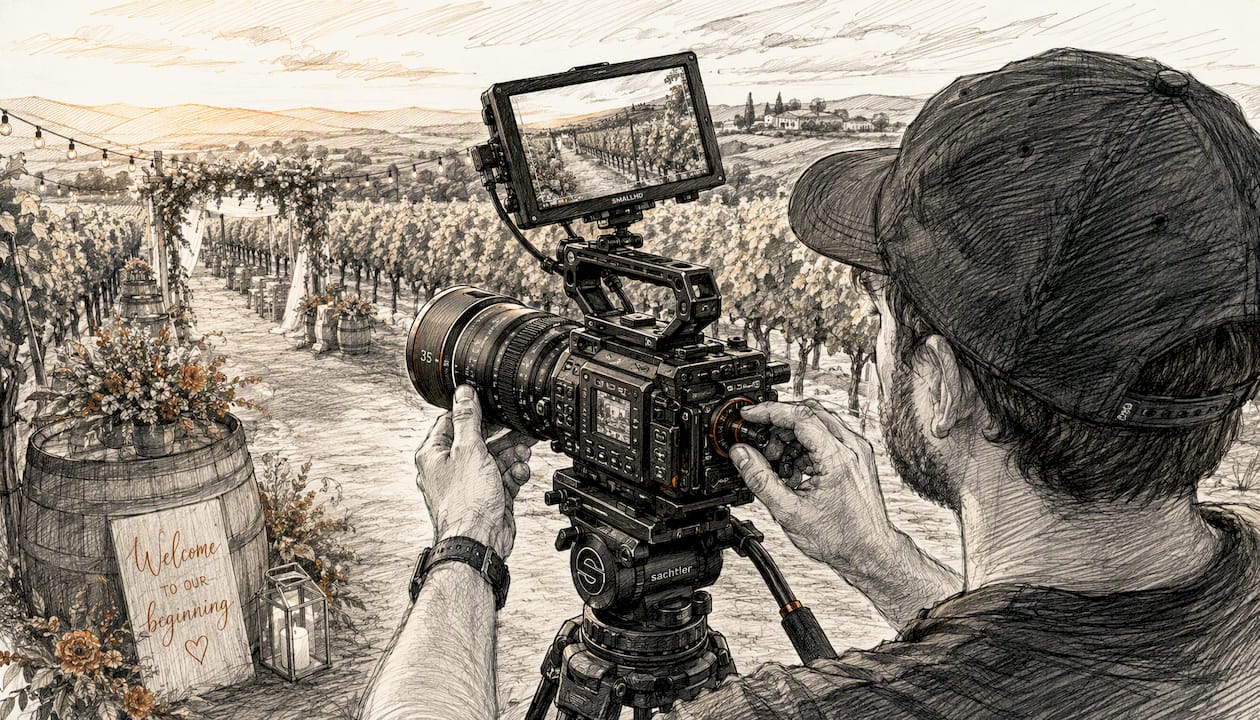
Ask specifically: "How many weddings of this size and format have you filmed in the past two years?" Then request edits from those specific events, not a general portfolio. A vendor with 40 corporate shoots and two weddings is not a wedding videographer with corporate experience. They are a corporate videographer who has shot two weddings.
For large events with live streaming or multi-camera setups, verify the vendor has managed that exact technical configuration before, not just claimed familiarity with it.
What Visualizemedia looks for when hiring subcontractors
The signals that matter most when vetting any videographer are consistent narrative craft, reliable audio across a full event, a transparent workflow, and references who actually pick up the phone.
When evaluating subcontractors for New York and New Jersey weddings, the 7-question framework above is a recommended starting point, not the finish line. A vendor who answers all seven questions well but cannot produce two full edits from comparable events does not move forward. Audio is non-negotiable: a ceremony with inaudible vows cannot be fixed in post.
The most overlooked signal is how a vendor handles a question they cannot answer. Honest uncertainty about a venue's PA setup is a green flag. Confident vagueness about the same question is a red one.
Visualizemedia: cinematic wedding films for couples who want it done right
Couples who have worked through this checklist and want a team that already passes every item on it: Visualizemedia films luxury weddings across New York and New Jersey with multi-camera coverage, aerial drone footage, professional color grading, and full ceremony edits delivered in high-quality archival formats.
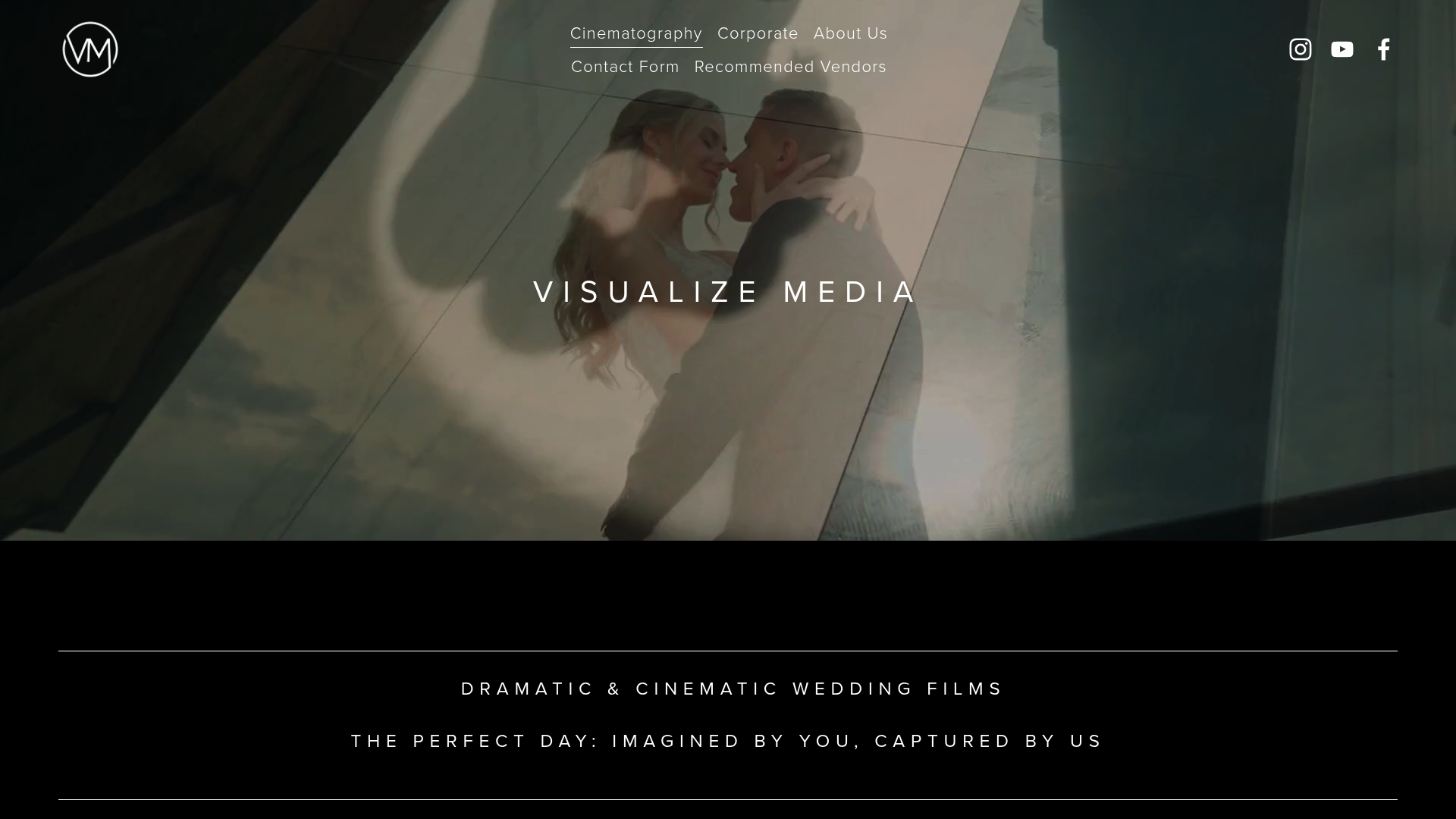
Every package includes a highlight reel, a full ceremony edit, and a dedicated colorist. Super 8 film coverage is available with full provenance documentation. Follow our work on Instagram to see current projects and style samples before you reach out.
Check availability for your date or visit the main site to review packages and request a consultation.
Sources
- Choose the best videographer for your event
- How to evaluate a video editor’s portfolio before hiring
- How to review deposition videographer's work (quality checklist)
- How to choose a videographer for your business | 10 criteria
- Expert tips for choosing the right videographer
- How to make a video portfolio like a pro (+ inspiring examples)