
You waited months for that first edit link to arrive in your inbox. You click play, and something feels off. Maybe the pacing drags through the cocktail hour, or a key moment during the vows is missing entirely. For couples investing in a luxury wedding film in New York or New Jersey, that first-draft disappointment is more common than it should be. The good news is that a structured, expert-led review process can prevent it. This guide walks you through every step, from building a solid checklist before editing starts to giving feedback your filmmaker will actually appreciate.
Table of Contents
- Start with a detailed editing checklist
- Evaluate the video edit with an expert eye
- Request revisions with clarity and professionalism
- Go beyond the highlight reel: Verify lasting quality
- What most couples miss when reviewing video edits
- Elevate your wedding film with expert support
- Frequently asked questions
Key Takeaways
| Point | Details |
|---|---|
| Use a comprehensive checklist | Thorough preparation with detailed notes and deadlines minimizes revision cycles. |
| Focus on story and pacing | A luxury wedding film excels through strong narrative coherence and emotional timing, not just flashy effects. |
| Communicate feedback professionally | Specific, solution-oriented revision requests lead to better edits and a stronger client–editor relationship. |
| Review full-length films | Judge quality and consistency by asking for and watching complete edits, not just highlights. |
Start with a detailed editing checklist
Before your videographer even opens an editing timeline, you need a shared document that removes all ambiguity. Think of it as the blueprint for your film. Without one, even the most talented editor is working from assumptions rather than your actual vision.
A strong checklist covers much more than just a shot list. Premium editing checklists should include creative notes on pacing and style, event order preferences, the confirmed first draft deadline, and the exact number of revision rounds included in your contract. When these details are in writing, both you and your filmmaker are protected from the kind of miscommunication that leads to repeated back and forth.
Here is what to include in your pre-edit checklist:
- Creative tone and style: Cinematic and emotional, documentary, or a blend
- Pacing notes: Should the film move quickly through formalities but slow down for vows?
- Event order: Ceremony, cocktail hour, speeches, first dance, in your preferred sequence
- Must-include moments: Specific guests, surprise elements, or family traditions
- Music preferences: Cleared songs, genre mood, or energy arc from beginning to end
- Delivery specs: Film length, export format, and color grade preferences
- Revision rounds: Confirm how many are included and what qualifies as a revision
| Checklist element | Why it matters |
|---|---|
| Creative notes | Guides the editor's stylistic decisions from frame one |
| Event order | Prevents structural surprises in the first draft |
| Revision rounds | Caps scope creep before it starts |
| Delivery deadline | Sets shared timeline expectations |
| Music mood | Ensures emotional arc aligns with your vision |
Pro Tip: Send your checklist at least two weeks before your wedding day, not after. Your videographer can flag anything unclear before they are deep in the edit. When you're choosing a wedding videographer, ask upfront whether they use a formal intake process. Teams that do tend to produce cleaner first drafts.
Also discuss wedding video turnaround timelines in writing. Luxury edits typically run four to twelve weeks depending on footage volume and post-production complexity. Knowing this in advance prevents unnecessary anxiety.
Evaluate the video edit with an expert eye
Once the first draft arrives, resist the urge to simply watch it and react emotionally. That is a recipe for vague, hard-to-act-on feedback. Instead, watch it twice: once for feeling and once for craft.

The most important markers of quality in a premium edit are not flashy transitions or elaborate effects. Premium editing quality is measured by narrative coherence, emotional clarity, and consistent pacing. A well-edited luxury film should "breathe," meaning it gives important moments room to land before moving forward.
Here is a structured way to review your first draft:
- Watch it straight through without stopping to take notes.
- Write down the emotional peaks: Where did you feel something? Where did attention drift?
- Watch it a second time with a notepad and use timestamps for specific observations.
- Check for coherence: Does the story flow logically from beginning to end?
- Evaluate consistency: Does the color grade, audio mix, and pacing feel uniform throughout?
- Assess audio quality: Can you clearly hear every word of the vows and speeches?
- Separate style from substance: Is something off because of quality, or because of personal taste?
| What to evaluate | Signs of quality | Red flags |
|---|---|---|
| Pacing | Moments breathe and build naturally | Rushed cuts or slow dead zones |
| Narrative arc | Story has a clear emotional journey | Disjointed scene order |
| Color grade | Consistent warmth and depth throughout | Color shifts between clips |
| Audio mix | Speech is clear above music | Voices buried or distorted |
| Style consistency | Same visual language throughout | Effect mismatches between sections |
Pro Tip: Watch your edit on a large screen with good speakers or headphones at least once. Audio quality issues are often invisible on a laptop at low volume. The cinematic artistry that defines luxury filmmaking shows up most clearly when viewed the way it was intended to be experienced.
Request revisions with clarity and professionalism
After your careful review, you likely have some feedback. How you deliver it matters enormously. Vague or emotional feedback creates confusion; specific, solution-oriented notes lead to faster, cleaner results.
Here is how to structure a revision request that works:
- Use timestamps: "At 3:42, the audio from the officiant is barely audible."
- Describe what you observe, not just how you feel: Instead of "this part feels weird," try "the transition between the ceremony and reception feels abrupt."
- Suggest a direction: "Could we add the ambient crowd sound here to smooth the cut?"
- Group similar notes together: All pacing notes in one section, all audio notes in another.
- Acknowledge what works: Start and end with specific things you love.
Professional revision guidance recommends calm, solution-focused communication. Avoid language that implies the editor made a mistake. Instead, frame feedback as collaborative problem-solving. Be honest about limitations on both sides and allow reasonable processing time.
Here is a model message you can adapt:
"Thank you so much for the first draft. We really love the opening sequence and the way the vows section feels. A few things we'd like to revisit: at 4:15, the speech audio from my father seems a bit low compared to the music. Could we bring his voice up slightly? Also, we'd love to include the brief moment at 7:02 where our dog walked down the aisle. Overall, the pacing feels great. Looking forward to the next version!"
When personalizing your wedding film, specific written feedback is the fastest path to a result that feels truly yours. Avoid verbal-only conversations where possible. Written notes create a paper trail that prevents misunderstandings from round to round.
Go beyond the highlight reel: Verify lasting quality
A beautifully cut two-minute highlight reel can hide a lot of inconsistencies in a full-length film. If you are evaluating a videographer before booking, or reviewing the final product before approving it, always go deeper than the highlight.
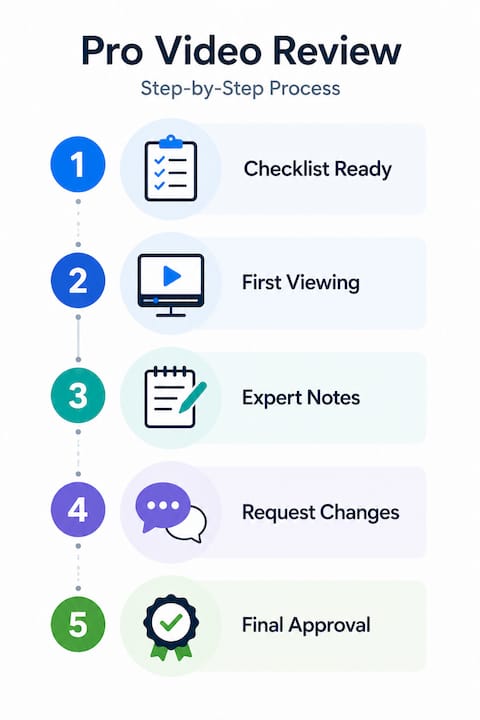
Full-length film review is essential for upscale couples. Ask to see complete ceremony and reception edits, not just trailers. Listen specifically to speech audio, ambient ceremony sound, and how music transitions across scene changes. These are the areas where less experienced editors often fall short.
Key things to check in a full-length film review:
- Ceremony audio: Every word of the vows should be audible and cleanly mixed
- Speech clarity: Multiple microphone sources should blend naturally without clipping
- Consistency across the film: Does the energy and color remain stable from beginning to end?
- Handling of low-light scenes: Reception footage should look intentional, not grainy or underexposed
- Scene-to-scene flow: No jarring jumps between radically different locations or lighting conditions
When evaluating a videographer, watch their work from at least two or three different weddings across different venues. What defines cinematic wedding videos at the luxury level is not just one stunning film but repeatable excellence regardless of lighting, venue acoustics, or weather conditions.
What most couples miss when reviewing video edits
Here is the uncomfortable truth: most couples, even those with excellent visual taste, evaluate their first edit based on "vibe" rather than craft. They focus on whether a song choice moves them or whether they love the opening shot. Those impressions matter, but they are not the same as quality.
The real risk is style drift. This happens when revision requests slowly pull the edit in multiple directions because each note addresses a subjective reaction rather than a structural issue. Pacing and coherence are the actual foundation of a premium edit. When those are strong, the film holds together even if a few stylistic choices are not exactly what you imagined.
The other common pitfall is scope creep in the revision process. Without written expectations and boundaries set from the start, revision rounds can spiral. Luxury couples sometimes assume their investment entitles them to unlimited changes. The truth is, great filmmakers set boundaries not to be difficult but to protect the integrity of the edit and deliver the best possible result.
What separates couples who end up with extraordinary films from those who feel underwhelmed? They use the checklist framework, they evaluate craft over effects, and they give feedback that moves the project forward. If you want to see how current wedding videography trends are shaping the way luxury films are structured and paced, that context helps you give better feedback too.
Elevate your wedding film with expert support
The framework in this guide puts you in control of the review process, but the foundation of an extraordinary film is still the team you choose to work with.
At Visualize Media, we build the checklist process, revision structure, and creative collaboration directly into every package. Couples planning luxury weddings across New York and New Jersey can explore our wedding cinematography services to see exactly how we approach each film. Ready to move forward? Start by completing our wedding planning questionnaire so we can understand your vision in detail. You can also watch full wedding film examples to see our standard of storytelling before you reach out.
Frequently asked questions
What details should be included in a wedding video editing checklist?
Your editing checklist should cover creative notes on pacing and style, the first draft deadline, and the number of revision rounds included in your contract. Adding specific must-include moments and music preferences gives your editor everything needed to build a first draft that is close to your vision.
How many rounds of revisions are typical for wedding video edits?
Most professional teams include one to two revision rounds. Always confirm revision rounds and what qualifies as a revision before editing begins to avoid misunderstandings.
How can I give feedback without offending the videographer?
Use specific timestamps, describe what you observe rather than how you feel, and suggest a direction for each change. Professional revision feedback should stay calm and solution-oriented, making it easy for the editor to act without feeling criticized.
Should I only review the highlight reel?
No. Reviewing only highlight reels can hide inconsistencies in audio, pacing, and color across the full film. Always ask to see full-length edits and sample films from multiple different weddings before approving or booking.