
For most LinkedIn headshots, wear a well-fitted, solid mid-to-dark neutral or muted jewel tone, in matte fabric, styled one level more formal than your daily work outfit. That's the whole rule. Everything else is refinement.
Photographers who shoot headshots for a living frame the face to fill roughly 60 to 70 percent of the image, which means your outfit has to hold up under a tight, unforgiving crop. There's one exception worth flagging before you go further: formality shifts by industry. A litigator and a UX designer shouldn't dress identically, even though the underlying rule (solid color, good fit, one step above normal) stays the same for both.
Here's the fast version:
- Do: Choose navy, charcoal, or a muted jewel tone in a matte weave, and size it to fit your shoulders and collar exactly.
- Don't: Wear busy patterns, logos, bright white with no contrast, or anything shiny enough to catch studio light.
TL;DR:
- Solid, mid-to-dark colors like navy, charcoal, and jewel tones outperform bright or pastel shades in photo clarity and background separation.
- Matte fabrics are essential because shiny materials create unpredictable highlights and reflections under studio lighting, affecting image quality.
- Clothing fit matters more than price, with a focus on collar, shoulder, and layered fit, as tight cropping leaves no room for visible flaws.
- Dress one step more formal than your daily attire, with specifics varying by industry, to convey authority without appearing overdressed.
- The pose should include a three-quarter turn with the chin slightly forward and down, ensuring the face fills 60 to 70 percent of the frame for optimal framing.
What Colors and Fabrics Work Best for a LinkedIn Headshot Outfit
Color choice isn't a style preference here. It's a technical decision about how fabric behaves against skin tone and background.
Navy, charcoal, deep blue, forest green, burgundy, and muted jewel tones consistently photograph better than bright primaries or pale pastels. These shades separate cleanly from most skin tones and most studio or office backgrounds, which keeps the eye where it belongs: on your face. A studio review of LinkedIn photos backs this up, finding that solid mid-to-dark tones consistently outperform brighter alternatives once an image is shrunk down to thumbnail size, which is how most people will actually see your photo in a search result or a comment thread.
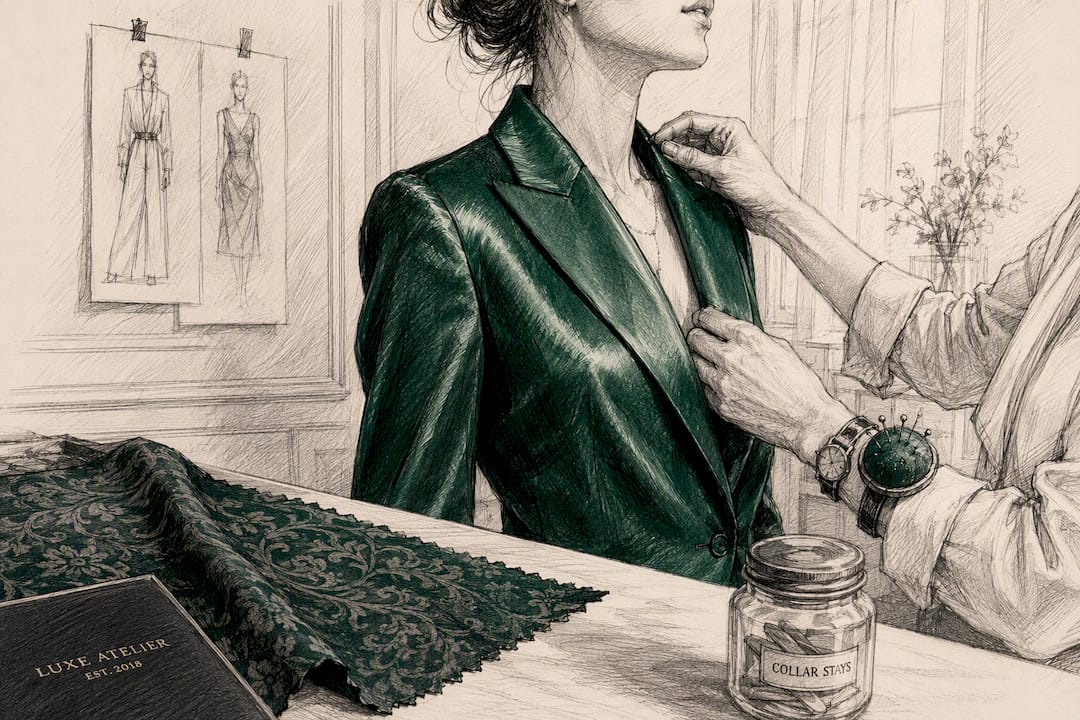
Fabric matters just as much as color. Matte finishes read as clean and controlled; high-sheen synthetics do the opposite. Under studio strobes, shiny fabrics throw unpredictable highlights that a camera sensor picks up as blown-out white patches. That polyester blouse that looks fine in the office mirror can turn into a light source under the wrong bulb.
Face-fill statistic: Recruiters and hiring managers see your photo cropped tight, with your face occupying 60 to 70 percent of the frame. At that scale, your outfit is basically a color swatch and a texture sample. Contrast and fabric finish carry more visual weight than any small design detail.
A few things to skip entirely:
- Small, busy patterns (herringbone, houndstooth, fine plaid) that can create moiré, a shimmering distortion on camera sensors and some screens.
- Visible logos or branded text, even subtle ones.
- Thin, clingy synthetic fabrics that lose all texture and definition once compressed for a profile thumbnail.
A subtle woven texture, like a fine herringbone that's barely visible at normal viewing distance, can add personality without tipping into distraction. The test is simple: shrink the fabric photo down to thumbnail size on your phone. If the pattern still reads clearly, it's too loud.
Getting the Fit Right for a Head-and-Shoulders Crop
A headshot crop is merciless about fit. There's no room to hide a gaping collar or a shoulder seam that sits an inch too low, because that's most of what's in frame.
Fit tends to matter more than price. A well-fitted blazer with a clean collar line reads as more credible than an expensive jacket that doesn't sit right on the shoulders, because a camera has no way to show you the fabric quality, only the silhouette.
Run through these checks before the shoot:
- Collar room. You should be able to fit two fingers between your neck and the collar without strain, and the collar shouldn't gap or fold oddly when you turn your head.
- Shoulder seam placement. The seam should sit right at the edge of your shoulder bone, not drooping past it or pulling tight across it.
- No pulling or gaping. Watch for buttons straining across the chest or a blazer lapel that won't lie flat when you're seated.
- One clean layer. A blazer or structured cardigan over a simple top works well. Stacking multiple layers adds bulk right under the chin, which is the worst possible place for extra fabric in a tight crop.
Pro Tip: Sit exactly as you will for the shoot and look down at your collar in a mirror. Most fit problems only show up once you're in the actual pose, not standing relaxed.
Matching Your Outfit's Formality to Your Industry and Role
The "one level up" rule sounds simple until you have to apply it to your actual job. It means dressing slightly more formal than your daily work attire, not switching to a completely different wardrobe.
Here's how that plays out by field:
- Finance and law: A dark suit jacket, white or light blue shirt, and a conservative tie if you'd normally wear one to client meetings. This is the one field where erring formal rarely backfires.
- Healthcare: A blazer or structured cardigan over a simple top reads as competent without feeling stiff, especially for clinical roles where scrubs are the daily norm.
- Tech and startups: A clean blazer over a solid crewneck or button-down. Skip the tie. Skip the hoodie too, since oversized casual pieces flatten shoulder structure in a tight crop and can read as underprepared even in casual company cultures.
- Creative and entertainment: A well-fitted blazer or a statement piece in a muted jewel tone gives you room to show personality while staying polished. If you shoot creative work regularly, the same pose and framing principles that guide a pre-wedding shoot apply here: structure first, personality second.
- Real estate: A blazer in navy or charcoal signals trustworthiness to buyers and sellers who are about to hand you a six-figure decision.
The general principle: lean toward authority when your audience is evaluating trust with money or legal stakes attached, and lean toward approachability when your role depends on being easy to work with day to day. A blazer over a simple top usually threads that needle for almost any field.
Small Details That Make or Break the Shot
Accessories and grooming don't need much attention, but the little things you skip are often the ones a viewer notices first.
Keep jewelry minimal and matte. Reflective metal, especially anything faceted, can catch studio light the same way shiny fabric does. A simple watch or a small pair of stud earrings is plenty.
Before the shoot:
- Press or steam your top the morning of, since wrinkles show up clearly at close range.
- Remove any visible tags, pins, or labels.
- Blot shine on your forehead and nose; matte powder helps more than heavy foundation.
- Skip SPF-heavy sunscreen or very dewy makeup products, which can flash back under strobes.
- If you have facial hair, trim the edges cleanly the day before, not the morning of.
Pro Tip: Bring a lint roller and a small mirror to the shoot. Both fit in a bag, and both solve problems no one thinks about until they're standing in front of the camera.
How Pose and Framing Work With Your Outfit
Your outfit and your pose aren't separate decisions. They interact directly, especially around the collar and shoulders.
The most reliable studio pose is a three-quarter body turn, angled somewhere between 30 and 45 degrees from the camera, with your head turned back toward the lens. Tilt your head about 5 degrees, and bring your chin slightly forward and down. This defines your jawline instead of letting it disappear, which is a fix most people need but almost nobody does on their own.
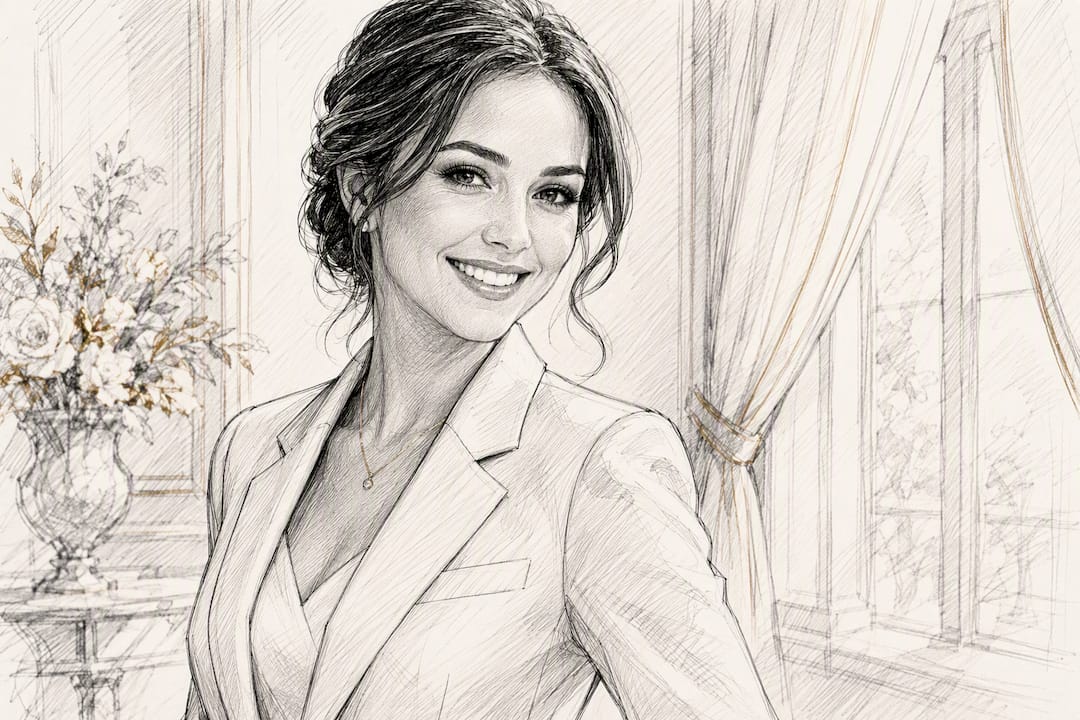
Framing statistic: The goal is a tight head-and-shoulders crop where your face fills roughly 60 to 70 percent of the frame. That's tighter than most people expect, and it's exactly why fabric texture and collar fit matter so much: there's very little else in the shot to look at.
Collar type interacts with this pose in a specific way. A high or stiff collar can look bulky once your torso is angled, because the fabric bunches differently than it does facing straight on. An open collar or a soft blazer lapel tends to read cleaner in a three-quarter turn. If you're seated, check that your jacket doesn't ride up around your neck. If you're standing, make sure your shoulders stay level rather than dropping toward the angled side, which happens more than people realize once they start turning toward camera.
Outfit Mistakes to Avoid and Quick Fixes
Some mistakes show up in nearly every batch of bad headshots. They're predictable, which means they're also easy to prevent.
Avoid busy patterns, visible logos, stark white with no contrast against your skin, shiny fabrics, and small repeating prints that vibrate under a camera sensor. Selfies fail for a different set of reasons: phone lenses distort faces at close range, lighting is rarely even, and cropping a group photo down to just you almost always leaves an elbow or a stray hand in frame.
Quick fixes for shoot day:
- Bring two tops in different but complementary tones, in case one doesn't read well under the actual lighting.
- Press every garment the morning of, not the night before.
- If possible, test your top under lighting similar to what the shoot will use, even just a lamp with a similar color temperature.
What a Professional Photographer Actually Checks Before the Shot
Visualize Media brings the same eye it uses for multi-camera wedding coverage and color grading to its corporate headshot sessions, and the wardrobe checks are nearly identical to what a wedding shoot demands: fabric behavior under real light, not just how something looks in a closet.
Before any headshot session, the checklist looks like this:
- Check every garment under the actual lighting setup, not ambient room light.
- Flag any fabric with visible sheen and swap it for a matte alternative before the camera rolls.
- Confirm collar and shoulder fit while the subject is seated in the actual shooting position.
- Steam or press garments on-site rather than relying on how they looked earlier that day.
Structured jackets and matte weaves behave predictably under strobe lighting. Shiny synthetics don't. That single distinction decides more headshot outcomes than any color choice.
The same attention to visual detail shows up across Visualize Media's broader portfolio review process, where color consistency and fabric texture matter just as much on a wedding day as they do in a corporate studio.
Seasonal Variations in Outfit Selection for Headshots
Studio headshots are usually shot indoors under controlled lighting, so the season affects your outfit choice less than it does for everyday dressing. But it still matters in a few specific ways.
In winter, heavier fabrics like wool blazers or knit sweaters photograph well and add welcome texture, as long as they stay matte and aren't bulky enough to hide your shoulder line. A chunky cable knit can swallow your silhouette in a tight crop, so stick to fine-gauge knits or structured blazers instead.
In summer, lighter fabrics like cotton or linen blends work fine, but linen wrinkles fast and shows every crease under strobe light. If you're shooting in warmer months, bring a steamer or plan to press your top immediately before the session rather than hours ahead.
Color choices don't need to shift by season the way they might for a wardrobe update. Navy and charcoal work in January and July alike, since the room, not the weather outside, sets the actual lighting conditions. The one seasonal adjustment worth making: if your headshot is being refreshed to match a seasonal profile update or a new role, consider whether your usual color rotation still fits the season's tone, but don't feel obligated to swap in lighter colors just because it's warm outside. Consistency across a year of profile views matters more than seasonal styling.
Choosing Outfit Colors That Work With Your Skin Tone
Color recommendations aren't one-size-fits-all, because contrast between your outfit, your skin, and the background is what actually reads well on camera, and that contrast shifts depending on your undertone.
For lighter skin tones, deep jewel tones like burgundy, forest green, and navy create strong, flattering contrast without overwhelming the face. Very pale pastels or stark white can wash out lighter skin under bright studio light, so if white is part of your outfit, pair it with a darker jacket or add contrast some other way.
For medium skin tones, most of the recommended palette (navy, charcoal, muted jewel tones) works well, since these shades sit far enough from most medium undertones to separate cleanly without clashing.
For deeper skin tones, jewel tones like emerald, sapphire, and burgundy tend to look especially rich on camera, and lighter neutrals like camel or soft gray can also read well because they create gentle contrast without competing with the skin's natural depth.
Across every skin tone, the same fabric guidance applies: matte finishes control shine more predictably than high-sheen synthetics, and that consistency matters more once you factor in how different skin types reflect studio light differently. If you're unsure which shade works best for you, holding two or three color options up under lighting similar to your shoot day, and photographing a quick test shot on your phone, tells you more than any general color chart will.
Key Takeaways
A LinkedIn headshot outfit works when it pairs a solid, mid-to-dark color with a matte fabric and a fit precise enough to hold up in a 60 to 70 percent face-fill crop.
| Point | Details |
|---|---|
| Color choice | Stick to navy, charcoal, or muted jewel tones that separate cleanly from skin and background. |
| Fabric finish | Choose matte weaves over shiny synthetics to avoid unpredictable highlights under studio light. |
| Fit over price | A well-fitted blazer with a clean collar outperforms an expensive jacket that fits poorly. |
| Formality level | Dress one step above your daily work outfit, adjusted for your specific industry. |
| Pose and framing | Use a three-quarter turn with chin slightly forward and down, keeping face fill around 60 to 70 percent. |
An Editorial Take on the LinkedIn Headshot Wardrobe Advice Everyone Repeats
Most advice on this topic stops at "wear a blazer," which is true and also nearly useless without the fit and fabric detail underneath it. The research actually supports a narrower, more useful claim: fit and fabric finish do more work than color choice, and color choice does more work than most people's actual outfit decisions reflect.
The conventional wisdom oversells formality and undersells texture. A cheap navy blazer that fits your shoulders correctly and photographs matte under studio light will outperform an expensive shiny one every time, and almost nobody tests fabric under real lighting before a shoot.
If you take one thing from this, prioritize the fit check and the light test over agonizing about which exact shade of blue to wear. Book time with a photographer who checks fabric behavior under the actual lights, not just under a phone flashlight, and you'll skip most of the mistakes this piece warns against. Follow Visualize Media on Instagram to see how these fabric and lighting calls play out across real sessions.
— Anthony