
A cinematic morning prep video captures intimate, unscripted moments in soft, flattering natural light instead of stiff posed shots under harsh overhead bulbs. The single biggest lever you control is logistics, not gear: pick a bright, calm room and hand your videographer a clear morning timeline before the day starts. Everything else, from lens choice to audio setup, works better once that foundation is set.
TL;DR:
- Securing a bright, calm room with large windows and light-colored walls ensures softer, more even natural light ideal for cinematic footage.
- Early communication of a detailed timeline and designation of a single point person can prevent chaos and ensure key moments like letter readings are well captured.
- Using prime lenses, controlled camera movement, and proper lighting management are crucial technical choices that define the film’s cinematic quality.
- Coordinating a shared visit with your videographer and avoiding cluttered, crowded spaces enhances visual clarity and emotional intimacy.
- Prioritizing timeline planning and vendor coordination yields more impactful footage than focusing solely on high-end gear or camera specifications.
What Belongs on Your Morning Prep Video Checklist
Most couples don't realize how much of a "cinematic" result comes down to decisions made weeks before anyone picks up a camera. The room, the guest list in that room, and the schedule matter more than any piece of equipment.
Choose a suite or bedroom with large windows and light-colored walls or curtains. North-facing windows give the softest, most even light for most of the morning, which is exactly what makes getting-ready footage look calm and cinematic instead of flat and yellow.
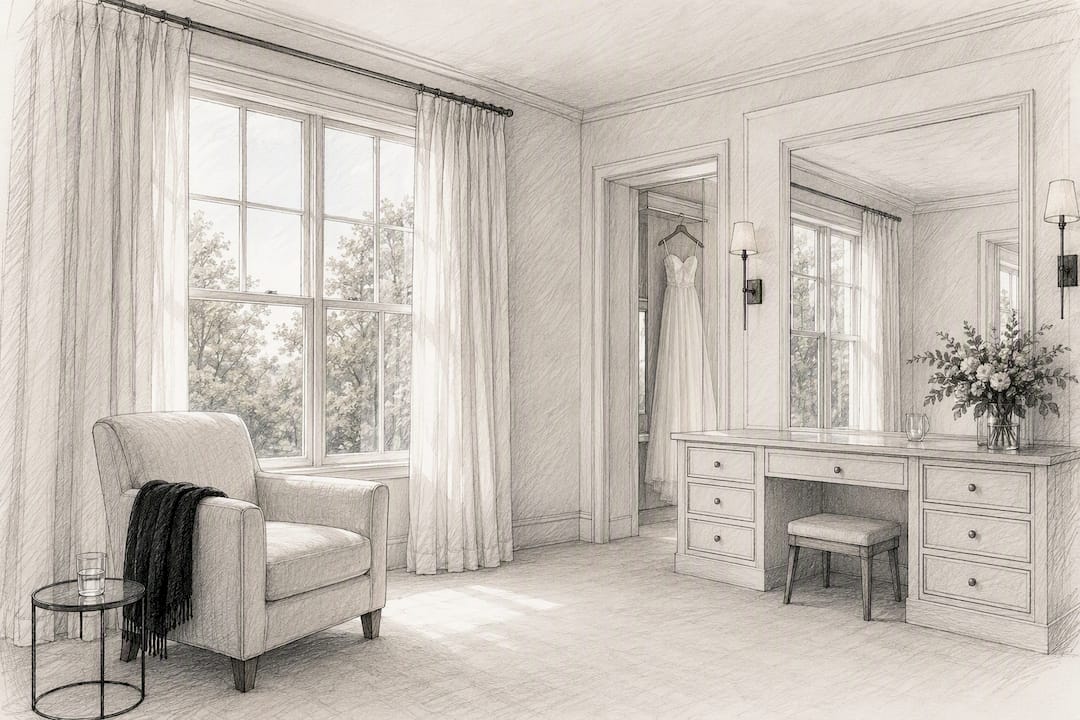
Keep the room small on purpose. A crowded suite creates visual clutter and makes it harder for your videographer to move without becoming part of the shot.
Here's what to screenshot and send to your wedding party and vendors:
- Book a room with big windows and a clean, light-colored backdrop near them
- Limit the room to your closest people during hair, makeup, and dressing
- Gather your dress, rings, invitation suite, and heirlooms into one box the night before
- Place that box near the window so detail shots are ready to film the moment your videographer arrives
- Add 30 minutes of buffer to your hair and makeup schedule for photo and video breaks
- Name one point person (planner, maid of honor, best man) to manage timing and vendor questions
That last item saves more footage than anything else on this list. A confused morning with no single decision maker is the number one reason cinematic moments get missed.
What Camera Settings Actually Create That Cinematic Look?
The "cinematic" label gets thrown around loosely in wedding marketing, but it describes specific technical choices: deliberate camera movement, shallow depth of field, and intentional color grading, all built around how the footage will eventually be cut to music. None of that starts with a fancy camera body. It starts with light.
Natural window light is the preference every experienced wedding cinematographer will tell you about, and for good reason. Mixed lighting, meaning daylight from the window competing with warm overhead bulbs or fluorescent ceiling fixtures, creates color casts that are difficult to fix in post. Turning off the overheads and shooting off window light alone gives a cleaner base for color grading later.
A few technical choices separate a cinematic prep sequence from a home video:
- Fast prime lenses (often 35mm or 50mm at wide apertures) create shallow depth of field for intimate, blurred-background close-ups
- Prep scenes are typically filmed at 30fps, with a switch to 24fps for letter readings to keep lip-sync natural through editing
- Gimbals and controlled handheld movement replace static tripod shots, but only when the movement is motivated, not movement for its own sake
- Lavalier microphones on the reader, paired with a second angle and a clean backup audio track, protect letter readings from room noise
Pro Tip: Ask your videographer whether they mark a "home base" spot in the room for you to stand during transitions. It sounds small, but it keeps lighting and framing consistent across every clip, which is the difference between a sequence that feels edited and one that feels thrown together.
Audio is the detail couples forget to ask about, and it's the one that ruins a beautiful shot fastest. A gorgeous, softly lit letter-reading scene with muffled or echoing audio doesn't make the final cut, no matter how good the lighting looked.
How Should Your Morning Timeline Actually Flow?
A calm morning on camera is a scheduled morning off camera. Build your run of show with these blocks in mind, and share it with every vendor at least a week out:
- Videographer arrival, roughly 30 to 45 minutes before hair and makeup finish, to capture ambient detail shots first
- Detail and room shots while everyone is still relatively fresh and the space is uncluttered
- Hair and makeup blocks, with a built-in 30 minute buffer beyond what your stylist quotes
- Letter reading or quiet moment, scheduled after hair and makeup finish so it happens naturally rather than rushed
- Dressing sequence, timed with enough room to redo a zipper or a cufflink shot if needed
- Departure buffer, at least 15 minutes before you actually need to leave
If your budget allows, two-camera coverage during this window catches candid reactions from parents or bridal party members you'd otherwise miss entirely. Coordinate directly with your photographer too. Two vendors working the same twelve-foot suite without a plan is how you end up with both of them in each other's shots.
Which Cinematic Moments Should You Actually Ask For?
Beyond the checklist basics, certain shots consistently produce the most emotional and visually rich footage in the final film.
Detail shots of the dress, rings, invitation suite, and family heirlooms photograph beautifully when they're gathered near a window rather than scattered across a hotel room. Quiet moments, letters between partners, a private toast, a parent's reaction, become the emotional anchors editors build the whole film's music-driven arc around. You don't need to fake or stage these. You just need to schedule them so they can happen without fifteen people watching.
Movement shots earn their place too:
- A slow walk into the room, filmed once so it isn't repeated and losing authenticity
- Cufflink and zipper close-ups shot at a marked "home base" for consistent lighting
- A mirror reveal, timed for whenever your dress or final look actually comes together
Small or awkward rooms don't have to look small on camera. Experienced videographers use prisms and foreground elements to add depth and disguise a cramped suite as something far more atmospheric. Booking combined photo and video coverage also tends to reduce friction on the morning itself. One coordinated vendor team can mean fewer competing instructions and more usable footage for both mediums.
What Should You Ask Before Booking a Videographer?
Not every videographer who says "cinematic" on their website actually shoots that way. A short round of questions during your consultation tells you fast whether they do.
- How do you handle mixed lighting in a hotel suite or small bedroom?
- What frame rate and microphone setup do you use for letter readings?
- Can you show me a full prep sequence from a past wedding, not just highlight clips?
- What time do you arrive, and how do you coordinate with the photographer and hair and makeup team?
- Who is my point of contact if the morning runs behind?
Watch for red flags in the answers. A vague audio plan, insistence on shooting under bright overhead lights because it's "easier," or no mention of coordinating with other vendors are all signs the morning coverage will feel rushed rather than cinematic.
Why the Method Behind the Camera Matters More Than the Camera
Anthony, who leads production at Visualizemedia, built the studio's approach around a simple observation: couples don't remember the gear list, they remember whether the morning felt calm or chaotic. That distinction shows up directly in the footage.
Visualizemedia's wedding coverage includes multi-camera setups so a second angle catches a parent's reaction while the primary camera stays on the couple, drone and aerial footage for exterior establishing shots, professional color grading tuned to each venue's light, and full edits that carry through the ceremony and speeches. Sample films like Nestor & Elsa and Aryana's wedding show how unobtrusive prep coverage and planned quiet moments translate into a finished film, not just raw clips. The team coordinates arrival times and room logistics with planners and other vendors ahead of the day, which is the same buffer-and-timeline advice covered above, just executed by people who do it every weekend.
What I'd Tell Every Couple Planning This Footage
The gear obsession in wedding videography marketing is mostly noise. Ask ten couples what they remember about their morning prep video and none of them will mention lens choice. They'll talk about whether the room felt calm, whether the letter reading felt real, whether their mother's reaction got captured or missed entirely. That's logistics, not equipment.

Conventional wedding planning advice treats the videographer's arrival time as a footnote in the day-of schedule. It should be one of the first things you lock in, right alongside your hair and makeup call time. A videographer who shows up after the room is already cluttered with fifteen people and half-packed bags is fighting a losing battle no matter how good their camera is.
If you prioritize one thing from everything above, prioritize the timeline. Share it early, build in buffer, and name one point person. The lighting and lens choices matter, but they only get to matter once the morning itself isn't falling apart around them.
— Anthony
Ready to Book Cinematic Morning Coverage?
Visualizemedia is the direct route to the kind of morning prep footage described above, not just camera work, but the coordination that makes it possible. Our wedding cinematography packages build getting-ready coverage into multi-camera setups, dedicated audio for letter readings, and full cinematic edits from prep through the last speech.
When you reach out, expect a portfolio review of sample prep sequences similar to the films linked above, a conversation about your venue's lighting, and timeline coordination with your planner and photographer well before the wedding date. Check our availability for your date through the main booking page and follow along on Instagram for recent morning prep sequences and full wedding films.
Sources
For more on frame rates, lighting setups, and vendor timing, see the BTS breakdown of bride and groom prep filming and the complete guide to cinematic wedding video. For production planning across an entire event, Visualizemedia's guide to building a filming run of show covers the same timeline principles in more depth.
- How To Film Bride & Groom Prep | BTS of Noah & Mal’s Wedding Film (Part 2)
- Cinematic Wedding Video: The Complete Guide to Shooting, Editing & Delivering (2026) — OurStoria Blog