

Must-have moments to film at your wedding are the emotionally charged, unrepeatable events that form the narrative backbone of a cinematic wedding film. Super 8 cameras, originally manufactured by Kodak in 1965, have returned as one of the most requested tools in luxury wedding filmmaking. Their warm grain, soft color rendering, and analog imperfection create a feeling that no digital filter can replicate. When paired with modern cinematography, Super 8 footage transforms key moments into something that feels less like documentation and more like memory itself.
1. Must-have moments to film: the getting-ready sequence
The preparation sequence is where the day's emotional tone is established. Laughter between bridesmaids, a parent fastening a button, a quiet moment of reflection in the mirror. These are the scenes that ground the entire film in something personal. Super 8 film stock, particularly Kodak Vision3 50D or 500T, renders skin tones with a warmth that digital cameras struggle to match, making these intimate spaces feel genuinely lived-in.
2. The first look
A first look is one of the best moments to film on Super 8 because the format's slight softness amplifies the emotional weight of the reveal. The grain structure of Super 8 mimics the texture of memory, which is exactly what a first look feels like years later. Position the camera at a medium distance to capture both faces in the same frame, then move to a close-up for the reaction. Close-ups convey tension and emotion in ways that wide shots simply cannot.
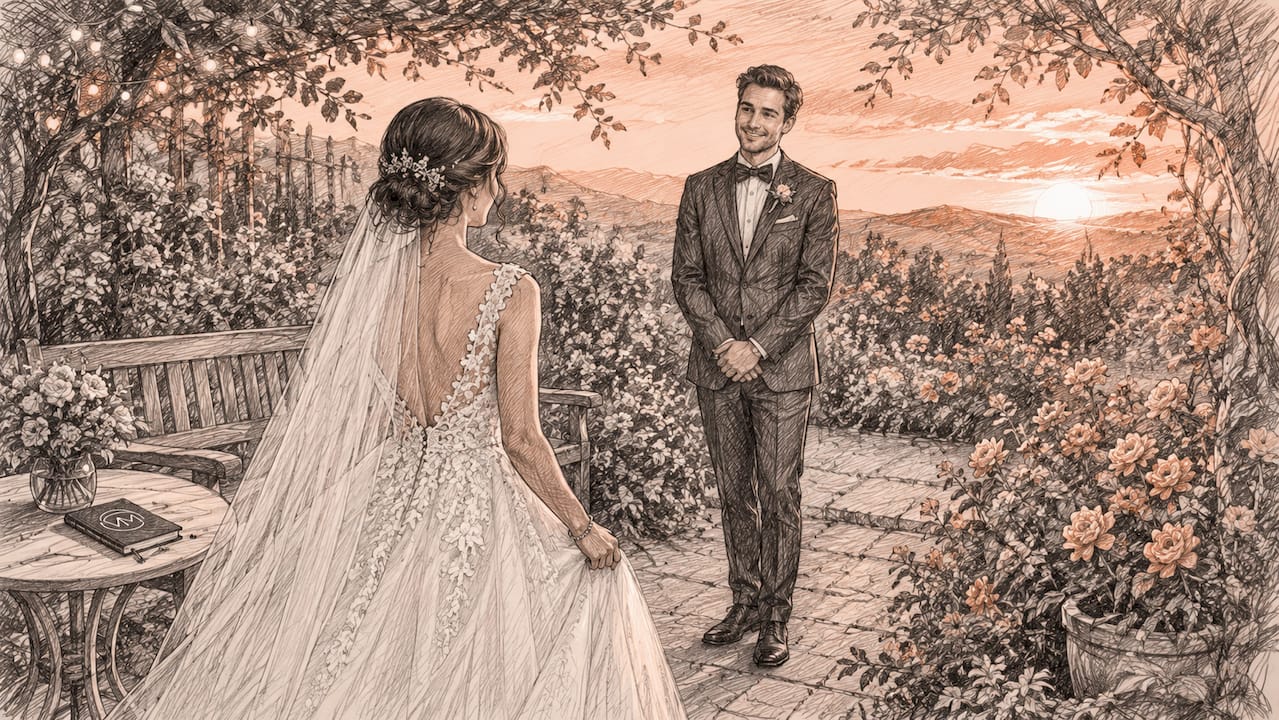
3. The walk down the aisle
The processional is one of the most important events to film in the entire day. Super 8's 18 frames per second frame rate creates a slightly dreamlike motion quality that makes the walk feel cinematic rather than recorded. A wide master shot establishes the geography of the space, then cut to close-ups of the faces watching. Master shots provide geography and timing context that anchor every other shot in the sequence.
4. The exchange of vows
Vows are the emotional center of the wedding film. Super 8 footage of this moment, even without synchronized audio, carries extraordinary weight when cut against a clean digital audio track in post-production. Many Visualizemedia films use this hybrid approach: Super 8 for the visual texture, digital for the audio fidelity. The result is a sequence that feels both intimate and cinematic. Emotional fidelity in wedding films gives couples a legacy that communicates how moments truly felt, not just how they looked.
5. Reaction shots of family and friends
The person listening is often more revealing than the person speaking. Prioritizing the listener captures story depth and emotional weight that over-shooting dialogue misses entirely. Super 8 is ideal for reaction coverage because its unobtrusive size allows a cinematographer to move quietly through a crowd without disrupting the moment. A grandmother wiping a tear, a best friend laughing through a toast. These are the frames couples return to most.
Pro Tip: Load a roll of Kodak Vision3 500T for indoor ceremony and reception reaction shots. The higher ISO handles low light with beautiful grain rather than digital noise.
6. The first kiss
The first kiss is among the top scenes to capture on any format, and Super 8 makes it iconic. The slight overexposure that analog film produces in bright ceremony light creates a luminous, almost ethereal quality around this single frame. Shoot it from at least two angles: one wide for context, one tight for intimacy. Viewers connect most with faces, making the close-up version the one that will anchor the film's highlight reel.
7. Post-ceremony private moments
The five to ten minutes after the ceremony, when the couple is alone for the first time as married partners, produce some of the most memorable moments to capture on film. Super 8 thrives here because the camera's small form factor and quiet motor allow a filmmaker to observe without directing. Unposed moments like a hand squeeze or shared laughter become emotional anchors in the finished film. No staging required.
8. The reception entrance and speeches
The reception entrance is pure kinetic energy, and Super 8 captures crowd movement with a warmth that digital slow-motion cannot replicate. Speeches and toasts, meanwhile, demand the reaction coverage strategy described above. A well-crafted shot list distinguishes essential coverage from optional coverage, which matters enormously when you have a limited number of Super 8 rolls available. Kodak Super 8 cartridges run approximately 3.5 minutes per roll, so prioritization is not optional. It is the discipline that separates good films from great ones.
9. The first dance
The first dance is one of the essential filming moments where Super 8's frame rate creates an effect no digital tool replicates cleanly. At 18fps, movement has a gentle, slightly slowed quality that makes the dance feel suspended in time. Shoot wide to capture the full choreography, then move in for close-ups of hands, faces, and the details of the dress. Mixing shot scales this way creates cinematic flow that keeps the sequence from feeling static.
10. Candid dancing and celebrations
Documentary-style coverage of the dance floor is where Super 8 genuinely outperforms digital. Videographers prioritize letting couples exist in joy without interruption to capture authentic connections rather than forced performances. The grain and color of Super 8 make a crowded dance floor look like a scene from a film you have always wanted to be in. These are the filming must-have experiences that guests will ask about when they see the finished film.
11. The send-off
The final exit, whether a sparkler send-off, a confetti tunnel, or a quiet walk to a waiting car, is the closing punctuation of the wedding film. Super 8 handles practical light sources like sparklers with a beautiful halation effect, a soft glow around bright points of light that is a physical property of film stock. No plugin recreates it accurately. Ending your film on Super 8 footage of the send-off gives the entire piece a cohesive, analog warmth that feels complete.
Key takeaways
A Super 8 camera transforms must-have wedding moments into emotionally textured, cinematic memories that digital formats cannot replicate on their own.
| Point | Details |
|---|---|
| Hybrid format approach | Pair Super 8 visuals with digital audio for the best of both formats during vows and speeches. |
| Prioritize reaction shots | Film the people listening, not just the people speaking, to capture authentic emotional weight. |
| Shot variety is non-negotiable | Each key moment needs a master shot, a medium shot, and at least one close-up for proper coverage. |
| Roll count demands planning | At 3.5 minutes per cartridge, mark essential versus optional shots before the wedding day. |
| Candid over staged | Documentary-style Super 8 coverage of unscripted moments produces the frames couples return to most. |
Why the moments you almost miss are the ones that matter most
I have filmed weddings across New York and New Jersey for years, and the frame couples mention first when they watch their film back is almost never the one we planned. It is the father of the bride exhaling slowly before the doors open. It is two flower girls whispering to each other during the vows. Super 8 captures these moments with a quality that feels less like footage and more like a feeling you forgot you had.
The discipline I have developed is what I call becoming a welcomed shadow. You are present, you are watching, but you are never the loudest thing in the room. Super 8 helps with this. The camera is small, the motor is quiet, and people stop performing for it faster than they stop performing for a large digital rig. That is when the real film begins.
What I tell every couple: trust the process of candid storytelling over a rigid shot list. The shot list is a communication tool, not a script. The best wedding films I have made are the ones where we had a plan and then let the day surprise us. Super 8 is the format that rewards that philosophy most generously. These films become your family's heirloom, and they deserve to be made with that weight in mind.
Follow our work on Instagram to see how Super 8 footage looks in finished wedding films.
— Anthony
How Visualizemedia captures your wedding on Super 8
Visualizemedia specializes in cinematic wedding films across New York and New Jersey, integrating Super 8 film into multi-camera packages that combine analog warmth with digital precision. Every package includes professional color grading that honors the natural look of your chosen film stock, aerial footage where the venue allows, and full ceremony coverage. Couples who want their wedding film to feel like a movie rather than a recording consistently choose this hybrid approach. If you are planning a wedding and want to discuss how Super 8 fits your day, reach out through the contact form at Visualizemedia to start the conversation. You can also explore event setup strategies that complement cinematic coverage for your venue.
FAQ
What Super 8 film stock works best for weddings?
Kodak Vision3 50D performs best in bright outdoor settings, while Kodak Vision3 500T handles low-light indoor receptions with warm, natural grain rather than digital noise.
How many Super 8 rolls do I need for a full wedding day?
Most wedding cinematographers use between 8 and 12 cartridges for a full day, covering key moments from preparation through the send-off at roughly 3.5 minutes of footage per roll.
Can Super 8 footage be synced with digital audio?
Yes. The standard professional approach pairs Super 8 visuals with a separate digital audio recording, then syncs them in post-production for a film that has both analog texture and clean sound.
Does Super 8 replace digital cameras at a wedding?
Super 8 works as a complement to digital coverage, not a replacement. Essential shot coverage requires multiple camera formats to capture every key moment with the right technical quality and emotional texture.
What moments should always be filmed on Super 8?
The first look, first kiss, first dance, and send-off are the top scenes to capture on Super 8 because the format's grain, color, and frame rate create an emotional quality that defines the film's overall tone.