
Pre-wedding consultations are structured meetings between couples and their wedding vendors that align expectations, clarify logistics, and build the trust needed to execute a culturally rich South Asian wedding with confidence. The importance of pre-wedding consultations goes well beyond checking boxes on a vendor list. These sessions create the communication foundation that carries you through a multi-day celebration involving dozens of moving parts, extended family expectations, and deeply personal traditions. Whether you are coordinating a baraat procession, a mehndi night, or a cinematic wedding film, what you discuss before the wedding determines what actually happens on the day.
What are the main benefits of pre-wedding consultations for south asian weddings?
South Asian weddings are among the most logistically complex events in the world. A typical celebration spans multiple ceremonies across two or three days, involves large extended families, and requires tight coordination between photographers, videographers, decorators, caterers, and musicians. Pre-wedding consultation benefits are especially pronounced in this context because the margin for miscommunication is so much wider.
Here is what these meetings deliver in concrete terms:
- Timeline alignment: You and your videographer agree on exact ceremony start times, golden hour windows, and family portrait schedules before the day arrives.
- Photography and film style agreement: You share reference films and images so your vendor understands whether you want a documentary feel, a cinematic narrative, or a traditional coverage approach.
- Cultural briefing: You walk your vendor through rituals they may not know, such as the saat phere or the vidaai, so nothing is missed on camera.
- Family dynamics mapping: You identify which family members need to be included in formal coverage and flag any sensitivities around seating or relationships.
- Event flow optimization: You confirm the order of events across all ceremonies so vendors can position themselves correctly without disrupting the moment.
Couples who build a relational toolkit before stressors like family dynamics become entrenched report significantly smoother wedding experiences. That same principle applies directly to vendor relationships. The consultation is where you prevent the problems that ruin wedding films and wedding days alike.
Pro Tip: Bring a written ceremony rundown to your first vendor consultation. Even a rough draft forces clarity and gives your vendor something concrete to respond to.
How do pre-wedding consultations build stronger communication?
The most underestimated function of a pre-wedding meeting is what it reveals about unspoken assumptions. Couples often discover during a consultation that they hold very different expectations about coverage, about family involvement in decisions, or about how traditional versus modern they want their wedding to feel. Surfacing those differences before the wedding is far less costly than discovering them during it.
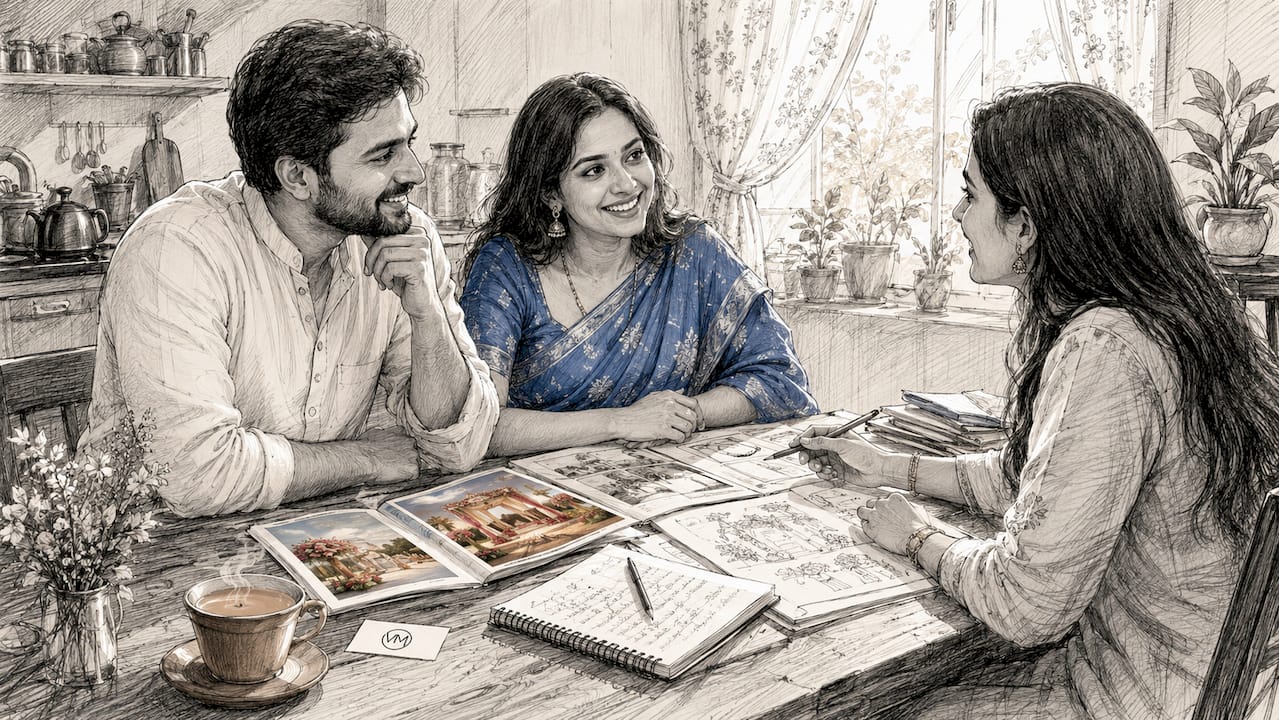
Research on premarital preparation supports this directly. Couples who practice constructive dialogue in structured settings before the wedding develop stronger conflict resolution skills that carry into the marriage itself. The same communication muscles you build talking through vendor contracts and ceremony logistics are the ones you use when navigating disagreements later.
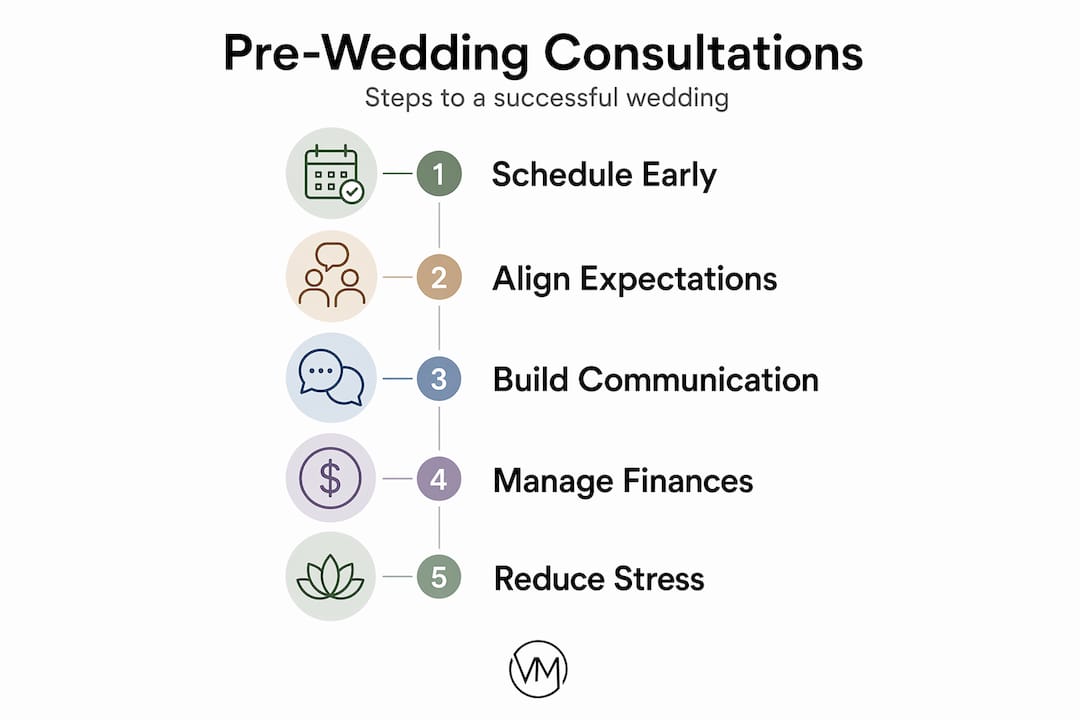
Dr. John Gottman identifies contempt as the strongest predictor of divorce. Consultations help couples address conflict patterns early, before they harden. That is a significant finding with direct relevance to how you approach every difficult conversation in the planning process.
Here are the dialogue topics every South Asian couple should cover in their consultations:
- Financial boundaries: Who controls the wedding budget, and what decisions require joint approval?
- Family involvement: Which family members have decision-making authority, and where does that authority end?
- Cultural traditions: Which rituals are non-negotiable, and which can be adapted for timing or logistics?
- Vendor expectations: What does "full coverage" mean to you, and does your vendor define it the same way?
- Post-wedding deliverables: When do you expect your wedding film, and what format do you want it in?
"Effective communication during pre-wedding consultations enhances a couple's ability to handle stress together over the course of a marriage." — Dipesh Patel Counseling
Financial transparency deserves special attention. Early financial openness reduces one of the most common sources of conflict in marriage. Discussing the wedding budget openly with both families and your vendors during consultations sets a precedent for honest financial communication that extends well beyond the wedding day.
Pre-wedding consultations vs. standard wedding planning meetings
Most couples are familiar with standard wedding planning meetings. These are vendor walkthroughs focused on logistics: venue capacity, menu selections, floral arrangements, and contract terms. They are transactional by design. Pre-wedding consultations go deeper. They address the relational and communicative dimensions that standard meetings ignore entirely.
| Feature | Standard Planning Meeting | Pre-Wedding Consultation |
|---|---|---|
| Primary focus | Logistics and contracts | Communication, expectations, and relationship alignment |
| Timing | Any point in planning | Ideally 6–12 months before the wedding |
| Participants | Couple and vendor | Couple, vendor, and sometimes key family members |
| Outcome | Signed agreements | Shared understanding and documented preferences |
| Emotional depth | Low | High |
A standard pre-wedding preparation course typically involves 6–12 sessions totaling about 8 hours, held 6–12 months before the wedding. That time investment is modest compared to the return. Couples invest over 250 hours planning weddings but fewer than 10 hours on foundational relationship work. The imbalance is striking, and it explains why so many couples arrive at their wedding day feeling unprepared for the emotional weight of it.
Pro Tip: Ask every vendor you interview whether they offer a formal pre-wedding consultation as part of their package. Vendors who build this in are signaling a commitment to personalized service, not just coverage.
How to maximize your pre-wedding consultation experience
Knowing why consultations matter is only half the equation. How you prepare for and conduct them determines how much value you actually extract.
- Start early. Schedule your first vendor consultations 6–12 months before your wedding date. This gives you time to course-correct if a vendor is not the right fit.
- Prepare a question list. Cover style, timeline, deliverables, contingency plans, and cultural knowledge before every meeting. Use a wedding consultation questionnaire as your starting framework.
- Include key family members selectively. Bring in parents or siblings for one session to align on cultural expectations. Keep other sessions couple-focused to protect your decision-making space.
- Document everything. After each consultation, send a written summary of what was agreed. This protects both you and your vendor.
- Choose vendors who listen. The consultation itself is a test. A vendor who talks more than they ask questions during your first meeting will do the same on your wedding day.
- Be transparent about your budget. Vendors who know your real numbers can give you honest recommendations. Vendors who do not will fill the gap with assumptions.
For music vendors specifically, understanding how to request songs for your wedding during the consultation phase ensures your entertainment reflects your cultural preferences accurately.
Learning how to choose wedding vendors before you begin consultations gives you a sharper filter for evaluating who is worth your time.
Key takeaways
Pre-wedding consultations are the single most effective tool South Asian couples have for preventing wedding-day miscommunication and building vendor relationships that deliver on their promises.
| Point | Details |
|---|---|
| Start 6–12 months out | Early consultations give you time to replace vendors who are not the right fit. |
| Cover cultural specifics | Brief every vendor on your ceremonies, rituals, and family dynamics in writing. |
| Document all agreements | A written summary after each meeting protects both parties and prevents disputes. |
| Communication builds marriage skills | The dialogue you practice with vendors strengthens the same skills you use in marriage. |
| Choose vendors who consult | Vendors who offer structured pre-wedding meetings deliver more personalized results. |
What i have learned filming south asian weddings
After filming dozens of South Asian weddings across New York and New Jersey, I can tell you with certainty that the couples who arrive at their wedding day with the least stress are the ones who talked the most beforehand. Not just with us, but with every vendor on their list.
The couples who skip consultations tend to assume their vendors understand the significance of a vidaai or the timing of a pheras. They rarely do without being told. The couples who invest in those conversations get films that feel intentional. Every shot is where it needs to be because we planned for it together.
I have also noticed something that surprises people: consultations change how couples relate to each other during the planning process. When you sit down and work through the hard questions with your vendor, you practice the same skill you need to work through hard questions with your partner. That is not a coincidence. It is why premarital counseling research and vendor consultation research point to the same outcomes.
The significance of client consultations is not administrative. It is relational. Treat every pre-wedding meeting as an investment in the day itself, and in the marriage that follows it.
— Anthony
Plan your wedding film with Visualizemedia
Visualizemedia offers dedicated pre-wedding consultations for every couple we work with across New York and New Jersey. Before we film a single frame, we sit down with you to understand your ceremonies, your family, your vision, and the moments that matter most to you.
Our wedding cinematography packages include multi-camera coverage, aerial footage, and full cinematic edits built around what we learn in those early conversations. You can also explore our work and get inspired by following us on Instagram. If you are ready to start the conversation, reach out and let us show you what a real consultation looks like.
FAQ
What is a pre-wedding consultation?
A pre-wedding consultation is a structured meeting between a couple and a wedding vendor to align on expectations, logistics, and personal preferences before the wedding day. It goes beyond a standard planning meeting by addressing communication, cultural details, and relationship dynamics.
How early should couples schedule pre-wedding consultations?
Couples should schedule their first consultations 6–12 months before the wedding. This timeline allows enough space to address concerns, adjust plans, and build genuine trust with each vendor.
Why do pre-wedding consultations matter for south asian weddings specifically?
South Asian weddings involve multiple ceremonies, large family networks, and culturally specific rituals that most vendors do not know by default. Consultations give couples the opportunity to brief vendors on these details so nothing is missed or mishandled on the day.
Do pre-wedding consultations reduce wedding-day stress?
Yes. Couples who proactively build relationship skills and align vendor expectations before the wedding report significantly lower stress on the day itself. Clear agreements eliminate the guesswork that causes last-minute panic.
What topics should a pre-wedding consultation checklist include?
A strong checklist covers ceremony timeline, cultural rituals, family portrait lists, deliverable formats, contingency plans, and budget boundaries. Documenting the outcomes of each session in writing keeps all parties accountable.