
South Asian bridal style ideas have never been more exciting or more personal than they are in 2026. With multi-day celebrations spanning Mehndi nights, wedding ceremonies, and receptions, every event calls for a distinct look that balances deep cultural roots with your own sense of self. Whether you are drawn to a sculpted pistachio lehenga or a timeless Kerala kasavu saree, the challenge is not finding options. It is knowing how to choose intentionally, wear your look with confidence, and let every detail tell your story.
Table of Contents
- Key takeaways
- 1. Build your framework around cultural event types
- 2. The lehenga: your most flexible bridal canvas
- 3. Bridal blouses as statement pieces
- 4. Silk sarees for traditional ceremony looks
- 5. Anarkali dresses for Mehndi and pre-wedding functions
- 6. Jewelry: the craft of contrast
- 7. Dupattas and veils: texture over volume
- 8. Regional style comparison by event type
- 9. Posture and comfort as a style practice
- 10. Mixing heritage and modern through Super 8 film
- My honest take on South Asian bridal fashion in 2026
- Let Visualize Media capture every bridal detail
- FAQ
Key takeaways
| Point | Details |
|---|---|
| Match attire to the event | Each wedding function (Mehndi, ceremony, reception) carries distinct style expectations rooted in regional tradition. |
| 2026 favors softer palettes | Pistachio, blush, and tonal embroidery are replacing maximalist looks without losing cultural richness. |
| Accessories make or break the look | Pairing lighter jewelry with heavily embroidered outfits lets the garment's craftsmanship stand out. |
| Comfort is a style choice | Choosing fabrics and silhouettes you can move in confidently transforms an outfit from costume to couture. |
| Film captures what styling creates | Professional videography preserves bridal fashion details across every event of a multi-day celebration. |
1. Build your framework around cultural event types
Before you fall in love with any single outfit, understand what each event actually calls for. South Asian wedding ceremonies are not interchangeable. A Mehndi calls for vibrant, playful energy. The wedding ceremony demands ritual significance. The reception is where modern personality can fully shine.
Colors carry meaning across every community. Red, maroon, and gold remain symbolic for many Hindu and Sikh ceremonies, while South Indian weddings lean toward cream, off-white, and silk with gold borders rooted in regional ritual. Understanding this foundation stops you from chasing trends that may conflict with your ceremony's meaning.
Fabric matters more than most brides expect. Long ceremonies in heavy brocade can become physically exhausting. Choosing silk blends, georgette, or lighter organza for extended events keeps you comfortable and graceful through hours of ritual and photographs.
Pro Tip: Visit your tailor at least three months before the wedding. Fittings for heavily embroidered lehengas and structured blouses take significantly more time than standard alterations.
2. The lehenga: your most flexible bridal canvas
The bridal lehenga remains the most popular choice across North Indian, Gujarati, and Punjabi weddings, and for good reason. It offers near-limitless variation in silhouette, embroidery, and color. The 2026 South Asian bridal trends are shifting this staple toward softer palettes. Pistachio, dusty rose, and ivory are replacing heavy reds without sacrificing festivity.
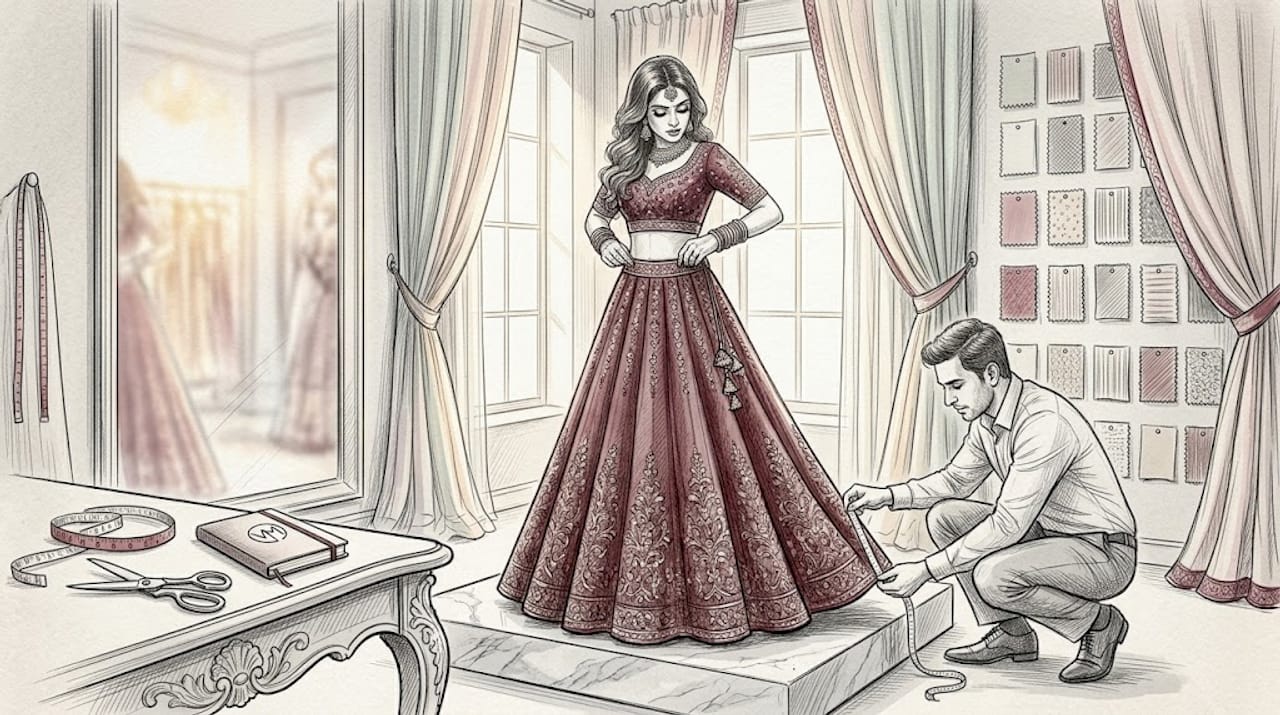
Tonal embroidery, where thread color closely matches the base fabric, is one of the most understated yet striking techniques this season. It creates texture and depth without visual overwhelm. Pair a pistachio lehenga with ivory thread embroidery and a statement dupatta in a contrasting blush, and the result feels both modern and grounded.
Pro Tip: When styling a bridal lehenga, think of the blouse as its own garment. A sculpted, boned bodice with a curved neckline will define your silhouette even in photographs taken from a distance.
3. Bridal blouses as statement pieces
The blouse has evolved from a supporting element to the visual anchor of the entire bridal look. Bridal blouses in 2026 are designed as intentional statement pieces, featuring corset-inspired shapes, boned bodices, and curved necklines that enhance your silhouette whether you are standing, seated, or moving through rituals.
Consider a deep scoop back paired with a heavily embroidered front panel. Or choose a full-sleeve blouse in sheer fabric with minimal embroidery to contrast against a maximalist skirt. The blouse is where you can push creative boundaries while keeping the overall look anchored in tradition.
4. Silk sarees for traditional ceremony looks
For South Indian brides, the silk saree is not just a fashion choice. It is ritual. The Kerala Nair bride traditionally wears a cream or off-white kasavu saree with a wide gold border, layered with gold jewelry that has been passed through generations. The Pudamuri ceremony, where the groom's family gifts the kasavu saree, is considered the emotional center of the entire wedding.
Tamil Brahmin and Telugu brides similarly favor silk with intricate zari borders in gold or silver. These looks read as timeless precisely because they are tied to ritual rather than trend. If you want to modernize the silhouette, ask your draper to experiment with pre-stitched or pleated draping styles that maintain the saree's visual integrity while making movement easier.
5. Anarkali dresses for Mehndi and pre-wedding functions
The Anarkali remains one of the most versatile choices for pre-wedding events. Its flared silhouette works across body types and reads as festive without requiring the full weight of a bridal lehenga. Celebrity-inspired bridal fashion in 2026 favors lighter embellishments, mirror work, and thoughtful borders that combine festivity with wearability.
For Mehndi events, go bold with color. Mustard yellow, coral, and deep teal photograph beautifully in outdoor or garden settings. Accessorize with jhumkas and bangles rather than heavy polki sets so your hands remain visible for the Mehndi itself. This event is where playful bridal outfit inspiration truly shines.
6. Jewelry: the craft of contrast
The most common styling mistake in South Asian bridal fashion is layering heavy jewelry over heavily embroidered fabric. The result is visual noise that overwhelms both the garment and the wearer. Choosing lighter jewelry with a heavily embroidered outfit lets the craftsmanship of your garment actually breathe and be seen.
The nath is experiencing a cultural moment. The traditional nath has evolved from ceremonial use into a versatile fashion statement, with younger brides now styling nose rings with contemporary outfits far beyond the wedding day. For bridal wear, consider a delicate gold or diamond nath for the ceremony and swap to a subtle nose pin for the reception.
7. Dupattas and veils: texture over volume
The dupatta is one of the most underutilized styling tools in bridal fashion. In 2026, sheer fabrics with soft tonal embroidery are replacing the stiff, heavily bordered dupattas that dominated the previous decade. A tissue silk dupatta with scattered floral embroidery over a structured lehenga adds movement and lightness to the overall look.
For brides who want a veil-adjacent effect without compromising cultural tradition, a long sheer dupatta pinned at the crown of the head and draped over the shoulders photographs similarly to a Western cathedral veil while remaining fully rooted in South Asian tradition.
8. Regional style comparison by event type
Understanding how different communities approach each event makes planning significantly easier.
| Event | North Indian / Punjabi | South Indian (Tamil, Telugu, Kerala) |
|---|---|---|
| Pre-wedding / Mehndi | Bright lehenga or Anarkali, heavy jewelry | Silk half-saree or churidar, floral accessories |
| Wedding ceremony | Red or maroon bridal lehenga, full polki set | Silk saree (cream, gold, or red), temple jewelry |
| Reception | Designer lehenga or fusion gown, lighter accessories | Colored silk saree or designer outfit, refined jewelry |
Urban South Asian weddings are moving toward two-day formats where the ceremony and reception are compressed into a single weekend. This shift makes outfit planning more strategic. Each look needs to stand on its own while flowing coherently as part of a visual narrative across your wedding film and photographs.
9. Posture and comfort as a style practice
An outfit only works if you can wear it. Architectural bridal garments demand relaxed posture and ease of movement. When you feel physically burdened, the outfit looks like a costume instead of couture.
Practice sitting, walking, and standing in your full look during your final fitting. Wear the correct undergarments, heels, and jewelry so the fitting replicates the actual wedding day conditions. Ask your designer to add lightweight boning or internal structure so the garment holds its shape without depending entirely on your posture.
- Choose fabrics that feel like a second skin after four hours, not just in the fitting room
- Break in your shoes before the wedding day. Blisters during a ceremony show in every frame
- Tell your designer which events you will be on your feet for versus seated so they can adjust the skirt volume accordingly
10. Mixing heritage and modern through Super 8 film
Here is a detail most brides do not consider when planning their visual style: the medium used to film your wedding changes how your bridal look is remembered. Super 8 cameras have made a genuine comeback at weddings precisely because their warm, slightly grainy aesthetic mirrors the feeling of heirloom photography. Silk sarees, gold borders, and soft pastel lehengas photograph with extraordinary depth on Super 8 film.
If your photographer or videographer offers Super 8 coverage as part of their package, request it specifically for the ceremony moments. The texture of the film format pairs naturally with the texture of embroidered bridal fabric in a way that digital footage rarely replicates. Your kasavu saree will look like it belongs to a different, more timeless era. Because, in a sense, it does.
My honest take on South Asian bridal fashion in 2026
I have worked alongside South Asian brides long enough to notice the shift that is happening right now. The brides who look most stunning are not the ones with the heaviest outfits or the most jewelry. They are the ones who made deliberate choices.
I have seen brides choose a pistachio lehenga over red because it matched who they actually are, and I have watched that confidence translate into every frame of their wedding film. The outfit communicated something true about them. That is what intentional bridal styling actually means.
What I want every bride to understand is that tradition is not a constraint. It is a vocabulary. When you know what each piece means, whether it is the kasavu saree or the nath or the heavy silk border, you can use that vocabulary to say something personal. The craftsmanship in South Asian bridal fashion is extraordinary. Wear it like you know it.
— Anthony
Let Visualize Media capture every bridal detail
Your bridal looks deserve to be documented with the same level of care you put into choosing them.

At Visualize Media, we specialize in cinematic wedding films for South Asian weddings across New York and New Jersey. From the intricate embroidery on your lehenga blouse to the moment your dupatta catches the light during your ceremony, we film every detail as part of your larger story. Our wedding cinematography services include multi-camera coverage, aerial footage, and color grading tailored to the rich textures and colors of South Asian weddings. See how we have brought bridal fashion to life in films like Hinal and Brijesh's wedding, and follow our work on Instagram for ongoing bridal film inspiration.
FAQ
What colors are trending for South Asian brides in 2026?
Pistachio, blush, dusty rose, and ivory are the dominant 2026 palette shifts, moving away from saturated reds without abandoning festivity or cultural meaning.
How do I style a bridal lehenga for a modern look?
Focus on a structured, corset-style blouse with tonal embroidery on the skirt, and balance the look with lighter jewelry so the garment's detail remains the focal point.
What is the traditional attire for a Kerala Nair bride?
A Kerala Nair bride traditionally wears a cream kasavu saree with a wide gold border during the ceremony, often transitioning to colored silk or a designer outfit for the reception.
How many outfits does a South Asian bride typically need?
Most modern South Asian weddings require two to four outfits covering the Mehndi or pre-wedding event, the main ceremony, and the reception, though this varies by community and format.
Can the nath be worn outside of bridal contexts?
Yes. The nath has evolved into a fashion statement beyond bridal wear, with diamond nose pins now marketed and styled as everyday accessories by younger South Asian women.