
Planning a South Asian wedding means stepping into a world rich with color, meaning, and centuries of tradition. The challenge is not finding beautiful ceremonies to include. It is choosing which ones truly reflect who you are as a couple and what your families hold dear. This guide walks you through six distinct South Asian wedding ceremony styles, from Hindu and Muslim to Sikh and Parsi, so you can draw inspiration, make informed choices, and build a celebration that feels genuinely yours.
Table of Contents
- How to select the ideal wedding ceremonies for your family
- Hindu wedding ceremonies: Rituals and symbolism
- Muslim wedding ceremonies: Sacred vows and customs
- Sikh wedding ceremonies: Spiritual roots and celebration
- Parsi/Zoroastrian wedding ceremonies: Purity, playfulness, and meaning
- Comparing major South Asian wedding ceremonies: Features at a glance
- Our perspective: Why blending traditions creates unforgettable weddings
- Bring your unique wedding vision to life
- Frequently asked questions
Key Takeaways
| Point | Details |
|---|---|
| Multiple traditions | South Asian weddings encompass Hindu, Muslim, Sikh, and Parsi/Zoroastrian ceremonies, each with its own character. |
| Blending is common | Couples often combine rituals to honor both heritage and personal preferences. |
| Ceremony structure | Each tradition features unique events, from purification and vows to playful games. |
| Use a selection guide | A ceremony selection framework helps families choose meaningful traditions. |
How to select the ideal wedding ceremonies for your family
Before you fall in love with every ritual you discover, it helps to get clear on what matters most to you both. Ceremony selection is deeply personal, and the best choices come from honest conversations with your families, your partner, and yourselves.
Start by thinking through these core factors:
- Cultural identity: Which traditions feel like home to each of you?
- Family input: Are there rituals that grandparents or parents consider non-negotiable?
- Personal values: Do you want ceremonies rooted in spirituality, community, or celebration?
- Practical logistics: Consider venue restrictions, ceremony length, and guest engagement levels.
- Complexity: Some rituals require a priest or officiant with specific expertise. Plan early.
Pro Tip: You do not have to choose just one tradition. Many couples blend elements from two or more backgrounds to create something entirely new and deeply personal. A wedding traditions questionnaire can be a wonderful tool to start structured conversations with your families, helping everyone feel heard before decisions are made.
The goal is a ceremony that feels authentic, not performative. When your guests watch you exchange vows or circle a sacred fire, they should feel the weight and joy of something real.
Hindu wedding ceremonies: Rituals and symbolism
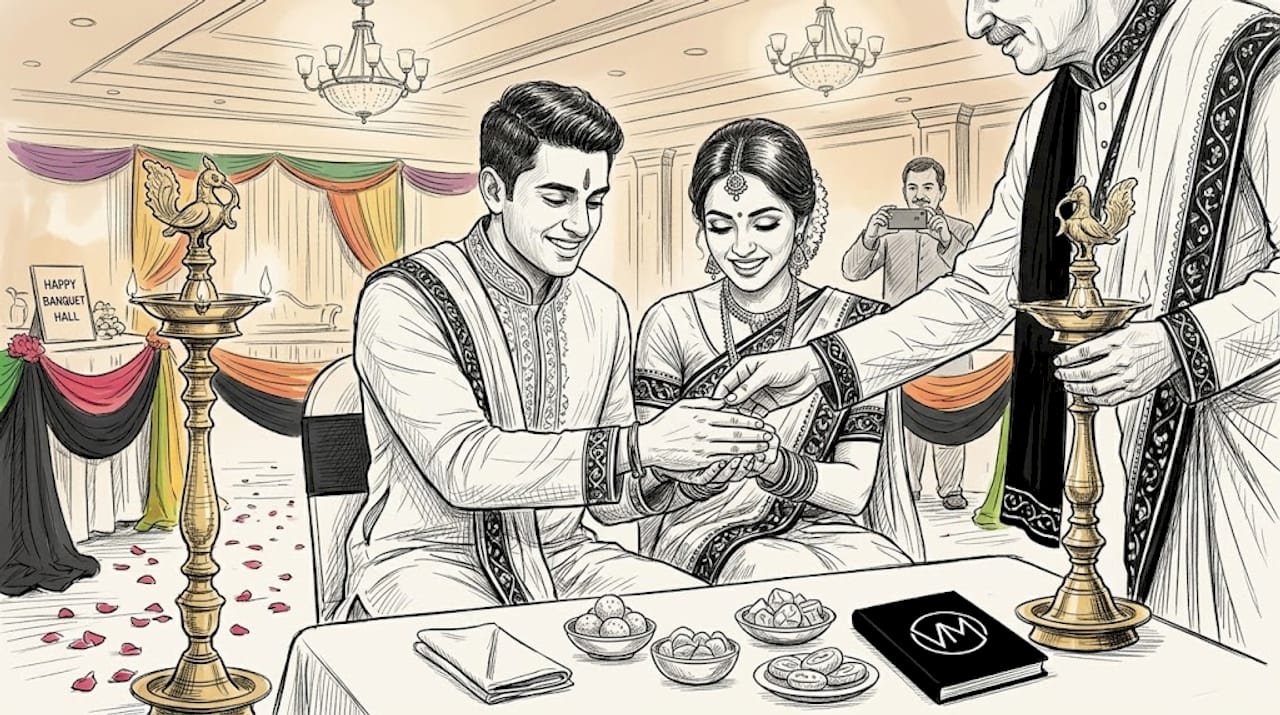
Hindu weddings are among the most visually layered and symbolically rich of all South Asian traditions. While practices vary significantly by region, the core thread is a series of sacred rituals that mark the couple's spiritual union.
Here is a look at key ceremonies found in many Hindu weddings, using Bengali Hindu traditions as a detailed example:
- Gaye Holud (Haldi): Turmeric paste is applied to the bride and groom to purify the skin and bless the couple before marriage.
- Bor Jatri (Baraat): The groom's procession arrives at the wedding venue, often with music and dancing.
- Saat Paak: The bride is carried on a wooden seat and circles the groom seven times, symbolizing their first view of each other as life partners.
- Shubho Drishti: The couple gazes into each other's eyes for the first time as partners, a moment of profound spiritual recognition.
- Mala Badal: Garlands are exchanged between the bride and groom.
- Sindoor Daan: The groom applies sindoor (vermillion) to the bride's hair parting, marking her as a married woman.
- Bou Boron: The bride is formally welcomed into her new family.
As Bengali Hindu wedding traditions show, these ceremonies carry deep layers of meaning tied to regional culture and spirituality.
"Every ritual in a Hindu wedding is a prayer in motion. The fire, the garlands, the sacred steps all speak a language older than words."
Pro Tip: Ask your family elders about regional variations specific to your community. A North Indian wedding may include a Pheras (seven sacred steps around the fire) where a Bengali wedding uses Saat Paak. Both are beautiful. Both are meaningful. Seeing Hinal & Brijesh's wedding story is a great example of how these rituals come alive on film.
Muslim wedding ceremonies: Sacred vows and customs
South Asian Muslim weddings weave together Islamic law, cultural tradition, and joyful community celebration. The sequence of events typically unfolds over several days, each with its own purpose and energy.
Here is the general flow of a South Asian Muslim wedding:
- Mangni (Engagement): Families formally agree to the union, often with an exchange of gifts and prayers.
- Manjha (Haldi): Similar to the Hindu Haldi, turmeric is applied to the bride and groom in separate ceremonies to prepare them spiritually and physically.
- Mehndi: Intricate henna designs are applied to the bride's hands and feet, often accompanied by singing and dancing.
- Nikah: The formal Islamic marriage contract is signed. The bride and groom each give their verbal consent (Qubool hai, meaning "I accept") in front of witnesses, and Quranic verses are recited.
- Reception/Walima: The groom's family hosts a celebratory feast to announce the marriage to the wider community.
"The Nikah is not just a contract. It is a covenant witnessed by God, family, and community. Every word spoken carries the weight of a promise."
What makes South Asian Muslim weddings especially moving is the emphasis on community prayer and collective blessing. The Walima, in particular, is a tradition rooted in generosity, inviting everyone to share in the couple's joy. These ceremonies are a beautiful reminder that marriage is not just between two people. It is between two families and their wider circles of love.
Sikh wedding ceremonies: Spiritual roots and celebration
Sikh weddings, known as Anand Karaj (meaning "blissful union"), are centered on the Guru Granth Sahib, the Sikh holy scripture. The ceremony takes place in a Gurdwara (Sikh temple) and is as spiritually grounding as it is joyful.
Here is how a traditional Sikh wedding unfolds:
- Milni: Male family members from both sides are formally introduced, exchanging garlands and gifts as a symbol of unity.
- Ardas: A congregational prayer is offered to seek God's blessings before the ceremony begins.
- Kirtan: Devotional hymns (Shabads) are sung, setting a meditative and celebratory tone.
- Laavan: The couple walks around the Guru Granth Sahib four times while four specific hymns are sung, each round representing a stage of the spiritual journey toward God and each other.
- Langar: A communal meal is shared by all guests, regardless of background, embodying the Sikh principle of equality.
As Sikh wedding customs illustrate, the Anand Karaj is not just a wedding ceremony. It is a spiritual commitment witnessed by the congregation and blessed through scripture.
Pro Tip: If you want to honor the spirit of seva (selfless service) that defines Sikh culture, consider volunteering your wedding party to help serve Langar. It is a deeply meaningful gesture that guests from all backgrounds will remember.
Parsi/Zoroastrian wedding ceremonies: Purity, playfulness, and meaning
Parsi weddings, rooted in ancient Zoroastrian tradition, are unlike any other South Asian ceremony. They balance solemn purity rituals with genuinely playful post-wedding customs, creating a celebration that is both sacred and joyful.
Key elements include:
- Rupia Peravanu and Madhavsaro: Pre-wedding rituals that bless the home and prepare the couple spiritually.
- Nahan: A purification bath taken by both the bride and groom before the ceremony.
- Adarni: A gift exchange between families.
- Ara Antar: A white cloth separates the couple during the ceremony while they throw rice at each other, symbolizing prosperity.
- Hathvar: The hands of the bride and groom are bound together with thread, symbolizing their lifelong connection.
- Chero Bandhvanu: A ritual tying of the couple's garments.
As Zoroastrian wedding traditions confirm, Parsi ceremonies blend ancient purity rituals with playful post-wedding games, including Hath Borvanu, where the couple playfully compete to see who can grab a coin first. These Zoroastrian wedding customs are unique in their hand-binding and cloth-separation mechanics, making them visually stunning to film and photograph.
"In a Parsi wedding, the sacred and the playful live side by side. That balance is what makes these ceremonies so deeply human."
Comparing major South Asian wedding ceremonies: Features at a glance
With each ceremony outlined, a side-by-side comparison helps you visualize which traditions best match your vision. You can also explore weddings events highlights to see how these ceremonies look on film.
| Tradition | Key rituals | Typical duration | Guest participation |
|---|---|---|---|
| Hindu (Bengali) | Gaye Holud, Saat Paak, Sindoor Daan | 2 to 4 days | High (dancing, processions) |
| Muslim | Mehndi, Nikah, Walima | 2 to 3 days | Moderate (prayers, feasting) |
| Sikh | Milni, Laavan, Langar | 1 to 2 days | High (Kirtan, communal meal) |
| Parsi | Nahan, Ara Antar, Hathvar | 1 to 2 days | Moderate (games, blessings) |
A few things worth noting as you compare:
- Hindu and Sikh weddings tend to involve the most guest participation through music and movement.
- Muslim weddings place strong emphasis on community prayer and shared meals.
- Parsi weddings are smaller in scale but extraordinarily rich in symbolic detail.
Our perspective: Why blending traditions creates unforgettable weddings
After filming weddings across cultures and continents, I have come to believe that the most memorable ceremonies are rarely the ones that follow a strict script. They are the ones where a couple makes a deliberate, thoughtful choice to honor what is real.
I have filmed Hindu-Muslim fusion weddings where the Mehndi night flowed into a Haldi morning without missing a beat. I have watched Sikh families welcome a Parsi bride with Kirtan, and seen tears from every corner of the room. These moments do not happen by accident. They happen when couples are brave enough to ask: what do we actually want?
The about our cinematic approach page explains how we document these stories. But the real advice is this: write down your blended ceremony plan and share it with your families early. Future generations will thank you for the record.
Pro Tip: Create a simple one-page ceremony guide for guests explaining each ritual. It deepens connection and helps everyone feel included, regardless of their background.
Bring your unique wedding vision to life
Your wedding ceremonies deserve to be captured with the same care and intention you put into planning them. At Visualize Media, we specialize in wedding photography and cinematography for traditional, fusion, and multi-day South Asian celebrations. We know how to anticipate the Sindoor Daan, the Laavan, and the Hath Borvanu game, because we have been there.

Ready to start planning? Start your wedding questionnaire to share your ceremony vision with us, or contact the Visualize Media team to schedule a discovery call. We would love to help you tell your story.
Frequently asked questions
What are the most common South Asian wedding ceremonies?
Hindu, Muslim, Sikh, and Parsi/Zoroastrian are the most recognized South Asian wedding ceremonies, each with distinct rituals like the Bengali Hindu Saat Paak and the Zoroastrian Ara Antar.
How long do South Asian wedding celebrations usually last?
They can range from one to five days, depending on the ceremonies chosen and family practices, with Hindu and Muslim weddings often spanning the most days.
Can you combine different South Asian wedding traditions?
Yes, many couples blend rituals from various cultures to reflect their unique backgrounds and values, and it often creates the most memorable celebrations of all.
What makes Parsi wedding ceremonies unique?
Parsi weddings feature purity rituals, playful post-wedding games, and symbolic elements like hand-binding and cloth-separation that set them apart from all other South Asian traditions.