
Most couples spend months obsessing over flowers, lighting, and the perfect dress. Then they book a videographer and assume the rest is visual. But the importance of audio in wedding films is something that quietly separates a film you watch once from one you return to for decades. The way your partner's voice shakes slightly during the vows, the eruption of laughter from your guests, the song that was playing as you walked through the doors — those are the moments that make you cry every time. No camera lens captures any of that on its own.
Table of Contents
- Key takeaways
- The emotional power of audio in wedding films
- Core components of great wedding film audio
- Common audio mistakes that ruin wedding films
- Working with your videographer on audio
- My honest take on audio being the secret ingredient
- How Visualize Media captures audio that lasts a lifetime
- FAQ
Key takeaways
| Point | Details |
|---|---|
| Audio drives emotional memory | At least 50% of a wedding film's emotional impact comes from audio, often more than the visuals. |
| Natural sound creates authenticity | Laughter, ambient noise, and clear vows make wedding films feel lived-in and real, not produced. |
| Generic music hurts your film | Stock music designed for corporate videos drains emotional specificity from wedding films. |
| Redundancy protects once-in-a-lifetime moments | Multiple audio sources and backup recordings prevent irreplaceable moments from being lost. |
| Couples should ask the right questions | Asking your videographer about microphone setup, music licensing, and backup audio before booking matters. |
The emotional power of audio in wedding films
Here is a fact that surprises most couples: audio accounts for at least half of a wedding film's emotional impact, often outweighing the visuals when it comes to long-term memory. That is not a subtle point. You can have gorgeous footage, cinematic color grading, and sweeping drone shots, but if the audio is muddy, mismatched, or generic, the film loses its emotional core.
Think about why that is. When you close your eyes and remember your wedding day, you do not see a color-graded shot. You hear your partner's voice. You hear the sound of applause. You hear the song that was playing when you first saw each other. Sound is how memory encodes emotion, and a wedding film that captures that honestly becomes something much more than a highlight reel.
"Natural sounds such as laughter, vows, ambient noise provide intimacy and bring a wedding video to life in ways that visuals alone simply cannot."
This is why why audio matters in wedding films goes beyond technical quality. The role of sound in wedding videos is fundamentally about emotional truth. When the audio is right, you are not watching a film. You are reliving a day.
The music layer adds another dimension entirely. The wrong track pulls you out of the moment, but the right one deepens every visual. Natural rhythms and human imperfections in music match the spontaneous emotional flow of wedding moments far better than perfectly metronomic, algorithmically produced tracks. Real music breathes with the film.
Core components of great wedding film audio
Understanding what goes into exceptional audio quality in wedding films helps you ask better questions and recognize whether a videographer is serious about sound.
The most critical elements include:
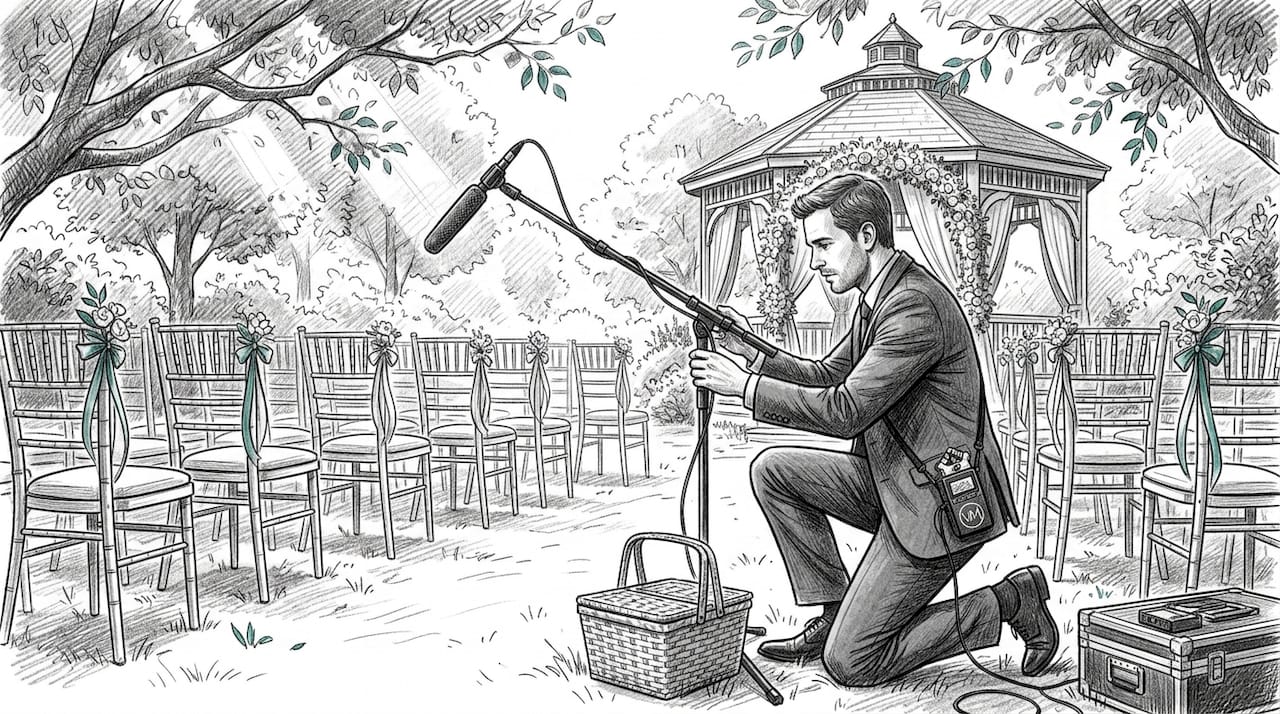
- Vows and ceremony speech. Lavalier microphones clipped discreetly on the groom and officiant capture vows without interfering with movement or the look of the ceremony. These are non-negotiable for any professional setup.
- Backup recorders. Portable audio recorders costing around $100 each provide independent audio streams that protect against any single point of failure. Professional teams use more than one.
- Direct soundboard feeds. For speeches and toasts, a direct XLR feed from the venue's soundboard produces clean, broadcast-quality audio without the ambient noise of a room microphone.
- 32-bit float recording. This technology means no distortion from clipping during sudden loud moments, like applause or an emotional outburst, without needing manual gain adjustments during the ceremony.
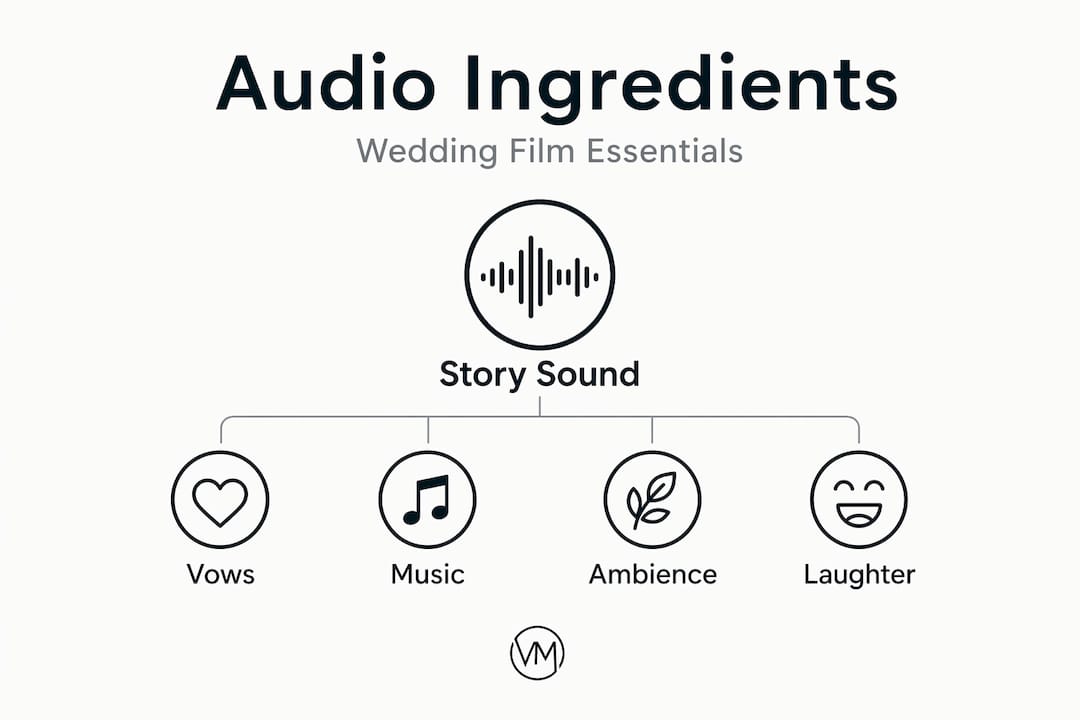
- Ambient sound. The collective sound of the room: the chatter before the ceremony, the clink of glasses, the music between speeches. These layers create atmosphere and authenticity in the final edit.
The right music selection is equally technical. Harmonically interesting music with dynamic range allows a mix where dialogue sits naturally without volume clashes or emotional monotony. Flat, repetitive tracks make that balance nearly impossible.
Pro Tip: Ask your videographer to show you a sample film with isolated audio before the music was added. If the natural sound is rich and clear on its own, the final product will be extraordinary.
Common audio mistakes that ruin wedding films
Knowing the pitfalls is just as useful as knowing best practices. These are the most common ways audio goes wrong.
- Using stock or corporate music. Generic stock tracks designed for product demos or explainer videos break emotional immersion instantly. They make a deeply personal film feel mass-produced.
- Burying the vows under music. Layering music too loud over the ceremony audio is a shortcut that costs the film its most irreplaceable moments. The vows should be heard clearly, not suggested.
- No backup recording plan. A single lavalier mic is a single point of failure. Wind, fabric rustling, battery issues, or a mic placed wrong can destroy the audio from the entire ceremony without a backup.
- Ignoring the venue acoustics. Highly reverberant spaces like stone churches or large halls require a different microphone approach than outdoor ceremonies. Teams that do not plan for this produce muddy, echo-heavy audio.
- Skipping ambient sound entirely. Some videographers record only what is needed and ignore the room. The result is a film that feels sterile, like a series of clips rather than a living memory.
Pro Tip: When reviewing a videographer's previous work, pay attention specifically to how clearly you can hear the vows and toasts. That is the real test of their audio quality in wedding films.
Working with your videographer on audio
Getting exceptional audio requires more than hiring the right person. It requires a conversation before your wedding day. Here is what to cover:
- Ask specifically what microphones they use for the ceremony and whether they use a lavalier on the groom, the officiant, or both.
- Ask whether they plug directly into the venue's sound system for speeches. If they do not know what an XLR feed is, that is a red flag.
- Ask how they handle outdoor weddings. Wind protection gear like windscreen covers is standard for any professional working outside.
- Ask how many separate audio sources will be recording simultaneously. Multiple backup recorders are the difference between losing a vow and saving it.
- Ask how they approach music selection. Do they choose music for each couple, or do they pull from the same playlist they have used for five years?
- Review at least two to three full wedding films from their portfolio, not just highlight clips. Listen critically to the dialogue clarity, the music choices, and how the two are balanced.
Understanding the role of sound in storytelling transforms you from a passive client into an informed one. The couples who ask these questions consistently get better films.
My honest take on audio being the secret ingredient
I have worked on enough wedding films to say this clearly: the ones that make people cry every time are almost never the ones with the best camera equipment. They are the ones where you can hear everything. The barely-held-together voice during the vows. The best man laughing before he even gets to the punchline. The ambient sound of a crowd that has just witnessed something real.
What I have learned is that audio problems are almost always invisible to clients during planning. Nobody walks into a consultation asking about 32-bit float recorders or XLR routing. But when the film comes back and the vows are muffled or the music feels like it came from a commercial, they feel it immediately. Something is just off, even if they cannot name it.
The solution is redundancy and intentionality. I would never record a ceremony with fewer than three independent audio sources running simultaneously. And I spend more time on music selection than almost anything else in post-production, because a great track with natural imperfections will carry visuals that are merely good into something genuinely moving.
Couples who ask about audio before booking are always the easiest to work with. They understand that this is not just a recording. It is a film.
— Anthony
How Visualize Media captures audio that lasts a lifetime
At Visualize Media, audio is treated with the same care as every visual element of your film. The team uses multiple lavalier microphones, independent backup recorders, and direct soundboard feeds at every ceremony to protect moments that cannot be recreated. Music is selected specifically for each couple, drawing on tracks with the harmonic depth and dynamic range needed to complement your story, not cover it up. If you are planning a wedding in New York or New Jersey and want a film that sounds as extraordinary as it looks, start a conversation with the Visualize Media team today. You can also follow their work on Instagram to see and hear the difference firsthand.
FAQ
Why does audio matter more than visuals in wedding films?
Audio is how emotional memory is encoded. According to producer Navid Hamidi, audio drives at least half of a wedding film's emotional impact, meaning poor sound quality undermines even the most beautiful footage.
What microphones do professional wedding videographers use?
Most professionals use lavalier microphones on the groom and officiant, supplemented by portable backup recorders and direct soundboard feeds for speeches and toasts.
How can I tell if a videographer prioritizes audio quality?
Ask to watch full-length films from their portfolio, not just highlight reels, and listen for clear vow audio, natural ambient sound, and music that complements rather than overwhelms the dialogue.
What is wrong with using stock music in a wedding film?
Generic stock music makes a personal film feel mass-produced. It lacks the harmonic depth and natural rhythm needed to match the emotional flow of real wedding moments.
How do I protect against audio failures on my wedding day?
Ask your videographer about redundant audio sources before booking. Multiple simultaneous recordings mean a battery failure or mic issue on one device does not erase the audio from your ceremony.