
Wedding rituals are purposeful symbolic actions that confer meaning, reinforce social ties, and create lasting emotional impact in marriage ceremonies. The importance of wedding rituals goes far beyond aesthetics. From the ring exchange and unity candle to culturally specific customs like the Agĩkũyũ Rũracio gift exchange, these acts connect couples to their heritage, reduce anxiety, and bind families into lasting alliances. Research confirms that rituals reduce anxiety, strengthen relationships, and add meaning to life. Understanding why these traditions work gives you the power to choose them with intention.
Why the importance of wedding rituals goes deeper than tradition
Rituals are not decorative. Wedding rituals confer socially meaningful outcomes beyond decoration, including blessings, good fortune, and community recognition. That distinction matters because it reframes every moment of your ceremony as functional, not just sentimental.
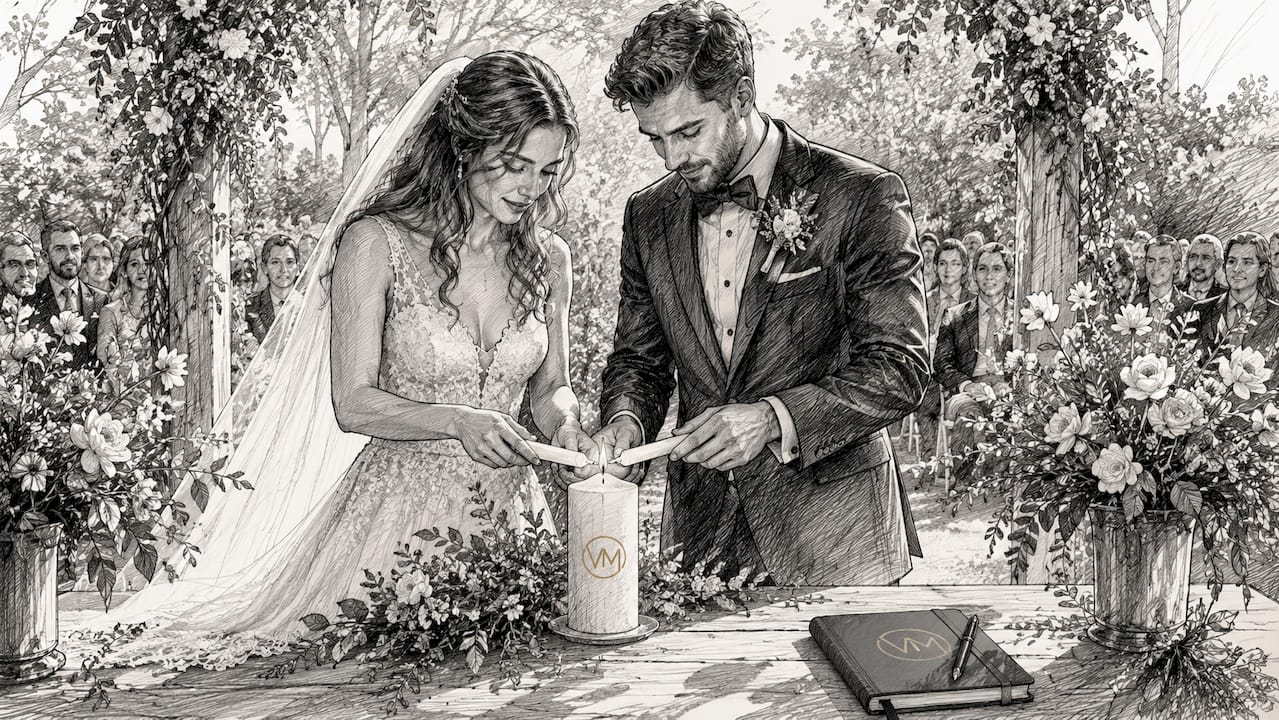
Cognitive science explains the mechanism. Rituals synchronize participant expectations through emotional rewards and culturally encoded outcomes, which is why a room full of strangers can feel unified the moment a couple exchanges vows. The predictable structure of a ritual tells every person present what to feel and when to feel it.
The psychological payoff is real and measurable. Research published by Psychology Today confirms that engaging in rituals creates emotional comfort, presence, and social bonding for both the couple and their guests. That comfort is not accidental. It comes from the brain recognizing a familiar sequence of action and outcome, which lowers stress hormones and increases feelings of connection.
- Rituals provide a predictable structure that reduces decision fatigue and anxiety on a high-stakes day.
- Repeated symbolic actions, like placing a ring on a finger, reinforce emotional presence and commitment.
- Joint participation in ritual creates shared memory, which deepens intimacy between partners and guests.
- Effective ritual design00105-1) uses predictable, shared action-outcome mappings that increase emotional and social impact.
Pro Tip: Choose at least one ritual that requires both partners to act simultaneously, such as lighting a unity candle together or pouring sand into a shared vessel. Simultaneous action creates the strongest sense of shared experience and emotional synchrony.
What social and cultural functions do wedding rituals serve?
Wedding ceremonies have always been about more than two people. They are public declarations that reorganize social networks, formalize family alliances, and transmit cultural values across generations. Marriage rituals embed individuals in descent groups that provide identity, support, and resource distribution control. That is a significant social function that a simple party cannot replicate.
The Agĩkũyũ people of Kenya offer one of the most instructive examples. Their Rũracio gift exchange demonstrates respect and long-term reciprocity between families rather than a transaction. The ritual creates a bond called uthoni, a lifelong relationship of mutual obligation between the two families. This is the social architecture that wedding rituals build everywhere, even when the specific customs differ.
The table below compares the core social functions that wedding rituals serve across different cultural contexts.
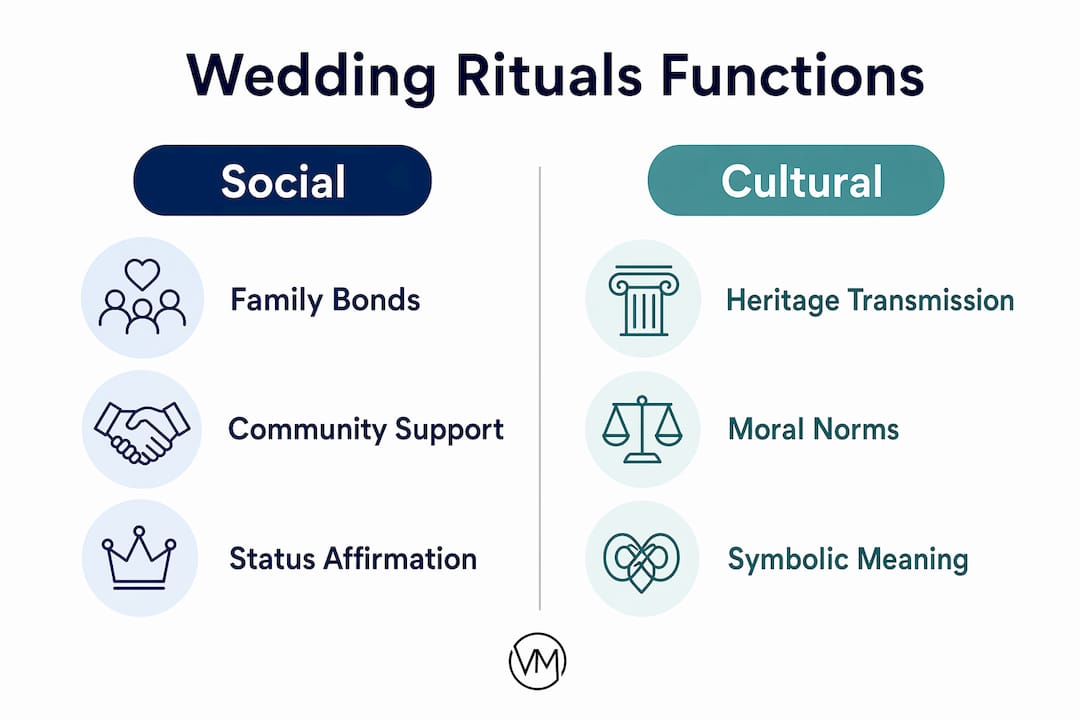
| Social function | How rituals deliver it |
|---|---|
| Family alliance formation | Gift exchanges and ceremonial introductions formalize bonds between lineages. |
| Cultural value transmission | Symbolic acts and ceremonial speech communicate community norms to the next generation. |
| Social identity conferral | Rituals place the couple within a recognized kinship group, granting belonging and status. |
| Community continuity | Fertility-focused ceremonies link marriage to lineage continuation and community survival. |
For couples planning weddings in New York or New Jersey, this framework applies directly. Inviting elders to speak, incorporating family-specific customs, or including meaningful wedding traditions from your cultural background are not nostalgic gestures. They are acts of social investment that pay dividends for decades.
What do common wedding rituals actually symbolize?
Every ritual carries a coded message. The ring exchange communicates unbroken commitment through the circle's geometry. Ringing bells at Irish weddings is a tradition intended to ward off evil spirits and protect the new family. The giving away of the bride historically transferred guardianship between kinship groups, though modern couples often reinterpret this as a gesture of family blessing rather than ownership.
The Tamia Tapuni wedding customs of Eastern Indonesia show how far symbolic communication can reach. Ceremonial speech and symbols in these rituals reflect community harmony and ancestral respect, functioning as a complete communication system between families and generations. The words spoken are not just words. They are binding social contracts delivered in poetic form.
| Ritual | Cultural origin | Core symbolism |
|---|---|---|
| Ring exchange | Western Christian tradition | Unbroken commitment and eternal love |
| Unity candle | American Christian ceremonies | Two lives merging into one shared flame |
| Rũracio gift exchange | Agĩkũyũ, Kenya | Respect, reciprocity, and lifelong family alliance |
| Bell ringing | Irish folk tradition | Protection from evil spirits and blessing of the home |
| Tamia Tapuni utterances | Retta, Eastern Indonesia | Ancestral respect, moral values, and community harmony |
Pro Tip: When incorporating a ritual from your cultural heritage, research its original meaning before adapting it. Couples who understand the symbolism behind a custom can explain it to guests during the ceremony, which multiplies the emotional impact for everyone in the room.
For couples exploring South Asian wedding ceremonies, the density of symbolic ritual is especially rich, with each of the seven steps in a Hindu Saptapadi carrying a distinct vow and social meaning.
How to incorporate rituals into your wedding with intention
Choosing rituals thoughtfully requires understanding who gives them meaning. Role-structured participation, meaning who speaks, officiates, and witnesses, determines a ritual's social function and weight. An elder blessing carries different authority than a friend's toast, and both serve different purposes.
Here is a practical framework for building a ritual-rich ceremony:
- Identify the social actors in your community whose participation confers the most meaning, whether that is a grandparent, a religious officiant, or a community elder.
- Balance tradition and personalization. Omitting a culturally expected ritual in a strong kinship context can create lasting social friction. Adapt rather than eliminate.
- Write out the action-outcome sequence for each ritual you include. If guests cannot follow the logic of what is happening and why, the emotional impact drops sharply.
- Consider modern additions like a Super 8 film camera moment, where guests or a videographer capture candid ritual scenes on analog film, creating a tactile, nostalgic record that digital footage cannot replicate.
- Avoid stacking too many rituals without explanation. Three well-explained customs outperform eight unexplained ones every time.
The Super 8 camera trend at weddings deserves specific attention here. Couples are increasingly asking their videographers to incorporate Super 8 footage of key ritual moments, from the processional to the first kiss. The grain and warmth of Super 8 film mirrors the emotional texture of ritual itself: imperfect, human, and deeply felt. It is a format that makes the significance of wedding ceremonies visible in a way that crisp digital footage sometimes cannot.
Key takeaways
Wedding rituals work because they combine psychological structure, social function, and cultural symbolism into a single act that connects couples, families, and communities simultaneously.
| Point | Details |
|---|---|
| Rituals reduce anxiety | Predictable symbolic structure lowers stress and increases emotional presence for couples and guests. |
| Social bonds are the real output | Rituals formalize family alliances and embed couples in kinship networks that provide lifelong support. |
| Symbolism carries coded meaning | Every ritual, from ring exchanges to bell ringing, communicates specific values and social commitments. |
| Role-structured participation matters | Who officiates and witnesses a ritual determines its social authority and emotional weight. |
| Personalization requires understanding | Adapting a ritual works best when couples understand its original meaning and communicate it to guests. |
Why rituals are the most underrated investment in your marriage
I have filmed hundreds of weddings across New York and New Jersey, and the ceremonies that stay with me are never the ones with the biggest floral budgets. They are the ones where the couple clearly understood why they were doing what they were doing. When a groom tears up during a Rũracio-inspired gift presentation to his future in-laws, or when a bride and her grandmother light a unity candle together, the camera captures something that no posed portrait can touch.
What I have noticed is that couples who skip or rush through rituals almost always regret it. Not because the day felt incomplete, but because the film feels incomplete. Rituals give a wedding its narrative spine. Without them, you have a beautiful party. With them, you have a story.
The balance between honoring tradition and personal storytelling is not a compromise. It is the whole point. Rituals are not constraints on your creativity. They are the framework that makes your creativity legible to everyone in the room, including your future selves watching the film ten years from now.
Treat every ritual as a relational investment, not a formality. The return compounds over a lifetime.
— Anthony
Preserve your ritual moments with Visualize Media
The symbolic moments in your ceremony deserve more than a smartphone clip. Visualizemedia specializes in cinematic wedding films across New York and New Jersey, capturing the exact moments where ritual and emotion intersect. Whether it is the weight of a ring placement, the flicker of a unity candle, or the raw emotion of a ceremonial blessing, the team at Visualizemedia frames these acts with the same intentionality you brought to choosing them. Explore wedding cinematography and photo services to see how cinematic storytelling preserves the cultural and emotional depth of your ceremony. Follow the work on Instagram for real examples of ritual moments captured on film.
FAQ
What is the importance of wedding rituals?
Wedding rituals are symbolic acts that reduce anxiety, strengthen emotional bonds, and formalize social alliances between families. Research confirms they create emotional comfort and community belonging that extends well beyond the wedding day.
Why do wedding customs matter across different cultures?
Cultural values in marriage rituals communicate moral norms, transmit heritage, and embed couples in kinship networks that provide identity and long-term social support. The specific customs differ, but the social function is consistent across cultures.
How do rituals affect the couple's relationship long-term?
Shared ritual participation creates synchronized emotional memory, which deepens intimacy and commitment. Couples who engage in meaningful rituals report stronger feelings of connection and shared identity.
Can couples personalize rituals without losing their meaning?
Yes. Adapting a ritual works best when couples understand its original symbolism and explain it to guests during the ceremony. Personalization that honors the core meaning amplifies emotional impact rather than diluting it.
What role does Super 8 film play in capturing wedding rituals?
Super 8 cameras capture ritual moments with a warmth and grain that mirrors the emotional texture of the ceremony itself. Many couples request Super 8 footage specifically for key ritual moments because the analog format feels more intimate than digital video.