
Most couples spend months imagining what their wedding will look like but far less time thinking about how it will feel on screen. The difference between a wedding video that sits unwatched on a hard drive and a wedding film you replay for years comes down to one thing: cinematic intention. Understanding which shots create that intention gives you the power to walk into a videography consultation with a clear vision, ask the right questions, and walk away with a film that genuinely moves people.
Table of Contents
- Signature cinematic wedding shots and what they capture
- Comparison of cinematic shots: impact and complexity
- How to choose the right shots for your wedding style
- Real-life examples: before-and-after cinematic wedding moments
- Our take: why cinematic shots matter more than perfect moments
- Bring your own cinematic wedding vision to life
- Frequently asked questions
Key Takeaways
| Point | Details |
|---|---|
| Iconic shots elevate emotion | Using cinematic angles and movement transforms wedding films into memorable stories. |
| Editing handles real moments | Professional editing techniques can smooth over flubs and turn candid scenes into film-worthy highlights. |
| Personalization builds impact | Choosing shots that reflect your personalities and story ensures your film feels uniquely yours. |
| Shot selection boosts creativity | Knowing your options helps guide your videographer and enhances the emotional power of your wedding film. |
Signature cinematic wedding shots and what they capture
With that context, let's break down exactly which shot types bring wedding films to life and why each matters.
A cinematic shot in wedding videography is any image captured with deliberate artistic purpose. It uses camera movement, depth of field (how sharp or blurred the background appears), lighting, and framing to guide the viewer's emotions, not just document what happened. Think of the difference between a phone recording and a film scene. Same moment, completely different feeling.
Here are the foundational shots that define cinematic emotion in wedding films at the highest level:
- Establishing drone shot: An aerial view that opens the film by setting the scale and beauty of your venue. For a Hudson Valley estate or a Jersey Shore waterfront, this single shot immediately signals that what follows is something elevated.
- Slow-motion walk: The couple, wedding party, or even a flower girl walking toward camera at high frame rate. When slowed down in post-production, small details like fabric movement, a nervous smile, or a squeeze of the hand become deeply emotional beats.
- Intimate closeup during vows: Tight framing on eyes, clasped hands, or a trembling lip during the ceremony creates raw, vulnerable footage that audiences connect with instantly. This is often the shot couples say made them cry watching their own film.
- Sweeping dance floor movement: A tracking shot or handheld movement through the reception, capturing energy, laughter, and real celebration. It puts the viewer inside the party, not watching from the sidelines.
- Creative b-roll moments: Detail shots of the rings, invitations, floral arrangements, or a grandmother's smile during the first dance. These pieces of footage are the connective tissue of your film's story.
- Dramatic first look: A wide or medium shot of the moment one partner turns to see the other for the first time. Framed correctly with the right lens compression, this single shot often becomes the most-shared clip from the entire film.
Each of these shots uses the filming techniques for emotion that separate a skilled filmmaker from a basic videographer.
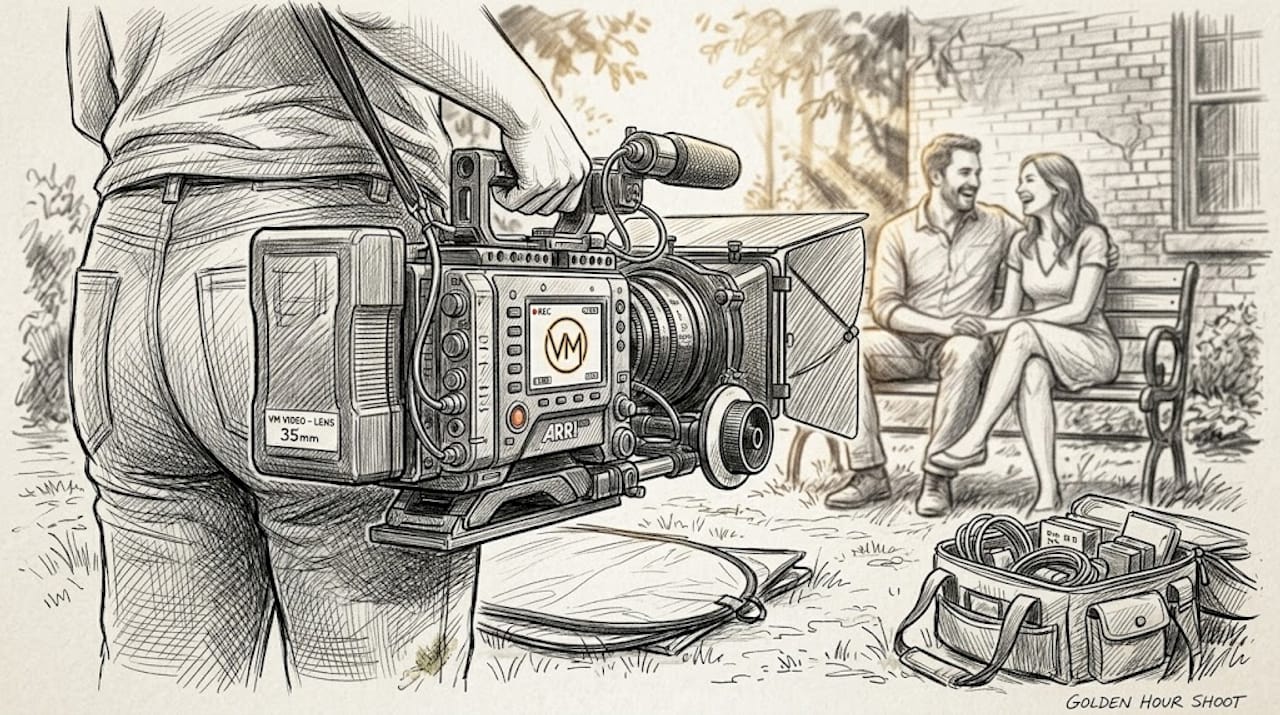
Pro Tip: Even when unplanned moments happen, like a stumbled line or an awkward pause, skilled editing can save the scene entirely. Editing techniques for flubs such as match cuts, speed ramps, b-roll cutaways, and even subtle subtitles allow filmmakers to handle mumbles or stumbles without losing the emotional momentum of the scene.
Comparison of cinematic shots: impact and complexity
After exploring the core shots, here's how they stack up for style and difficulty, helping you prioritize your vision.
Not every shot carries the same weight, and not every wedding needs the same combination. Understanding what each shot demands from your videographer and what it delivers emotionally helps you make smarter choices about coverage and film vs digital wedding shots.
| Shot type | Emotional impact | Technical skill required | Best suited for |
|---|---|---|---|
| Establishing drone shot | High, sets tone and scale | Advanced, requires FAA certification | Outdoor or grand venue weddings |
| Slow-motion walk | Very high, intimate and iconic | Moderate, needs high frame-rate camera | Any couple wanting emotional punch |
| Intimate vow closeup | Extremely high, raw and personal | Moderate to high, lens and lighting critical | Couples who want emotional depth |
| Sweeping dance floor movement | High, energetic and joyful | High, requires steady movement technique | Couples with large, lively receptions |
| B-roll detail shots | Medium, adds texture and story | Low to moderate, eye for composition | All weddings, especially detail-rich ones |
| Dramatic first look | Very high, suspense and love | High, timing and positioning are critical | Couples doing a traditional first look |
The editing layer applied to each of these shots matters just as much as the shooting itself. Color grading (adjusting tones and mood in post-production) can give your film a warm golden feel, a moody cinematic look, or a clean modern aesthetic. Techniques like editing techniques for flubs prove that even imperfect footage, handled with professional skill, becomes part of a polished final product. Modern wedding films routinely blend three or more of these shot types into a single highlight reel, and couples who understand this combination tend to be the happiest with their final films.
How to choose the right shots for your wedding style
Now, it's time to turn inspiration into reality. Here's a framework for selecting cinematic shots that feel uniquely you.
- Review your venue's visual highlights. A rooftop ceremony in Manhattan calls for different shots than an indoor ballroom in Bergen County. Walk through your venue virtually or in person and note the angles, textures, and natural light. Share these observations with your videographer.
- Discuss creative inspiration with your videographer. Bring reference films, screenshots, or even mood boards. A great filmmaker will build on your ideas with shots you haven't even considered yet. This is also a good time to ask about their experience with your specific venue type.
- Choose the moments you most want emphasized. Is it the vow exchange? The father-daughter dance? The moment you see your guests for the first time? Prioritizing two or three emotional peaks ensures your film has a clear narrative arc.
- Consider your guest experience and unique traditions. Cultural ceremonies, multilingual vows, or family traditions often produce unexpected cinematic gold. Make sure your videographer knows about these in advance.
Pro Tip: Before finalizing your videographer, ask to see a short mood board or two to three past films from weddings similar to yours in scale and setting. This tells you far more about their creative instincts than a highlight reel alone. You can also explore guides on cinematic memories tips to understand how framing decisions translate emotion into lasting visuals.
Even the moments you dread ending up on film can be transformed. Knowing how to personalize your wedding film starts with honest communication and ends with footage that feels authentically yours. And remember, editing techniques for flubs mean that stumbles, nervous laughter, and off-script moments rarely make it into the final cut unless they add charm.
Real-life examples: before-and-after cinematic wedding moments
Here's how these concepts come together. See real-world before-and-after transformations that reveal cinematic magic.
| Raw moment | What happened | Cinematic result |
|---|---|---|
| Groom's voice cracked during vows | B-roll of bride's reaction cut in seamlessly | Emotional, beautiful scene that viewers remember most |
| Ring fell during the exchange | Moment trimmed, reaction shot used instead | Clean, elegant sequence without any awkwardness |
| Flower girl refused to walk | Wide establishing shot used, cutaway to parents laughing | Genuine, joyful moment that felt intentional |
These transformations happen because editing techniques for flubs are built into the professional workflow from day one. The filming and the edit are not two separate services. They are one continuous creative act. A real wedding film transformation happens in the edit suite just as much as on the wedding day itself.
"The most cinematic moments are rarely the ones we planned. They're the ones we were ready to capture and skilled enough to shape into something extraordinary." — Professional wedding filmmaker perspective
Our take: why cinematic shots matter more than perfect moments
With these real-life transformations in mind, let's reflect on what truly makes wedding films unforgettable.
Here's the uncomfortable truth most videography companies won't tell you: flawless execution is not what makes a wedding film great. What makes it great is emotional truth. The cracked voice during vows. The unplanned laugh during the first dance. The grandmother wiping her eyes in the back row. These are the moments that make audiences feel something, and they almost never appear on any shot list.
The best filmmakers understand that wedding film trends are moving away from formal, staged perfection and toward raw, honest storytelling. Couples increasingly want their film to feel like them, not like a generic luxury production.
This is why trusting your videographer's creative instincts, especially in unscripted moments, delivers results that no pre-planned shot list can guarantee. The signature shots we've described are tools, not formulas. The magic happens when a skilled team uses those tools to chase meaning rather than perfection.
Bring your own cinematic wedding vision to life
Ready to make your wedding film as cinematic as you've imagined? Here's your next step.
At Visualize Media, we specialize in weddings and events services across New York and New Jersey, crafting films that feel more like short cinema than documentation. Every couple's story is different, and our approach is built around capturing yours with intention, artistry, and emotional precision.
Browse a client film example to experience how our cinematic style translates to real weddings, then take two minutes to complete our wedding film questionnaire so we can start building a creative vision around your specific day. Your film should be as extraordinary as the moments it preserves.
Frequently asked questions
What defines a "cinematic" wedding shot?
A cinematic wedding shot uses artistic angles, deliberate camera movement, and storytelling technique to create a film-like emotional atmosphere rather than simple documentation.
How can awkward moments be made to look cinematic?
Skilled editing can transform awkward moments using b-roll, match cuts, and other professional film techniques for seamless, polished results.
Should we request specific cinematic shots for our wedding film?
Yes, discussing specific shots with your videographer ensures your wedding film reflects your personal vision, venue, and emotional priorities.
What if we feel camera-shy or worried about looking staged?
Experienced videographers guide couples into natural moments throughout the day and use creative editing to ensure footage never feels stiff or overly posed.
How much can videography and editing change the feel of a wedding video?
Professional videography combined with cinematic editing can transform even simple, unplanned moments into emotionally powerful highlights that last a lifetime.