
Most couples don't realize something is missing until weeks after the wedding, when they sit down to watch their film and notice the moment they whispered to each other before the ceremony isn't there, or the first dance looks stiff because the camera operator was hovering three feet away. That regret is more common than you'd think, and it almost always comes from intrusive filming that disrupted the natural flow of the day. Unobtrusive videography changes that equation entirely, using smart placement, silent equipment, and deep rapport to capture genuine emotion without anyone noticing the cameras are rolling.
Table of Contents
- Why unobtrusive filming matters for luxury weddings
- Core unobtrusive filming techniques: the foundation
- Dual videographers: maximum coverage with minimal disruption
- Applying unobtrusive techniques in NY/NJ luxury venues
- What most couples and videographers miss about unobtrusive filming
- Connect with unobtrusive wedding film experts in NY/NJ
- Frequently asked questions
Key Takeaways
| Point | Details |
|---|---|
| Regret reduction | Dual videographers reduce missed moments by 84%, greatly minimizing regret. |
| Silent technique | Strategic camera and mic placements capture vows discreetly and artistically. |
| Pre-event rapport | Building comfort before filming results in candid, emotion-filled footage. |
| Venue adaptation | Unobtrusive methods are tailored to NY/NJ venues for luxury results. |
| Experience-led approach | Empathy and timing matter more than equipment for unobtrusive, cinematic films. |
Why unobtrusive filming matters for luxury weddings
Luxury weddings in New York and New Jersey come with sky-high expectations, not just for the venue or the florals, but for how the day is remembered. You want a film that feels like a movie, not a documentary where someone keeps stepping in front of guests to get a shot. That distinction matters enormously.
Traditional intrusive filming is easy to spot: large rigs positioned at the end of aisles, videographers moving constantly during vows, visible equipment everywhere. It creates self-consciousness in couples and guests alike, and that stiffness shows up on screen. What you get is technically competent footage that feels hollow because the real emotion was suppressed the moment people noticed the camera.
There's a significant emotional and practical cost to missing key moments. Wedding video regrets are far more common than most couples expect before their day. In fact, 75% of couples who didn't have video coverage later regret that decision, which tells you how much the filmed memory of a wedding matters long term.
The benefits of unobtrusive filming include:
- Genuine emotional reactions captured without prompted performances
- Comfortable guests who behave naturally throughout the day
- Cinematic compositions that use architecture and light rather than direct staging
- Preserved spontaneous moments like a bridesmaid's laugh or a father's quiet tears
- Artistic storytelling that unfolds rather than being forced
"The best wedding films are the ones where you forget you were being filmed at all. That kind of comfort only comes when the team behind the cameras has mastered the art of disappearing."
Now that you understand the emotional stakes, let's explore the core filming principles that ensure your memories are preserved artistically and discreetly.
Core unobtrusive filming techniques: the foundation
The foundation of invisible filmmaking is preparation. A skilled videographer never improvises camera positions during your ceremony. Every placement is decided in advance, ideally after a venue walkthrough, so there is zero movement or adjustment needed when the music starts.
Pre-positioning silent cameras and hidden microphones before the ceremony begins is the single most effective way to avoid any sound or movement during vows. This is especially critical in Catholic ceremonies, Jewish ceremonies, and formal Protestant services where any disruption stands out instantly. The camera operator should be stationary and positioned behind or beside guests so the focal point stays on you, not the equipment.
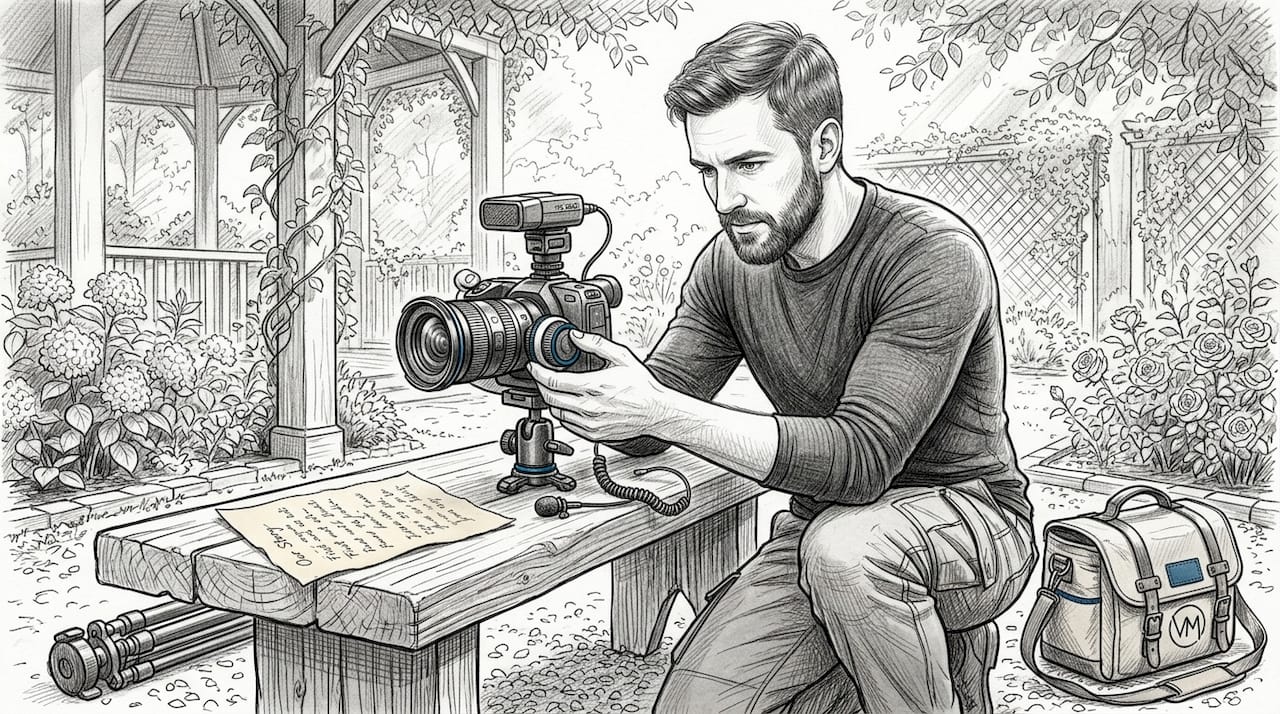
Building casual familiarity before the wedding day is equally powerful. The most cinematic wedding filming doesn't happen because of expensive gear. It happens because you forgot the cameras were there.
Here's a step-by-step approach the best teams use:
- Venue walkthrough at least two weeks before to identify optimal fixed camera angles
- Engagement session or pre-wedding meeting to build comfort with the couple on camera
- Hidden audio setup using wireless lavalier mics clipped discreetly to the groom's jacket
- Long lens shooting from greater distances to keep operators out of sightlines
- Agreed movement zones so operators know exactly when and where they can reposition without risk
| Technique | Traditional approach | Unobtrusive approach |
|---|---|---|
| Camera placement | Ad-hoc, adjusted during ceremony | Pre-planned, fixed positions |
| Audio capture | Visible boom mic or podium device | Hidden wireless lavalier mics |
| Videographer movement | Frequent repositioning during vows | Stationary during key moments |
| Guest interaction | Minimal before event | Casual rapport built in advance |
| Lighting use | Artificial lighting added | Ambient and venue light maximized |
Pro Tip: Ask your videographer to share their ceremony camera placement plan at least one week before the wedding. If they don't have one, that's a signal to ask more questions about their discreet filming approaches.
With those foundational strategies in mind, luxury weddings require solutions that scale, especially to cover multiple key moments without missing a beat.
Dual videographers: maximum coverage with minimal disruption
Here is where data becomes compelling. A single videographer, no matter how skilled, physically cannot be in two places simultaneously. During your first kiss, they might be positioned on the left side of the altar, meaning the angle on your mother's reaction in the front row is simply gone. That moment cannot be recreated.
Dual videographers reduce missed moments from an average of 3.8 per wedding to just 0.6 per wedding, an 84% reduction. Client satisfaction ratings rise from 4.56 to 4.78 stars, a statistically significant jump. These aren't minor improvements. They represent the difference between a film you love and one that leaves you wishing certain scenes were there.
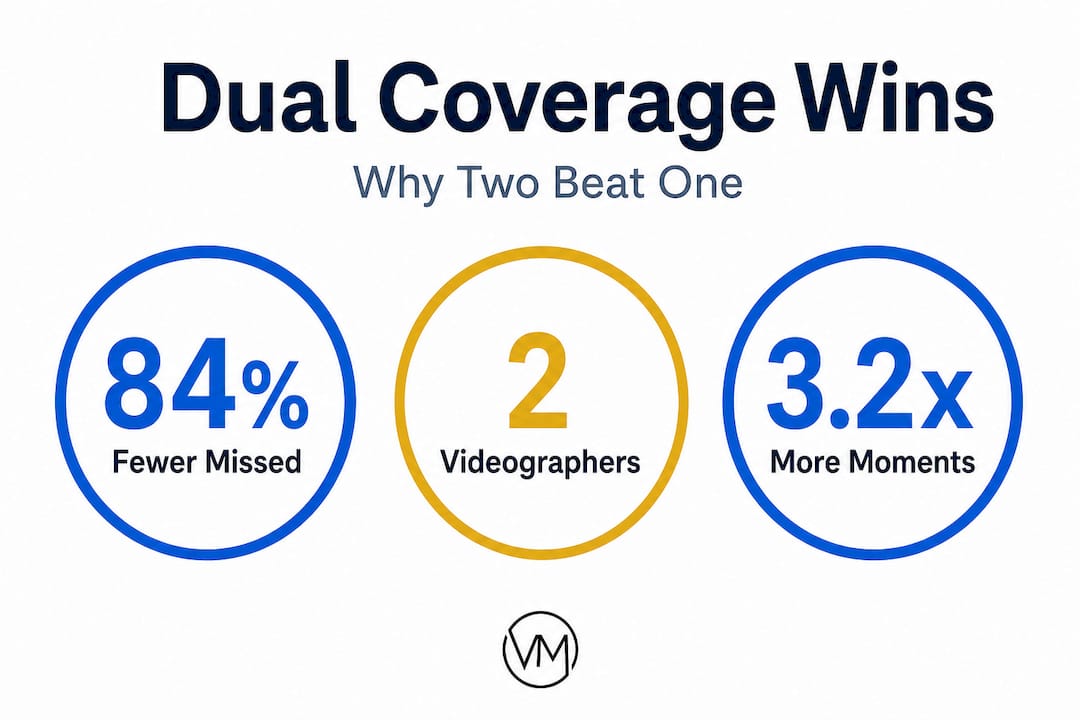
Importantly, adding a third videographer adds no measurable benefit in coverage but does increase the number of people moving through your event space. Two is the optimal number.
Key advantages of a dual videographer setup:
- Simultaneous ceremony angles from both sides of the altar without movement
- Parallel coverage of the couple and guests during emotional moments
- Backup audio in case one wireless microphone encounters interference
- Separate coverage of reception room detail shots while the couple is being photographed
- Natural documentary style that feels less staged than a single operator repositioning constantly
The dual videographer benefits extend beyond the ceremony too. During cocktail hour, one operator can capture candid guest moments and venue details while the other stays close to the couple for portraits. You get a complete story, not a highlight reel with gaps.
Luxury couples want not just coverage, but artistry. Let's look at how unobtrusive methods can achieve both, with practical examples from NY/NJ events.
Applying unobtrusive techniques in NY/NJ luxury venues
New York and New Jersey offer some of the most architecturally stunning wedding venues in the country. Think ballrooms in Manhattan with soaring ceilings and dramatic chandeliers, waterfront estates in the Hudson Valley, historic estates in northern New Jersey, and rooftop venues with the skyline as a backdrop. These spaces are visually extraordinary, and unobtrusive filming is designed to use that architecture rather than compete with it.
In these settings, a skilled operator places cameras where the room's own lines and light do the compositional work. A chandelier above a dance floor becomes a framing device. A grand staircase creates natural depth. The venue's ambient light, when paired with a long lens from a quiet corner, produces cinematic wedding shots that feel like scenes from a film rather than event documentation.
Pre-wedding candid footage gathered during an engagement session pays enormous dividends on the day itself. Couples who have spent even one hour in front of a camera before their wedding are measurably more relaxed and natural during filming. That comfort translates directly into warmer, more emotional footage.
"We always notice the difference between couples who've done a pre-wedding shoot and those who haven't. The chemistry with the camera is visible within the first five minutes."
Pro Tip: Schedule your pre-wedding session at the actual venue if possible. Familiarity with both the space and the team dissolves almost all remaining self-consciousness by the time your wedding day arrives.
Additional techniques for NY/NJ venues include using natural window light during morning preparations, positioning operators in balconies or elevated areas during ceremonies, and using venue architecture to create natural foreground framing during reception speeches.
What most couples and videographers miss about unobtrusive filming
Here's the honest truth after years of filming luxury weddings across New York and New Jersey: the biggest breakthroughs in unobtrusive filming have almost nothing to do with gear. Couples obsess over camera specs, drone technology, and editing software, and those things matter at a baseline level. But they are not what separates a film that makes you cry from one that simply documents your day.
What actually makes the difference is emotional intelligence. Knowing that a bride's hands always shake slightly before she walks down the aisle. Recognizing that a groom's first tear comes not at the altar but the moment he sees the room full of people who love them both. Anticipating that the flower girl will do something unexpectedly funny between the processional and the vows. These moments cannot be captured by an operator who is focused on technical settings. They require empathy, presence, and the ability to read emotional energy.
The emotional artistry in wedding films that genuinely moves people is built on anticipation, not reaction. By the time most videographers raise the camera to catch a moment, it's already half over.
Our perspective: couples should spend as much time evaluating their videographer's emotional intelligence and communication style as they spend reviewing their portfolio. Ask them: how do you prepare to capture a moment you can't predict? Their answer will tell you everything.
Connect with unobtrusive wedding film experts in NY/NJ
You now know that unobtrusive filming is a craft built on preparation, rapport, and dual-coverage strategies, not just quiet equipment.
At Visualize Media, we specialize in exactly this approach for luxury weddings across New York and New Jersey. Our luxury wedding cinematography packages include dual-camera coverage, aerial footage, ambient audio capture, and full cinematic edits designed to feel like films, not recordings. You can personalize your wedding film experience through our detailed planning questionnaire, which helps us understand your day, your priorities, and the moments that matter most to you. Ready to talk through your wedding? Contact Visualize Media to schedule your consultation and see sample films from real NY/NJ weddings.
Frequently asked questions
How do unobtrusive filming techniques differ from traditional wedding videography?
Unobtrusive techniques minimize operator visibility and disruption by using pre-positioned cameras and hidden microphones, capturing candid moments rather than staged shots during vows and key events.
Is having two videographers necessary for luxury weddings?
Dual videographers are strongly recommended because they reduce missed moments by 84% compared to single operators, with client satisfaction rising measurably in documented studies.
How can couples ensure their videographer is unobtrusive?
Prioritize teams who discuss pre-event rapport and build familiarity before filming, and ask specifically about their camera placement strategy for your venue's ceremony space.
What happens if a moment is missed during the wedding?
Dual videographer setups bring missed moments down to 0.6 per wedding on average, and thorough pre-event consultations help identify priority moments so nothing critical goes uncovered.