
You just said "I do," danced until midnight, and now you're refreshing your inbox every day waiting for your wedding video. The anticipation is real, and so is the confusion when weeks pass without a delivery. Many couples assume their video will arrive within days, the same way a smartphone photo syncs to the cloud. It doesn't work that way, and understanding why can save you frustration and set you up for a much better experience. This guide breaks down exactly what happens after the cameras stop rolling, what shapes your delivery timeline, and how to communicate with your videographer so nothing falls through the cracks.
Table of Contents
- Why wedding video turnaround takes time
- The phases of wedding video production
- Factors that influence wedding video delivery times
- How to manage wedding video expectations and communication
- The overlooked reality of wedding video delivery
- Ready to experience luxury wedding cinematography?
- Frequently asked questions
Key Takeaways
| Point | Details |
|---|---|
| Editing takes time | Expect 20-80 hours of editing for a polished wedding highlight film. |
| Several factors affect delivery | Video length, number of cameras, and seasonality all shape turnaround times. |
| Clear communication helps | Discuss delivery expectations and revision policies with your videographer upfront. |
| Patience ensures quality | Allowing enough time leads to a superior, memorable wedding film. |
Why wedding video turnaround takes time
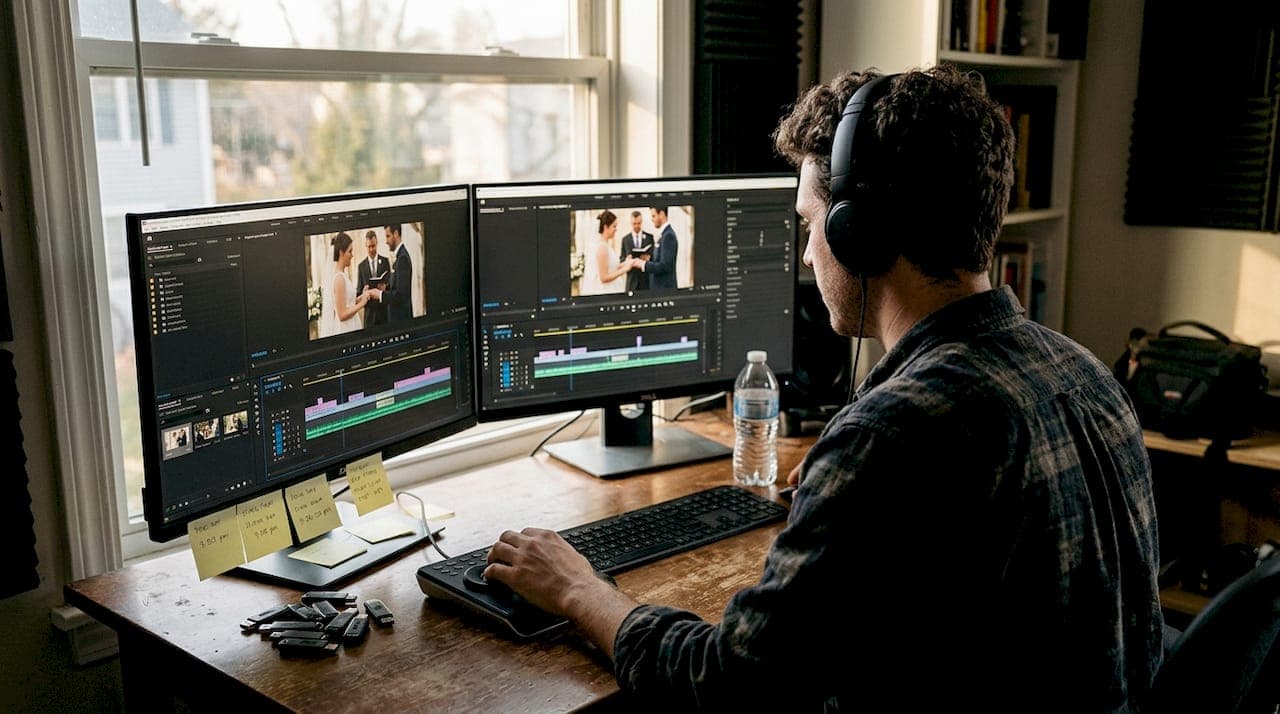
With common frustrations around waiting for wedding videos, it's essential to understand the steps that happen after your wedding day. Most couples picture editing as a simple process of pressing play and trimming a few clips. In reality, post-production is closer to crafting a short film from raw materials that can span eight to twelve hours of unorganized footage.
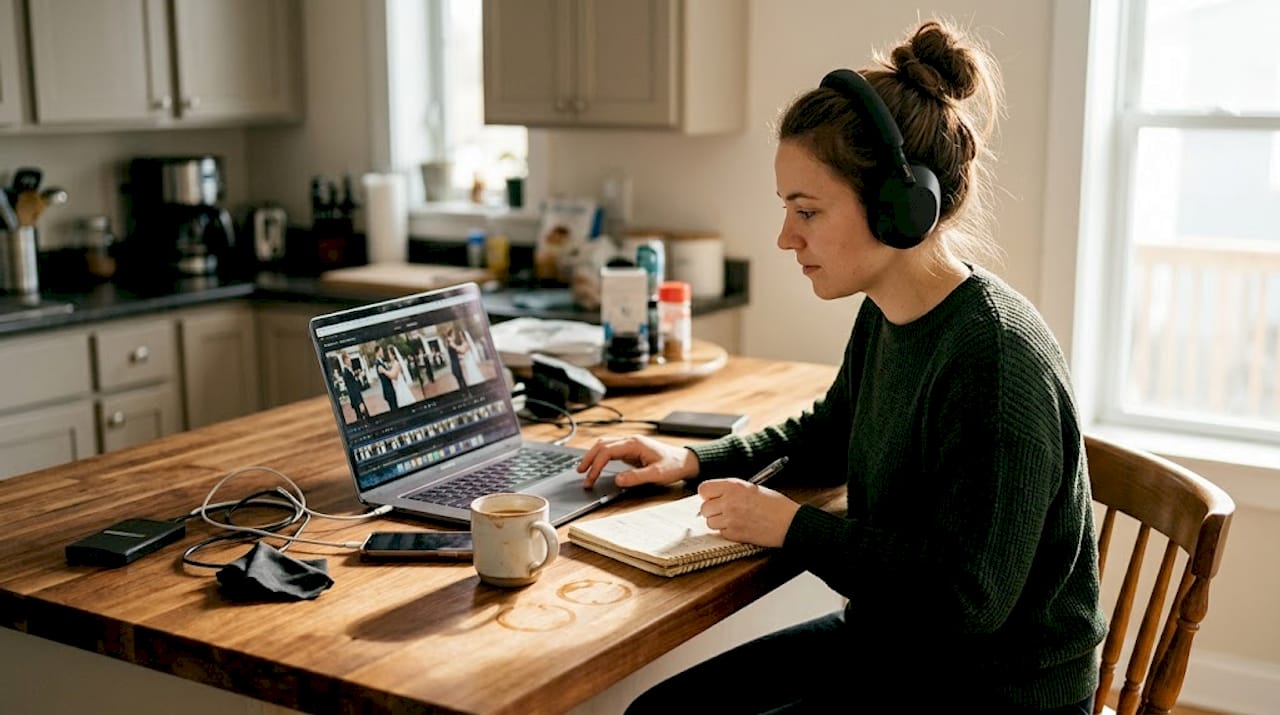
After the wedding, your videographer transfers and backs up every card. That alone can take hours. Then the real work begins: syncing audio from multiple sources, reviewing every clip, and building a rough story structure before a single creative decision is made. Only after that foundation is set does the editor move into music selection, pacing, color grading, and sound design. Each of those steps requires skill, taste, and time.
Here is what the editing process typically involves:
- Footage ingestion and backup — All cards are offloaded, organized, and stored safely before anything else happens.
- Audio sync — Ceremony audio, speeches, and ambient sound are matched to the correct video clips.
- Rough assembly — The editor builds a chronological or story-driven sequence from the best raw material.
- Creative editing — Music is selected, pacing is shaped, and emotional moments are highlighted.
- Color grading — Every clip is color corrected and given a consistent cinematic look.
- Sound design and mixing — Music levels, dialogue, and ambient sound are balanced for a polished final mix.
- Client review and revisions — The film is delivered for feedback, and adjustments are made before final export.
The numbers reflect just how intensive this is. Editing a single highlight film of five to ten minutes requires 20 to 80 hours of editor time. That is not a typo. Even at the lower end, 20 hours is half a standard work week dedicated entirely to your film.
"A wedding video is not just footage. It is a story built from thousands of small decisions, each one invisible to the viewer but essential to the emotional impact of the final film."
When you factor in multiple revision rounds and the editor's existing client queue, it becomes clear why most studios ask couples to set their wedding video timeline expectations well in advance of the big day.
The phases of wedding video production
Understanding why editing takes time leads naturally to a step-by-step breakdown of the full production process. Wedding video production is not a single task. It is a pipeline with distinct phases, and each one must be completed before the next can begin.
- Day-of filming — Cameras roll from getting-ready through the reception. Multiple shooters may capture different angles simultaneously.
- Media organization — Footage is labeled, sorted by scene, and stored in a structured project folder.
- Core editing — The rough cut is assembled, and the story arc is established.
- Creative and stylistic editing — Music, transitions, and pacing give the film its personality.
- Color and audio polish — The film is graded and mixed to broadcast quality.
- Client delivery and revisions — A private link is shared, feedback is collected, and final adjustments are made.
- Final export and archiving — The approved film is exported in high resolution and archived for safekeeping.
The speed at which a studio moves through these phases depends on their team size, current workload, and the complexity of your package. High-end production houses may spend 3 to 5 days in dedicated post-production for a single luxury film, separate from the weeks of scheduling and prep around it.
Here is a general comparison of common turnaround tiers:
| Delivery type | Typical timeframe | Best for |
|---|---|---|
| Standard | 10 to 16 weeks | Most couples with flexible timelines |
| Express | 4 to 6 weeks | Couples with upcoming anniversaries or events |
| Custom | Varies by project | Complex multi-day or destination weddings |
If you want to understand what goes into the editing and post-production process for a luxury film, it helps to think of your videographer less like a photographer and more like a film director in the editing suite.
Factors that influence wedding video delivery times
Now that you know the phases involved, let's pinpoint what actually makes some wedding videos take longer than others. Not every wedding is the same, and neither is every editing job. Several variables stack on top of each other to shape how long you wait.
Here are the most common factors:
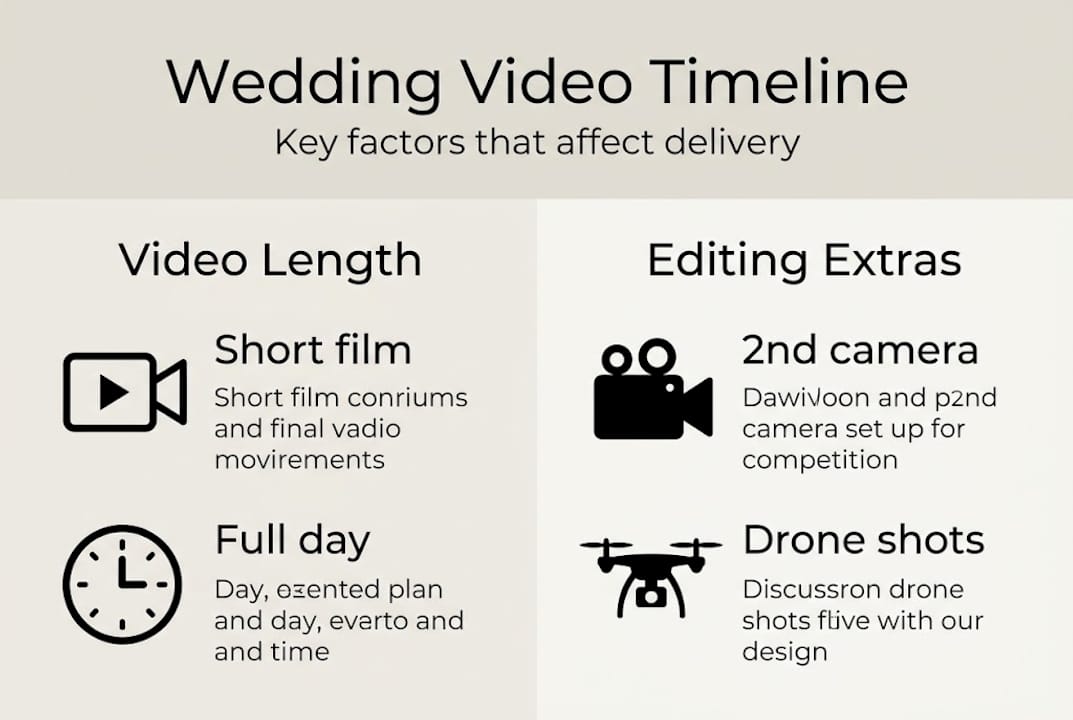
- Film length — A 3-minute social cut edits faster than a 20-minute full ceremony film.
- Number of cameras — More cameras mean more footage to review, sync, and select from.
- Package features — Add-ons like drone footage, rehearsal dinner coverage, or a same-day edit each add hours to the workload.
- Revision requests — Each round of client feedback requires the editor to re-open the project, make changes, and re-export.
- Peak season backlog — Videographers who shoot heavy spring and fall seasons often carry a queue of 10 or more weddings waiting for post-production.
- Music licensing — Sourcing and clearing the right licensed tracks can add unexpected time.
Long highlight films and multiple cameras extend editing hours significantly, which is why complex packages almost always come with longer estimated delivery windows.
Here is a quick reference for how common add-ons affect the timeline:
| Add-on feature | Estimated extra editing time |
|---|---|
| Second camera operator | 5 to 10 additional hours |
| Drone footage | 3 to 6 additional hours |
| Rehearsal dinner coverage | 4 to 8 additional hours |
| Same-day edit | 6 to 12 additional hours (day-of) |
| Additional revision round | 2 to 4 additional hours |
Pro Tip: During your initial consultation, ask your videographer for a sample timeline from a recent wedding with a similar package. Seeing a real example of how long each phase took gives you a concrete benchmark, not just a vague estimate. You can also browse a real wedding video example to understand the level of craft that goes into a finished film.
How to manage wedding video expectations and communication
Having explored all the factors, couples can be more proactive in managing their expectations and communication. The single biggest source of disappointment in wedding video delivery is not the wait itself. It is the silence. Couples feel forgotten, and videographers assume no news is good news. Closing that gap starts before you sign anything.
Here is how to set yourself up for a smooth experience:
- Get delivery estimates in writing. Vague verbal promises disappear. A contract should state the expected delivery window clearly, along with what triggers delays.
- Clarify the revision policy upfront. Know how many rounds are included, what counts as a revision, and how long each round takes.
- Agree on a check-in schedule. Ask your videographer how they prefer to communicate progress, whether that is email updates, a client portal, or milestone notifications.
- Follow up politely if deadlines pass. A single, friendly email after a deadline is missed is completely appropriate. Give your videographer 48 hours to respond before escalating.
- Keep a record of all agreements. Email threads and signed contracts protect both parties.
Experienced editors typically need 30 to 40 hours for a standard highlight film, so a realistic delivery window accounts for that time plus the editor's existing queue.
Pro Tip: Use a detailed questionnaire before your wedding to capture all timeline agreements in one place. If you need to reference what was promised, you have a written record. You can also contact your videographer directly to confirm delivery standards before signing.
The overlooked reality of wedding video delivery
After reviewing strategies for managing expectations, there is something most couples never hear before booking, and I want to say it plainly: the best wedding films are never the fastest ones.
I have been doing this since 2015, filming weddings from small backyard ceremonies to large destination events. Every time I have rushed an edit to meet an impatient deadline, I have felt it in the final product. The story feels thin. Moments that deserved more breathing room get cut. The emotional arc that makes a film feel like your film gets compressed into something generic.
Editing requires distance. When I step away from footage for a few days and return with fresh eyes, I catch things I missed the first time. A quiet glance between the couple. A grandmother wiping a tear. Those are the moments that make a wedding film timeless, and they only surface when the editor is not racing a clock.
If a videographer promises your film in two weeks flat, ask questions. Either they have a large team handling your project in shifts, or corners are being cut somewhere. Patience is not just a virtue here. It is an investment in quality. You can see what that patience produces in a final wedding film example that reflects real craft and care.
Ready to experience luxury wedding cinematography?
If you want a stunning film and a seamless process, working with a team that prioritizes both quality editing and honest communication makes all the difference.
At Visualize Media, we bring a filmmaker's eye and a clear process to every wedding we document. From the moment you book, you will know exactly what to expect, when to expect it, and who to call if you have questions. We offer wedding cinematography packages designed for couples who want luxury results without the guesswork. Ready to talk timelines and find the right fit for your wedding day? Speak with our team and let's start the conversation.
Frequently asked questions
How long does it take to receive a wedding video?
Most couples receive their wedding video in 8 to 16 weeks, depending on editing complexity and the videographer's current season. This reflects the reality that editing a highlight film alone requires 20 to 80 hours of dedicated editor time.
Can I get my wedding video sooner if I pay extra?
Some videographers offer express or rush delivery for an additional fee, but even a fast turnaround still requires genuine editing hours to produce a quality result.
What if I need revisions after the first video delivery?
Most contracts include one or two rounds of revisions, and each round typically adds a few extra days to the overall delivery window depending on the scope of changes.
Why do long videos or multiple camera angles affect the timeline?
More footage and complex edits mean significantly more hours of review, syncing, and creative decision-making, all of which extend the total editing time before delivery.