
Planning a luxury wedding in New York or New Jersey means every detail carries weight, and your wedding film is no exception. The videography style you choose will shape how you relive your day for decades. With so many approaches available, from sweeping cinematic productions to raw, unscripted documentary footage, the decision can feel overwhelming. The right style is not just about aesthetics. It is about how well the film captures your personalities, your venue, and the genuine emotion of the day. This guide breaks down every major wedding videography style and gives you a clear framework to find your perfect match.
Table of Contents
- How to choose your wedding videography style
- Cinematic style: Creating a wedding film experience
- Documentary and traditional: Capturing every real moment
- Storytelling and vintage: Unique touches for lasting memories
- Comparison of popular wedding videography styles
- Why mixing styles delivers the ultimate wedding film
- Make your wedding film unforgettable with expert videography
- Frequently asked questions
Key Takeaways
| Point | Details |
|---|---|
| Cinematic leads luxury events | Cinematic videography captures upscale weddings with an artistic, emotional, movie-like approach. |
| Hybrid styles offer more | Mixing cinematic with documentary or storytelling ensures both epic visuals and real, unscripted moments. |
| Personalization matters | Choose a style (or blend) that fits your story, venue, and emotional goals, not just trends. |
| Ask for sample films | Review full wedding films to understand how your videographer interprets style, not just the highlights. |
How to choose your wedding videography style
With those needs in mind, let's break down the key considerations that will guide you to the perfect videography style.
Before you fall in love with a particular look, it helps to think through what actually matters most to you in a finished film. Different couples prioritize different things, and being honest about those priorities makes the selection process far easier.
Here are the core factors worth evaluating before you commit:
- Emotional impact. Do you want to cry every time you watch it? Prioritize styles that lean into narrative and music-driven editing.
- Artistic vision. Are you drawn to bold visuals, dramatic color grades, and sweeping aerial shots? That points toward cinematic or hybrid production.
- Authenticity. If unscripted reactions and real conversations matter most, documentary-leaning coverage is essential.
- Editing style. Some couples want a tightly cut 5-minute highlight. Others want a full-length record of every speech and dance. Know your preference before you book.
- Coverage scope. Multi-camera setups, drone footage, and getting-ready coverage all affect the package you need.
- Budget alignment. Premium techniques like aerial drone passes, professional color grading, and multi-editor workflows affect cost. Understand what drives the price.
In the upscale New York and New Jersey market, couples increasingly expect videography style trends to reflect the same level of sophistication found in their other vendors. As cinematic style delivers movie-like techniques with curated edits, dramatic music, and directed shots for polished films of 3 to 15 minutes, it has become the benchmark for premium wedding films.
Pro Tip: Always ask your potential videographer to show you a full-length film, not just a 90-second highlight reel. A highlight reel tells you how well they edit music. A full film tells you whether they can hold your attention through an entire ceremony.
Cinematic style: Creating a wedding film experience
Now that you know what to look for, let's explore each major videography style, starting with cinematic, the undisputed favorite among luxury couples.
Cinematic wedding videography borrows directly from film and television production. It treats your wedding day like a movie set, using intentional composition, camera movement, and post-production work to create something that feels polished and genuinely powerful. This is not simply recording what happens. It is crafting a visual story with a beginning, a build, and an emotional payoff.
Key hallmarks of cinematic style include:
- Professional color grading that gives your footage a rich, consistent visual tone
- Drone and aerial footage to capture grand venues, outdoor landscapes, and dramatic establishing shots
- Sliders, jibs, and stabilizers that produce fluid, smooth camera movement
- Multi-camera coverage so no single moment is missed from multiple angles
- Directed B-roll where the filmmaker guides specific moments, like putting on the dress or a quiet look between partners
- Carefully selected music that controls the emotional arc of the entire film
Understanding cinematic wedding artistry reveals just how much deliberate craft goes into every frame. For a deeper breakdown of what separates this style from everything else, the cinematic wedding video guide walks through the technical and artistic elements in detail. And if you want specific shot inspiration, exploring top cinematic wedding shots can help you communicate your vision clearly to your filmmaker.
"A cinematic wedding film doesn't just document your day. It transforms ordinary moments into scenes that feel extraordinary, giving you something that plays like a short film you'll want to watch again and again."
This style is best suited for grand ballrooms, outdoor estates, rooftop ceremonies with city skylines, and any couple who values visual sophistication alongside emotional storytelling.
Documentary and traditional: Capturing every real moment
While cinematic takes center stage, many couples want to ensure every candid moment and heartfelt speech is preserved. Here is how documentary and traditional styles work.
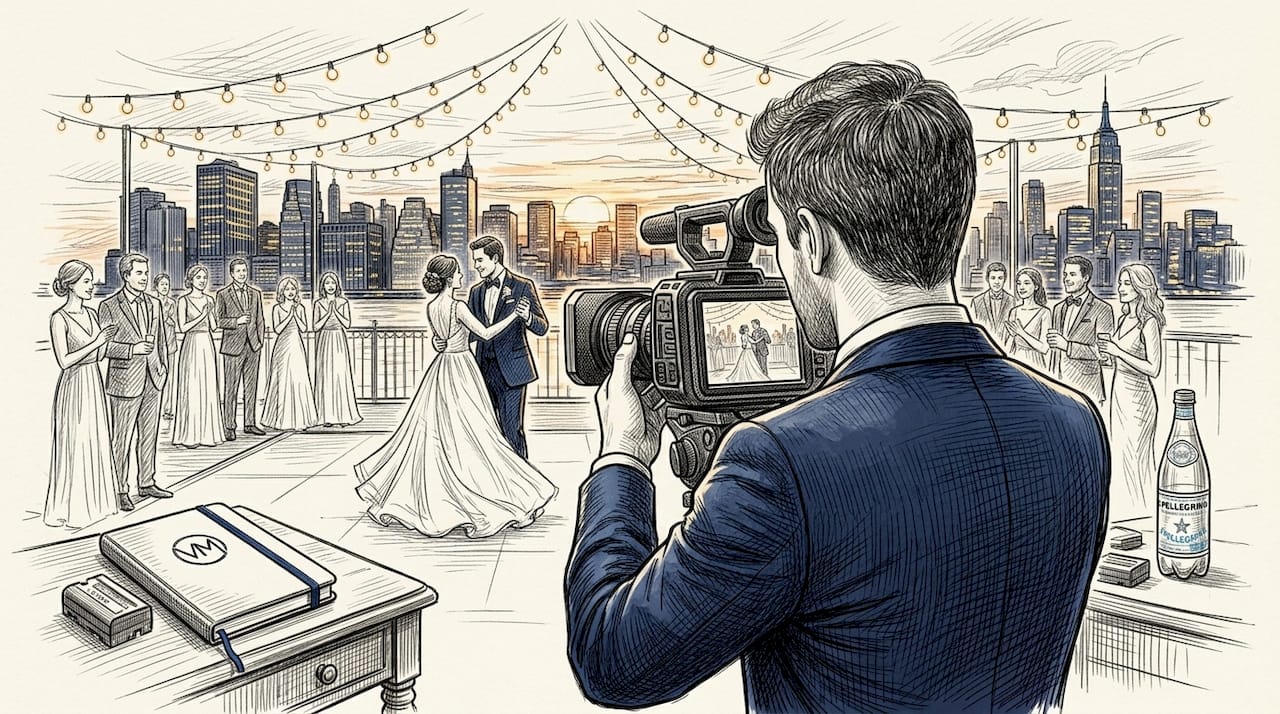
Documentary wedding videography operates on a simple but powerful principle: stay out of the way and let real life unfold. The camera follows the day as it happens, capturing unscripted reactions, spontaneous laughter, tearful hugs, and the small details that no one planned. The editing tends to be minimal and chronological, preserving the authentic texture of the event.
Traditional style takes this a step further by prioritizing comprehensive coverage above all else. The full ceremony from processional to recessional, every speech, the first dance, the cake cutting, and the party in its entirety. Less editing flair, but nothing is left out.
Pros of documentary and traditional approaches:
- You can relive every vow, every toast, every unplanned emotional moment
- Candid reactions from family and guests are preserved naturally
- Speeches are captured in full rather than trimmed to a few seconds
- The timeline of the day remains intact for future viewing
Cons to consider:
- Less visual drama than cinematic production
- Fewer "wow" visuals and cinematic compositions
- Long unedited stretches may feel slow on repeated viewings
Understanding emotional wedding filming shows how skilled filmmakers bring feeling to even unscripted moments. The good news is that pure documentary is rarely the only option. You can see how a documentary-cinematic blend works in practice when you explore full-service wedding packages.
Pro Tip: For upscale weddings, combine documentary coverage for ceremonies and speeches with cinematic treatment for your highlight film. You get the raw emotion and the stunning visuals.
Storytelling and vintage: Unique touches for lasting memories
For those who want a film that truly tells their story or radiates retro charm, these two styles push creativity and personalization to the next level.
Storytelling or narrative wedding videography goes beyond capturing what happened on the wedding day itself. It weaves in pre-wedding interviews and vows to build emotional arcs that give the film real depth and context. Your filmmaker might conduct a brief sit-down interview with each of you before the wedding, asking how you met, what this day means to you, and what you hope for the future. Those words then narrate the film, making the footage feel profoundly personal.
Vintage style takes a completely different route. Using retro color treatment, analog grain effects, and occasionally actual Super 8mm film footage, it creates a warm, nostalgic quality that makes your wedding look like a beautiful memory even while it is still fresh. It is romantic, tactile, and unlike anything else.
When to choose storytelling or vintage:
- Your relationship has a specific narrative you want captured and told
- You want your film to feel deeply personal rather than broadly polished
- You love the warmth and texture of older film aesthetics
- Your wedding has a vintage, garden, or intimate atmosphere
Learning how to personalize your wedding film opens up possibilities most couples never consider. If the idea of a full narrative film appeals to you, understanding what a wedding love story film actually looks like in practice will help clarify whether it fits your vision. For couples weighing visual texture, the film vs digital videography comparison is worth reading carefully.
"A narrative or vintage film doesn't just show your wedding day. It becomes an heirloom, something future generations will watch to understand who you were and how you loved."
Comparison of popular wedding videography styles
Still torn? Here is a table showing how these styles directly compare for upscale NY and NJ weddings.
Common wedding videography types include cinematic, documentary, traditional, storytelling, and vintage, each serving a distinct purpose and aesthetic. For most luxury couples, blending two or more is the smart move, and your wedding videography style trends research will confirm that hybrid packages are now the standard for upscale events.
| Style | Visual signature | Emotional impact | Editing approach | Best for |
|---|---|---|---|---|
| Cinematic | Bold, color-graded, filmic | Very high | Heavily curated, music-driven | Grand venues, luxury events |
| Documentary | Natural, observational | High (raw) | Minimal, chronological | Candid moments, speeches |
| Traditional | Clean, straightforward | Moderate | Full coverage, minimal cuts | Complete event record |
| Storytelling | Narrative-driven, personal | Very high | Interview-integrated arcs | Personal, emotional couples |
| Vintage | Warm, grainy, retro | High (nostalgic) | Analog effects, soft tones | Intimate, garden, classic events |
Why mixing styles delivers the ultimate wedding film
Now that you have seen each style broken down, here is the insider truth from experienced NY and NJ wedding filmmakers.
Purely cinematic films are stunning, but they can sometimes feel like a perfume commercial. Beautiful to watch, emotionally evocative, yet somehow a little distant from the actual people and moments that made your day unique. Purely documentary films preserve everything, but without editorial vision they can feel like watching raw security footage. Neither extreme serves you well on its own.
The most memorable wedding films we create blend intentional cinematography with genuine documentary moments. We direct the big set-piece moments because those benefit from controlled composition, perfect lighting, and purposeful camera movement. But we stay completely invisible during the ceremony and toasts, because those moments need to be real. No posing, no direction, just presence.
As hybrid wedding filmmaking demonstrates in practice, the couples who get the most emotionally powerful films are those who allow their filmmaker to make real-time decisions about when to lead and when to follow. For upscale NY/NJ weddings, cinematic and hybrid approaches excel at emotional impact through directed B-roll, drone work, and professional audio, but pairing that with documentary coverage of vows and speeches is what prevents the film from losing its soul.
Pro Tip: When inquiring with a videographer, request a custom package that combines a cinematic highlight reel with a full-length documentary edit. You get the film you share with everyone, plus the complete record you treasure privately.
Make your wedding film unforgettable with expert videography
Ready to translate inspiration into your own one-of-a-kind wedding film? Here is how you can take the next step.
At Visualize Media, every package is built around your specific story, your venue, your personalities, and the moments that matter most to you. We do not apply a template. We have a conversation, watch your favorite films together, and design a coverage plan that blends cinematic artistry with genuine documentary authenticity.
Explore our full portfolio of NY and NJ wedding cinematography to see how each style comes to life in real weddings. If you are still figuring out your preferences, our custom wedding film questionnaire helps you define your vision before we ever get on a call. When you are ready to talk through your specific day, visit the Visualize Media homepage to start the conversation. Your wedding deserves a film as extraordinary as the celebration itself.
Frequently asked questions
What is the difference between cinematic and documentary wedding videography?
Cinematic videography uses curated edits, dramatic music, and directed shots for a polished, film-like result, while documentary style captures events exactly as they unfold without direction or heavy editing.
Can I combine multiple videography styles for my wedding?
Yes, hybrid packages blending cinematic and documentary approaches are extremely popular for upscale NY and NJ weddings because they deliver both stunning visuals and authentic emotional moments.
What is storytelling or narrative wedding videography?
Storytelling videography weaves interviews and personal vows into a narrative arc that gives your film emotional depth and context well beyond standard day-of footage.
Is vintage wedding videography still popular?
Yes, vintage styles using retro colors and analog film effects remain a strong choice for couples who want a unique, nostalgic wedding film that feels timeless rather than trend-driven.