A fine art wedding photographer is not simply someone who takes beautiful pictures at your wedding. The style is a curated, print-first approach built around clean composition, intentional light control, and a cohesive visual voice that runs from the first frame of getting-ready shots to the last dance. The goal is a gallery that holds up as artwork, not just a record of what happened.
Fine art wedding photography prioritizes quality over volume. Where documentary-style coverage captures everything, fine art photography captures selectively, with each image composed to stand on its own and work within the larger gallery.
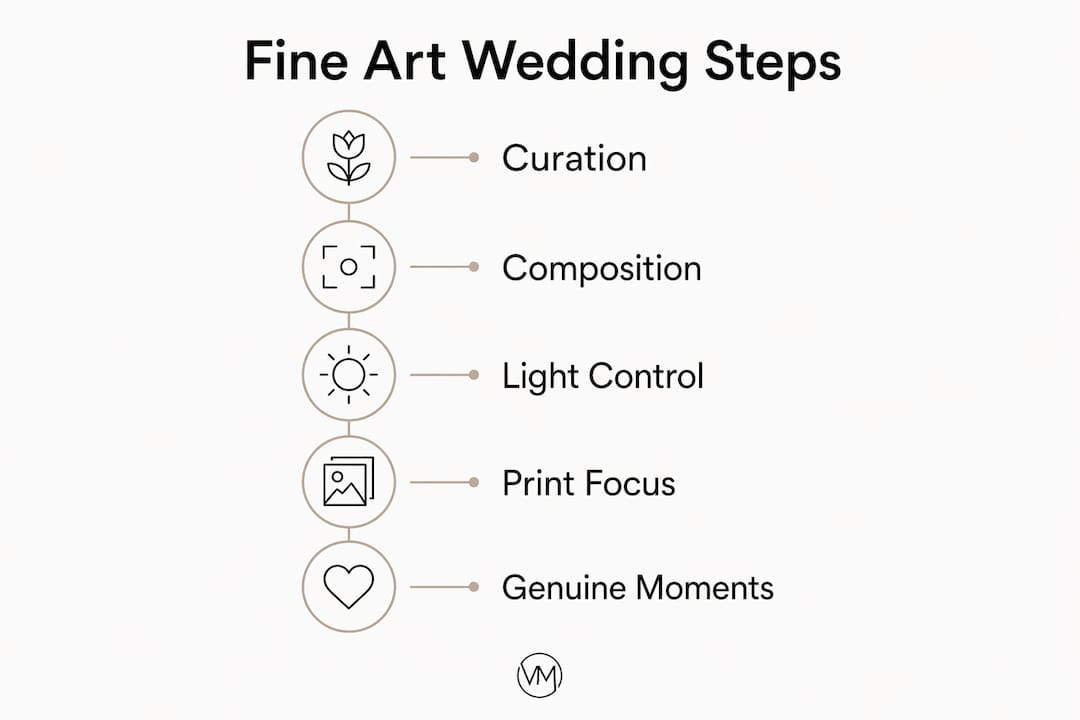
Key defining elements of fine art wedding photography:
- Intentional composition: clean frames, balanced layering, and deliberate use of negative space
- Light-first thinking: soft, directional light from windows, open shade, or controlled flash rather than whatever happens to be available
- Editing restraint: neutral skin tones, consistent tonal balance, and no heavy trend-driven color shifts
- Gallery cohesion: images that feel tonally and aesthetically unified from start to finish
- Print-first mindset: every compositional decision made with a physical album or wall print in mind
1. What makes fine art wedding photography distinct?
Fine art wedding photography is curation-first. The photographer is not trying to document every moment; they are building a cohesive set of images that hold up as prints. That distinction shapes every decision made on the wedding day.
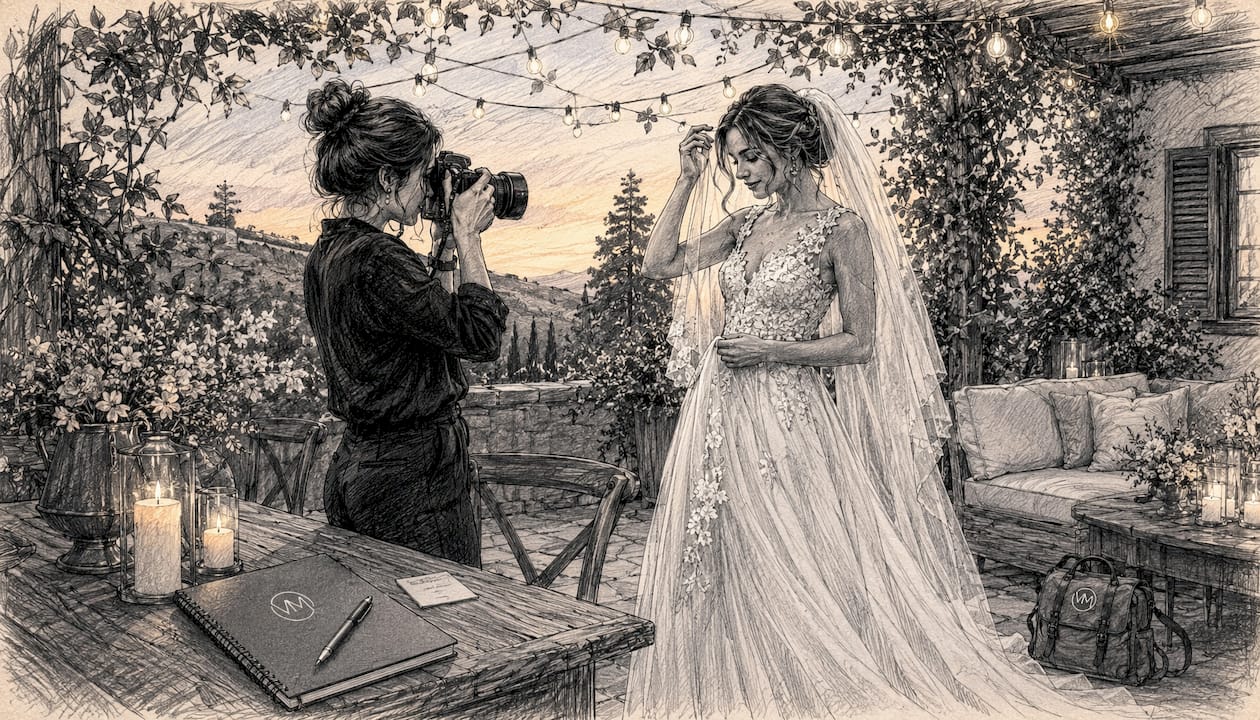
The style is often misunderstood as "light and airy" editing or a specific film look. Neither is accurate. A fine art photographer can shoot dark and moody or bright and soft. What defines the approach is intentionality, not brightness.
Signature stylistic features include:
- Composition: negative space, clean backgrounds, balanced layers within the frame
- Light direction: window light, open shade, and controlled flash used purposefully
- Restraint in editing: no extreme contrast, no heavy color grading, no trend-chasing
- Film alongside digital: used as a discipline tool to limit frames and sharpen curation, not as a stylistic gimmick
- Repeatability: the look stays consistent across different venues and lighting conditions
One technique worth noting: many fine art photographers shoot 300–400 frames on film per wedding, choosing those moments specifically where light, tone, and atmosphere benefit most from the medium. Film supports the philosophy rather than defining it.
2. Why hire a fine art wedding photographer?
The clearest benefit is longevity. Fine art images are composed with the final print in mind, which means they translate beautifully to large-format wall art and heirloom albums. Fine art photography holds lasting value because it blends artistic depth, technical skill, and emotional impact in a way that standard event coverage rarely achieves.
Beyond aesthetics, fine art photographers actively shape the scenes they photograph. They move couples for better light, rotate ceremony positions to protect skin tones, and adjust timelines when needed. That active involvement produces images that look considered rather than accidental.
Considerations before booking:
- Portfolio depth: review full galleries, not just highlight images, to assess consistency
- Cost: fine art photographers typically charge more than general wedding photographers, reflecting their process and expertise
- Fit: this style suits couples who value timeless imagery over trend-driven coverage
- Communication: expect a pre-shoot consultation to align on vision, locations, and timing
- Wedding style: fine art photography pairs especially well with intimate, elegant, or destination weddings
The creative event photography approach that defines fine art work is what separates a gallery you frame from one you archive and forget.
3. How fine art photographers work on your wedding day
Fine art photographers operate with a print-first workflow. Every compositional decision, from how they frame a doorway to where they position you during portraits, reflects how that image will eventually look on a wall or album page.
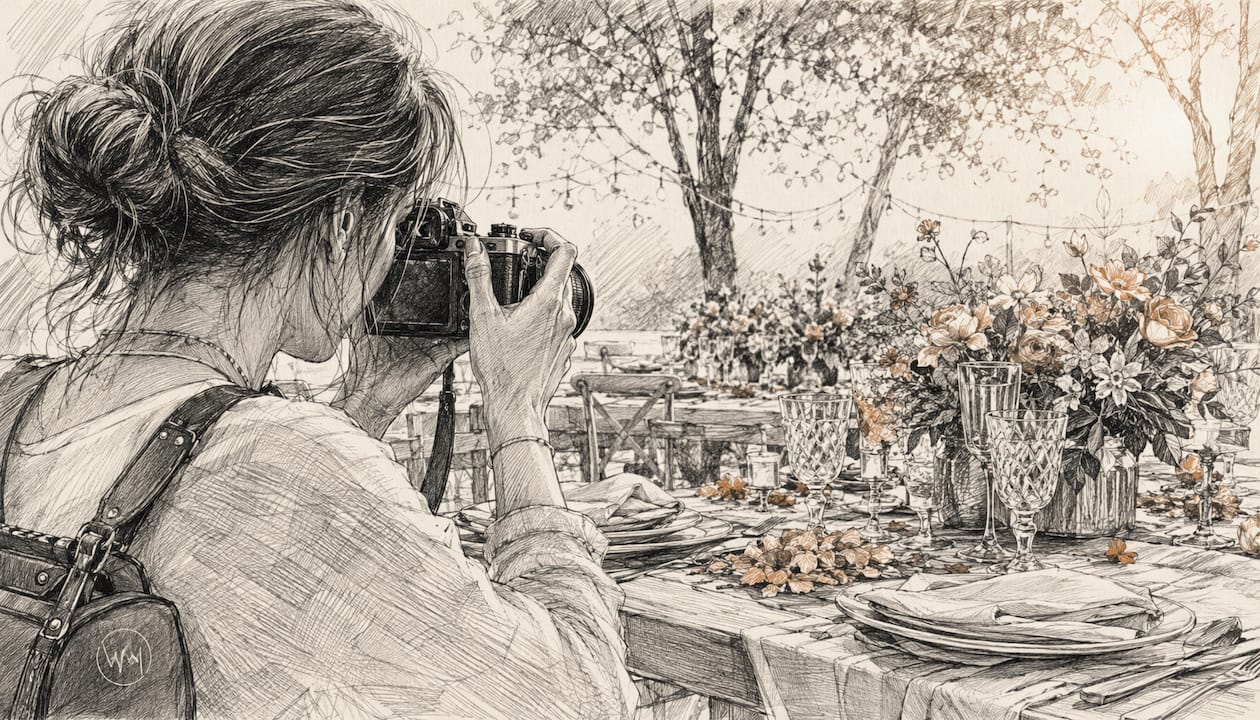
Light management is constant. A fine art photographer will move you three feet to catch window light, ask the officiant to rotate the ceremony direction, or delay a portrait session by ten minutes to avoid harsh midday sun. This is not fussiness. It is the difference between an image that feels alive and one that feels flat.
Day-of strategies typically include:
- Active light scouting: identifying the best natural light sources at each venue before the day begins
- Limited frame discipline: shooting fewer images with more intention rather than spraying and praying
- Calm direction: gentle posing guidance that keeps moments feeling natural rather than stiff
- Film integration: loading film for specific moments where the medium adds emotional weight
- Scene management: adjusting backgrounds, removing distractions, and composing before pressing the shutter
Fine art photography balances purposeful direction with genuine candid moments. The photographer is not staging your wedding. They are creating the conditions where real emotion can be captured beautifully.
4. Visualizemedia's approach to artistic wedding storytelling
Visualizemedia brings the same intentional, light-first philosophy to wedding cinematography that fine art photographers apply to still images. Based in New York and New Jersey, the team specializes in cinematic wedding films that prioritize emotional depth, compositional care, and cohesive storytelling across every frame.
The parallels between fine art photography and luxury wedding videography run deep. Both disciplines require active scene management, deliberate light decisions, and a commitment to producing work that feels timeless rather than trendy. Visualizemedia's films reflect that same restraint: no heavy-handed effects, no trend-chasing edits, just honest storytelling with a filmmaker's eye.
What Visualizemedia focuses on:
- Emotional storytelling: capturing vows, first looks, and quiet in-between moments with cinematic precision
- Multi-camera coverage: ensuring no significant moment is missed while maintaining visual consistency
- Color grading: applied with the same restraint a fine art photographer brings to editing stills
- Aerial footage: used selectively to add scale and context, not as a default flourish
- Cohesive final films: every edit shaped around the couple's story, not a generic wedding template
Follow @visualizemedia on Instagram to see their latest work and get a feel for the cinematic style they bring to every wedding. For couples who want storytelling that transforms their wedding film into something genuinely moving, Visualizemedia's approach is worth exploring.
5. Notable fine art wedding photographers and their work
Several photographers have shaped what fine art wedding photography looks like in practice. Jose Villa's book, published in 2011, introduced wide-open, soft-light imagery to the wedding world and influenced a generation of photographers. His work popularized the film-supported, light-driven aesthetic that many now associate with the style.
Laura de Roeck captures elegant European celebrations with a refined, light-filled approach inspired by travel, fashion, and art. Her galleries demonstrate the tonal consistency and compositional calm that define authentic fine art work. Tristan Perrier, based in Bordeaux, brings an editorial sensibility to fine art wedding photography in France, with a focus on soft light, tonal harmony, and emotional coherence across full galleries.
Nick Tucker, a UK-based photographer, has written critically about how the "fine art" label is often misused in wedding photography, arguing that true fine art should challenge and engage rather than simply produce safe, pretty images. His perspective is a useful counterpoint for couples trying to distinguish genuine artistic vision from marketing language.
6. Common misconceptions about fine art wedding photography
The biggest misconception is that fine art equals light and airy. Editing style is not the defining characteristic. A dark, moody gallery can be just as fine art as a bright, soft one, provided the composition, light, and cohesion are intentional.
A second misconception: fine art means over-posed or stiff. The opposite is closer to true. Fine art photographers give purposeful direction, but the goal is natural emotion within a beautifully composed frame, not a series of catalog poses. The "fine art" label is also sometimes used as marketing language with no substance behind it. Couples should look at full galleries, not just hero images, and ask whether the skin tones are consistent, the backgrounds are clean, and the editing feels calm across 400 images, not just ten.
7. How to prepare for a fine art wedding photography session
Preparation makes a measurable difference in fine art results. The style depends on controlled conditions, and you can help create those conditions before the day even begins.
Start by sharing your venue details and timeline with your photographer well in advance. Fine art photographers often visit venues ahead of time or study floor plans to identify the best light at different times of day. Your pre-wedding shoot guide is a good starting point for thinking through poses, timing, and locations before the big day.
Practical preparation tips:
- Schedule portraits during golden hour or at least avoid harsh midday sun when possible
- Choose attire with clean lines and colors that photograph well in natural light
- Communicate your vision clearly by sharing inspiration images and discussing what you want to avoid
- Trust the direction your photographer gives on the day, even if it means moving from a spot you love
- Plan buffer time into your timeline so your photographer is never rushing a portrait session
The couples who get the most from fine art wedding photography are the ones who treat the session as a collaboration rather than a service transaction.
Key Takeaways
Fine art wedding photography is a curated, print-first approach defined by intentional composition, disciplined light control, and gallery-wide cohesion, not by editing presets or a specific visual trend.
| Point | Details |
|---|---|
| It's about approach, not editing | Fine art is defined by composition, light, and curation, not brightness or film emulation. |
| Photographers actively shape scenes | Expect your photographer to move you, adjust timelines, and manage light throughout the day. |
| Full galleries reveal authenticity | Review complete wedding galleries for consistent skin tones, calm editing, and cohesive tone. |
| Print-first thinking drives decisions | Every compositional choice is made with a physical album or wall print as the end goal. |
| Preparation improves results | Sharing your venue, timeline, and vision early gives your photographer the best conditions to work with. |
Planning a luxury wedding in New York or New Jersey? Visualizemedia creates cinematic wedding films with the same intentional artistry that defines fine art photography. Explore their wedding services and see how storytelling and visual craft come together in every film they make.