
A wedding film storyboard is a sequential visual roadmap that maps out every narrative and emotional beat of your wedding video before a single frame is shot. Think of it as the blueprint a filmmaker uses: not a rigid script, but a scene-by-scene plan that guides the story from getting-ready footage all the way through the final send-off. It tells your videographer which moments matter most, in what order, and how they should feel.
A storyboard differs from a mood board or inspiration board in one critical way. Where a mood board collects visual references and general aesthetics, a storyboard breaks down every detail of the sequence, including shot order, audio cues, pacing, and emotional tone. That specificity is what turns a collection of wedding footage into a film with a real narrative arc.
What does a wedding film storyboard actually include?
A well-built wedding storyboard covers more than just a list of scenes. Each entry typically addresses:
- Scenes and sequence: The order of key moments, from bridal prep and first look through ceremony, formals, and reception highlights
- Emotional beats: Notes on the feeling each scene should carry, such as anticipation during getting-ready shots or joy during the first dance
- Audio cues: Planned voiceover moments like vows, toasts, or the officiant's words, plus music transitions
- Pacing notes: Whether a scene calls for slow, cinematic cuts or fast, energetic editing
- Sensory details: Lighting conditions, location specifics, and any props or décor that anchor the visual story
The storyboard also serves as the first real alignment tool between you and your videographer, setting shared expectations before the wedding day arrives.
How to create a wedding film storyboard step by step
Building a storyboard does not require film school. It requires clarity about what your wedding day means and which moments you cannot afford to miss.
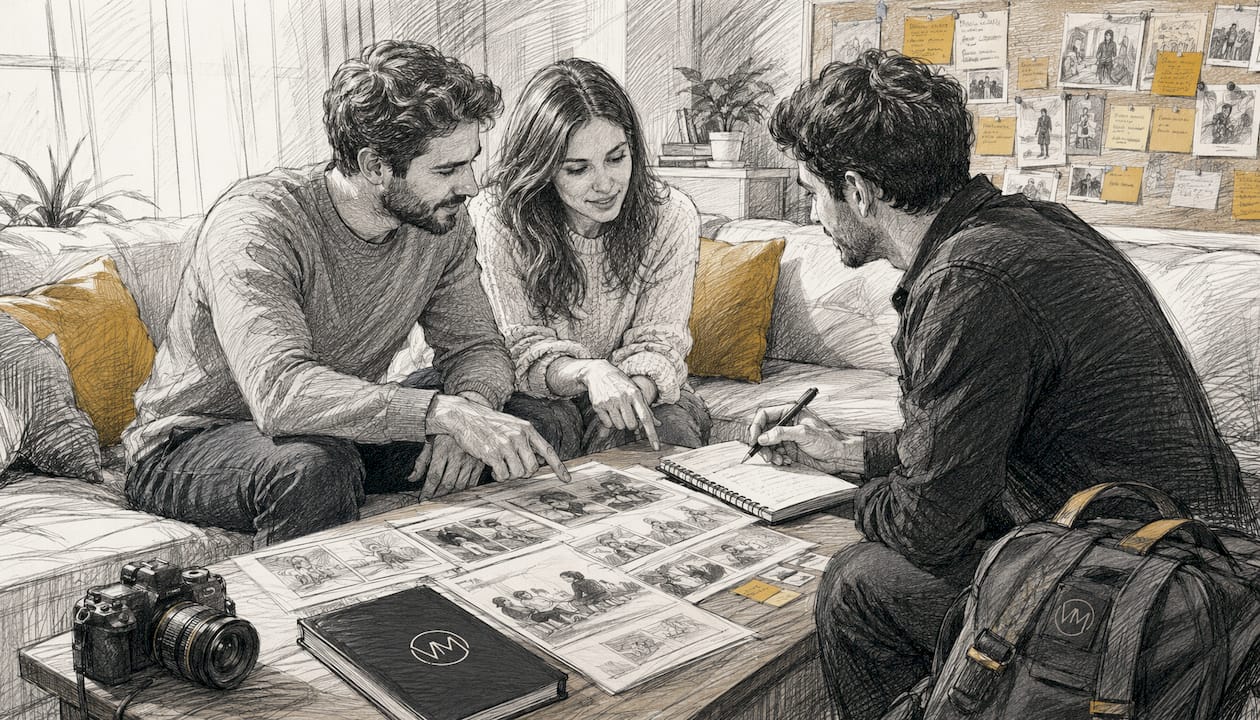
Step 1: Gather your raw material. Pull together your wedding day timeline, vendor contacts, and a list of must-capture moments. Talk to your videographer about the overall tone you want, whether that is documentary-style, cinematic, or somewhere in between.
Step 2: Identify your narrative scenes. Effective wedding storyboards typically organize scenes in this order: preparations, first look, ceremony, formals, reception highlights, and a closing moment like a send-off or golden hour shot. Each scene becomes a storyboard panel.
Step 3: Decide on linear or nonlinear storytelling. A linear structure follows the day chronologically. A nonlinear approach might open with a powerful vow audio clip over prep footage, then build toward the ceremony. Both are valid; the choice shapes the emotional experience of the final film.
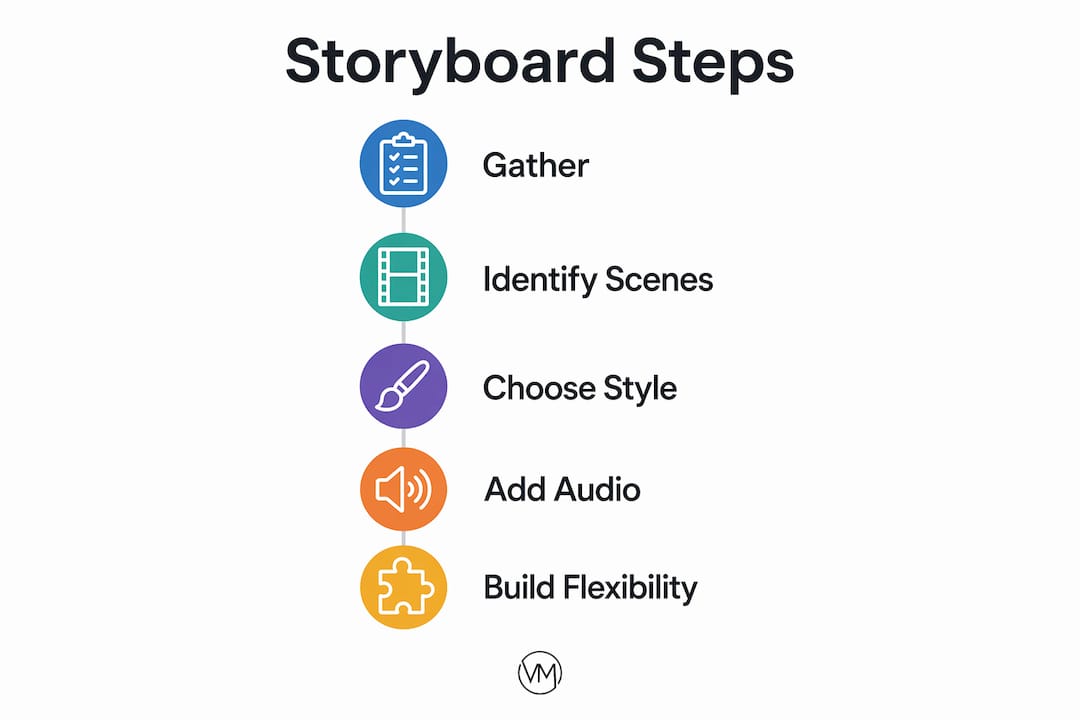
Step 4: Layer in audio cues. Voice-over from vows, toasts, or the officiant grounds the story emotionally in a way that music alone cannot. Mark these moments in your storyboard so your videographer knows to capture clean audio, not just visuals.
Step 5: Add timing and pacing notes. Note whether a scene should feel slow and intimate or quick and celebratory. This guides both the shoot and the edit.
Step 6: Choose your tools. Digital storyboard tools like Milanote let you layer images with notes for timing, audio cues, and scene descriptions. For simpler needs, a printed template with hand-drawn panels works just as well. StudioBinder and Canva both offer wedding-specific shot list and storyboard templates worth exploring.
- Milanote: drag-and-drop boards with image and note layering
- StudioBinder: shot list integration with storyboard panels
- Canva: pre-built visual templates for non-designers
- Printed PDF templates: fast, low-tech, and easy to share with vendors
Step 7: Build in flexibility. A storyboard is a guide, not a contract. Leave room in the plan for candid moments you cannot predict.
Pro Tip: Treat your storyboard the way a jazz musician treats a lead sheet: know the structure cold, then be ready to improvise when something real and unplanned happens in front of the camera. The best wedding film moments are rarely the ones you scripted.
Wedding storyboard examples and templates worth knowing
Storyboard formats range from bare-bones sketches to fully detailed digital boards. Here are the most practical formats for wedding films:
- Skeletal outline: A simple numbered list of scenes with one-line descriptions. Fast to build, easy to share, and enough for experienced videographers who just need the sequence.
- Panel-based storyboard: Drawn or digitally rendered frames showing camera angle, subject position, and action for each scene. Closer to what film productions use.
- Digital template with audio notes: A structured document that pairs each visual panel with columns for audio cues, timing, and emotional intent. The most complete format for complex wedding films.
- Sensory storyboard: Borrowed from event design, this format maps sight, sound, scent, and touch to each scene, helping videographers understand the full atmosphere they are capturing.
A typical wedding film storyboard example might open with a panel labeled "Bridal prep, 9:00 AM" with a note to capture detail shots of the dress, shoes, and jewelry while a voiceover from the couple's letter-reading plays underneath. The next panel shifts to "First look, 11:30 AM" with a note for a wide establishing shot followed by a close-up reaction. Each panel builds on the last, creating a clear through-line for the editor.
For couples who want a starting point, sites like Canva and Milanote offer free wedding storyboard templates you can customize. Paid options on platforms like Etsy often include pre-labeled panels for ceremony, reception, and prep sequences, which saves setup time considerably.
Why storyboards improve your wedding film
The benefits of storyboarding a wedding video show up at every stage of production, not just on the wedding day itself.
- Clearer communication: A storyboard gives couples and videographers a shared visual language, reducing the chance of misaligned expectations after the fact.
- Fewer post-production revisions: When the plan is documented upfront, editors know exactly which scenes carry the emotional weight and which serve as connective tissue.
- Better pacing: Pre-visualizing the sequence helps identify gaps, like a missing transition between ceremony and reception, before they become editing problems.
- Confident shooting: Videographers who walk in with a storyboard spend less time deciding what to shoot and more time capturing it well.
- Audio-visual integration: Planning audio and visuals together from the start, rather than fitting music to footage in post, produces a more cohesive final film.
- Protected must-have moments: When the first dance or the ring exchange is on the storyboard, it does not get missed because the videographer was repositioning for a different shot.
Coordinating your storyboard with your wedding DJ timeline also pays off. Knowing when the first dance, toasts, and cake cutting are scheduled lets you build the reception portion of your storyboard around real timing, not guesswork.
What Visualizemedia's approach to storyboarding looks like in practice
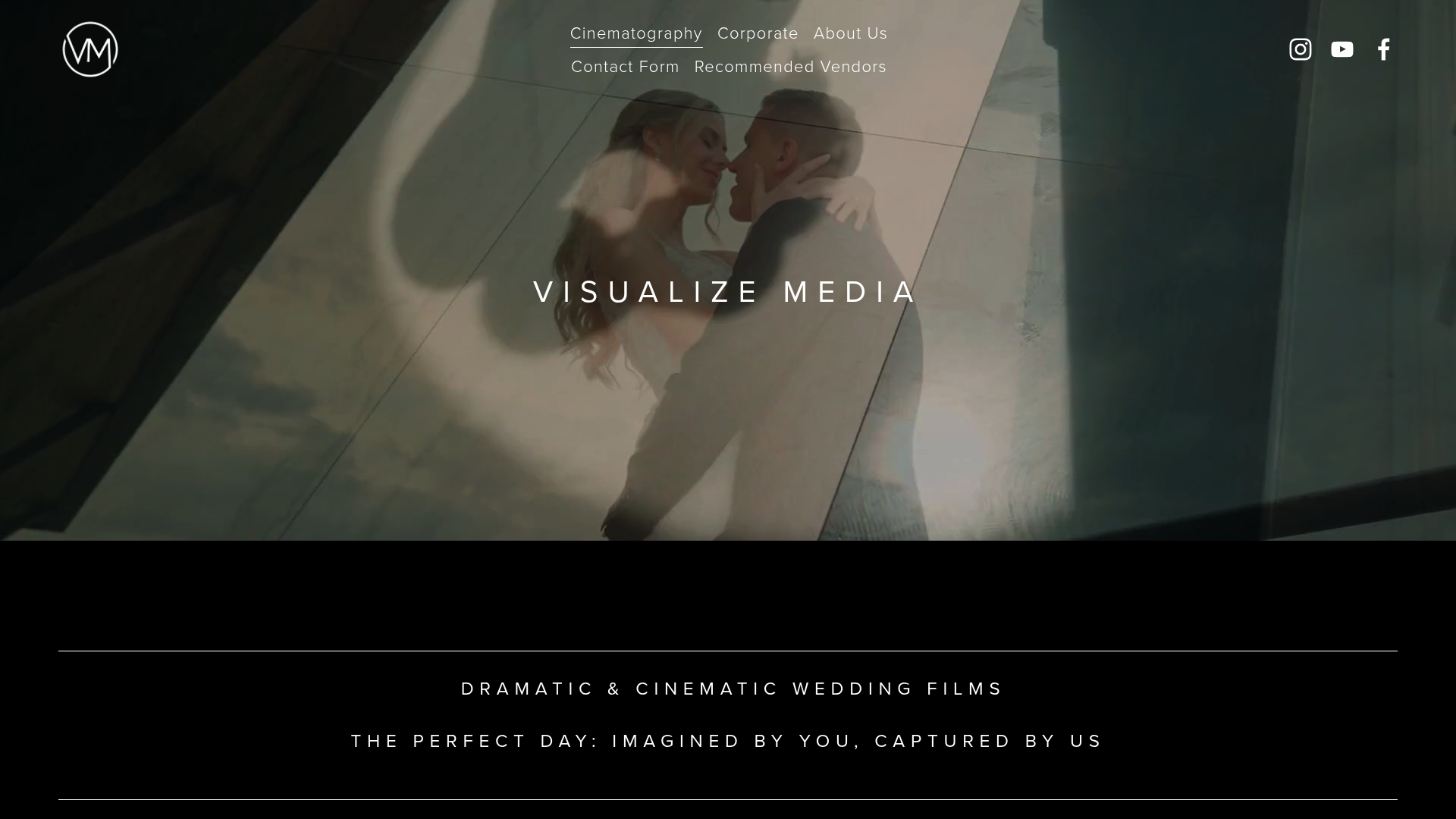
At Visualizemedia, storyboarding is where the cinematic process begins, long before the wedding day. The team treats each film as a short story with a beginning, a middle, and an end, and the storyboard is how that story gets shaped before a camera is ever picked up.
A storyboard is not a checklist. It is a creative conversation between the couple and the filmmaker about what this day actually means. The planned scenes give us structure. The unplanned moments give us the film's soul. Our job is to hold both at once, and the storyboard is what makes that possible.
Storytelling in wedding films works best when the emotional arc is decided early. Visualizemedia's process involves reviewing the couple's timeline, identifying the audio moments with the most emotional weight, and building the storyboard around those anchors rather than around the clock. Vows, parent reactions, and the first words exchanged after the ceremony tend to carry the most narrative power, and the storyboard ensures the camera is in the right place to capture them cleanly.
The team also plans for nonlinear storytelling when it serves the couple's vision. Opening a film with a quiet, intimate moment from the morning before cutting to the energy of the ceremony creates a different emotional experience than following the day in strict chronological order. That choice gets made in the storyboard, not in the edit suite.
Follow Visualizemedia on Instagram to see how these storyboard-driven films come to life.
If you are planning a cinematic wedding film in New York or New Jersey, explore Visualizemedia's wedding cinematography packages to see how a storyboard-first approach shapes every film they create.
Key Takeaways
A wedding film storyboard is the single most effective tool for aligning creative vision, protecting must-have moments, and producing a wedding film that tells a real story rather than just recording an event.
| Point | Details |
|---|---|
| Definition | A storyboard is a sequential visual roadmap of scenes, audio cues, and emotional beats for your wedding film. |
| Core elements | Every storyboard should include scene order, emotional tone, audio cues, pacing notes, and sensory details. |
| Creation process | Start with your timeline, identify narrative scenes, layer in audio, then choose a digital or printed template. |
| Key benefit | Storyboards reduce post-production revisions by aligning videographer and couple expectations before the shoot. |
| Flexibility rule | Treat the storyboard as a guide, not a script, so candid moments can be captured alongside planned scenes. |