
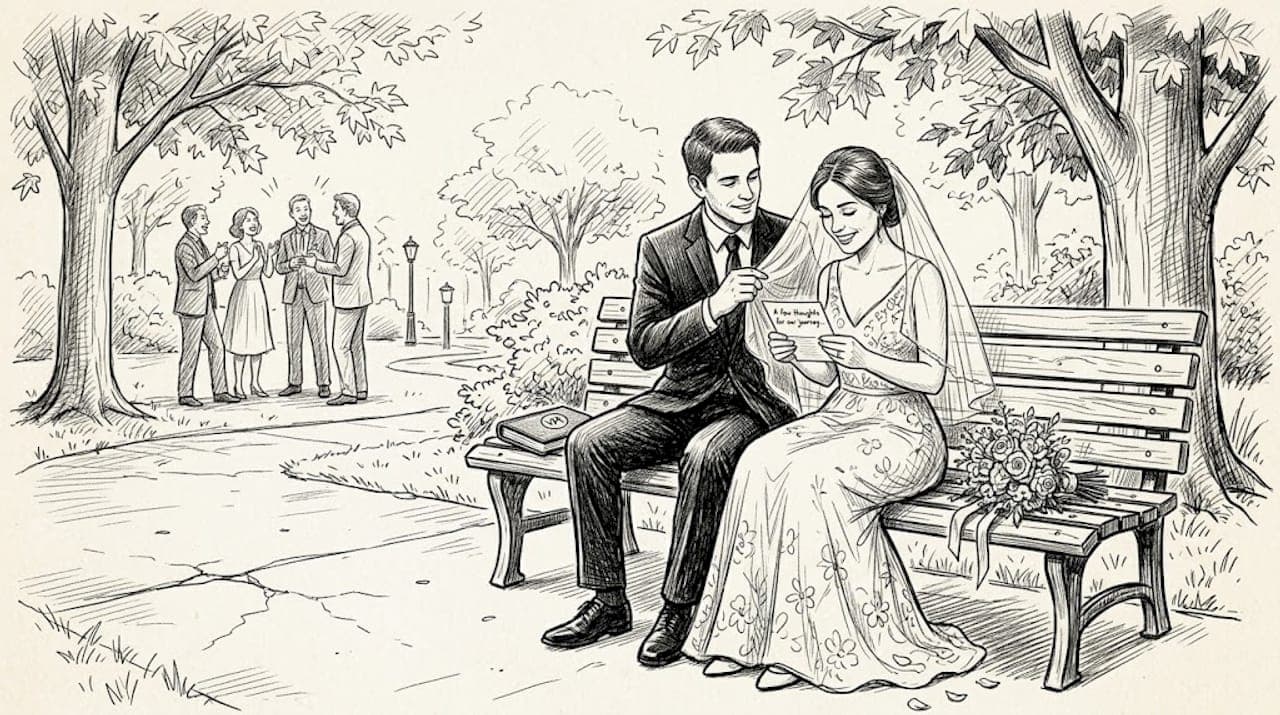
Most couples booking their wedding videographer assume they know exactly what they're getting: a polished highlight reel of the big day. But a wedding love story film is something else entirely. It's a personalized, narrative-driven film that captures the emotional journey behind your relationship, not just the ceremony itself. Many couples only discover this distinction after their wedding day has passed, and by then it's too late to go back. This guide breaks down what a wedding love story film actually is, how it's made, and how you can work with your filmmaker to create something that still moves you to tears twenty years from now.
Table of Contents
- What defines a wedding love story film?
- How are wedding love story films created?
- Comparison: Love story films vs. traditional wedding videos
- Tips for making your wedding love story film unforgettable
- Our take: Why authentic love stories overshadow traditional wedding films
- Start your wedding love story film journey
- Frequently asked questions
Key Takeaways
| Point | Details |
|---|---|
| Story-first focus | Wedding love story films emphasize your relationship and journey, not just the wedding timeline. |
| Emotional authenticity | Capturing candid, unscripted moments leads to a deeper, more meaningful wedding film. |
| Personalization | Sharing key details and memories with your filmmaker helps create a truly unique film. |
| Distinct from highlights | Love story films go beyond traditional highlight reels by prioritizing narrative and emotion. |
What defines a wedding love story film?
At its core, a wedding love story film is built around narrative. Traditional wedding videos document events in sequence: the getting ready, the walk down the aisle, the first dance. A love story film goes further. It frames your wedding day inside the larger arc of who you are as a couple, where you started, what you've overcome, and why this day matters beyond the flowers and the venue.
The filmmaking approach draws heavily from documentary techniques. That means your filmmaker is watching, listening, and responding rather than orchestrating. Authentic, unscripted moments take priority over posed beauty shots. The result feels less like a polished commercial and more like a short film you happen to be the stars of.
Here's what typically sets these films apart from a standard highlight reel:
- Emotional narrative arc: The film has a beginning, middle, and end shaped by your story, not just the day's schedule.
- Candid footage emphasis: Reactions, whispered conversations, and quiet moments carry as much weight as the grand gestures.
- Personal voice: Couples often contribute interview audio, voicemails, or handwritten vows that become the backbone of the film.
- Cinematic composition: Every frame is intentional, using light, movement, and music to heighten emotion.
- Thematic coherence: A love story film has a through-line, a feeling or idea that ties every scene together.
"The most powerful wedding films don't show you what happened. They show you how it felt."
This is exactly why cinematic wedding videography done well feels so different from a standard video package. The camera isn't just recording. It's interpreting.
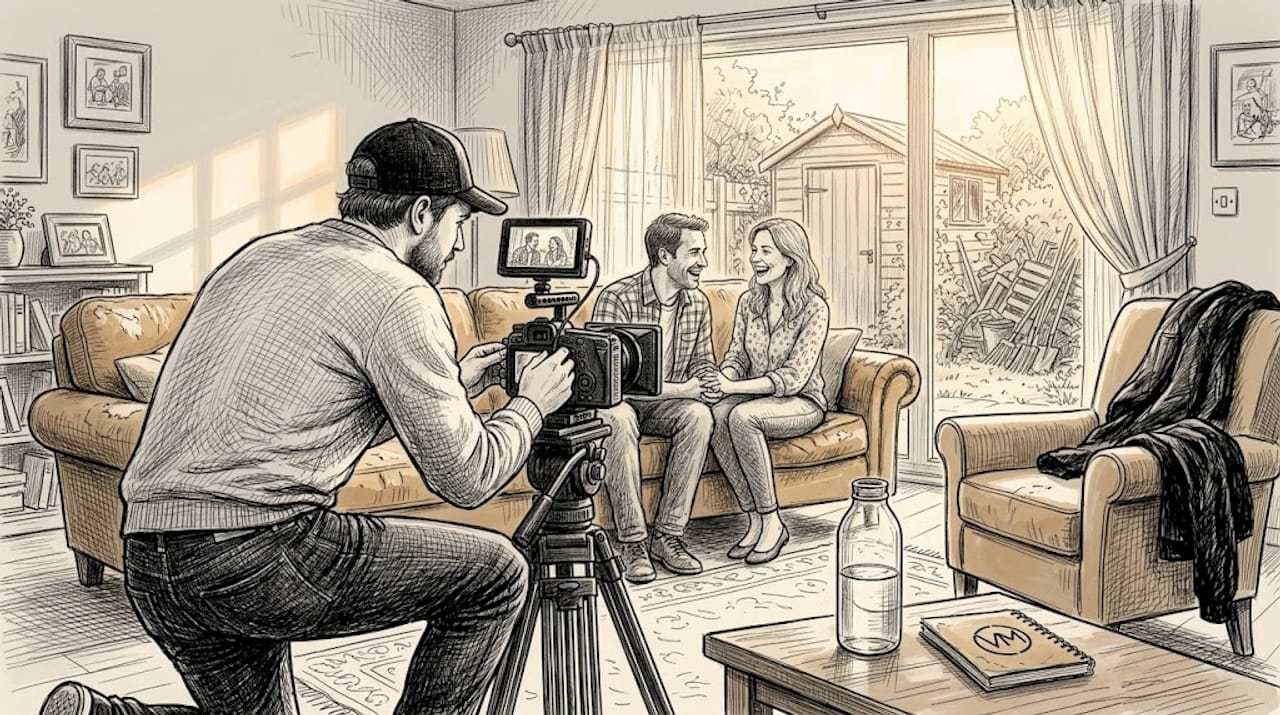
Traditional highlight reels have their place, and they're beautiful. But they tend to focus on moments that look good rather than moments that mean something. A love story film prioritizes meaning, which is a harder thing to capture and a more lasting thing to keep.
How are wedding love story films created?
The process starts long before your wedding day. Here's a breakdown of how a well-crafted love story film comes together:
- Pre-wedding consultation: Your filmmaker sits down with you to learn about your relationship. How did you meet? What does the other person do that makes you laugh? What are you most nervous about on the wedding day? These conversations become the raw material for your film's emotional core.
- Interview or audio collection: Some couples record a short interview together, separately, or both. Others contribute voice notes, letters, or meaningful recordings. This personal audio often becomes the narration that runs beneath your footage.
- Wedding day documentary filming: On the day itself, your filmmaker operates more like a photojournalist than a director. They're moving through the day, reading the room, and capturing moments as they naturally unfold.
- Selects and assembly: Editing workflows begin with reviewing all footage and selecting the most emotionally resonant clips, then assembling them in a rough chronological order before moving into thematic refinement.
- Thematic refinement and music pairing: The final edit layers footage, audio, and music to create emotional peaks and valleys, much like a short film's structure.
- Review and delivery: You receive a film that reflects your story, typically in a cinematic format ready for sharing or private keeping.
Pro Tip: Before your wedding, write down three to five specific memories or inside jokes that define your relationship and share them with your filmmaker. The more specific the detail, the more personal the film becomes.
To see how this process plays out in real life, look at films like the Kesha & Bhadresh film example or the Michele & Brandon story, where personal anecdotes and candid footage weave together into something deeply moving.
Comparison: Love story films vs. traditional wedding videos
Choosing between a love story film and a traditional wedding video comes down to what you want to feel when you watch it ten years from now. Here's a clear side-by-side look:
| Feature | Love story film | Traditional wedding video |
|---|---|---|
| Structure | Narrative arc, character-driven | Chronological event sequence |
| Tone | Emotional, cinematic, personal | Documentary, informational |
| Footage focus | Candid, unscripted, intimate | Coverage of key events |
| Audio | Personal interviews, voiceovers | Ceremony audio, speeches |
| Editing style | Thematic, emotionally driven | Sequential, event-based |
| Length | Typically 8 to 20 minutes | Typically 3 to 10 minutes |
| Primary goal | Tell your unique story | Preserve the day's events |
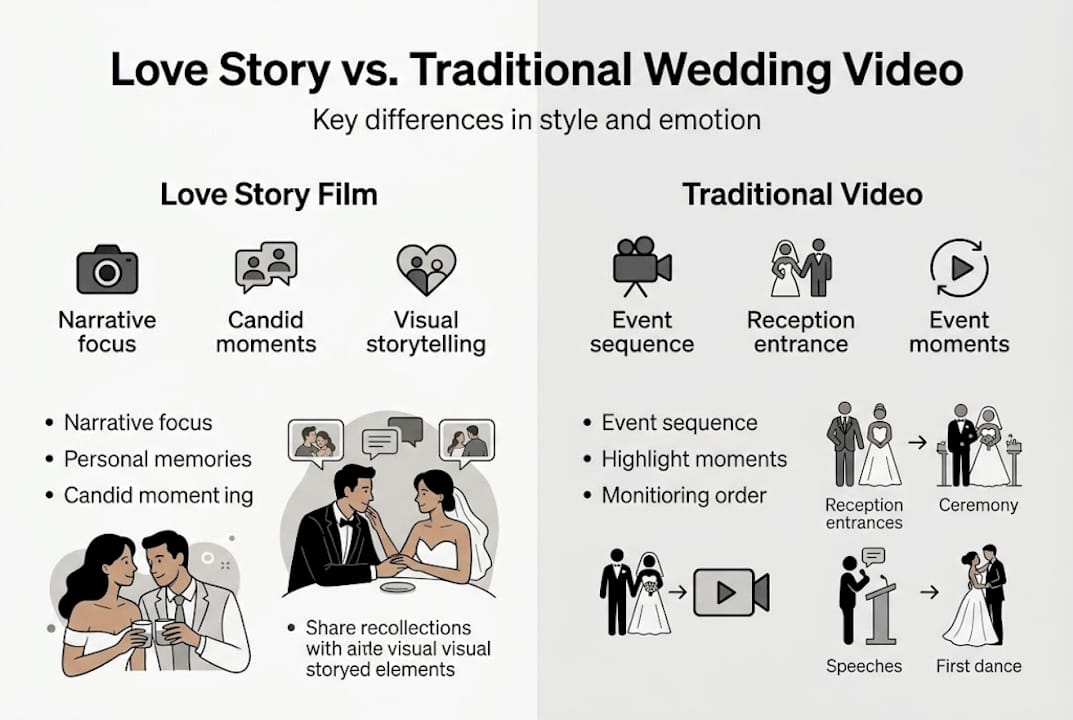
Documentary-style capture provides genuine emotional depth by focusing on authenticity rather than staged moments, which is the fundamental difference in philosophy between these two formats.
Some couples prefer traditional videos for practical reasons:
- They want a full record of every speech and reading.
- They value shorter, shareable formats for social media.
- They prefer a straightforward, event-by-event format.
Others lean toward love story films because:
- They want their relationship preserved, not just the wedding day.
- They value emotional impact over comprehensive event coverage.
- They want a film they'll watch repeatedly, not just once.
Films like the Alyssa & Ryan wedding film show exactly how a story-driven approach transforms footage into something far more personal than a standard highlight reel. Exploring wedding videography services that offer both options gives you the flexibility to decide what fits your vision best.
Tips for making your wedding love story film unforgettable
The couples who walk away with the most emotionally powerful films are always the ones who invest a little time in preparation. Here are the most effective ways to personalize your film:
- Tell your filmmaker the weird stuff: The quirky habits, the inside jokes, the story of your first fight and how you got through it. These details give a film its soul.
- Identify meaningful locations: If there's a bench where you had a crucial conversation, or a neighborhood where you fell in love, consider building a pre-wedding film session around it.
- Bring meaningful objects into frame: A grandparent's ring, a letter you wrote each other, or a photo that lives on your nightstand can anchor the film emotionally.
- Honor family traditions: Whether it's a cultural ritual or a family recipe someone baked for the reception, these details layer depth into your story.
- Involve the people who shaped your relationship: Your filmmaker can capture moments with the friends and family who've been part of your journey, not just the wedding party.
Pro Tip: Trust your filmmaker to find the moments. Couples who try to direct every shot often end up with footage that looks rehearsed. The most compelling films, like the Courtney & Chris film, happen when couples let themselves forget the camera is there.
| Personalization idea | Emotional impact |
|---|---|
| Pre-wedding interview | Adds personal voice and context |
| Meaningful location session | Creates visual anchors for your story |
| Family heirloom in frame | Connects generations and history |
| Candid guest moments | Reflects how others experience your love |
| Custom music selection | Sets the emotional tone of the entire film |
Authentic, unscripted moments consistently produce the most compelling wedding love story films, which is why preparation and trust in your filmmaker work together so powerfully.
Our take: Why authentic love stories overshadow traditional wedding films
I've filmed weddings on six continents and at every scale imaginable. And I can tell you honestly: the couples who cry hardest when they watch their film back are almost never the ones who had the biggest budgets or the most elaborate productions. They're the ones whose films captured something true.
Traditional highlight reels have a tendency to flatten weddings into a series of beautiful images. That's not a criticism. It's just what that format is designed to do. A love story film asks a harder question: Who are these two people, and why does their love matter?
The reactions that stay with me are the ones where a couple watches their film and sees themselves clearly, sometimes for the first time. One partner once told me that watching their film helped them understand why they fell in love again, not just remember that they did. That's the difference between beautiful footage and meaningful cinema.
If you want to understand the philosophy behind this approach, our storytelling philosophy explains exactly how we think about building films that last.
Start your wedding love story film journey
If you've read this far, you already understand that a wedding love story film is one of the most personal things you can create together as a couple. It's not just a video. It's a document of who you were and how you loved each other at one of the most meaningful moments of your lives.
At Visualize Media, I'd love to sit down with you, hear your story, and talk about how we can bring it to life on film. Explore wedding cinematography options and real couple examples to see the range of what's possible. When you're ready to take the next step, contact our team to start a conversation about your vision. Your story deserves more than a highlight reel.
Frequently asked questions
What makes a wedding love story film different from a traditional wedding video?
A wedding love story film focuses on your unique emotional journey as a couple, using documentary-style capture for emotional depth, while a traditional wedding video primarily records the sequence of events on your day.
How can we personalize our wedding love story film?
Share key relationship stories, meaningful locations, and specific memories with your filmmaker, since authentic, unscripted moments consistently lead to the most compelling and personal films.
Are interviews necessary for a wedding love story film?
Interviews are common but not required. They add personal voice and context if you want them, but many powerful love story films are built entirely from candid footage and natural audio.
How long does it take to edit a wedding love story film?
Most filmmakers need several weeks, since editing workflows involve reviewing selects, rough assembly, and thematic refinement before the final film is ready for delivery.