
A wedding photography gallery is the complete, curated visual record of your wedding day, organized to tell the full story from getting ready through the final send-off. Unlike a highlight portfolio, which shows only a photographer's best work across many weddings, your gallery belongs entirely to you. It captures every significant moment, mood, and detail of your specific day. Visualizemedia, which specializes in cinematic wedding storytelling, treats the gallery as the foundation of all wedding memory preservation. Understanding what goes into a gallery helps you ask better questions and choose the right team.
What is a wedding photography gallery and what does it include?
A wedding photography gallery is a full-day visual narrative that covers every phase of your wedding, not just the picture-perfect moments. That distinction matters more than most couples realize before they book.
A well-structured gallery typically contains:
- Getting ready shots: candid moments, detail close-ups of rings, shoes, and florals
- Ceremony coverage: processional, vows, ring exchange, first kiss, and recessional
- Formal portraits: couple, wedding party, and family groupings
- Reception highlights: first dance, toasts, cake cutting, and dance floor energy
- Send-off and exit: sparkler tunnels, confetti, or getaway car moments
Sample galleries contain far more images than highlight portfolios and reveal a photographer's full storytelling ability. That breadth is what separates a gallery from a curated portfolio. Chronological organization mirrors the emotional arc of your day, so viewing it feels like reliving the experience rather than browsing a catalog.
Pro Tip: When evaluating a photographer, ask to see a complete gallery from a single wedding, not just their best shots. Consistency across varied lighting conditions, especially reception dance floor flash photography, reveals true skill.
How do modern digital wedding galleries work?
Digital galleries have replaced USB drives and printed contact sheets as the standard delivery format. Today's web-based gallery platforms function as interactive storytelling ecosystems, not simple file storage. That shift changes what you should expect from your photographer.
Top platforms now offer:
- Live delivery so you receive sneak-peek images within hours of your wedding
- Guest marketing tools that notify family members automatically when the gallery goes live
- AI-powered face recognition to help guests find photos of themselves instantly
- Password protection and access controls to keep your images private
- High-resolution downloads with print-release permissions built in
Galleries of around 1,000 high-resolution photos require approximately 20 GB of storage. That figure underscores why cloud-based delivery has become the norm. Downloading everything to a single hard drive is no longer a safe backup strategy on its own.
Good event lighting at your venue directly affects gallery quality. Photographers working in well-lit spaces produce more consistent results across hundreds of images, which is why venue lighting deserves attention during your planning process.
What is a collaborative wedding gallery?
A collaborative gallery allows guests, second shooters, and vendors to upload their own photos alongside the professional images, creating a multi-perspective collection of your day. The result is a fuller picture than any single photographer can capture alone.
The benefits are concrete:
- Candid moments from guest tables that a photographer physically cannot reach simultaneously
- Behind-the-scenes footage from the bridal suite or groomsmen prep
- Vendor perspectives from your florist or caterer that add texture to the story
- Reduced post-wedding chasing of photos shared across dozens of group chats
Photographers typically charge $300–$500 extra for managing collaborative gallery features. That fee covers platform costs, curation time, and quality control. For couples who want the most complete record of their day, the added investment pays off in memories you would otherwise never see.
Pro Tip: Ask your photographer whether their platform supports guest uploads before you sign a contract. Adding this feature after booking often costs more and may require switching platforms entirely.
Photo booths are another way to generate guest-contributed images. Wedding photo booths can increase guest engagement significantly and feed fun, candid shots directly into your collaborative gallery.
What role do physical wedding albums play alongside digital galleries?
A physical album is the tangible heirloom that outlasts every hard drive, platform, and password. Digital galleries are convenient, but a well-made album sits on a coffee table for decades without requiring a login. The two formats serve different purposes and work best together.
| Format | Material | Best for | Lifespan |
|---|---|---|---|
| Flush-mount layflat album | Photographic paper, rigid pages | Heirloom display, panoramic spreads | 50+ years with proper care |
| Standard photo book | Inkjet-printed pages, soft binding | Budget-friendly keepsake | 10–20 years |
| Digital gallery | Cloud-hosted files | Sharing, downloading, daily access | Platform-dependent |
Layflat flush-mount albums use thick, rigid pages and photographic paper, making them the premium physical format. Cheaper photo books use inkjet printing on thinner stock, which fades faster and cannot replicate the same visual weight. The difference is visible the moment you hold both.
Professional albums come in standard sizes of 10x10, 12x12, or 10x12 inches, with 60–80 pages recommended for the best emotional flow. Albums beyond 150 images dilute the storytelling impact. Designing your album within one to six months of your wedding, while memories are fresh, produces a more personal and satisfying result.
Key Takeaways
A wedding photography gallery is the complete visual story of your day, and its value depends on organization, format, and the technology used to deliver it.
| Point | Details |
|---|---|
| Gallery vs. portfolio | A gallery covers your full day; a portfolio shows a photographer's best work across many weddings. |
| Digital platform features | Look for live delivery, guest access controls, and AI face recognition when choosing a photographer. |
| Collaborative galleries | Guest and vendor uploads cost $300–$500 extra but create a fuller, more personal record. |
| Physical albums | Flush-mount layflat albums at 60–80 pages preserve emotional impact better than oversized photo books. |
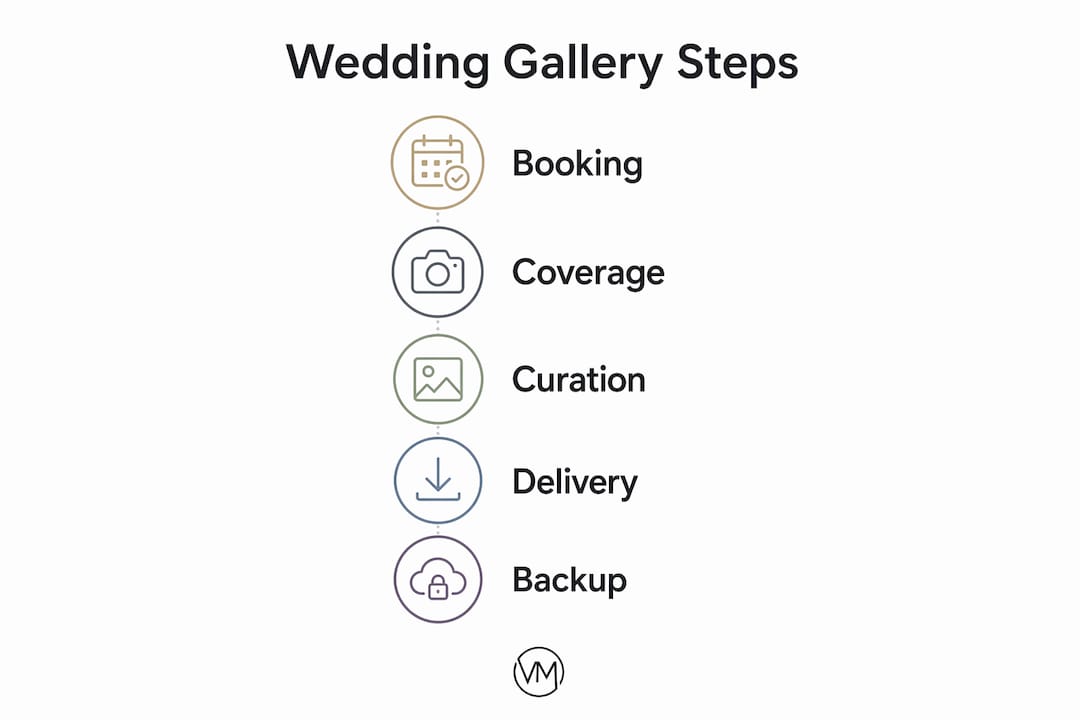
| Backup strategy | Store gallery files in at least three copies across two media types, with one copy kept off-site. |
What I've learned from watching couples use their galleries
The couples who get the most from their galleries are the ones who treat curation as a second creative act, not an afterthought. Viewing 800 unsorted images in one sitting creates gallery fatigue that dulls even the most beautiful photography. The fix is simple: organize chronologically, then select a focused subset for your album.
I've also seen couples make a costly mistake by skipping the physical album entirely. Five years later, the digital gallery link has expired, the platform has changed its pricing, or the hard drive has failed. The album is still on the shelf. Designing it within the first few months, when you still remember exactly how the day felt, produces something far more personal than a rushed order years later.
Ask to see a full sample gallery before you book anyone. A photographer's Instagram feed tells you almost nothing about how they handle a six-hour wedding with three lighting environments. The full gallery tells you everything.
Follow Visualizemedia on Instagram to see how cinematic storytelling applies to both film and photography.
— Anthony
Visualizemedia's approach to wedding galleries and films
Visualizemedia builds wedding media around the same storytelling principles that make a great gallery work: chronological flow, emotional honesty, and attention to the details couples care about most.
The team covers weddings across New York and New Jersey, combining multi-camera cinematography with a filmmaker's eye for the moments that matter. Every package includes color grading, full ceremony coverage, and aerial footage options that complement a photography gallery rather than duplicate it. Couples who want both a cinematic film and a well-organized photo record find that the two formats strengthen each other. Explore Visualizemedia's wedding photography and film packages to see how the full story of your day can be preserved in every format that lasts.
FAQ
What is a wedding photography gallery?
A wedding photography gallery is the complete, curated collection of images from your entire wedding day, organized chronologically to tell the full story from preparation through the send-off.
How many photos are in a typical wedding gallery?
Most professional wedding galleries contain several hundred to over 1,000 images, covering every phase of the day across varied lighting conditions and locations.
What is a wedding photography album vs. a digital gallery?
A digital gallery is a web-based collection for sharing and downloading, while a physical album is a printed, bound heirloom. Flush-mount layflat albums at 60–80 pages offer the best long-term quality and emotional impact.
How do I back up my wedding gallery files?
The best practice is the 3-2-1 rule: keep three copies of your files across two different media types, with at least one copy stored off-site or in the cloud.
When should I design my wedding album?
Design your album within one to six months of your wedding, while the memories and emotions are still vivid, for the most personal and satisfying result.