

Candid videography is defined as the practice of filming genuine, unposed moments at weddings and events without directing subjects or interrupting the natural flow of the day. Unlike traditional videography, which relies on staged setups and scripted sequences, the candid filming style prioritizes spontaneity over technical perfection, revealing real emotions and unscripted interactions as they happen. The result is a film that feels less like a production and more like a memory. For couples planning their wedding in New York or New Jersey, understanding this approach is the first step toward choosing footage that will still move you decades from now.
What is candid videography and how does it differ from traditional styles?
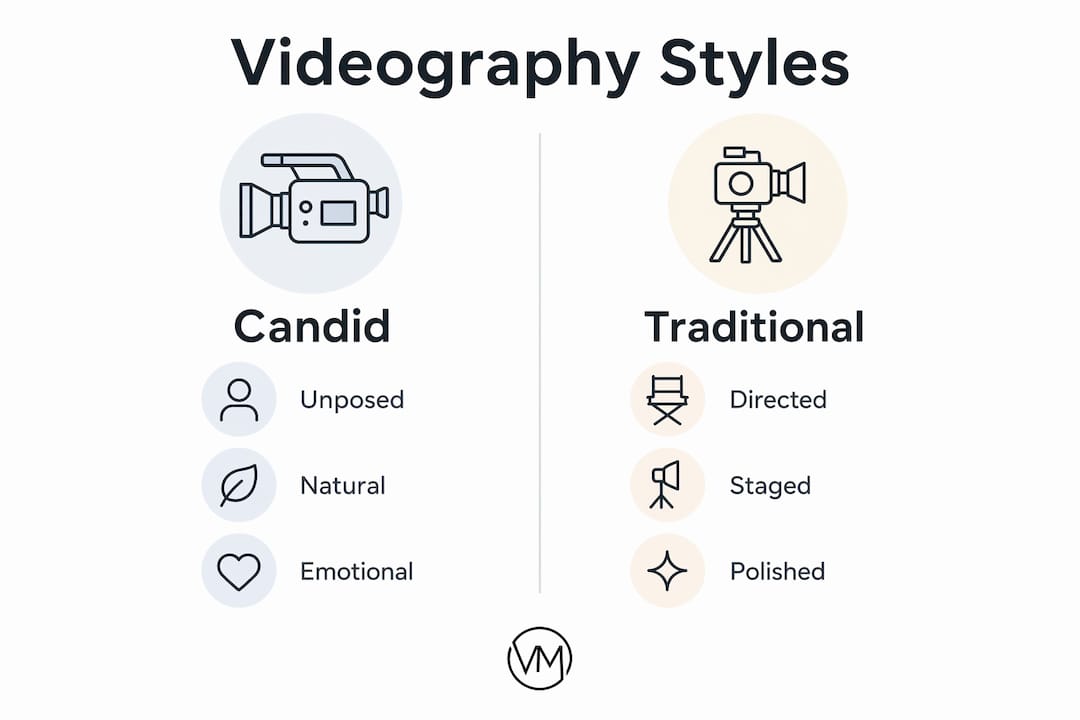
Candid videography and traditional wedding videography share the same raw material but treat it very differently. Traditional videography directs couples and guests into positions, cues reactions, and controls the frame. Candid videography observes instead of orchestrates. The videographer becomes a presence in the room rather than a director of it.
The distinction matters more than most couples realize. Too much direction makes moments feel staged, even when the footage is labeled "candid." A videographer who constantly repositions guests or asks for reaction shots is producing directed content, not genuine documentation. The most important factor affecting authenticity is simply how much the couple is guided during filming. Less direction produces more natural footage.
Cinematic wedding videography adds another layer to this conversation. Cinematic style focuses on visual storytelling through composition, color grading, and music. Candid style focuses on capturing truth. The best wedding films combine both: technically beautiful footage of genuinely unscripted moments. Here is how the three approaches compare:
| Approach | Direction level | Primary focus | Emotional tone |
|---|---|---|---|
| Traditional videography | High | Posed coverage | Formal, structured |
| Candid videography | Minimal | Authentic moments | Raw, emotional |
| Cinematic videography | Moderate | Visual storytelling | Artistic, evocative |
For couples who want a film that captures who they actually are, rather than a polished performance of who they think they should be, candid style is the clearest path to that goal.
What techniques do videographers use to capture candid moments?
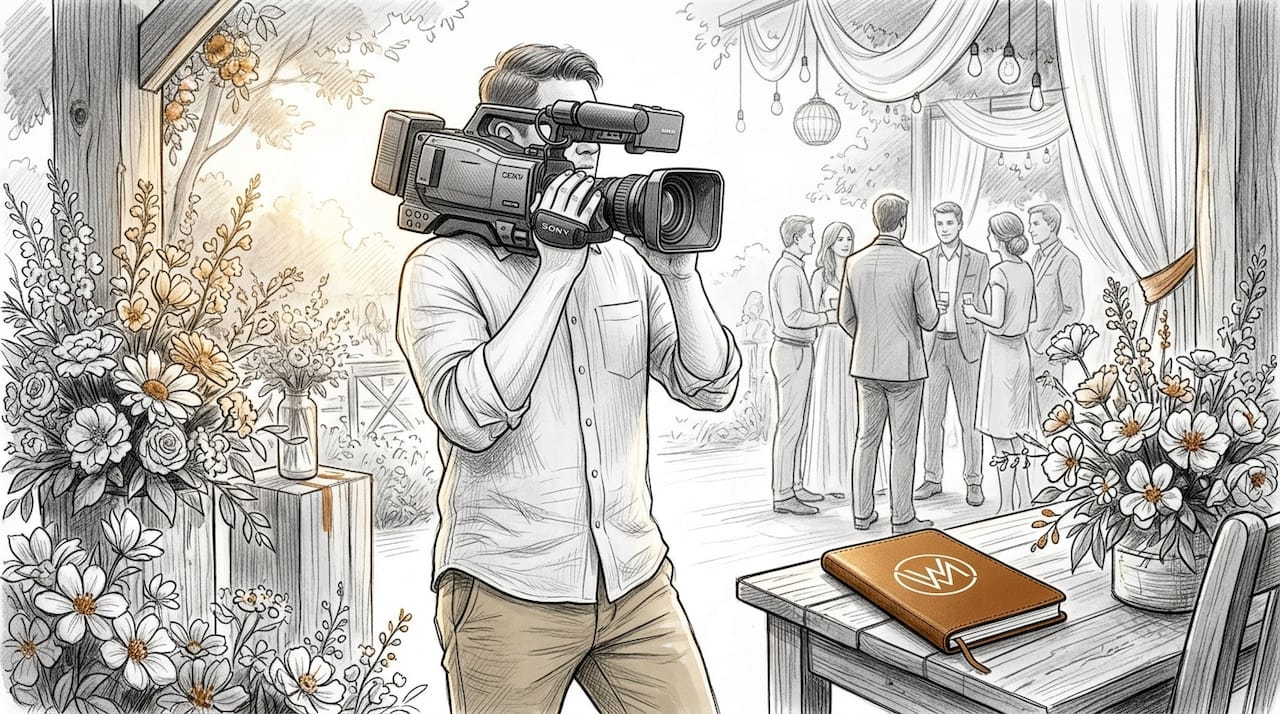
Capturing genuine moments without disrupting them is a craft skill, not an accident. Discreet positioning and anticipation are the two core tools every skilled candid videographer relies on. Knowing where to stand before a moment happens is what separates a professional from someone who arrives late to every frame.
The practical techniques behind effective candid filming include:
- Blending in physically. Videographers dress to match the event, use smaller camera rigs where possible, and avoid drawing attention through movement or equipment noise.
- Building rapport before the event. Friendly conversation off-camera helps subjects feel comfortable and behave naturally when the camera is rolling. This is one of the most underrated preparation steps.
- Maintaining constant camera readiness. A wedding day offers no retakes. The moment a father sees his daughter in her dress for the first time will not repeat. The camera must be ready before the door opens.
- Capturing ambient audio. Laughter, whispered vows, and the sound of a crowd reacting are as emotionally powerful as the visuals. Wireless microphones and room mics placed discreetly preserve these sounds without requiring anyone to hold a boom pole in the frame.
- Using longer focal lengths. A 70-200mm lens lets a videographer film intimate moments from across the room without physically entering the scene.
Pro Tip: Ask any videographer you are considering how they handle the first look or ceremony entrance. Their answer will tell you immediately whether they work candidly or whether they stop and redirect subjects mid-moment.
The common pitfall to avoid is over-coverage. Videographers who move constantly or hover near subjects create anxiety, and anxious people do not produce natural footage. Strategic stillness is often more effective than relentless movement.
What emotional benefits does candid videography bring to wedding films?
Candid wedding videography produces footage that evokes stronger memories through naturalness, showing real smiles, tears, and unguarded interactions. This is why so many couples who initially planned a traditional video end up wishing they had chosen a candid approach after watching their film. Posed footage documents what happened. Candid footage makes you feel it again.
The emotional power comes from specificity. A staged shot of a couple looking at each other is generic. A candid shot of a groom watching his bride laugh at something her grandmother said is irreplaceable. These are the moments that define a relationship, and they only exist if a camera is present without announcing itself.
Consider what candid filming captures that directed coverage typically misses:
| Moment type | Why it matters emotionally |
|---|---|
| Unguarded tears during vows | Reveals genuine depth of feeling |
| Spontaneous laughter between guests | Preserves the social atmosphere of the day |
| A parent's quiet reaction | Documents generational emotion without staging |
| Children behaving naturally | Captures the unpredictable joy of the event |
| Glances between the couple | Shows intimacy that cannot be manufactured |
These moments are also what couples share with people who were not at the wedding. A film full of posed sequences tells viewers what the day looked like. A candid film tells them what the day felt like. That distinction is the entire argument for this style.
How to prepare for a successful candid videography experience
Choosing a candid videographer is only the first step. How you prepare for the day shapes how much genuine footage is actually possible. Start by asking specific questions during your consultation. Ask how the videographer positions themselves during the ceremony, how they handle family formals, and whether they use a second shooter for wider candid coverage. Their answers reveal their actual workflow, not just their marketing language. You can also review how to choose a wedding videographer for a structured approach to evaluating candidates.
- Share your story before the wedding day. Tell your videographer about your relationship, your families, and the moments you most want preserved. This context helps them anticipate where to be.
- Minimize your own direction on the day. Resist the urge to pose for the camera or ask the videographer to capture specific staged moments during candid coverage time.
- Give your videographer access to getting-ready moments. The most emotionally rich candid footage often happens before the ceremony, not during it.
- Communicate your comfort level. Some couples want the camera close during emotional moments. Others prefer distance. Your videographer needs to know this in advance.
- Plan for post-production time. Editing candid wedding footage is time-intensive. Post-production often takes 40 to 60 hours for a highlight film, covering moment selection, audio sync, color grading, and music. Build realistic delivery expectations into your contract.
Pro Tip: Review your videographer's unobtrusive filming techniques before your wedding day. Knowing their approach helps you relax and forget the camera is there, which is exactly the condition that produces the best candid footage.
Key takeaways
Candid videography produces the most emotionally authentic wedding films when videographers combine discreet technique, genuine rapport, and consistent camera readiness throughout the entire event.
| Point | Details |
|---|---|
| Core definition | Candid videography captures unposed, unscripted moments without directing subjects. |
| Direction level is everything | Less direction during filming produces more natural and emotionally resonant footage. |
| Technique drives authenticity | Rapport building, discreet positioning, and ambient audio capture are the foundation of effective candid filming. |
| Emotional value is unique | Candid footage preserves irreplaceable moments that staged coverage cannot replicate. |
| Preparation matters | Sharing your story and minimizing on-day direction maximizes the quality of candid footage. |
Why candid filming is harder than it looks
I have filmed weddings across New York and New Jersey for years, and the question I hear most often is some version of: "Can't anyone just point a camera and film what happens?" The honest answer is no. Candid videography is part observation, part intuition, and the balance between technical preparedness and emotional sensitivity is something that takes years to develop.
What most couples do not see is the preparation that makes spontaneity possible. I spend time before every wedding learning the venue layout, identifying the light sources, and mapping the moments most likely to produce genuine emotion. The father-daughter dance, the moment the doors open for the processional, the first time the couple is alone after the ceremony. These are predictable in timing but unpredictable in feeling. Being in the right position before they happen is the entire job.
The client reactions that stay with me are never about the grand cinematic shots. They are always about the small moments. A grandmother wiping her eye during the vows. Two brothers sharing a look during the best man speech. These are the frames that make people call me months after the wedding to say the film made them cry again. That is what candid filming is actually for.
Follow Visualizemedia on Instagram to see real examples of candid wedding moments captured in the field.
— Anthony
How Visualizemedia captures your wedding day as it really happened
Visualizemedia specializes in cinematic wedding films across New York and New Jersey, with a filming approach built around unobtrusive, candid coverage. Every package includes multi-camera coverage designed to capture genuine moments from multiple angles simultaneously, so nothing is missed while the team stays out of your guests' experience. From getting-ready footage to the final dance, the goal is a film that reflects your actual day, not a performance of it. Explore the portfolio and wedding videography styles to see how candid technique translates into finished films, then reach out to schedule a consultation.
FAQ
What is candid videography in simple terms?
Candid videography is the practice of filming real, unposed moments at weddings or events without directing subjects. The videographer observes and documents rather than staging or scripting any part of the footage.
How does candid wedding videography differ from traditional coverage?
Traditional wedding videography involves directing couples and guests into positions for the camera. Candid wedding videography captures people as they naturally behave, with the videographer blending in discreetly to avoid disrupting the event.
What moments does candid filming capture best?
Candid filming excels at preserving unguarded emotional reactions: tears during vows, spontaneous laughter, quiet parental moments, and intimate glances between couples. These are moments that cannot be recreated on request.
How long does it take to edit a candid wedding film?
Post-production for a candid wedding highlight film typically takes 40 to 60 hours. Editors select the strongest moments, synchronize audio, apply color grading, and build the emotional arc of the film through music and pacing.
Should I tell my guests a candid videographer will be filming?
Informing guests that a videographer will be present is standard practice, but the less attention drawn to the camera during the event, the more natural the footage will be. Most guests forget the camera is there within the first hour.