

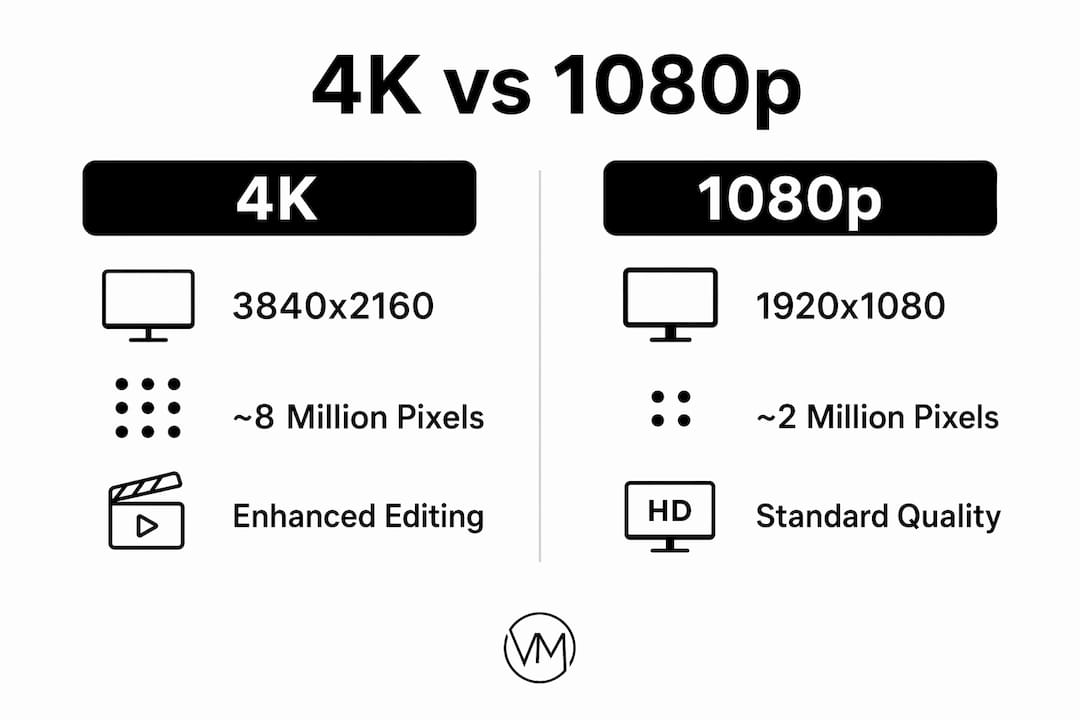
4K video is defined as footage captured at 3840 x 2160 pixels, delivering four times the resolution of standard 1080p HD. For weddings, that difference is not cosmetic. It means your videographer can capture the tear on your mother's cheek, the hand-stitched detail on your dress, and the exact moment your partner sees you for the first time, all in a single frame sharp enough to print. Choosing 4K video for weddings is the clearest way to future-proof your most important memories, and studios like Visualize Media, platforms like OurStoria, and filmmakers like Matt Hrkac have each shaped how the industry thinks about resolution, delivery, and what couples actually need.
Why choose 4K video for weddings: the technical case
The resolution gap between 4K and 1080p is not subtle. Standard HD captures roughly 2 million pixels per frame. 4K captures about 8 million, which means four times the visual data in every single shot. That density matters most in post-production, where your editor can punch in on a wide shot, reframe a moment, or isolate a reaction without the image turning soft or pixelated.
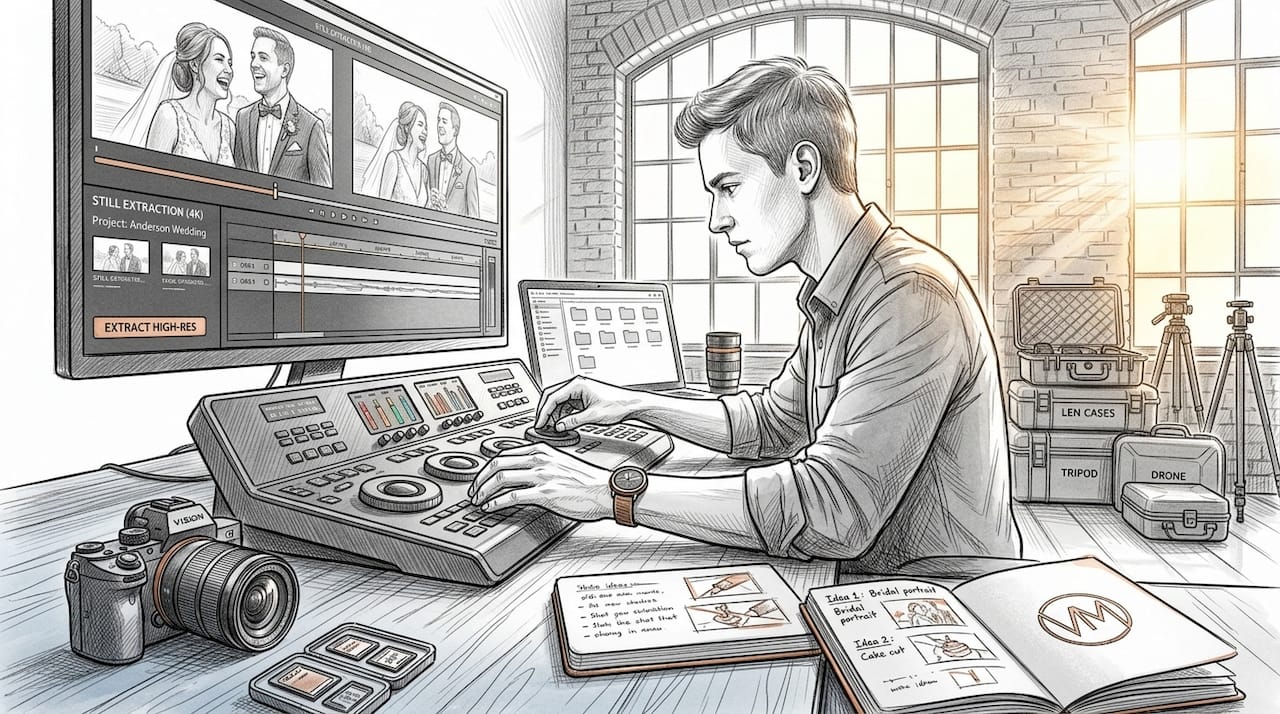
Each 4K frame is essentially an 8-megapixel photograph, which means your videographer can extract a crisp still from any point in the film. That first kiss, that laugh during the vows, that moment your flower girl decided to sit down in the aisle. All of them become printable images without a separate photographer needing to be in the exact right spot.
Color grading also benefits directly from higher resolution capture. 4K offers superior color depth that gives editors more latitude to adjust skin tones, warm up candlelit reception footage, or pull detail from shadows in a dimly lit church. The result is a film that looks intentional and cinematic rather than corrected.
| Spec | 4K UHD | 1080p HD |
|---|---|---|
| Resolution | 3840 x 2160 | 1920 x 1080 |
| Pixels per frame | ~8.3 million | ~2.1 million |
| Still frame quality | ~8 megapixels | ~2 megapixels |
| Cropping flexibility | High (reframe without loss) | Low (softens quickly) |
| Typical file size per hour | 45–60 GB | 8–15 GB |
| Color grading latitude | Wider | Narrower |
Pro Tip: Ask your videographer whether they shoot in 4K and deliver a true 4K master file. Some shoot in 4K but export a 1080p final cut, which eliminates most of the resolution advantages listed above.
What are the practical challenges of 4K wedding video?
The advantages of high resolution weddings come with real trade-offs that couples should understand before signing a contract. A full 4K wedding package typically runs between 30 and 70 GB in total file size, with highlight reels alone reaching 22 to 35 GB. That is not a file you can casually email or drop into a shared Google Photos album.
Editing 4K footage demands more storage and processing time, which translates directly into longer turnaround times and, in some cases, higher production costs. A videographer working on 4K footage needs a capable editing workstation, fast storage drives, and more rendering time per project. Those are real costs that get passed along.
Device compatibility is the other honest conversation. For 95% of clients, 4K is not necessary for everyday viewing on phones, tablets, or standard laptops, most of which cap out at 1080p. If your primary plan is to watch your wedding film on an iPhone at family dinners, the resolution advantage will be invisible on that screen.
| Factor | 4K Consideration |
|---|---|
| Full package file size | 30–70 GB |
| Highlight reel size | 22–35 GB |
| Best viewing device | 4K TV or large monitor |
| Editing turnaround | Longer than 1080p |
| Recommended storage | External SSD or purpose-built platform |
| Delivery method | Avoid Google Drive; use OurStoria or similar |
Pro Tip: Before booking, ask your videographer which platform they use to deliver your final film. Generic cloud storage like Google Drive compresses video on upload and does not stream large files reliably, which can make even a true 4K master look worse than it should.
Does 4K suit every wedding style and couple?
4K wedding video quality shines brightest in cinematic, detail-forward productions. Grand ballrooms, outdoor ceremonies with sweeping landscapes, and editorial-style films all benefit from the extra resolution. When your venue and aesthetic lean toward luxury, 4K is the natural match for the visual story you want to tell.
Not every couple wants that. Vogue reports that Gen Z and millennial couples are actively seeking lo-fi, candid footage shot on camcorders and analog devices for the emotional spontaneity it creates. That aesthetic prioritizes warmth and authenticity over sharpness, and a Super 8 camera or vintage camcorder can deliver something a Sony FX6 shooting in 4K simply cannot. The grain, the slight blur, the imperfect color. Those qualities feel human in a way that hyperclean footage sometimes does not.
The smartest approach for many couples is a blend. Consider these options based on your priorities:
- Full 4K cinematic production for couples who want a polished, future-proof film to screen on large displays or share with future generations
- 4K primary footage with Super 8 or camcorder inserts for couples who want cinematic quality alongside candid, nostalgic moments
- 1080p delivery with 4K capture for couples on tighter budgets who still want the editing flexibility of high-resolution source files
- Lo-fi only for couples whose wedding style is intentionally relaxed, intimate, and unproduced
Understanding your wedding videography style preferences before your first vendor meeting will save you from paying for a production that does not match your vision.
How to get your 4K wedding film delivered without quality loss
The resolution you capture means nothing if the delivery method destroys it. Google Drive compresses videos by default and does not stream large 4K files reliably, which means couples often watch a degraded version of their own wedding film without realizing it.
Follow these steps to protect your investment from capture through final viewing:
- Confirm your videographer delivers a true 4K master file, not a 1080p export from 4K source footage.
- Request delivery through a purpose-built platform like OurStoria, which supports fast-start metadata and CDN-backed streaming designed for large video files.
- Store your master file on an external SSD rather than relying solely on cloud links, which can expire or change over time.
- Watch your film on a 4K display at least once. A 65-inch 4K TV reveals detail that a laptop screen simply cannot show.
- Ask about turnaround time upfront. 4K editing workflows take longer, and knowing the timeline prevents frustration after the wedding.
Purpose-built delivery platforms offer branded galleries, instant playback, and consistent quality that generic sharing services cannot match. The delivery platform is as important as the camera that captured the footage.
Key takeaways
4K wedding video is worth choosing when you prioritize editing flexibility, large-screen viewing, and a future-proof film, but only if your videographer delivers a true 4K master through a platform built to handle it.
| Point | Details |
|---|---|
| Resolution advantage | 4K captures ~8 million pixels per frame, four times more than 1080p HD. |
| Still frame extraction | Every 4K frame equals an 8-megapixel photo, usable as a print. |
| File size reality | Full 4K packages run 30 to 70 GB; plan for proper storage and delivery. |
| Device limits | Most phones and tablets cap at 1080p, so 4K shines most on large screens. |
| Delivery platform matters | Avoid Google Drive; use purpose-built platforms to preserve 4K quality. |
The honest truth about resolution and wedding films
I have watched couples spend significant money upgrading to 4K and then share their wedding film as a compressed Instagram Story. The resolution advantage evaporates the moment the file hits a social platform's compression algorithm. That is not an argument against 4K. It is an argument for knowing why you want it.
The couples who get the most from 4K are the ones who plan to watch their film on a proper screen, who value the editing flexibility it gives their videographer, and who understand that a skilled storyteller matters more than any spec sheet. Resolution does not make a wedding film emotional. The craft of storytelling does. 4K gives a talented filmmaker more tools to work with. In the wrong hands, it is just a larger file.
My honest recommendation: ask your videographer to show you a 4K sample on a 4K screen before you book. If the difference moves you, it is worth every penny. If it does not, redirect that budget toward an extra hour of coverage or a second camera angle. Those decisions will matter more on the day itself.
Follow Visualize Media on Instagram for real wedding films and behind-the-scenes footage that shows exactly what 4K cinematic storytelling looks like in practice.
— Anthony
Visualize Media brings 4K cinematic storytelling to your wedding
Visualize Media creates luxury wedding films across New York and New Jersey, with 4K cinematography at the core of every production. Every package includes multi-camera coverage, aerial footage, professional color grading, and delivery through a platform that preserves every pixel of your film.
The team at Visualize Media works alongside photographers and photo booth services to give couples a fully coordinated media experience on their wedding day. If you want your love story captured with the clarity and artistry it deserves, explore wedding cinematography packages and reach out to start the conversation. Your wedding film should be something you watch again and again, not something you forget exists on a hard drive.
FAQ
What does 4K mean for wedding video quality?
4K captures approximately 8.3 million pixels per frame, compared to 2.1 million in 1080p HD. The result is sharper images, greater color grading flexibility, and the ability to extract high-quality still prints from any moment in the film.
Is 4K worth it for weddings if I mostly watch on my phone?
If your primary viewing device caps at 1080p, the resolution difference will not be visible during casual playback. The real value of 4K lies in large-screen viewing, post-production flexibility, and future-proofing your film for better displays.
How large are 4K wedding video files?
A full 4K wedding package typically runs between 30 and 70 GB. Highlight reels alone can reach 22 to 35 GB, so proper storage and a purpose-built delivery platform are necessary to preserve quality.
Can I mix 4K footage with Super 8 or camcorder video?
Yes, and many couples choose this approach. 4K handles cinematic, detail-rich moments while Super 8 or camcorder footage adds warmth and spontaneity. A skilled videographer can blend both styles into a single cohesive film.
Why should I avoid Google Drive for my wedding video delivery?
Google Drive compresses video files on upload and does not stream large 4K files reliably. Purpose-built platforms like OurStoria use CDN support and fast-start metadata to deliver your film at full quality without compression artifacts.