
A second videographer is defined as a dedicated camera operator who works alongside the lead filmmaker to capture your wedding day from multiple angles and locations simultaneously. The case for hiring one is backed by clear data: dual coverage captures approximately 84% more key moments than a single operator working alone. That number alone answers why have a second videographer better than any anecdote could. A two-person team also increases client satisfaction by 0.22 stars on average, making it the single highest-impact upgrade available for wedding film quality.
What are the key benefits of hiring a second videographer?
The most direct benefit is coverage volume. Two cameras cover roughly 94% of key wedding moments, while a solo operator misses a significant portion of what happens simultaneously across your venue. Your ceremony, cocktail hour, and getting-ready moments do not pause for each other.
- More key moments captured. A second shooter covers parallel events like the groom's preparation while the lead films the bride getting ready.
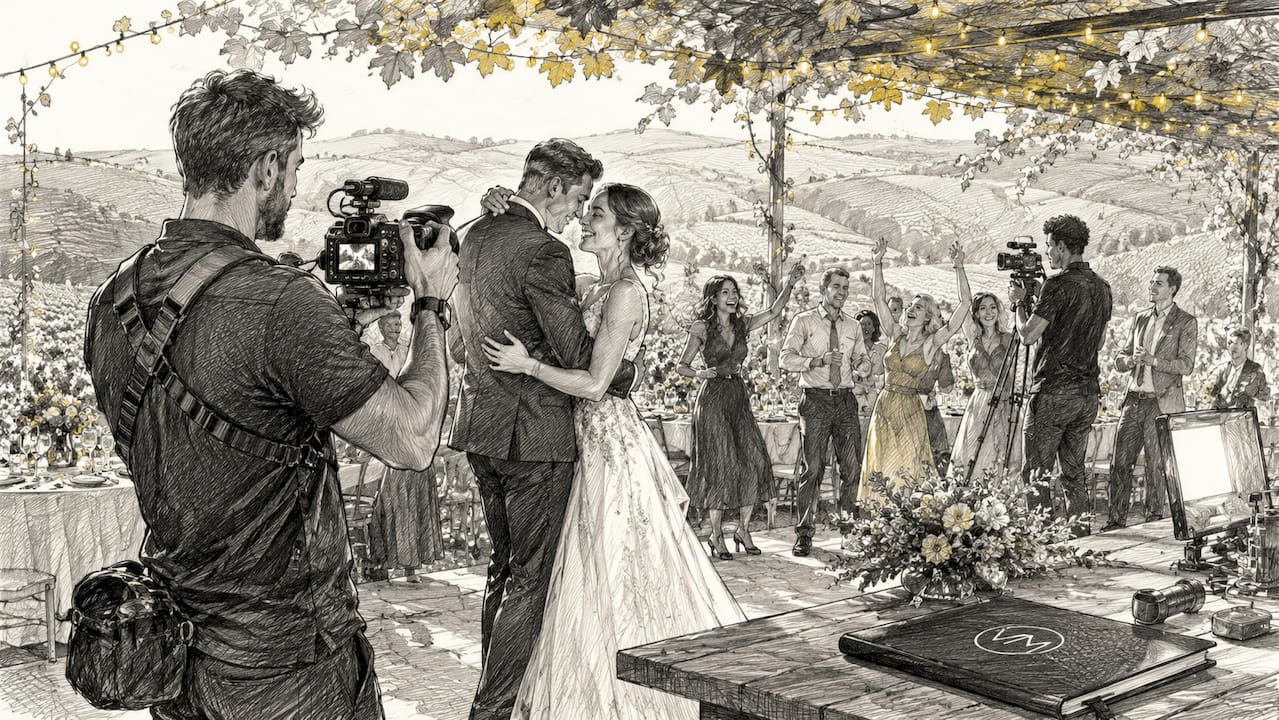
- Guest reactions recorded. One camera stays on the couple during the first kiss while the second captures the crowd's response. Those reaction shots are often the most emotional footage in a finished film.
- Equipment redundancy. Professional videographers face a 2.3% chance of camera failure during an 8-hour shoot. A second shooter means a single equipment failure never destroys your coverage.
- Satisfaction ceiling raised. The jump from one to two videographers produces a statistically significant satisfaction increase. Moving from two to three does not.
Pro Tip: Ask your videography team to confirm that the second shooter uses the same camera system as the lead. Matching color profiles during editing produces a far more consistent final film.
The redundancy point deserves emphasis. Memory card corruption, illness, and equipment theft are all real risks on a wedding day. A second videographer mitigates every one of those risks by providing a fully independent backup system running at all times.
When is a second videographer especially important?
Wedding size and structure drive this decision more than budget. Weddings exceeding 100 guests or involving multiple preparation locations essentially require a second videographer for comprehensive coverage. Larger events generate more unscripted, scattered moments that a single camera simply cannot track.
The following situations make a second shooter especially valuable:
- Multiple preparation locations. If the bride and groom are getting ready at different venues or rooms, one camera cannot be in both places.
- Overlapping events. Cocktail hours that run while the couple takes portraits mean the reception starts without coverage unless a second shooter stays behind.
- Tight venue transitions. Moving from a ceremony space to a reception hall in under 30 minutes creates gaps. Two-person teams stagger their movements to maintain uninterrupted coverage.
- Large guest counts. More guests mean more candid moments, more tables to cover during speeches, and more emotional reactions worth filming.
- Complex timelines. A wedding with a first look, outdoor ceremony, indoor reception, and late-night send-off has too many transitions for one operator to handle cleanly.
Smaller, intimate weddings with under 50 guests and a single venue may not require a second shooter. The decision should be based on timeline complexity and event logistics, not budget alone.
Pro Tip: Map out your wedding day timeline hour by hour before speaking with your videographer. Any moment where two significant things happen at the same time is a clear signal you need a second camera.
How does a second videographer improve your film's storytelling?
Cinematic wedding films are built in the editing room, and editors can only work with what they receive. A second camera gives editors the raw material to create dynamic, multi-angle sequences that feel like a film rather than a home video.
- Coverage of the same moment from two angles. The exchange of vows filmed from the front and the side simultaneously creates a far more emotional sequence than a single locked-off shot.
- Candid moments captured naturally. Two videographers blend into the background more easily than one operator under pressure. Guests stop noticing the cameras, and the footage becomes genuinely candid.
- Emotional details that would otherwise be missed. A grandmother wiping a tear, a best man laughing during the vows, a flower girl looking confused at the altar. These moments happen in seconds and require a second set of eyes.
- Richer editing options. More footage means editors can build a polished story with natural pacing, cutting between angles to hold attention throughout the film.
The unobtrusive quality of a two-person team is often underestimated. A solo videographer under pressure to capture everything tends to move more, reposition more, and draw more attention. Two videographers working in coordination stay calmer, move less, and produce more natural footage as a result.
What workflow advantages come with a dual videographer setup?
The practical benefits of a two-person team extend well beyond creative coverage. Workflow efficiency on a wedding day directly affects the quality of footage you receive.

| Workflow Advantage | What It Means for Your Film |
|---|---|
| Staggered location moves | One shooter leaves early to set up the next location while the other stays to finish coverage |
| Continuous ceremony coverage | No gap when the lead moves from the back of the aisle to the altar |
| Faster reception setup | Second shooter covers cocktail hour while lead prepares reception space |
| Equipment backup | Camera failure or memory card issue does not end coverage |
| Reduced individual pressure | Each videographer focuses on their specific role rather than trying to cover everything |
A solo videographer who needs to move from the ceremony to the reception must choose a moment to leave. That moment always carries risk. Dual teams alternate setups so coverage never stops. The lead can move ahead while the second shooter captures the final moments of one phase before following.
Pro Tip: When reviewing videography packages, ask specifically how the team coordinates handoffs between locations. A well-rehearsed two-person team has a clear system. An improvised one does not.
Key takeaways
A second videographer is the single highest-impact upgrade for wedding film coverage, capturing 84% more key moments and raising client satisfaction more than any other addition.
| Point | Details |
|---|---|
| Coverage volume doubles | Two cameras cover roughly 94% of key moments versus significantly less with one operator. |
| Satisfaction increases measurably | Adding a second shooter raises client satisfaction scores by 0.22 stars on average. |
| Risk is reduced significantly | Equipment failure, illness, or card corruption cannot destroy coverage when two systems run independently. |
| Storytelling quality improves | Editors receive multi-angle footage, candid reactions, and emotional details that one camera misses. |
| Complexity drives the decision | Weddings over 100 guests or with multiple locations require dual coverage for complete documentation. |
Why I think one camera is a gamble on the most important day of your life
I have watched solo operators work weddings with the best intentions and still miss the moment a father breaks down during the father-daughter dance because they were repositioning for the next shot. It is not a failure of skill. It is a failure of physics. One person cannot be in two places.
The couples who push back on a second shooter usually cite cost. I understand that. But the math changes when you frame it correctly. You are not paying for a second person. You are paying for the guarantee that the moments you cannot predict will still be on camera. The how to capture wedding moments question is really a question about how many of those moments you are willing to leave to chance.
Two videographers working in coordination also change the energy in the room. Guests relax faster. The couple stops noticing the cameras. The footage gets better because the environment gets more natural. That is not a theory. It shows up in the final film every time.
My honest advice: if your wedding has more than 80 guests, more than one location, or a timeline with overlapping events, a second shooter is not optional. It is the difference between a film that tells your full story and one that tells most of it.
— Anthony
Visualizemedia's dual videographer coverage for NJ and NYC weddings
Visualizemedia specializes in cinematic wedding films across New York and New Jersey, with packages built around multi-camera coverage for couples who want their full story captured.
Every wedding is different in scale, venue, and timeline. Visualizemedia's wedding cinematography packages include second shooter options designed specifically for larger events, multi-location days, and couples who want the emotional depth that only dual coverage provides. The team coordinates coverage from getting-ready through the final send-off, so no transition, reaction, or unscripted moment goes unfilmed. If you are ready to talk through what your day requires, start your inquiry and the team will walk you through the right coverage plan for your wedding.
Follow Visualizemedia on Instagram to see real wedding films and behind-the-scenes coverage from recent New York and New Jersey weddings.
FAQ
Why have a second videographer at a large wedding?
Weddings over 100 guests generate too many simultaneous moments for one camera to cover. A second videographer captures parallel events, guest reactions, and candid details that a solo operator physically cannot reach.
Does a second videographer really improve the final film?
Adding a second shooter raises client satisfaction by 0.22 stars on average and is the single highest-impact upgrade for wedding film quality, according to multi-videographer wedding studies.
Do small weddings need a second videographer?
Intimate weddings under 50 guests at a single venue may not require one. The decision depends on timeline complexity and whether significant events overlap, not guest count alone.
What does a second videographer actually do differently?
The second shooter typically covers a different location or angle simultaneously, such as filming the groom's preparation while the lead films the bride, or capturing guest reactions during the ceremony.
How do I know if my wedding videography package includes a second shooter?
Ask your videographer directly whether a second camera operator is included and how the two coordinate on the day. A professional team will have a clear system for location handoffs and coverage assignments.