

A videography timeline is a detailed schedule that organizes every filming moment of your wedding day, directly determining how your final film looks, sounds, and feels. Without one, even the most talented cinematographer is working blind. Planning a videography timeline is the single most impactful decision you can make for the quality of your wedding film, and the couples who treat it seriously walk away with cinematic stories. Those who skip it often end up with footage that feels rushed, poorly lit, and emotionally flat.
Why plan a videography timeline for better film quality
A structured filming schedule gives your videographer the control to capture key moments with precision, from vows to first dances, with professional audio and lighting already in place. Without that structure, your cinematographer is reacting instead of creating. Reaction produces documentation. Planning produces art.
Video quality directly impacts how 91% of consumers perceive trust and emotional connection in a film. For wedding couples, that number translates directly: a beautifully shot, well-lit, crisp-audio film is the one you will watch on anniversaries for the next 30 years. A rushed, poorly timed one collects digital dust.
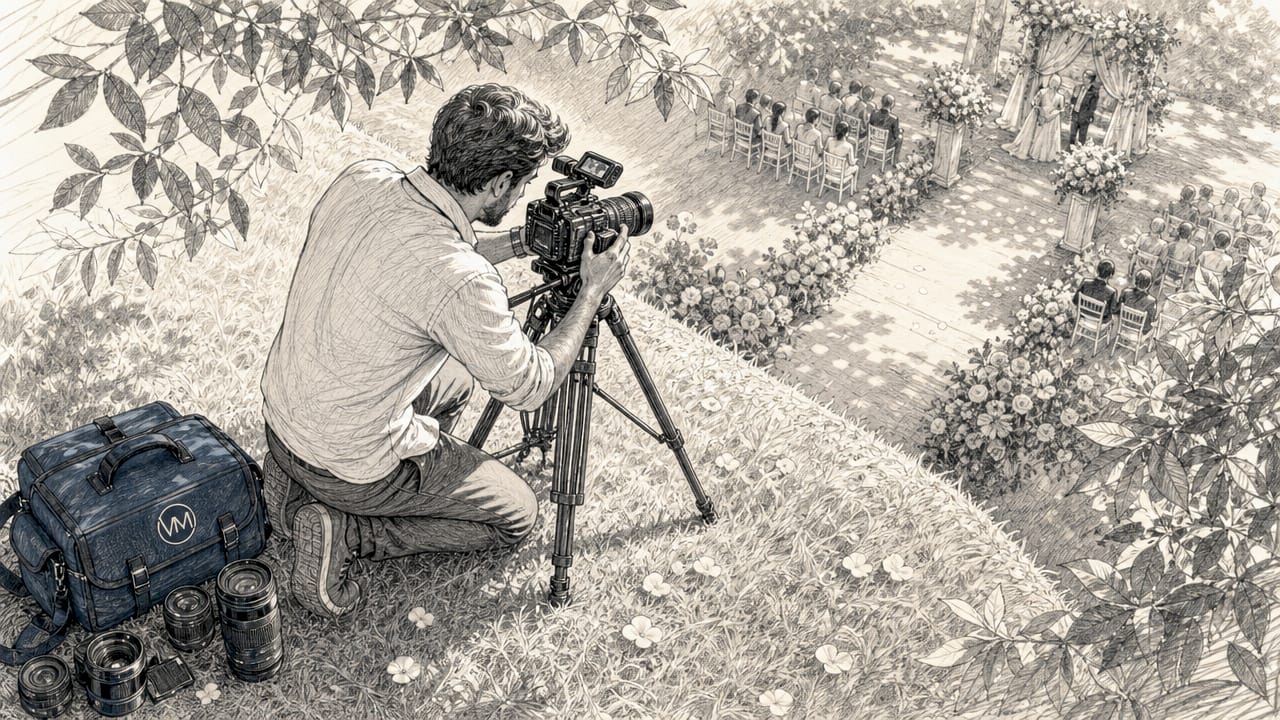
Lighting is the most unforgiving variable in wedding filmmaking. Golden hour scheduling is the single most important lighting decision in your entire day. Miss it by 20 minutes and you are dealing with harsh shadows that no amount of color grading can fully correct. A timeline locks in that window before the day even begins.
Pro Tip: Schedule your outdoor portrait session to begin 45 minutes before sunset. This places you squarely inside the golden hour window and gives your cinematographer the warm, directional light that makes wedding footage look cinematic without any artificial lighting.
What are the key phases of a wedding videography timeline?
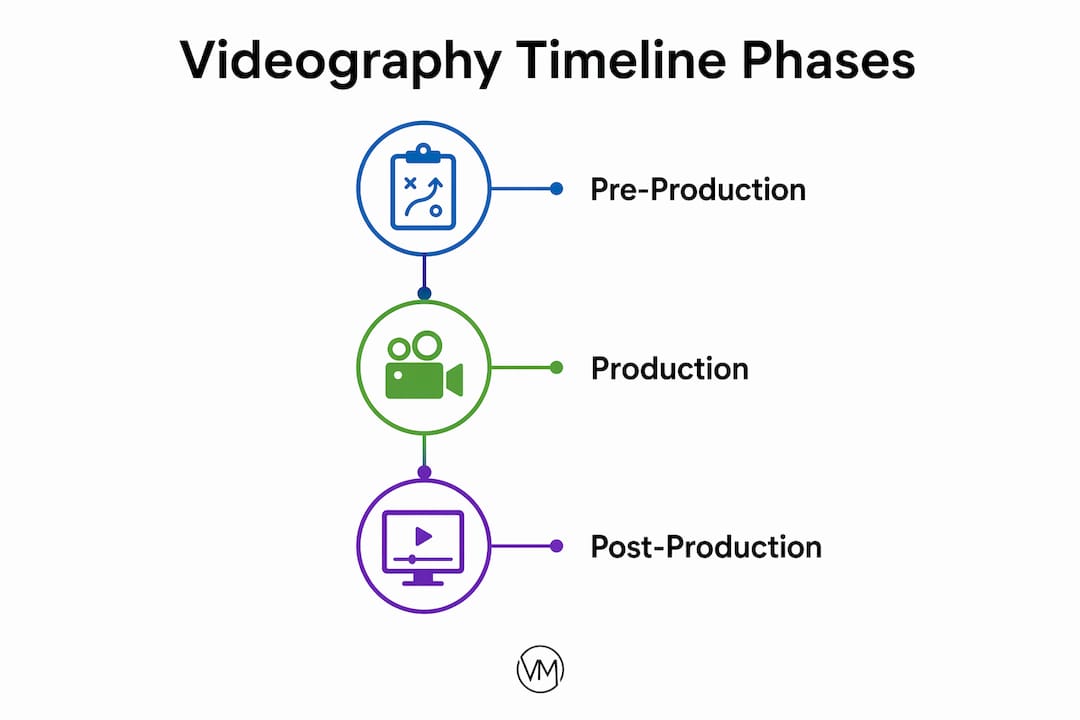
A video production timeline covers three distinct phases: pre-production, production, and post-production. Each phase carries specific tasks that directly affect what ends up in your final film. Skipping tasks in any phase creates problems that compound in the next.
Here is how each phase breaks down for a wedding:
| Phase | Key tasks |
|---|---|
| Pre-production | Book vendors, set shoot priorities, draft schedule, confirm audio setup |
| Production | Execute ceremony coverage, portraits, speeches, reception with buffer times |
| Post-production | Color grading, audio mixing, editing, delivery within agreed turnaround |
During pre-production, your videographer should be treated as a primary creative stakeholder, not an afterthought. Their input on event sequencing, location transitions, and lighting windows shapes the entire production plan. Most couples book their photographer first and add the videographer later. That sequence often creates scheduling conflicts that hurt both.
Wedding coverage typically requires 8 to 10 hours, but total hours matter far less than how those hours are paced. A 6-hour day with deliberate pacing and built-in buffers produces better footage than a 10-hour day crammed with back-to-back events. Build 15 to 30 minute buffers between major segments. They protect against the delays that every wedding experiences.
Why vendor collaboration makes or breaks your filming schedule
Vendor communication is the top cause of lost footage and poor audio in wedding films. Your videographer cannot control what they do not know about. When the DJ starts a speech before the wireless mic is live, that moment is gone permanently.
The most overlooked coordination point is the DJ microphone setup. Most couples assume the DJ and videographer will figure it out on the day. They rarely do without a plan. The result is ceremony audio recorded from 40 feet away on a camera mic instead of a clean feed from the DJ's board. That audio difference is the gap between a film you share proudly and one you apologize for.
Coordination between your photographer and videographer also prevents the most common on-day conflict: both teams competing for the same angle at the same moment. A shared timeline resolves this before anyone sets foot in the venue. Your wedding planner should facilitate a joint vendor call at least four weeks out.
Pro Tip: Confirm microphone placement and DJ board feed access with your videographer at least two weeks before your wedding. Ask specifically whether they will use a wireless lav mic, a direct board feed, or both. This one conversation protects the audio quality of your vows, speeches, and toasts.
Common mistakes couples make when planning a filming schedule
Most timeline mistakes come from optimism, not carelessness. Couples underestimate how long transitions take, how often events run late, and how much time great footage actually requires. Here are the most frequent errors and how to fix each one:
- Underestimating portrait time. Couples often schedule 20 minutes for portraits that need 45. Fix: ask your videographer how long they need, not your planner.
- Back-to-back event stacking. No buffer between cocktail hour, dinner, and speeches means the camera is always catching up. Fix: build 15-minute gaps between major segments.
- Ignoring audio logistics. Assuming sound "works itself out" on the day leads to unusable ceremony audio. Fix: confirm mic setup in writing two weeks before.
- Delaying videographer input. Waiting until one month before the wedding to share the schedule leaves no time for adjustments. Fix: share a draft timeline three months out.
- Treating the timeline as fixed. A living timeline should be updated within 14 days of the wedding to reflect weather changes, venue shifts, or guest count adjustments that affect shooting locations.
Overloading the schedule and skipping buffers is the single most common cause of rushed footage and missed emotional moments. Couples with balanced schedules consistently produce films that feel natural and beautifully paced.
How to create a videography schedule tailored to your wedding
Start building your filming schedule the moment you book your venue. The venue determines your lighting windows, transition distances, and available locations. Everything else builds from there.
| Planning step | When to complete it |
|---|---|
| Book videographer and share vision | 12 or more months before |
| Draft initial timeline with vendor input | 4 to 6 months before |
| Confirm audio and lighting logistics | 6 to 8 weeks before |
| Finalize and distribute timeline to all vendors | 4 to 6 weeks before |
| Update for weather or location changes | 14 days before |
Your timeline should sequence events in a way that serves storytelling, not just logistics. That means placing your most emotionally significant moments, vows, first look, and parent dances, when your energy and lighting are at their best. Learn how cinematic emotional results depend on exactly this kind of intentional pacing.
Share the finalized schedule with every vendor at least four weeks before the wedding. A personalized wedding film starts with a timeline that reflects your specific story, not a generic template. The couples who get the most from their videographer are the ones who treat timeline planning as a creative conversation, not a logistics form.
Key takeaways
A well-planned videography timeline is the foundation of every great wedding film, protecting audio quality, lighting, and emotional storytelling from the first moment to the last.
| Point | Details |
|---|---|
| Plan early and involve your videographer | Share a draft timeline at least three months before the wedding for best results. |
| Protect golden hour | Schedule outdoor portraits 45 minutes before sunset to capture cinematic natural light. |
| Build in buffer time | Add 15 to 30 minute gaps between major events to prevent rushed or missed footage. |
| Confirm audio setup in advance | Coordinate mic placement and DJ board access at least two weeks before the wedding. |
| Treat the timeline as a living document | Update it within 14 days of the wedding to reflect any venue or weather changes. |
Why I think most couples underestimate this completely
I have filmed weddings where every moment landed perfectly and weddings where technically everything went "fine" but the film felt hollow. The difference was almost never talent or equipment. It was planning.
The weddings that produce extraordinary films are the ones where the couple treated the timeline as a creative document, not a schedule. They asked where the light would be at 5:30 PM. They confirmed the DJ feed two weeks out. They gave us 50 minutes for portraits instead of 20. Those decisions show up in every frame.
The hardest conversation I have with couples is explaining that a great film cannot be rescued in post-production if the day itself was chaotic. Color grading cannot fix flat light. Audio software cannot reconstruct vows recorded from 40 feet away. The role of the filmmaker is to capture your story beautifully, but only a well-built timeline gives us the conditions to do that.
A videography timeline also gives you something most couples do not expect: peace of mind on the day itself. When logistics are handled, you stop managing and start experiencing. That presence shows in your face on camera. It is the difference between a couple who looks relaxed and joyful and one who looks like they are running a project.
Follow our work on Instagram to see how planned timelines translate into finished films.
— Anthony
How Visualizemedia helps couples build the perfect filming timeline
Visualizemedia specializes in cinematic wedding films across New York and New Jersey, and timeline planning is built into every client relationship from the first conversation. The team works directly with couples to map out lighting windows, coordinate vendor audio setups, and sequence events for maximum emotional impact. This is not a checklist process. It is a creative collaboration designed to protect every moment that matters.
If you are ready to build a wedding film that tells your actual story, explore the full range of wedding cinematography services Visualizemedia offers, including multi-camera coverage, aerial footage, and full ceremony edits. Browse real wedding films on Instagram to see exactly what intentional timeline planning produces.
FAQ
What is a videography timeline for a wedding?
A videography timeline is a detailed filming schedule that organizes every event of your wedding day, from getting ready through the reception, to ensure your videographer captures each moment with the right lighting and audio.
How early should you share your timeline with your videographer?
Share a draft timeline at least three to four months before your wedding. Finalize and distribute it to all vendors four to six weeks out to allow time for adjustments.
Why does golden hour matter for wedding videography?
Golden hour, the 30 to 60 minutes before sunset, produces warm, directional light that makes outdoor footage look cinematic. Missing this window results in harsh shadows that are difficult to correct in post-production.
How do buffer times improve a wedding film?
Buffer times of 15 to 30 minutes between major events prevent rushed filming and give your videographer space to set up properly for each segment, producing footage that feels natural rather than hurried.
What happens if vendors do not coordinate on the timeline?
Poor vendor coordination is the leading cause of lost footage and bad audio in wedding films. When the DJ, photographer, and videographer operate from separate plans, critical moments like vows and speeches are frequently compromised.