
Most couples step in front of a camera before their wedding and immediately freeze. You know your partner better than anyone, yet somehow a lens pointed at you both makes it feel like a first date. That awkwardness is almost universal, and it is exactly why a solid pre wedding shoot guide matters. Done right, your engagement session does more than produce great photos. It builds your confidence, deepens your connection with your photographer, and sets you up for a genuinely relaxed wedding day. This guide covers everything from timing and location to poses, wardrobe, and what to do with your images after the shoot.
Table of Contents
- Key takeaways
- Planning your pre wedding shoot the right way
- How to pose naturally and look genuinely relaxed
- What to expect on your shoot day
- Making the most of your photos after the shoot
- Why I believe every couple should do this shoot
- Capture your story with Visualize Media
- FAQ
Key takeaways
| Point | Details |
|---|---|
| Timing is everything | Shoot during golden hour for soft, flattering light that works in almost any location. |
| Location reflects your story | Pick a setting that matches your actual vibe, not just one that looks pretty on Instagram. |
| Movement beats stiff poses | Small actions like walking or twirling create more authentic photos than rigid standing poses. |
| Wardrobe should feel comfortable | Coordinated, timeless outfits without bold logos photograph far better than trendy or complicated looks. |
| Your photos have real utility | Engagement images work across save the dates, wedding websites, invitations, and reception décor. |
Planning your pre wedding shoot the right way
The three decisions that shape everything else are timing, location, and what you wear. Get these right and the rest of the session flows naturally.
Timing and light
Golden hour light is roughly the 60 minutes after sunrise or before sunset. The sun is low, shadows are long and soft, and every skin tone looks warm and dimensional. That is why nearly every photographer recommends it. What couples miss, though, is that golden hour varies by setting. A wooded trail or an urban canyon between tall buildings can lose that soft light 30 to 60 minutes before actual sunset because structures block the horizon. If your location has obstructions, plan to start your session earlier than you think you need to.
Professional shoots typically run 45 minutes to two hours. That window gives you enough time to warm up, move between two or three setups, and still catch great light at the end.
Choosing your location
Skip the "most photographed spot in town" if it does not feel like you. Bright garden settings suit airy, romantic styles. Industrial lofts or urban streets with texture suit editorial or moody looks. Think about the emotional quality of the images you want first, then find a location that delivers it. A place with personal meaning, a park where you walked on your first date, a neighborhood you both love, always produces more expressive photos than a generic backdrop.
Wardrobe that actually photographs well
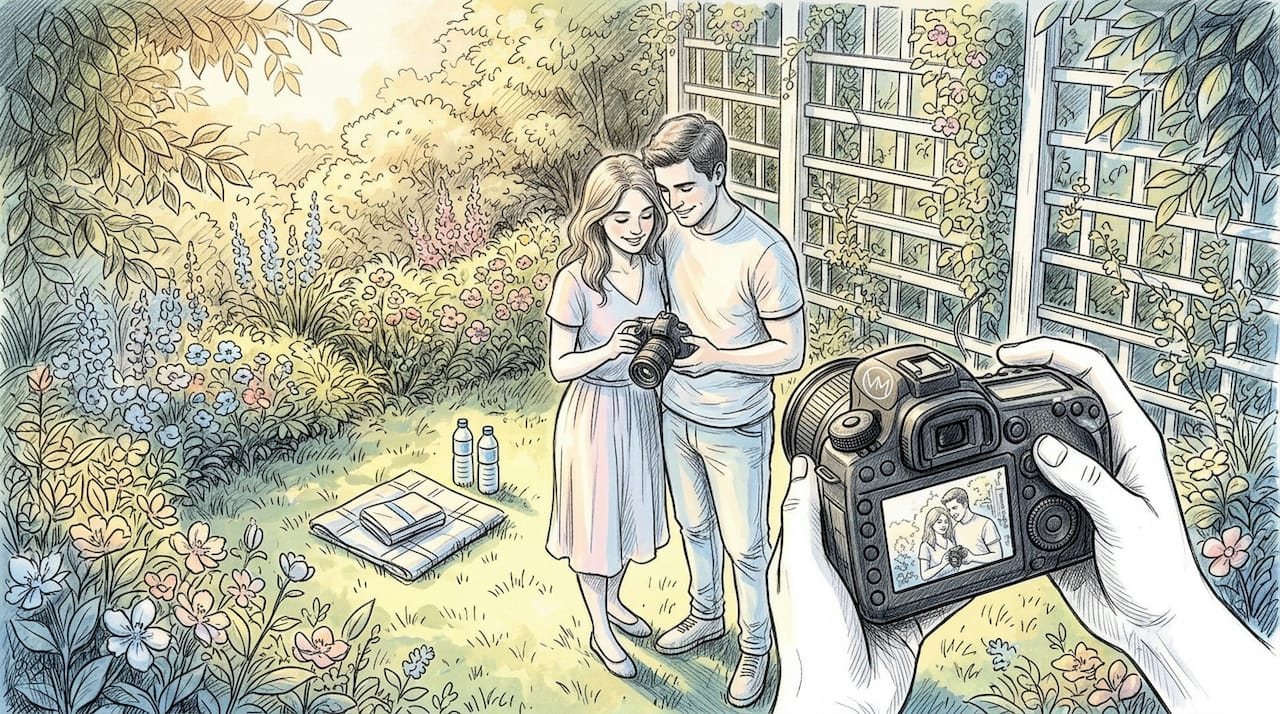
Comfortable, coordinated, timeless clothing without busy patterns or visible logos keeps the visual focus exactly where it belongs: on the two of you. Coordinate colors without matching perfectly. Think complementary tones rather than identical outfits. Avoid stiff fabrics because they read as uncomfortable in photos. Movement in fabric, like a flowy dress or a relaxed linen shirt, photographs beautifully.
Pro Tip: Schedule your hair and makeup trial on the same day as your shoot. You get a professional look for your photos AND you know exactly how long your getting-ready routine takes before the wedding.
Here is a quick planning checklist:
- Confirm your shoot location and get the address, parking, and entry details in advance
- Scout the spot at the same time of day as your shoot to check the light
- Pack a lint roller, touch-up makeup, a small brush, and a spare pair of shoes
- Communicate your wardrobe choices with your photographer for feedback before shoot day
- Bring a printed or digital mood board of images that inspire you
How to pose naturally and look genuinely relaxed
Here is the truth about posing: the couples who look most natural on camera are not trying to hold a pose. They are doing something together while the photographer captures it.
Around 97% of poses stem from five fundamental foot positions. Your stance determines your posture, your weight distribution, and how relaxed your whole body looks. A simple shift, putting your weight on your back foot and angling slightly toward your partner, immediately softens a stiff stance. Your photographer will guide you here, but knowing the principle helps you respond faster in the moment.
Movement is your best friend
Small natural movements like walking together, twirling, brushing hair back, or leaning in to whisper something release physical tension and produce frames that feel alive rather than staged. Tell your partner something that makes them laugh. Touch their face. Walk toward the camera holding hands. These micro-moments look infinitely more authentic than two people standing still and saying "cheese."
Prompts that work better than poses
Instead of trying to remember specific poses, think in terms of prompts:
- Walk slowly toward me while talking about your first trip together
- Put your forehead against theirs and close your eyes
- Spin them once and then pull them back close
- Whisper the most embarrassing thing that happened on your first date
- Pretend to fix their collar or brush something off their shoulder
The physical interaction creates natural expressions. Your photographer captures the real moments between the prompted ones. That is where the magic actually lives.
Pro Tip: Before the session, spend a few minutes looking at engagement photos together and discuss which images resonate. Sharing preferences with your photographer ahead of time gives them a creative roadmap for your specific dynamic.
What to expect on your shoot day
Most sessions run between 45 minutes and two hours. The early part is always the most awkward, and every photographer knows it. Good photographers use the first 15 minutes as a warmup, getting you comfortable with direction and movement before going for the shots they really want.
Here is what to bring with you:
- Water and a light snack if it is a longer session
- A small bag with touch-up essentials
- A lint roller and a spare pair of comfortable shoes
- A copy of your mood board or shot inspiration
Pro Tip: Arrive at least 15 minutes early. Not to start shooting, but to walk around, breathe the space, and let the nervous energy settle before the session officially begins.
Focus on each other during the session, not on the camera. The lens is not your audience. Your partner is. Photographers consistently report that couples who stay locked into each other, rather than checking if the shot looked good, produce the strongest images. If the weather shifts or the light changes unexpectedly, trust your photographer to adapt. Backup plan flexibility, moving indoors, switching locations, or simply waiting 20 minutes for a cloud to pass, is something experienced photographers handle routinely.
Making the most of your photos after the shoot
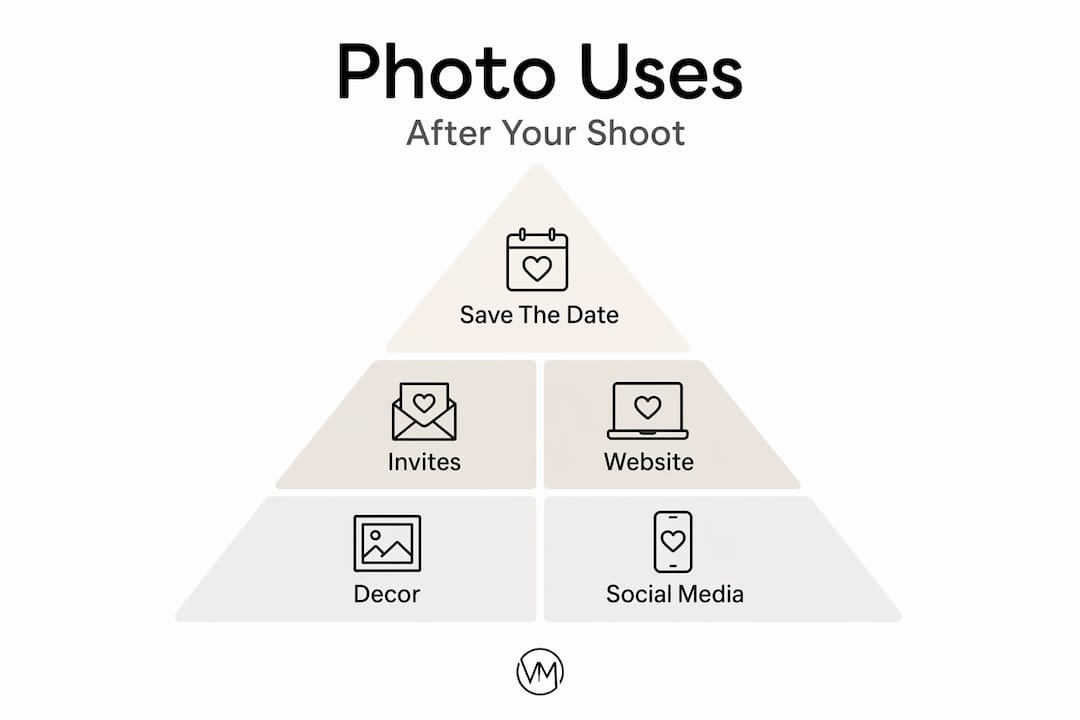
Once your images come back, they work harder than most couples realize. Pre-wedding photos support save the dates, wedding website headers, printed invitations, ceremony programs, and reception guest books. Some couples commission large canvas prints for their reception entrance or cocktail hour.
Beyond logistics, the shoot does something less tangible but equally valuable. Working with your photographer before the wedding builds genuine trust and familiarity. On your actual wedding day, they will not feel like a stranger with a camera. They will feel like someone you already know, which translates directly into more relaxed, expressive wedding photos.
When you receive your gallery, select your top 20 to 30 favorites and share them with your photographer. This tells them what you responded to visually and gives them a clear reference for your album layout, print selections, and wedding day coverage style.
Why I believe every couple should do this shoot
From my perspective, the pre-wedding session is the most underused tool in wedding photography preparation. I have seen couples walk into their engagement shoot stiff and self-conscious and walk out laughing, physically close, and completely at ease. That shift does not happen by accident. It happens because spending uninterrupted time in front of a camera, without the pressure of a wedding day timeline, teaches you something about yourself and your partner.
The relational benefit is real. Couples who complete engagement sessions consistently report feeling more present and less anxious on their wedding day. They already know what direction feels natural, they have already laughed through the awkward moments, and they already trust the person behind the lens.
What I find most interesting is the cinematic potential most couples leave on the table. When you treat the engagement session as a creative collaboration rather than a checkbox, you open the door to something genuinely personal and visually distinctive. A guide to creative wedding shoots is really a guide to self-expression through a medium that most people have never had real access to before.
— Anthony
Capture your story with Visualize Media
If you want your pre-wedding session and your wedding day covered with the same cinematic attention to detail, Visualize Media brings a filmmaker's eye to every shoot in New York and New Jersey.
From wedding cinematography and photography to photo booth experiences and full event coverage, the team at Visualize Media collaborates with couples from the very first session through the final edit. Browse the portfolio, explore packages, and get inspired by following the work on Instagram. When you are ready to talk about your shoot, reach out directly through the weddings and events page.
FAQ
How long should a pre-wedding shoot last?
Most pre-wedding shoots run 45 minutes to two hours, depending on the number of locations and how quickly the couple warms up to the camera.
What is the best time of day for engagement photos?
Golden hour, the 60 minutes before sunset, provides the softest and most flattering light. In wooded or urban settings, plan 30 to 60 minutes earlier because obstructions shorten the ideal light window.
What should couples wear for a pre-wedding shoot?
Choose comfortable, coordinated outfits in complementary colors without bold patterns or logos. Timeless, well-fitted clothing keeps the focus on your connection rather than your clothes.
How do you look natural in pre-wedding photos?
Focus on your partner, not the camera, and ask your photographer for movement-based prompts. Small natural actions like walking or whispering release tension and produce authentic expressions far more reliably than static poses.
Can pre-wedding photos be used for wedding invitations?
Yes. Engagement session images are commonly used for save the dates, wedding websites, printed invitations, ceremony programs, and reception décor like guest books and entrance prints.